Menu & categories

Pepper

Aromatic spice with intense spiciness and essential oils

Wiki about pepper Nutri-Score A Vegan Yes Gluten-free Yes Lactose-free Yes Nut-free Yes
NUTRITION / 100 g
255 kcal 10.4 g Protein 64.8 g Kohlenhydrate 3.3 g Fett

Introduction

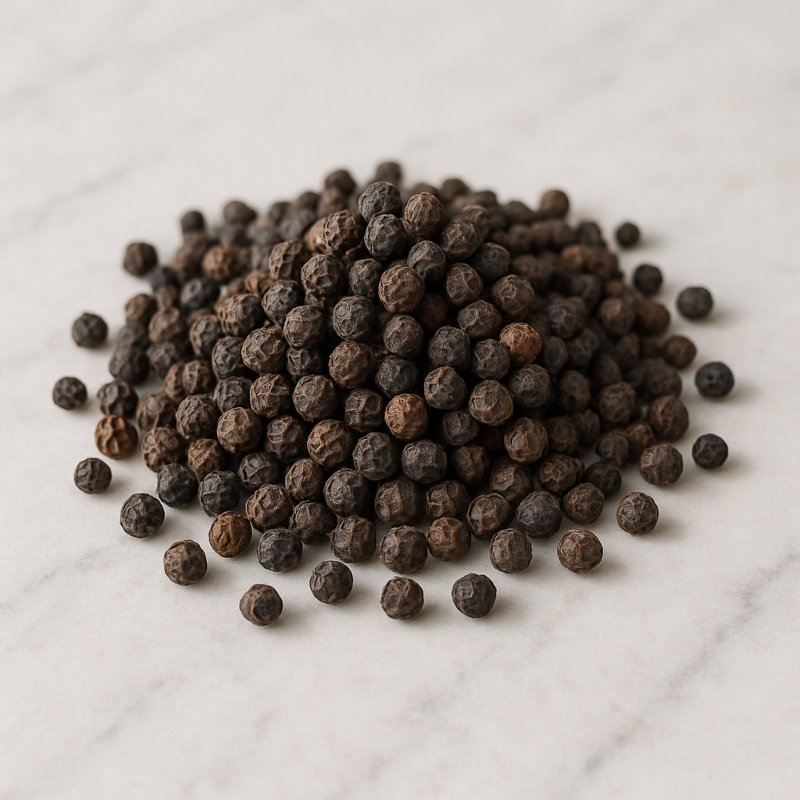
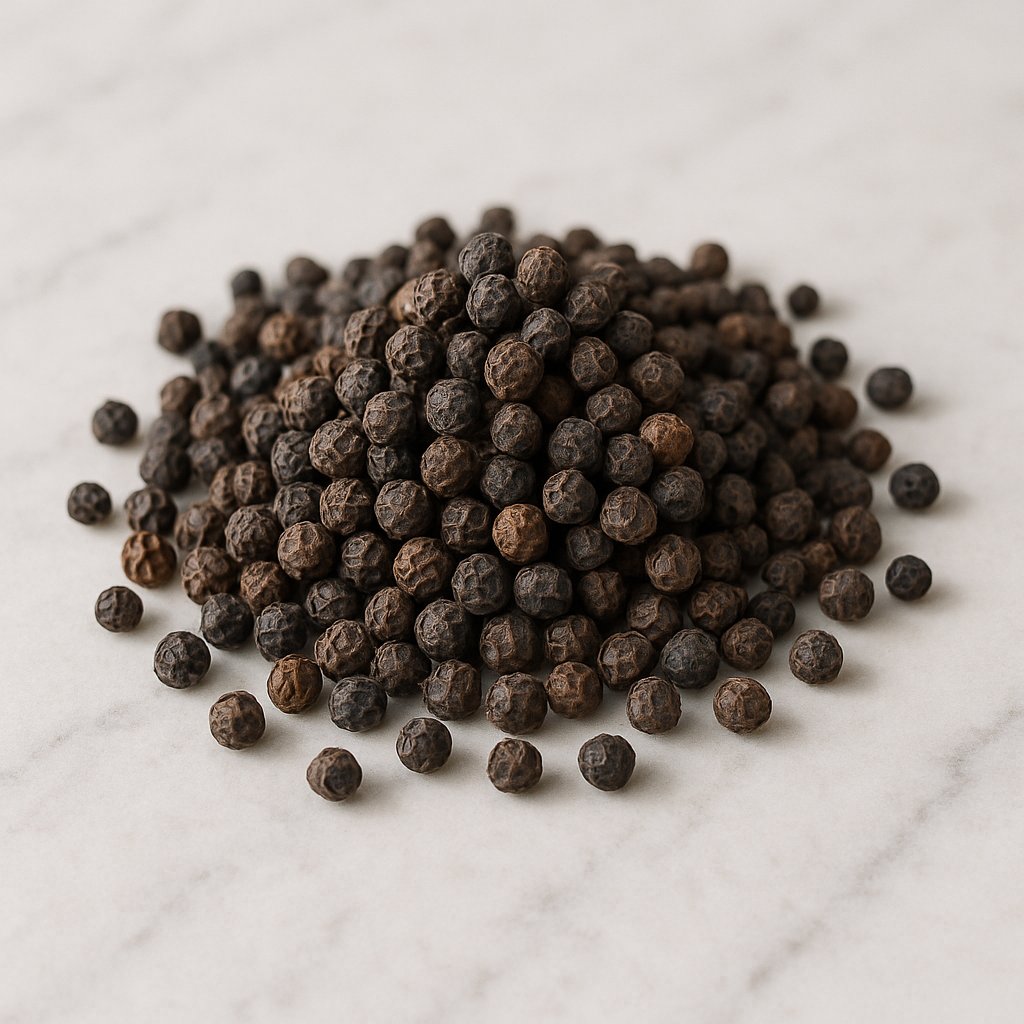
Dried black peppercorns and ground pepper
I have a special relationship with pepper, not the dramatic kind but the everyday-reliable type that shows itself when seasoning stews, salads and spontaneous stir-fries. I used to think pepper was just hot powder in the shaker until a friend brought a tiny bowl of freshly ground berries to the table and for the first time I understood how complex this black gold can be. The scent changed the dish immediately: peppery, floral, a hint of citrus and wood — all in one breath.

When I talk about pepper I think of variety. There is black, white, green and red pepper, plus Tellicherry and Lampong, which differ noticeably in aroma. I still remember a trip to a market where vendors displayed peppercorns in old wooden bowls. A seller offered me different qualities to try, and I was surprised how much size and harvest time shape the flavor.

I pay attention to two things when cooking: freshness and technique. Freshly ground pepper releases its essential oils best; ground pepper from the supermarket can seem flat and stale. That's why I often grind shortly before serving and use different grind sizes — coarse for marinated steaks, fine over an egg salad. A colleague of mine swears by finishing with pepper in combination with citrus, because the acidity makes the flavors bloom.

The uses are versatile. Pepper pairs with meat, fish and vegetables, but also with sweet components like dark chocolate or caramelized fruit. Sometimes I experiment with very different combinations, such as pepper in an herb dressing or as a crunchy crust on baked pears. Those little surprises make cooking exciting and show that pepper is more than just a source of heat.

  • Black pepper: powerful, spicy, ideal for searing.
  • White pepper: milder, suitable for light sauces.
  • Green pepper: fresh, often pickled, great with cream sauces.
  • Red pepper: fruity-sweet, rare but special.
I find that pepper tells stories of climate, soil and craftsmanship — and a good grind tells my own: that I take the time to shape flavor consciously. For the next dish you season, give the pepper a moment in the mortar; often patience pays off with a more layered, livelier result.

Availability & types

Availability and types of pepper

Pepper is a spice that seasons many dishes and is used around the world. It comes from the pepper plant, which bears small berries. These berries can be processed in different ways, and from them come the well-known varieties such as black, white, green and red pepper. Each variety tastes a little different and suits different dishes.

Origin and growing regions

Pepper grows best in warm, humid areas referred to as tropical. These are places near the equator where there is often sun and rain. Important countries that grow pepper include, for example:

  • India – one of the oldest growing regions; it produces particularly large amounts of black and white pepper.
  • Vietnam – today one of the largest exporters of pepper.
  • Indonesia and Sri Lanka – also major producers with their own flavor notes.
  • Brazil and other countries in South America – pepper is also grown there.
You can imagine the pepper plant as a climbing vine that grows up supports. The berries ripen on long spikes. Depending on when the berries are harvested and how they are dried or processed, different pepper varieties are produced.

Available varieties and variants

The best-known variants can be explained easily:

  • Black pepper: the berries are harvested ripe but not fully red and then dried in the sun or mechanically. In this process the skin shrinks and turns black. Black pepper has a strong, slightly pungent aroma and is a staple in most kitchens.
  • White pepper: here the berries are harvested ripe and then the outer skin is removed, leaving only the pale kernel. White pepper has a milder taste and is often used in light sauces or soups so as not to affect the color of the dish.
  • Green pepper: these berries are harvested very early, still green. They have a fresh, slightly grassy aroma. Green pepper is often pickled or gently dried so that it retains its color and freshness.
  • Red (or pink) pepper: red pepper consists of fully ripe berries that turn red. Sometimes “pink berries” are not true peppercorns at all but fruits of other plants that look similar and are also used as a spice. Red pepper is fruitier and milder.
In addition there are special brands or varieties like Tellicherry (from India) or Malabar, valued for their particular aroma. These names often indicate the region or quality, similar to apples from specific regions.

How and where to get pepper

Pepper is practically available everywhere: in supermarkets, at the weekly market or in specialty spice shops. You can get it as whole berries in a pepper mill, as ground powder or preserved (for example green pepper in brine). Whole berries stay fresh longer because the aroma is contained in the skin — this is comparable to how nuts in their shells keep longer than ground nuts.

When you buy pepper, pay attention to the best-before date and, if possible, origin information. That way you can choose a variety that you like and that fits the dish. Pepper is therefore versatile, easy to obtain and offers many flavor variants — from pungent and spicy to mild and fruity.
Details & nutrition

Property Value
Unit g
Calories per 100 255
Protein per 100 10.4
Carbohydrates per 100 64.8
Sugar per 100 0.6
Fat per 100 3.3
Saturated fat per 100 1.4
Monounsaturated fat 1.0
Polyunsaturated fat 0.9
Fiber per 100 25.0
Vitamin C (mg) per 100 21.0
Vitamin D (IU) per 100 0
Calcium (mg) per 100 440
Iron (mg) per 100 9.7
Nutri-Score A
CO₂ footprint 4.0
Origin Tropical and subtropical growing regions, especially India, Vietnam and Indonesia
Gluten-free Yes
Lactose-free Yes
Nut-free Yes
Vegan Yes
Note Nutritional values refer to black pepper, dried and ground; in typical consumption amounts it has negligible caloric relevance.

Technical & scientific information

Pepper (genus Piper, most widespread: Piper nigrum) is one of the oldest and most widely used spices worldwide. Botanically it is the dried fruits of a climbing plant in the pepper family (Piperaceae). The fruits grow in spikes; depending on harvest time and further processing, different pepper types such as black, white, green or red pepper arise, which differ in taste, color and chemical composition.

Chemical composition and constituents
The characteristic pungency of pepper is mainly due to piperine, an alkaloid concentrated in the outer fruit layers. Piperine typically makes up 2–9 % of the dry weight. Other secondary plant compounds include essential oils (e.g. limonene, pinene), flavonoids, terpenes and other alkaloids. The content of essential oils is lower in green and white pepper than in black, because these substances are sensitive to heat and light. Minerals such as potassium, calcium and magnesium as well as small amounts of vitamins (mainly B vitamins) are also present, although pepper primarily serves as a flavoring rather than a nutrient source.

Nutritional values
Pepper is low in calories, providing about 250–300 kcal per 100 g, with carbohydrates (mainly fiber) and a small protein content making up the bulk. Due to its high intensity it is used in very small amounts, so its nutritional contribution in a typical serving is negligible. The fiber content can affect bowel activity, and the polyphenols present contribute to antioxidant properties.

Processing methods
The distinction of pepper types follows mainly harvest time and processing:

  • Black pepper: harvested as an unripe, green berry and then dried in the sun or mechanically, during which the fruit skin shrinks and darkens; the pungency is preserved by the piperine content.
  • White pepper: ripe berries are soaked in water (retting) until the outer skin decomposes and is removed; what remains is the lighter seed with a milder aroma.
  • Green pepper: unripe berries are treated by freeze-drying, pickling in brine or with liquid nitrogen to preserve the green color and a fresh aroma.
  • Red pepper: a rarer case, ripe berries that retain their red color, usually through gentle drying or pickling.
These procedures influence not only color and aroma but also the concentration of volatile aroma compounds and heat-sensitive constituents.
Sensory properties and use
Pepper offers a complex combination of pungency, bitterness and aromatic notes. Piperine produces a sustained, thermal-like pungency, different from capsaicin in chili, which is perceived as more burning. Essential oils provide floral, citrus-like or resinous accents. Pepper is used in almost all cuisines worldwide, from spice blends to marinades, sauces and preservation.
Health aspects
Pepper has been used for millennia in traditional remedies as well. Scientifically studied effects include a possible improvement in nutrient absorption, especially of fat-soluble vitamins and secondary plant compounds, since piperine can increase the bioavailability of certain compounds. In addition, animal and in vitro studies show antioxidant, antimicrobial and inflammation-modulating activities of the substances present. In usual culinary amounts pepper is generally harmless; however, high doses or extracts can cause stomach irritation, interactions with medicines (by affecting liver metabolism enzymes) and allergic reactions.
Storage and quality
To preserve aroma and pungency, light- and air-tight containers, cool temperatures and protection from moisture are crucial. Ground pepper quickly loses volatile oils and should be freshly ground to use the full aroma. Quality criteria include color stability, aroma complexity and low moisture and contaminant levels (e.g. mold toxins from improper drying). Pepper combines botanical, chemical and cultural aspects and remains, because of its flavor versatility and scientifically documented effects, a significant spice in both cuisine and research.
Wiki entry for: pepper
Active now: 15 visitors of which 2 logged-in members in the last 5 minutes