Menu & categories

Peperoncino sauce

Spicy chili sauce on a tomato base

Wiki about peperoncino sauce Nutri-Score B Vegan Yes Gluten-free Yes Lactose-free Yes Nut-free Yes
NUTRITION / 100 g
70 kcal 1.5 g Protein 8.0 g Kohlenhydrate 3.0 g Fett

Introduction

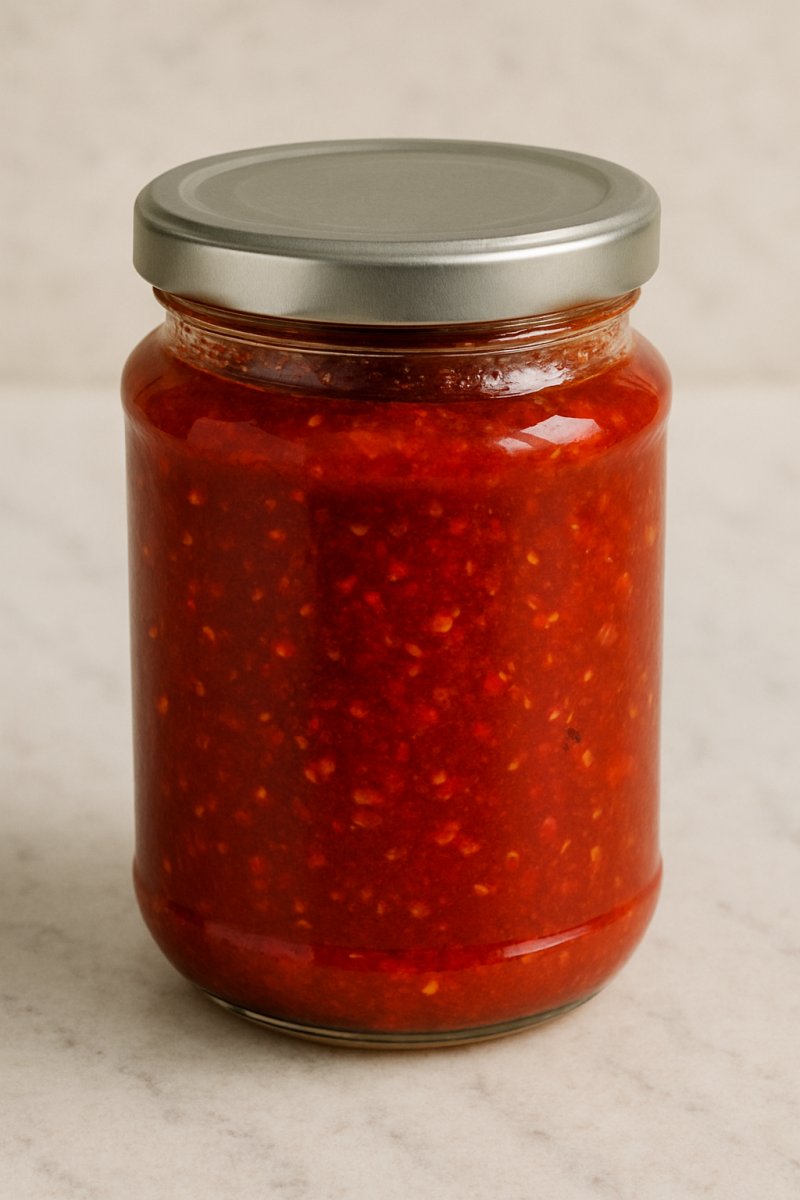
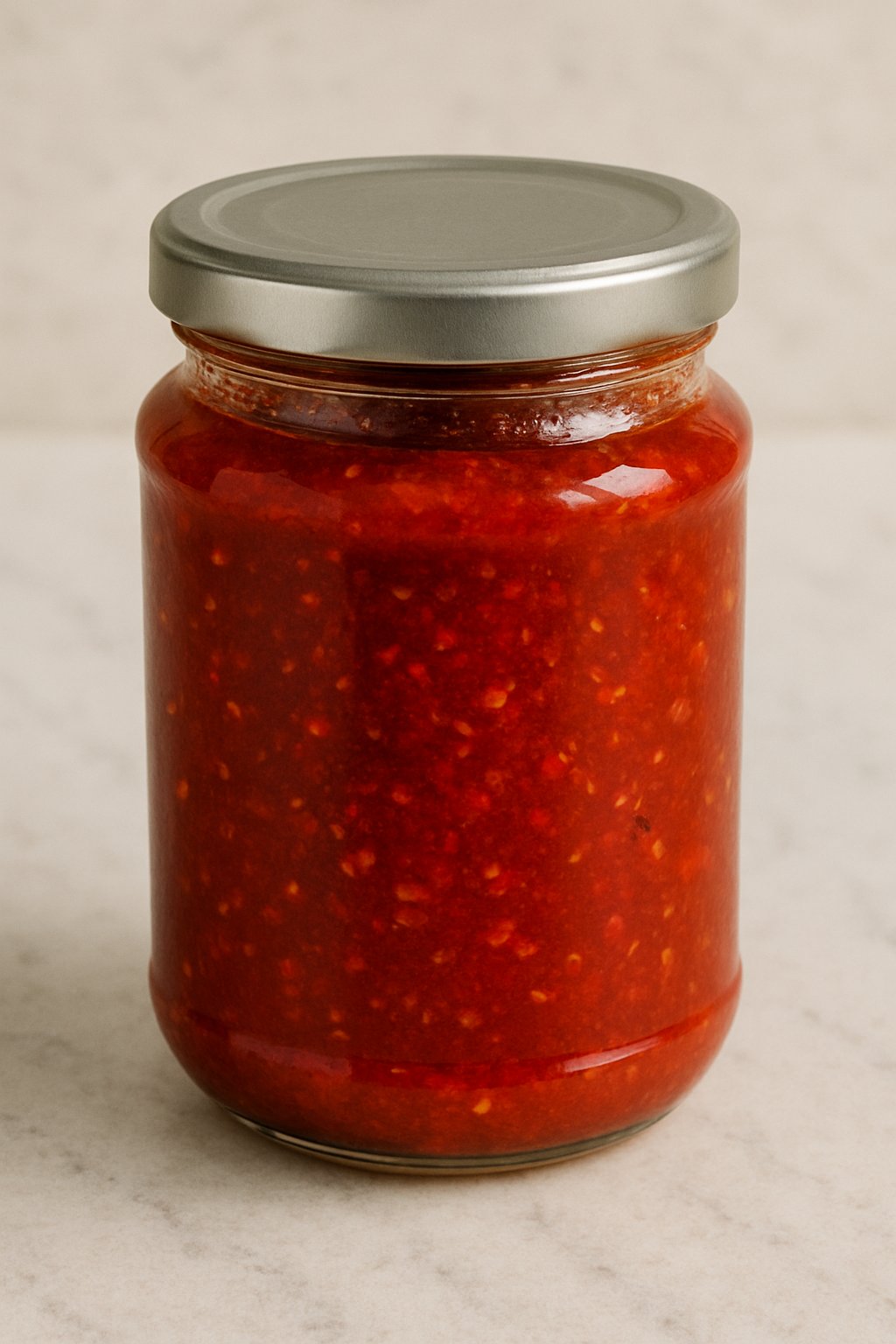
A jar of red peperoncino sauce
I must confess, peperoncino sauce was for a long time the underrated heroine of my kitchen, that small, fiery ingredient that lifts a plain dish and at the same time gives it a cheeky, southern Italian soul. I still remember a rainy evening when I was cooking pasta with a friend and accidentally forgot half the cream called for — it was only the generous addition of peperoncino sauce that turned the mishap into a small, triumphant meal we both praised for weeks afterwards.

Peperoncino sauce is not a single thing; it ranges from mildly sweet to loudly hot. The base is usually pickled or freshly pureed red chili peppers, often combined with olive oil, garlic and vinegar. Some variants rely on dried chili flakes, others on fresh, sun-red peppers. The result can be pleasingly mild or vibrantly hot — and it is precisely this range that makes the sauce so exciting.

What makes peperoncino sauce so versatile:

  • It gives quick dishes immediate depth and warmth, from pasta and pizza to grilled vegetables.
  • A few drops lift marinades, dressings and dips to a new level.
  • The sauce is easy to adapt: sweeter with honey, smokier with roasted peppers, more aromatic with lemon zest or herbs.
I recall a colleague who never served his classic tomato sauce without a spoonful of peperoncino sauce — for him it was almost a kind of ritual. In fact the sauce often helps to bring simple ingredients together: a bit of acid, fat and heat bundle flavors so that in the end you feel a dish was much more elaborate than it actually is.

For those who like to experiment: keep a bottle in the fridge as a universal flavor booster. Try it with grilled fish, over roasted potatoes or in a creamy polenta. And if I may give one tip: don't shy away from the heat. Often it's the balance of sweetness and acidity that tames the heat and makes peperoncino sauce so irresistible.

Availability & types

Availability and types

The peperoncino sauce is a hot sauce made from small chili peppers (peperoncini). It is popular in many countries, especially where people like spicy food. You can buy it in supermarkets, delicatessens, at weekly markets or online. In Italy, Spain and South America it is often part of everyday meals, but today it can be found almost everywhere, including major supermarket chains.

Where does it come from?
Peperoncini originally come from the Americas, as the first chili plants stem from Central and South America. Long ago people brought these plants to Europe and Asia. There they adapted well to the climate and are grown today in many regions. The idea for the sauce arose from the desire to preserve the hot fruits and to distribute their flavor easily over dishes.

Important cultivation areas
Peperoncini feel most comfortable in warm, sunny places. Therefore they grow particularly well in:

  • Mediterranean countries such as Italy, Spain and Greece – where there is lots of sun and little frost.
  • Latin America, where some wild forms of chili peppers still grow naturally.
  • Asia, especially in warmer regions like Thailand and India, where many hot sauces are produced.
  • Greenhouses in more northern countries, so the plants can produce fruit there even when it's too cold outside.
Available varieties and variants
Peperoncino sauces come in many variants – similar to how juices have different types (apple, orange, mixed). Here are the most common kinds, simply explained:

  • Fruity peperoncino sauce: It tastes fresh and somewhat sweet because many fresh chiles are used. It goes well with pizza or pasta.
  • Vinegar-based sauce: This sauce has added vinegar, making it long-lasting and giving it a sour taste. It can be used like a flavored oil.
  • Oil-based sauce: Here the chiles float in oil. The oil carries the flavor and makes the sauce mild and smooth. It is ideal for drizzling over bread or salads.
  • Smoky variants: Some sauces contain smoked chiles. This gives them a flavor similar to grilled food, almost like a campfire aroma.
  • Very hot varieties: Some producers add extra-hot chiles. These sauces are less suitable for children or people with sensitive stomachs.
  • Mild variants: For those who want only a small kick of heat, there are milder sauces, often mixed with more tomato or bell pepper.
  • With herbs and garlic: Many sauces also include herbs like oregano or basil or garlic. This makes the flavor more varied, almost like a little spice party in the jar.
How do I choose the right sauce?
When you shop, you can check the label: does it say "mild", "medium" or "very hot"? Then you'll know how strong the heat is. Another hint is the ingredients list: if there's a lot of oil and garlic the sauce will taste different than one with a lot of vinegar. Feel free to try various kinds – like with ice cream: vanilla is different from chocolate, and both have their fans.

In summary: peperoncino sauce is available almost everywhere because it is popular and versatile. It originally comes from the Americas but is now grown around the world, especially in warm places. There are many types – from mild to fiery hot, from vinegar- to oil-based or seasoned with herbs. That way everyone can find the right variant for their taste.
Details & nutrition

Property Value
Unit g
Calories per 100 70
Protein per 100 1.5
Carbohydrates per 100 8.0
Sugar per 100 5.5
Fat per 100 3.0
Saturated fat per 100 0.4
Monounsaturated fat 2.0
Polyunsaturated fat 0.6
Fiber per 100 2.0
Vitamin C (mg) per 100 10
Vitamin D (IU) per 100 0
Calcium (mg) per 100 20
Iron (mg) per 100 0.8
Nutri-Score B
CO₂ footprint 0.5
Origin Varies by manufacturer, typically Europe
Gluten-free Yes
Lactose-free Yes
Nut-free Yes
Vegan Yes
Note Average values for a typical industrially produced peperoncino sauce based on tomatoes, chili, oil, vinegar and spices; exact values may vary depending on the recipe.

Technical & scientific information

Peperoncino sauce denotes a spicy seasoning sauce based on peperoncini or chili peppers, used in various cuisines as a hot ingredient. Typically it consists of crushed or pureed fruits of the genus Capsicum, processed with water, vinegar, oil, salt and, if applicable, sugar, garlic or herbs. The term can vary regionally; in Italy "peperoncino" usually refers to the small dried red chili, while in other countries fresher or milder varieties may form the basis.

Chemical composition and active compounds
The heat of peperoncino sauce is primarily based on capsaicinoids, mainly capsaicin and dihydrocapsaicin. These lipophilic alkaloids bind to the transient receptor potential vanilloid 1 (TRPV1) ion channel on pain and heat receptors and thus trigger the perception of spiciness. Other compounds contained in Capsicum are carotenoids (e.g. capsanthin, capsorubin), which are responsible for the red coloring, as well as volatile aroma compounds such as terpenes and esters. The fruits also provide organic acids (especially ascorbic acid = vitamin C), sugars, fiber and a range of minerals such as potassium and magnesium.

Nutritional values (typical indications, varying by recipe)
Peperoncino sauces are low in calories, provided they contain little sugar and oil. Per 100 grams calories are often between 20 and 150 kcal, depending on the oil content. The proportion of carbohydrates is usually low; vitamins, especially vitamin C and provitamin A (beta‑carotene), are higher in fresh pods than in heavily heated or long-stored products. Fat content varies greatly in oil‑based recipes, while fermented or vinegar‑based sauces generally remain low in fat.

Production and processing methods
There are several procedures for preparing peperoncino sauce:

  • Direct pureeing: Fresh or dried chiles are mixed with liquid (water, vinegar), oil and spices and pureed. Heat may be applied briefly to meld flavors.
  • Heating/Reduction: Cooking concentrates flavors; capsaicin is heat‑stable, but flavor components can change.
  • Fermentation: Lactic‑fermented chiles develop secondary aromas as well as lactic acid bacteria relevant to probiotics and increased shelf life.
  • Oil infusion: Chiles are soaked in edible oil, extracting capsaicin and fat‑soluble aromas; such oils are intense in flavor but microbiologically stable only under clean conditions.
Shelf life and food safety
Shelf life depends on pH, water activity, oil content and preservation. Vinegar‑based products with low pH are more resistant to many pathogenic microorganisms. Oil infusions carry risks if plant residues are present, as anaerobes like Clostridium botulinum can form toxins under improper conditions; therefore heat‑treated, clean and pH‑controlled manufacturing processes are recommended.

Health aspects
Capsaicin shows various effects in studies: it can act locally as an analgesic, slightly influence appetite and energy expenditure, and have inflammation‑modulating effects. In sensitive individuals, however, capsaicin can cause gastrointestinal irritation, heartburn or skin irritation. Allergic reactions are rare but possible. Caution is advised for children and sensitive consumers; eye and mucous membrane contact should be avoided.

Applications in cuisine and industry
Peperoncino sauce is used as a seasoning, marinade, preservation component or flavor carrier. In the food industry, extracts also serve as natural carriers of heat in sauces, snacks and spice mixes. Sensorially, in addition to heat, color, fruitiness and roasted notes are appreciated, depending on the chili variety and processing.

Overall, peperoncino sauce is a versatile product with clearly definable chemical main active compounds, variable nutrient composition and different processing stages. Scientifically relevant aspects concern the stability of capsaicinoids, microbiological safety in oil products and health effects at different levels of consumption, whereby both culinary and technical considerations play a role in production and application.

Wiki entry for: peperoncino sauce
Active now: 21 visitors of which 2 logged-in members in the last 5 minutes