Menu & categories

Pecorino

Strong Italian hard cheese made from sheep's milk

Wiki about pecorino Nutri-Score D Vegan No Gluten-free Yes Lactose-free No Nut-free Yes
NUTRITION / 100 g
393 kcal 28 g Protein 0 g Kohlenhydrate 32 g Fett

Introduction

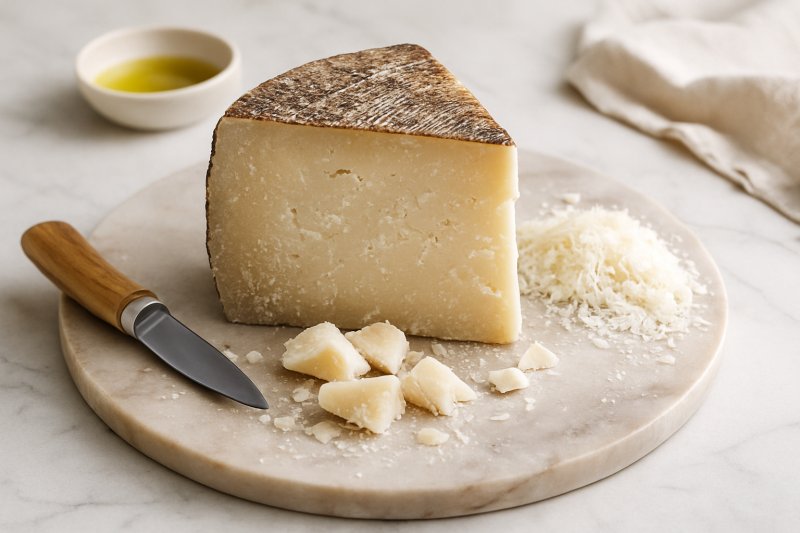
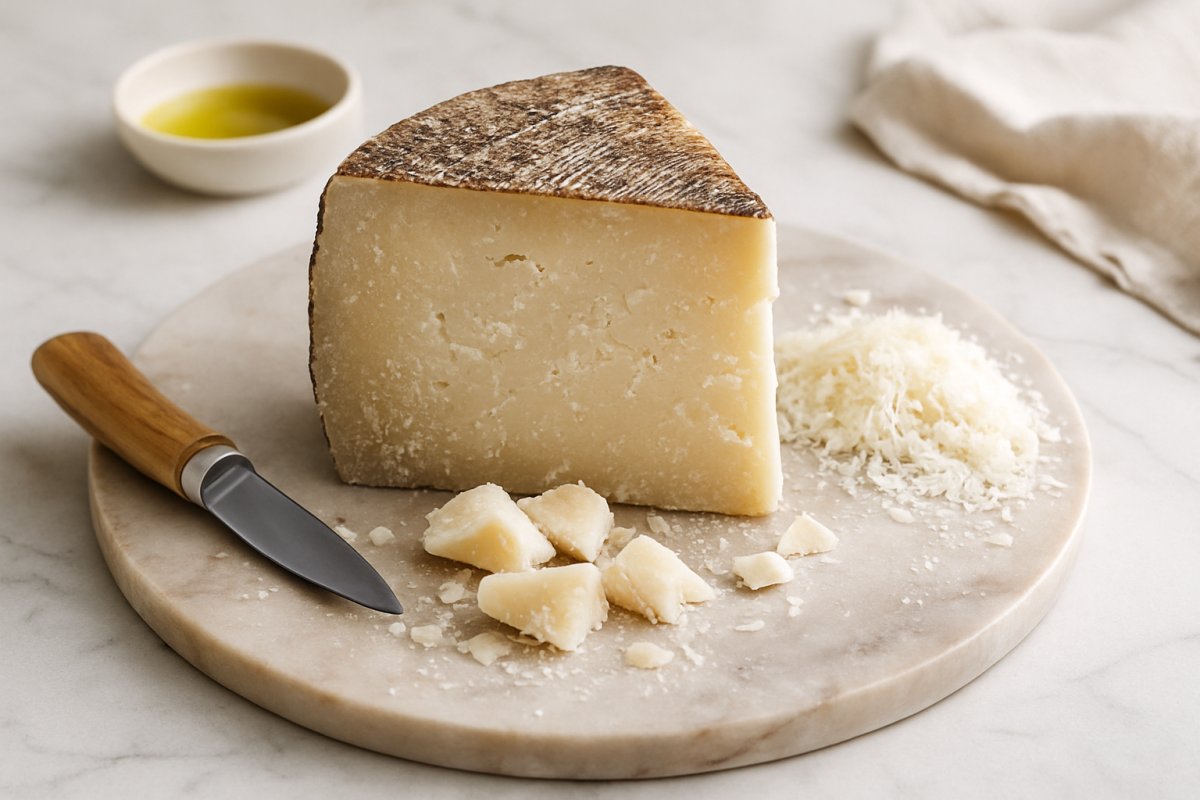
Piece of Pecorino cheese with grated Pecorino on a wooden board
I still vividly remember the first intense bite into a freshly grated Pecorino: a small whirl of salty sharpness, mineral depth and a hint of sheep's milk that opened my senses. Since then this cheese hasn't let me go. For me Pecorino is more than just an ingredient; it is a piece of Italian rural culture that brings old traditions and rustic elegance to every kitchen.

When I ask someone what Pecorino means to them, I often get vague answers. Yet it is surprisingly versatile. At its best Pecorino is aromatic, slightly granular and has a pleasantly firm texture. It is traditionally made from sheep's milk and varies by region: some varieties are young and mild, others aged and sharp enough to give character to a simple pasta dish.

A colleague of mine once, out of pure pride, tried to make a carbonara using only Parmesan. After three unsuccessful attempts he produced a Pecorino, and the kitchen turned into a small triumph. Pecorino brings a salty, piquant note that wonderfully balances fats and acids. To me it is the secret behind many classic dishes, from cacio e pepe to savory tarts.

I love how Pecorino instantly elevates simple foods. A few fine shavings over a field salad, some freshly grated cheese over roasted vegetables or thick slices on an antipasti platter — it always works. At the same time I enjoy the stories around its production: small farms, seasonal milk, artisanal aging. You can taste this origin, and it connects the product to landscapes and people.

If I give someone a tip I say: try different ages. A younger Pecorino is wonderfully spreadable and mild, while an older, firmer Pecorino develops more intense flavors and is perfect for grating. For me Pecorino remains a piece of culinary home that should not be missing from any well-stocked kitchen.

Availability & types

Availability and types of Pecorino

Pecorino is an Italian cheese made from sheep's milk. Its name comes from 'pecora', the Italian word for sheep. You can find Pecorino in many supermarkets, cheese shops or at markets, depending on where you live. In Italy it is available almost everywhere, but it is also becoming increasingly popular internationally – in large cities several varieties are usually available.

The origin of Pecorino is important because different regions in Italy produce different types. The best-known growing and production areas are:

  • Sardinia – One of the most famous Pecorinos comes from here, often with a somewhat spicier taste. The sheep graze on the island and feed on wild herbs, which makes the cheese distinctive.
  • Tuscany – In Tuscany there are Pecorinos with a balanced, sometimes slightly nutty flavor. It pairs well with fresh bread or wine.
  • Latium (Lazio) – This is the region around Rome. Pecorino from Latium can be strong and aromatic and is sometimes aged particularly long.
  • Umbria and Marche – Pecorino is also made here, often with small differences in taste because the sheep are fed differently or the climate is different.
There are many varieties and versions of Pecorino. They can be roughly classified by aging time and flavor:

  • Young (Fresco) – This Pecorino is only briefly aged, usually one to two months. It is soft, mild and almost a bit creamy. It is not very salty or sharp, so children often like it.
  • Medium-aged – After a few months the cheese gains more bite and flavor. It is no longer as soft but somewhat firmer, and has more aroma.
  • Aged (Stagionato) – This Pecorino is aged for a long time, sometimes a year or more. It becomes very hard and has a strong, piquant flavor. It is often grated over pasta because it grates well.
Besides aging time, Pecorinos also differ through specific production methods or added ingredients:

  • Pecorino Romano – A very well-known variety, originally from Latium and Sardinia. It is often saltier and stronger and is widely used as a grating cheese for pasta.
  • Pecorino Sardo – Directly from Sardinia, often with a spicy, slightly piquant taste. It is available both young and long-aged.
  • Pecorino Toscano – Milder and fruitier in flavor, especially when young. It can also be aged longer and then tastes more intense.
  • Smoked Pecorino – Sometimes Pecorino is lightly smoked, which gives it a smoky flavor, similar to grilled food but milder.
  • Spiced or with herbs – Some producers mix in herbs, pepper or even truffle into the cheese to give it special aromas.
When you buy Pecorino, you can look at its appearance: young Pecorino is usually pale and soft, older Pecorino is firmer and often has small crystals that crunch when you bite them. The packaging or the label in the shop usually states which region the cheese comes from and how long it has been aged. That way you can choose exactly the variety you like.

Overall Pecorino is very versatile: there are mild variants for breakfast or sandwiches and stronger ones for grating over pasta or nibbling with honey. The many regions and production methods make Pecorino a cheese with many faces – from soft and mild to hard and very piquant.
Details & nutrition

Property Value
Unit g
Calories per 100 393
Protein per 100 28
Carbohydrates per 100 0
Sugar per 100 0
Fat per 100 32
Saturated fat per 100 20
Monounsaturated fat 9
Polyunsaturated fat 1
Fiber per 100 0
Vitamin C (mg) per 100 0
Vitamin D (IU) per 100 40
Calcium (mg) per 100 800
Iron (mg) per 100 0.5
Nutri-Score D
CO₂ footprint 11.5
Origin Italy
Gluten-free Yes
Lactose-free No
Nut-free Yes
Vegan No
Note Nutritional values may vary slightly depending on the degree of aging and the variety (e.g. Pecorino Romano, Pecorino Sardo).

Technical & scientific information

Pecorino refers to a group of hard to semi-hard cheeses made from sheep's milk, traditionally produced in various regions of Italy. The name derives from the Italian word pecora for sheep. Among the best-known types are Pecorino Romano, Pecorino Sardo and Pecorino Toscano, which differ in production methods, aging time and sensory characteristics.

Raw material and composition: Pecorino is mainly made from whole sheep's milk, which comes from different breeds of sheep. Sheep's milk contains higher concentrations of fat, proteins and minerals than cow's milk. Typical average values for raw milk are about 6–8 % fat, 5–6 % protein and 6–9 % lactose, although these values vary seasonally and by breed. For the finished cheese the composition depends on water content and degree of aging; hard-aged Pecorinos typically show 28–34 % fat in dry matter and 25–35 % total protein.

Proteins and lipids: The casein pattern in sheep's milk is similar to that in cow's milk, however the proportion of αs1-, β- and κ-caseins is variable. These casein fractions influence coagulation properties and cheese texture. Sheep milk fats contain a higher proportion of short- and medium-chain fatty acids (e.g. caproic acid C6, capric acid C10), which contribute to characteristic aroma profiles. In addition, triglyceride distributions and the relative content of polyunsaturated fatty acids are relevant for nutritional assessments.

Manufacturing process: Production includes several standardized steps:

  • Milk preparation: Filtration, possibly pasteurization or the use of raw milk, depending on regional tradition and legal requirements.
  • Coagulation: Addition of rennet (animal or microbial enzyme) and/or lactic acid bacteria to induce coagulation. Coagulation time and temperature vary; for Pecorino higher temperatures (30–38 °C) are often used to produce a firm, dense curd.
  • Curd cutting and molding: After cutting the curd the whey is separated, the curd mass is shaped and pressed to achieve the desired moisture content.
  • Salting and aging: The wheels are dry-salted or treated in brine. Aging takes place on shelves under controlled conditions (temperature, humidity) and can range from a few weeks to over a year. During aging texture, aroma and microbial profile develop.
Microbiology and biochemical changes: During aging lactic acid bacteria, adjunct microflora and enzymes from milk, rennet and microorganisms play a central role. Proteolysis and lipolysis lead to the release of peptides, free amino acids, free fatty acids and aroma precursors such as ketones and lactones. These processes are responsible for the development of piquant, sometimes sharp flavor notes and crystalline structures (e.g. phenylalanine crystals or calcium spots) typical of Pecorino.

Nutritional values and health aspects: Pecorino is an energy-dense food rich in protein and calcium. Average values per 100 g of aged Pecorino: energy 400–450 kcal, protein 25–30 g, fat 30–35 g, carbohydrates <1–2 g, calcium 700–1000 mg. Due to the high fat and sodium content and the density of saturated fatty acids, moderate consumption is recommended, especially for people with cardiovascular risk factors. On the other hand, Pecorino provides well-bioavailable calcium, phosphorus-containing amino acids and protein, as well as fat-soluble vitamins (e.g. vitamin A). Due to the manufacturing process older Pecorino is relatively low in lactose because lactose is largely broken down during aging, which is why it is often better tolerated than fresh dairy products.

Food safety and labeling: Legal regulations in the EU and Italy define protected geographical indications (e.g. PDO for Pecorino Romano), raw material requirements and production standards. Pasteurization, hygiene measures and microbiological controls minimize risks from pathogenic microorganisms. Allergens are mainly milk proteins (casein, whey proteins), so people with a milk allergy should avoid Pecorino.

Overall, Pecorino represents a technically demanding cheese type with specific microbial and biochemical ripening mechanisms; its nutrient profile makes it both a valuable source of calcium and protein and a product whose fat and salt content should be considered in dietary advice.

Wiki entry for: pecorino
Active now: 18 visitors of which 2 logged-in members in the last 5 minutes