Menu & categories

Pearled barley

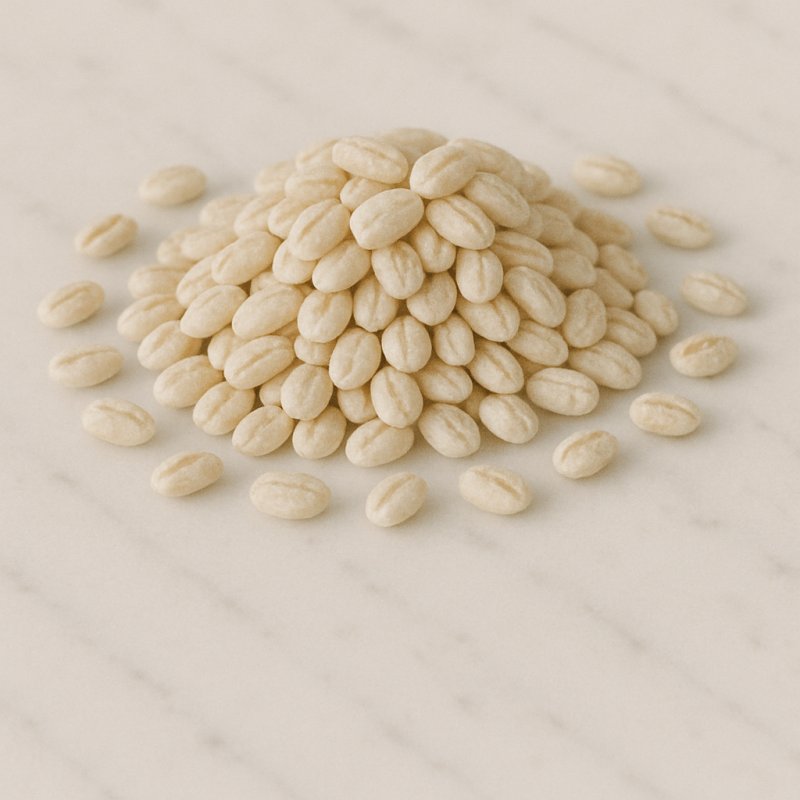
Hulled and polished barley grains as a versatile filling side dish

Wiki about pearl barley Nutri-Score B Vegan Yes Gluten-free No Lactose-free Yes Nut-free Yes
NUTRITION / 100 g
352 kcal 9.0 g Protein 73.0 g Kohlenhydrate 1.2 g Fett

Introduction

Pearled barley in a bowl
I still remember the first evening barley pearls landed on my table: a simple dish a friend from the north brought, warm and nutty, so comforting that I immediately knew this ingredient deserved more space in my cooking repertoire. Barley pearls are milled or polished barley kernels – grainy, slightly chewy and yet silky when cooked long enough. They have a wonderful ability to absorb liquid while keeping their shape, which makes them ideal for soups, stews and savory porridges.

What fascinates me about barley pearls is their versatility. In my kitchen they often travel between breakfast and dinner: once as a creamy breakfast with cinnamon and apple, another time in a simple vegetable broth with caramelized onions and a splash of lemon juice at the end. A colleague of mine swears by their texture in risotto-like dishes – he jokingly calls it "barley-otto" – and indeed barley pearls deliver the same pleasant bite as Arborio rice, only with a savory, slightly nutty undertone.

Nutritionally, barley pearls are surprisingly down-to-earth: rich in fiber, complex carbohydrates and some important minerals. They keep you full for a long time without feeling heavy. This makes them an excellent ingredient for winter dishes when I want something nourishing but not overwhelming. I also like that you can work with them seasonally and regionally – they pair especially well with root vegetables, mushrooms, leeks and robust herbs like thyme and rosemary.

When I cook barley pearls, I pay attention to two things: patience and the amount of liquid. Pre-soaking shortens the cooking time, and slow simmering over low heat gives the best consistency. Also try to toast them briefly before adding liquid – this brings out their aroma considerably. I even made an impromptu soup in which the pearls almost played the leading role; the guests asked for the recipe without believing it was so simple.

Tips in brief:

  • Optionally soak before cooking to save time.
  • Simmer gently until the desired bite is reached.
  • Ideal for soups, stews, porridges and "barley-otto".
  • Pairs excellently with root vegetables, mushrooms and robust herbs.
Barley pearls are for me one of those ingredients that combine modesty and pleasure: plain, reliable and full of character. They remind you how rewarding it can be to work with simple staples that tell stories and make every meal a bit warmer.

Availability & types

Availability and types of barley pearls

Barley pearls come from the plant barley, a cereal similar to wheat. Imagine barley as small kernels, similar to rice or oats. To make pearls, the hard outer layers are removed and the kernels are milled into round or slightly oval shapes. This produces the small, firm beads you find in soups and stews.

Origin and growing regions
Barley grows in many parts of the world. It prefers cooler climates rather than very hot tropics. Major growing regions include:

  • Europe: Countries such as Germany, Russia, France and the United Kingdom grow a lot of barley. There is usually sufficient rain and suitable soils.
  • North America: Barley is also grown in Canada and the United States – often in wide fields, similar to corn or wheat.
  • Asia: In parts of Asia, for example Kazakhstan or Turkey, barley cultivation is also common.
Because barley is hardy, it grows in diverse regions. Farmers often choose barley varieties suited to their climate. It's like wearing warmer clothes in winter and lighter ones in summer – the plant also needs the right "gear" for its environment.

Available types and variants
Barley pearls come in various forms. The main types are:

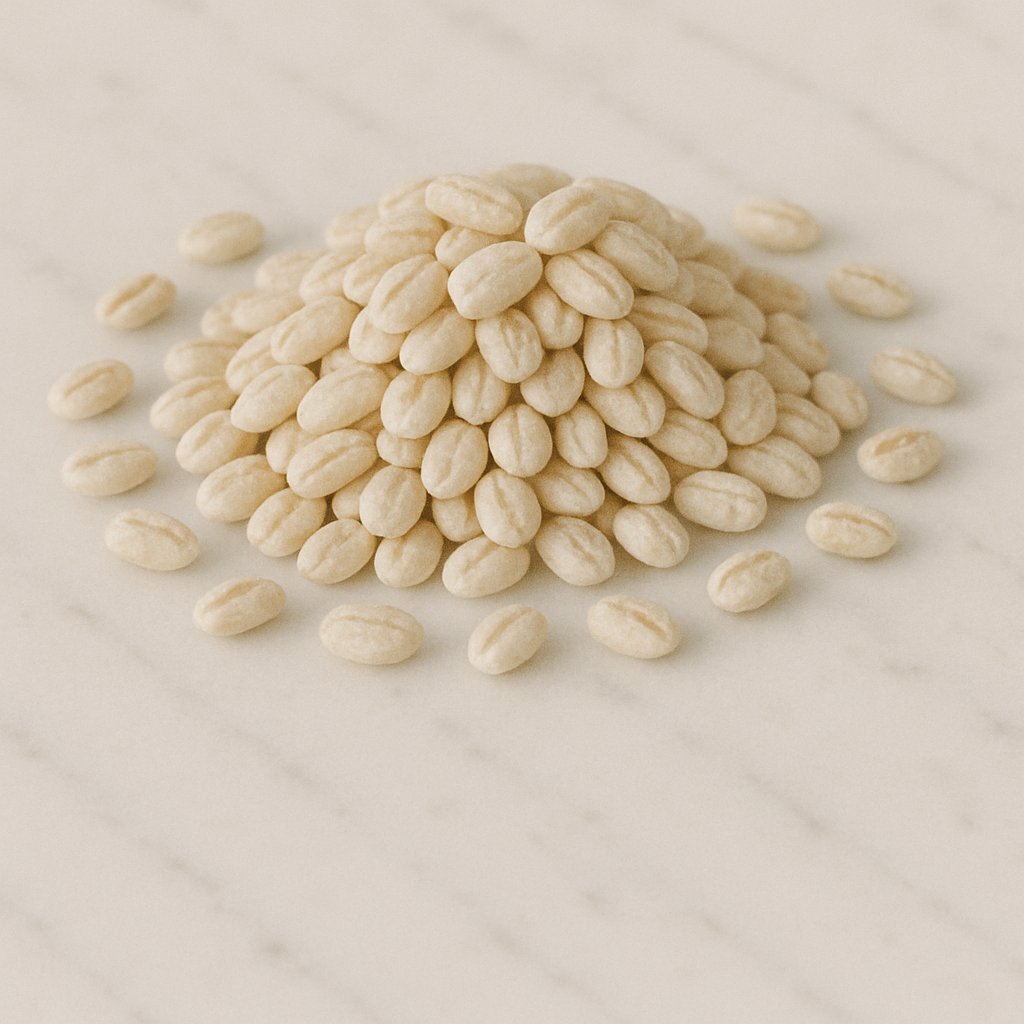
  • Pearled barley (milled pearls): These pearls are round and smooth because the outer husk and germ have largely been removed. They cook somewhat faster and are popular in soups. You can imagine them as small pearls – hence the name "pearled barley."
  • Whole-grain pearls (also called hull-retained pearls): More of the outer layers are retained in these. They appear duller and are a bit coarser. Because they keep more bran, they require longer cooking but contain more fiber and nutrients – it's like eating whole-grain bread instead of white bread.
  • Coarse and fine pearls: Sometimes pearls are milled to different degrees of fineness. Fine pearls cook faster and suit creamy dishes; coarse ones retain more bite and are great in stews.
  • Barley flakes: These are flattened kernels, similar to rolled oats. They are often used for porridge or as an ingredient in muesli. They are no longer round like pearls but are made from the same barley.
How to find barley pearls in the store?
Barley pearls are available in supermarkets, health food stores and natural food shops. They are often found in the grains or rice aisle. In some countries they are better known and easier to find; in others less so – in that case specialized stores or online shops can help. Check the packaging: "pearled barley" indicates milled, smooth pearls, "whole-grain" or "hull-retained pearls" indicate the fuller, firmer variants.

In summary: barley pearls come from barley, are grown in many countries and are available as light pearled barley, whole-grain pearls, coarse or fine variants and as barley flakes. Depending on what you want to cook—quick soup or a long-simmered stew—you choose the appropriate type. That way you always find the right pearl type for your dish.
Details & nutrition

Property Value
Unit g
Calories per 100 352
Protein per 100 9.0
Carbohydrates per 100 73.0
Sugar per 100 1.0
Fat per 100 1.2
Saturated fat per 100 0.3
Monounsaturated fat 0.2
Polyunsaturated fat 0.6
Fiber per 100 10.0
Vitamin C (mg) per 100 0
Vitamin D (IU) per 100 0
Calcium (mg) per 100 29
Iron (mg) per 100 2.5
Nutri-Score B
CO₂ footprint 0.7
Origin Europe
Gluten-free No
Lactose-free Yes
Nut-free Yes
Vegan Yes
Note Nutritional values refer to dry pearled barley, uncooked.

Technical & scientific information

Barley pearls are the milled or hulled kernels of barley (Hordeum vulgare), in which the hard outer hull and in many cases parts of the bran have been removed. Depending on the degree of processing, one distinguishes between pearled or milled pearls, where the surface is smoothed and much of the bran is removed, and rolled or hulled variants that retain more of the original layers. Pearls are a traditional cereal product in Europe and Asia and are used in soups, stews, risottos and as a side dish.

Chemical composition and nutritional values
Barley pearls consist mainly of carbohydrates, primarily starch, and provide about 330–360 kcal per 100 grams in dry state. The carbohydrate content is typically 70–75 g/100 g, with starch constituting the largest part. Protein content averages 9–12 g/100 g; the proteins are predominantly storage proteins with a relatively low proportion of lysine, a limiting essential amino acid. Fat content is low (approx. 2–3 g/100 g) and mainly consists of polyunsaturated fatty acids. Minerals such as potassium, magnesium, phosphorus and iron are present in moderate amounts, as well as B vitamins, particularly niacin and thiamine.

Fiber and soluble components
A characteristic feature of barley pearls is their fiber content, particularly beta-glucans, which are soluble polysaccharides in the cell wall of barley. Beta-glucans have functional properties for both food texture and health, because they increase intestinal viscosity and can modulate the absorption of glucose and cholesterol. Total fiber content varies with processing degree: whole-grain-like pearls contain significantly more insoluble and soluble fiber than heavily milled pearled barley.

Processing methods
The production of pearls includes several industrial steps: cleaning and sorting the barley kernels, removing the hull (threshing), possibly further pearling to remove bran layers and then milling or polishing to achieve the desired surface structure. Rolled pearls are produced by steam treatment and flattening and have a shorter cooking time. Heat treatment and drying influence physical properties such as swelling capacity and cooking time as well as microbiological stability.

Physical properties and cooking behavior
During cooking pearls absorb water and swell; the higher the fiber content, the stronger and slower the swelling. Pearled barley generally requires 20–40 minutes of cooking, rolled variants significantly less. The starch gelatinizes during cooking, softening the kernels and making some starch soluble, which binds the mash and thickens the dish. Texture ranges from al dente to creamy, depending on variety and processing.

Health aspects
Consumption of barley and barley pearls is associated with several health benefits, mainly due to their beta-glucan content. Clinical studies show that regular consumption can lower LDL cholesterol levels and have a beneficial effect on postprandial blood glucose. The high fiber content promotes gut health and regulates bowel transit. People with gluten intolerance must not consume barley because it contains gluten proteins. Additionally, consuming large amounts may cause bloating or increased flatulence in sensitive individuals, which should be considered when gradually increasing fiber intake.

Sensory and culinary use
Sensorially, pearls provide a mild nutty flavor and a pleasant grainy texture. They are suitable for savory dishes such as pearl barley soup, as an addition to salads, as a base for vegetarian sides or in grain mixes. Different degrees of processing allow texture and cooking time to be controlled, making them versatile in both modern and traditional cuisine.

In summary, barley pearls are a nutrient-rich, versatile cereal product with pronounced fiber properties, particularly beta-glucans, which convey both techno-functional and health-related effects. Their physical and sensory properties can be specifically influenced by choosing the processing level, making them valuable in many culinary applications and in nutrition science contexts.

Wiki entry for: pearl barley
Active now: 20 visitors of which 2 logged-in members in the last 5 minutes