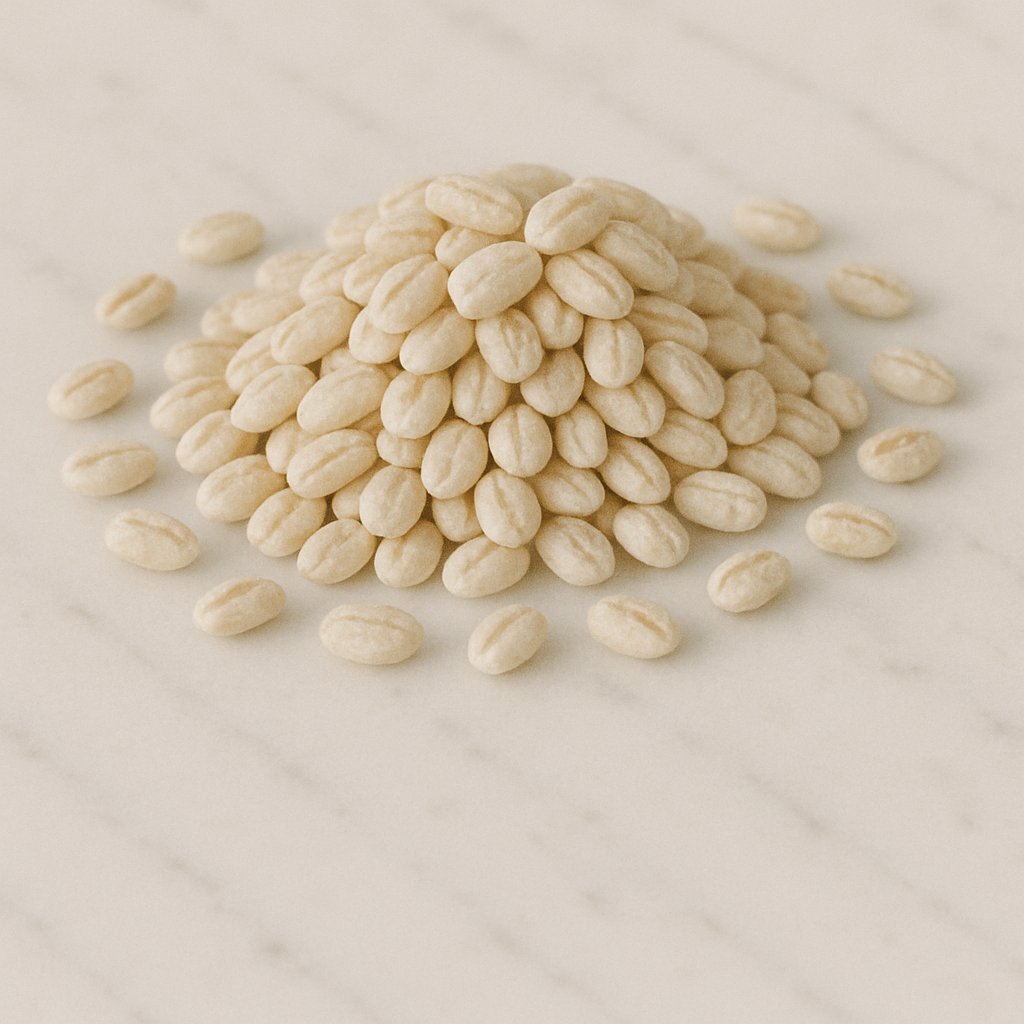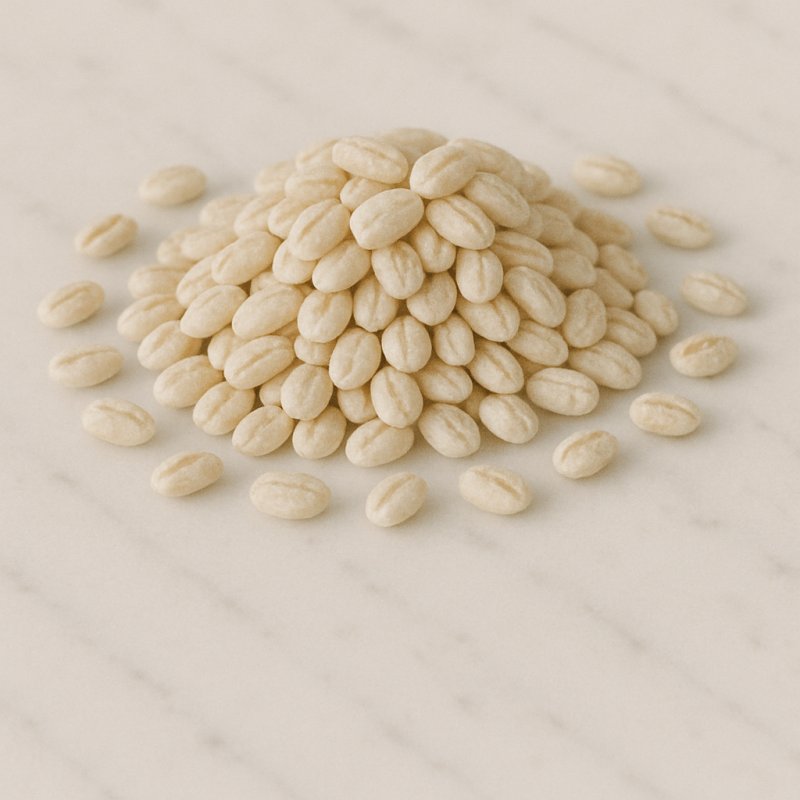
Availability and types of barley pearls
Barley pearls come from the plant barley, a cereal similar to wheat. Imagine barley as small kernels, similar to rice or oats. To make pearls, the hard outer layers are removed and the kernels are milled into round or slightly oval shapes. This produces the small, firm beads you find in soups and stews.
Origin and growing regions
Barley grows in many parts of the world. It prefers cooler climates rather than very hot tropics. Major growing regions include:
Barley grows in many parts of the world. It prefers cooler climates rather than very hot tropics. Major growing regions include:
- Europe: Countries such as Germany, Russia, France and the United Kingdom grow a lot of barley. There is usually sufficient rain and suitable soils.
- North America: Barley is also grown in Canada and the United States – often in wide fields, similar to corn or wheat.
- Asia: In parts of Asia, for example Kazakhstan or Turkey, barley cultivation is also common.
Because barley is hardy, it grows in diverse regions. Farmers often choose barley varieties suited to their climate. It's like wearing warmer clothes in winter and lighter ones in summer – the plant also needs the right "gear" for its environment.
Available types and variants
Barley pearls come in various forms. The main types are:
Barley pearls come in various forms. The main types are:
- Pearled barley (milled pearls): These pearls are round and smooth because the outer husk and germ have largely been removed. They cook somewhat faster and are popular in soups. You can imagine them as small pearls – hence the name "pearled barley."
- Whole-grain pearls (also called hull-retained pearls): More of the outer layers are retained in these. They appear duller and are a bit coarser. Because they keep more bran, they require longer cooking but contain more fiber and nutrients – it's like eating whole-grain bread instead of white bread.
- Coarse and fine pearls: Sometimes pearls are milled to different degrees of fineness. Fine pearls cook faster and suit creamy dishes; coarse ones retain more bite and are great in stews.
- Barley flakes: These are flattened kernels, similar to rolled oats. They are often used for porridge or as an ingredient in muesli. They are no longer round like pearls but are made from the same barley.
How to find barley pearls in the store?
Barley pearls are available in supermarkets, health food stores and natural food shops. They are often found in the grains or rice aisle. In some countries they are better known and easier to find; in others less so – in that case specialized stores or online shops can help. Check the packaging: "pearled barley" indicates milled, smooth pearls, "whole-grain" or "hull-retained pearls" indicate the fuller, firmer variants.
Barley pearls are available in supermarkets, health food stores and natural food shops. They are often found in the grains or rice aisle. In some countries they are better known and easier to find; in others less so – in that case specialized stores or online shops can help. Check the packaging: "pearled barley" indicates milled, smooth pearls, "whole-grain" or "hull-retained pearls" indicate the fuller, firmer variants.
In summary: barley pearls come from barley, are grown in many countries and are available as light pearled barley, whole-grain pearls, coarse or fine variants and as barley flakes. Depending on what you want to cook—quick soup or a long-simmered stew—you choose the appropriate type. That way you always find the right pearl type for your dish.