Menu & categories

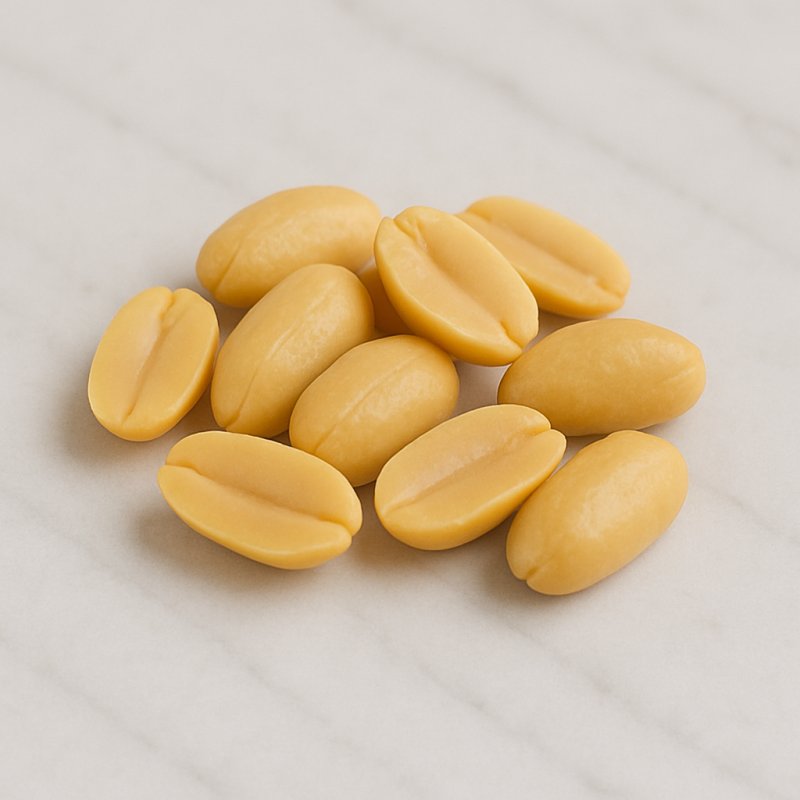
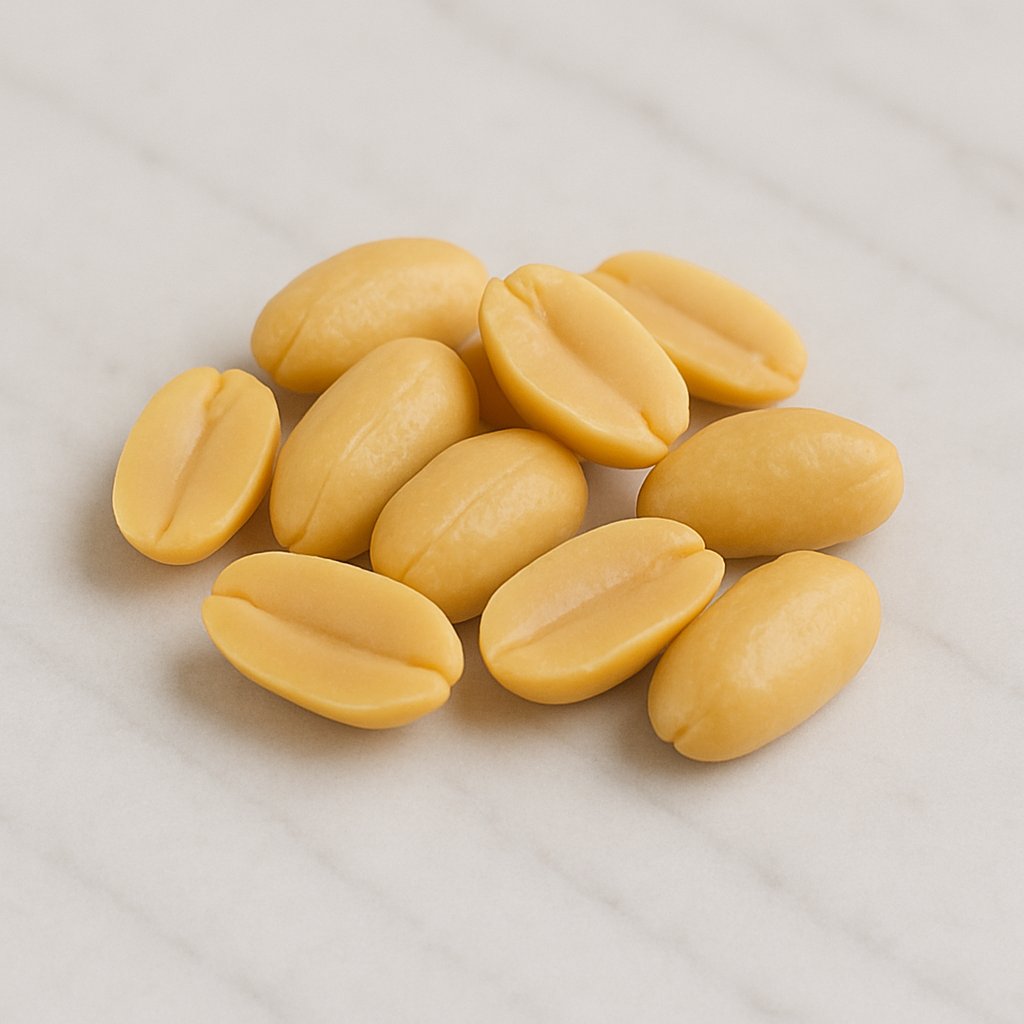
Peanuts

Protein- and energy-rich legume with a high fat content

Wiki about peanut Nutri-Score D Vegan Yes Gluten-free Yes Lactose-free Yes Nut-free No
NUTRITION / 100 g
567 kcal 25.8 g Protein 16.1 g Kohlenhydrate 49.2 g Fett

Introduction

Bowl with whole and shelled peanuts
I have a special relationship with peanuts that somehow swings between childhood memories and culinary curiosity. Even as a teenager, in summer I would crack open bags with friends whose salty aroma instantly put us in a jubilant mood. A colleague once secretly brought a tin of roasted peanuts to the office — within an hour the tin was empty and we debated passionately whether roasted-salty or caramelized was the better choice.

What fascinates me about peanuts is their versatility: they are snackable, worthy of being eaten as a snack and a serious ingredient in both hearty and delicate dishes. In my kitchen they end up roasted as a topping on salads, ground as a base for sauces and processed into a creamy paste as a faithful companion to Asian curries. Peanut butter has something comforting for me; I still remember a rainy weekend when a simple spoonful of it and a piece of bread brought immediate relief.

It's worth keeping a few interesting facts in mind:

  • Origin: Peanuts originally come from South America and are botanically not nuts but legumes.
  • Nutritional value: They are rich in plant protein, healthy fats and important minerals such as magnesium and copper.
  • Processing: Whether raw, roasted, salted or as a paste – each form significantly changes texture and flavor.
I've learned that quality makes the difference. Once I bought cheap, prepackaged peanut butter and was disappointed by the artificial sweetness. Since then I pay attention to ingredients: pure peanuts and at most a pinch of salt are enough. When I roast them I like to leave them on the baking sheet a few minutes longer until the aroma becomes nutty and warm — that's my little trick to intensify the flavors.

Peanuts are not only tasty, they also tell stories of climate, culture and agriculture. When I'm at markets I like to have varieties shown to me and listen to the producers. Those conversations always inspire me to new recipes and remind me that behind every crunchy shell there is a longer journey.

I prefer to combine peanuts with contrasting flavors: a bit of acidity, a little heat and a fresh herb note. Whether as a quick snack or the centerpiece of a dish — peanuts are for me a reliable, surprising and always enjoyable ingredient.

Availability & types

Availability and types of peanuts

Peanuts are small, nutritious legumes grown in many parts of the world. Although often referred to as nuts, they actually grow underground inside a pod. That makes them special: after flowering the plant lowers its fruit into the soil, and the peanuts mature there. It's as if a plant buried its treasures so they could ripen.

Origin and growing regions
Peanuts originally come from South America, especially regions such as Brazil and Paraguay. Over the centuries they were brought to other parts of the world and are now grown wherever it is warm enough. Major producing countries include:

  • China – one of the largest producing countries worldwide.
  • India – also a very large producer.
  • USA – particularly in the South, for example in Georgia and Texas.
  • African countries – like Nigeria and Sudan, where peanuts are often important staple foods.
  • Latin America – in addition to their origin, peanuts still grow in parts of South America today.
Available varieties and types
Peanuts come in many varieties that differ in size, flavor and appearance. You can find them raw, roasted, salted, as peanut butter or processed in sweets and dishes. Important varieties include:

  • Runner peanut – This variety has uniformly sized nuts and is often used for peanut butter. You can explain it with a visual comparison: imagine all the peanuts in a box being roughly the same size, like balls in a toy set.
  • Spanish peanut – The kernels are smaller and often have a reddish skin. They are well suited to roasting and in sweets because their flavor is strong.
  • Virginia peanut – These often have the largest kernels and are good for roasting as a snack, for example as roasted peanuts to nibble on.
  • Valencia peanut – They usually grow with several kernels in one pod and are very sweet. They are often used to make peanut butter.
Processed variants
Besides whole peanuts there are many forms of processing:

  • Raw – fresh from the pod, not yet roasted.
  • Roasted – heated, becoming crispy and developing flavor, similar to popcorn when heated.
  • Salted or seasoned – commonly sold as snacks, with salt or special spices.
  • Peanut butter – ground peanuts turned into a spreadable paste. It is reminiscent of spreads and is especially popular with children.
  • Ground or chopped peanuts – used in recipes, as toppings or in sweets.
Availability in trade
Peanuts are available almost everywhere: in supermarkets, at markets or in delicatessens. Fresh peanuts in the shell are easier to find seasonally, while roasted peanuts and peanut butter are available year-round. In some countries certain varieties are more common – in the USA you often see Virginia and Runner types, while in Asia other types are more common.

Overall, peanuts are versatile, easy to store and available in many forms, so there is something for almost every taste and use. Whether as a snack, a spread or an ingredient in dishes – peanuts are popular worldwide and easy to obtain in many varieties.
Details & nutrition

Property Value
Unit g
Calories per 100 567
Protein per 100 25.8
Carbohydrates per 100 16.1
Sugar per 100 4.7
Fat per 100 49.2
Saturated fat per 100 6.3
Monounsaturated fat 24.4
Polyunsaturated fat 15.6
Fiber per 100 8.5
Vitamin C (mg) per 100 0
Vitamin D (IU) per 100 0
Calcium (mg) per 100 92
Iron (mg) per 100 4.6
Nutri-Score D
CO₂ footprint 2.5
Origin Typical cultivation countries are China, India, the USA, Argentina and several African countries.
Gluten-free Yes
Lactose-free Yes
Nut-free No
Vegan Yes
Note Information refers to raw, unsalted, shelled peanuts. Peanut allergies are common and can cause severe reactions; traces may be present in many processed foods.

Technical & scientific information

Peanuts (Arachis hypogaea) are legumes from the Fabaceae family, botanically distinct from tree- or shell-forming nuts, although they are often treated culinarily as nuts. The plant is an annual herb with pods that mature underground; after pollination the fruiting stalks grow into the soil, where the seeds ripen in the shell. Numerous cultivars are grown with differing properties regarding seed shape, oil content and disease resistance.

Chemical composition and nutritional values
Peanuts consist mainly of fats and proteins, complemented by carbohydrates, fiber, minerals and vitamins. Typical nutritional values per 100 g of roasted peanuts are about 560–590 kcal, 45–50 g fat, 25–30 g protein and 10–15 g carbohydrates. The fat fraction consists mainly of unsaturated fatty acids: roughly 16–30% monounsaturated fatty acids (oleic acid, C18:1) and 30–50% polyunsaturated fatty acids (linoleic acid, C18:2). Saturated fatty acids (e.g. palmitic acid) make up around 10–20%. Peanuts are also rich in micronutrients such as magnesium, phosphorus, potassium, iron, zinc and B vitamins (particularly niacin). The content of antioxidants, especially polyphenols and tocopherols (vitamin E), contributes to oxidative protection of the lipid-rich seeds.

Proteins and amino acid profile
Peanut protein is composed mainly of storage proteins such as arachin and conarachin. The amino acid profile is favorable for a plant source, but contains relatively little methionine, so peanuts achieve better biological value when combined with other protein sources. Processing steps such as roasting can denature proteins, thereby affecting functional properties (solubility, emulsifying behavior).

Processing methods
Peanuts are offered fresh, dried or roasted; they serve as a basis for oil extraction, peanut butter, pastes and flours. Oil extraction is performed mechanically (pressing) or using solvents (e.g. hexane), followed by refining to remove free fatty acids and odor compounds. Roasting changes flavor and color through Maillard reactions and caramelization as well as thermally induced lipid oxidation. Gentle methods (inert gas, temperature control) minimize loss of polyunsaturated fatty acids and the formation of undesired by-products.

Health aspects
Epidemiological studies show that moderate peanut consumption can be associated with positive effects on cardiometabolic risk factors, particularly through the intake of unsaturated fatty acids, plant proteins, fiber and micronutrients. Regular, moderate consumption can lower LDL cholesterol and promote satiety. On the other hand, peanuts carry allergenic potential: major allergens such as Ara h 1–Ara h 8 can trigger severe IgE-mediated reactions; even small traces can be dangerous for sensitized individuals. Another safety issue is contamination with aflatoxins, toxic and potentially carcinogenic secondary metabolites of molds (Aspergillus spp.) that can arise with improper storage.

Storage, shelf life and safety
Because of their high fat content, peanuts are susceptible to oxidation and rancidity. Keeping them cool, dry and protected from light extends shelf life and sensory quality. Good practices in food production include control of water activity, drying, and storage conditions to prevent microbial contamination and mycotoxin formation. In industrial handling, allergen control measures, avoidance of cross-contamination and traceability are important requirements.

Applications
Peanuts are used in direct nutrition (snacks, baked goods), in the food industry (oils, emulsifiers, protein preparations) and in non-edible uses (biofuels, cosmetics). Processing into flour offers possibilities for enriching foods with protein and fiber, while the oil is valued both nutritionally and technologically.

In summary, peanuts are a nutrient-dense, versatile crop with a favorable fatty acid and protein profile, but also with specific risks such as allergies and mycotoxin contamination, which can be controlled by appropriate production, processing and storage measures.

Wiki entry for: peanut
Active now: 6 visitors of which 2 logged-in members in the last 5 minutes