Menu & categories

Peach

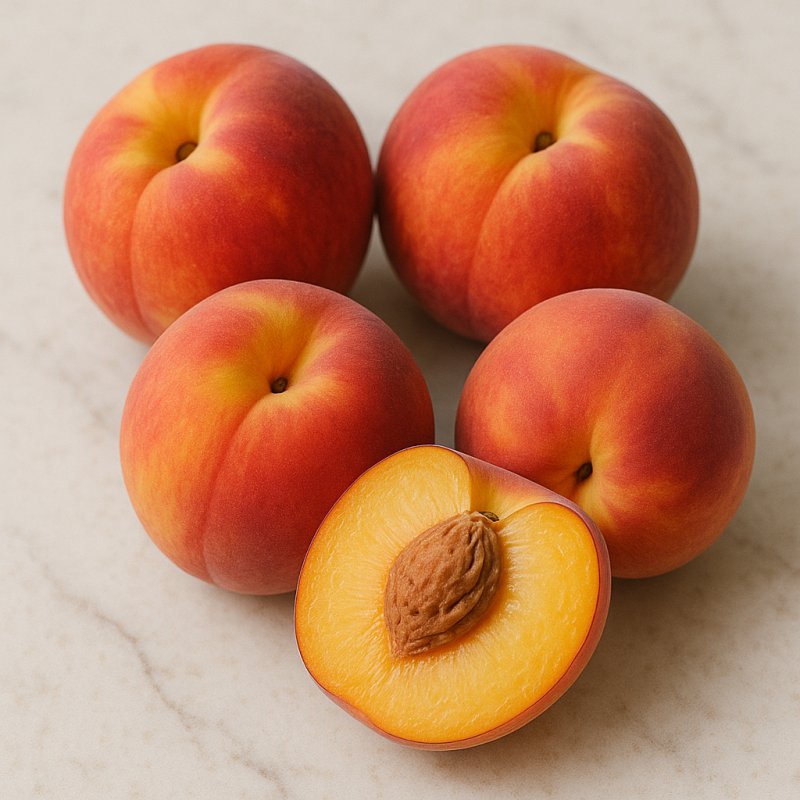
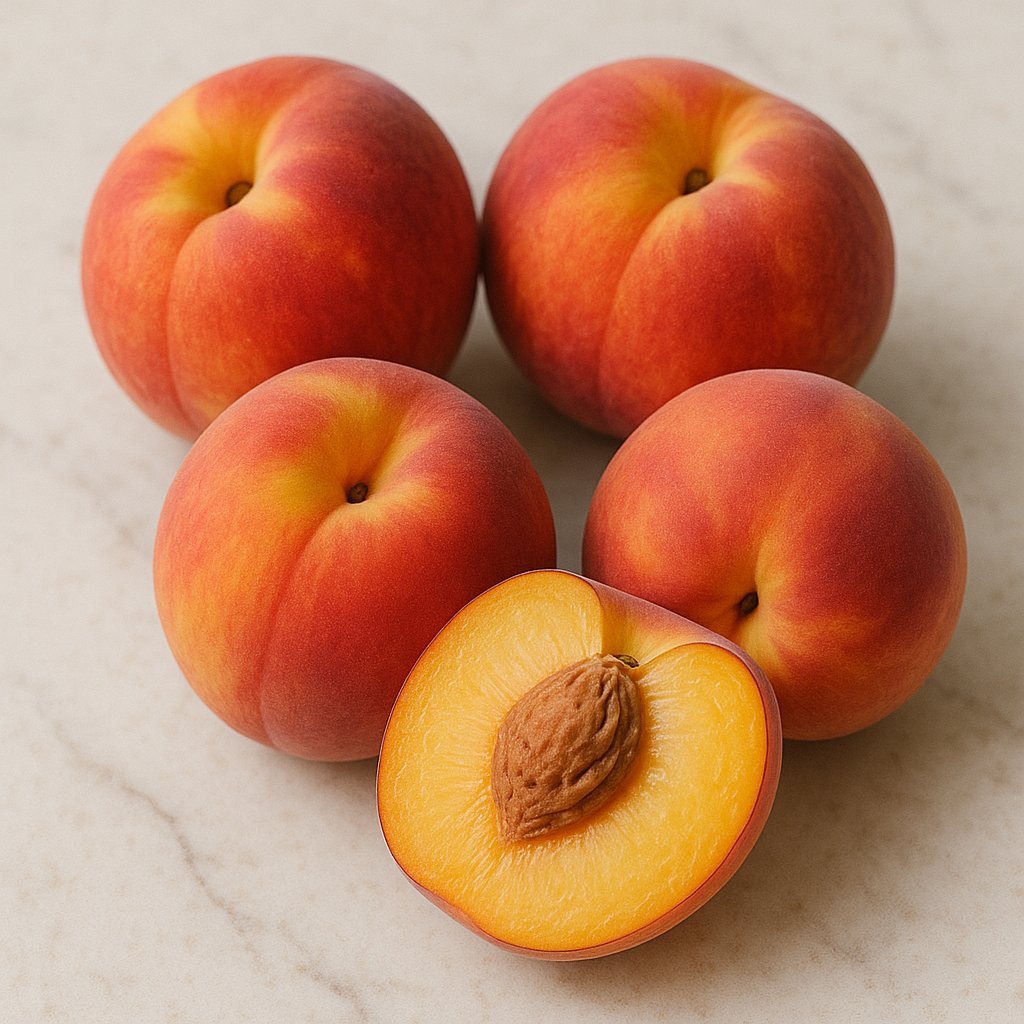
Juicy-sweet stone fruit, ideal as a snack or dessert.

Wiki about peach Nutri-Score A Vegan Yes Gluten-free Yes Lactose-free Yes Nut-free Yes
NUTRITION / 100 g
39 kcal 0.9 g Protein 9.5 g Kohlenhydrate 0.3 g Fett

Introduction

Fresh peaches

I have loved peaches since the first time I stood at a market in late summer and the scent of sun and sugar rose to my face like a promise. Peaches are for me both memory and discovery, because they can so quickly go from the perfect bite to a mushy disappointment. I still remember an afternoon when a friend laughed and told me there was no greater sin than baking an unripe peach. Since then I check every fruit with the same conscientious attention.

The peach, botanically Prunus persica, has a velvety skin and juicy flesh that can range between honey-sweet and pleasantly tart. A colleague of mine swears by yellow-fleshed varieties for warm desserts, while I often prefer the white peach for its delicate, floral note. These small differences make shopping exciting and occasionally a little culinary lottery.

I use peaches in many ways. They are excellent in cakes, surprisingly good in salads and almost iconic on the grill. In combination with salty cheese or smoky meat a compelling contrast is created that always gives guests something to talk about. Sometimes I cook peaches into a simple compote sauce that provides a wonderful stage for vanilla ice cream or yogurt.

Some practical tips I've collected over the years:

  • Check ripeness: Do a light pressure test and smell near the stem. An aromatic scent is the best sign.
  • Storage: Let unripe peaches ripen at room temperature and store ripe fruit in the refrigerator.
  • Processing: For grilling halve and remove the pit; for baking choose fruits that are somewhat firmer.
  • Preserving: Simple compotes or jarred preserves extend the enjoyment beyond the season.
Peaches for me are a summer compliment to be enjoyed deliberately, because it passes so quickly. When I'm at the market today I choose slowly and with a smile, because a good peach sweetens the day in a special way.

Availability & types


Availability and types

The peach originates from China. Peaches were cultivated there more than 3000 years ago. You can imagine it like a very old favorite fruit that slowly traveled the world – via trade routes like the Silk Road it came to Europe and from there to the New World. Today peaches grow in many warm regions of the globe.

Growing regions

  • China: The largest growing region in the world. Almost everyone knows peaches there because they grow so commonly.
  • Europe: Especially Spain, Italy and Greece grow many peaches. They supply large parts of Europe in summer.
  • USA: States like California and South Carolina are important producers. There are huge peach orchards there.
  • South America and South Africa: Countries like Chile or South Africa supply peaches to the Northern Hemisphere when it is winter there – so peaches are available almost year-round.
  • Australia: Peaches are also grown in warmer regions of Australia.
When are peaches available?

Fresh peaches are easiest to find in summer. But because many countries harvest at different times, imports often mean peaches are available in supermarkets almost year-round. Processed peaches – like canned, frozen, dried or as jam – also help bring peach flavor in winter.

Main types and varieties

There are many different kinds of peaches. Here are the main ones, explained simply:

  • Yellow-fleshed peaches: The flesh is yellow and usually sweet with a slight acidic note. They are the classic peaches.
  • White-fleshed peaches: These are often a bit sweeter and less acidic than yellow ones. The flesh is white or pale.
  • Freestone: In these peaches the stone can be removed easily, like in an apricot, which makes eating and cooking easier.
  • Clingstone: The stone adheres to the flesh. These varieties are often very juicy and are frequently used for canning.
  • Donut or flat peaches: These look flat and round, almost like a donut. They are often very sweet and have a pleasant, soft flesh.
  • Nectarines: Technically nectarines are peaches without the velvety skin. They taste similar but feel smooth.
Processed forms

Peaches are not available only fresh. You find them as canned peaches, dried slices, juice or jam. Canned peaches are practical because they store for a long time. Frozen peaches are good when you want to use them later for baking or smoothies.

In summary: peaches come from China and today grow in many warm regions. There are different varieties such as yellow- or white-fleshed, freestone or clingstone peaches, flat donut peaches and smooth nectarines. Thanks to different harvest times worldwide and processed products, you can enjoy peaches almost all year round.
Details & nutrition

Property Value
Unit g
Average weight per piece 150
Calories per 100 39
Protein per 100 0.9
Carbohydrates per 100 9.5
Sugar per 100 8.4
Fat per 100 0.3
Saturated fat per 100 0.02
Monounsaturated fat 0.07
Polyunsaturated fat 0.08
Fiber per 100 1.5
Vitamin C (mg) per 100 6.6
Vitamin D (IU) per 100 0
Calcium (mg) per 100 6
Iron (mg) per 100 0.25
Nutri-Score A
CO₂ footprint 0,4 kg CO2e/kg
Origin Spain/Italy (seasonal, depending on growing region)
Gluten-free Yes
Lactose-free Yes
Nut-free Yes
Vegan Yes
Note Values refer to raw peach (edible portion) and may vary depending on variety and ripeness.

Technical & scientific information

Peach (botanically Prunus persica) is a drupe of the Rosaceae family, originally domesticated in East Asia. The fruit is characterized by soft, juicy flesh, a velvety epidermis and a hard endocarp (stone). Peaches are climacteric fruits that show a pronounced rise in ethylene production and increased respiratory activity during ripening, which allows postharvest ripening but also limits shelf life.

Morphology and cell structure: The flesh is composed mainly of parenchymatic cells, whose turgor and cell wall integrity determine texture. During ripening enzymatic changes occur, notably the activity of polygalacturonase and pectin methylesterase, which degrade pectin leading to softening. Cell wall polysaccharides such as pectin, cellulose and hemicellulose shape mechanical properties.

Chemical composition and nutritional values (approx. values per 100 g flesh):

  • Energy: approx. 39 kcal
  • Carbohydrates: 8–10 g (of which sugars 7–9 g; mainly sucrose, glucose, fructose)
  • Fiber: 1.5–2.0 g
  • Protein: 0.8–1.0 g
  • Fat: approx. 0.2–0.4 g
  • Vitamin C: typically 6–10 mg
  • Minerals: mainly potassium (~150–200 mg)
Secondary plant compounds and aroma: Peaches contain various phenolic compounds such as chlorogenic acid, flavonoids (e.g. rutin, catechins) and carotenoids that contribute to yellow/orange coloring. The characteristic aroma is produced by a complex mixture of volatile compounds, including lactones (especially gamma-decalactone), esters and terpenes (e.g. linalool). These aroma compounds are formed biochemically from fatty acids and amino acids via oxidative and enzymatic transformation pathways.

Processing and technological aspects:

  • Heat-based preservation (canning, pasteurization): extends shelf life, reduces microbial risk, but leads to losses of volatile aromas and heat-sensitive vitamins (especially vitamin C).
  • Drying: causes water removal and concentration of sugars and minerals; thermal stress and oxidation can however lead to nutrient losses.
  • Freezing: preserves many nutrients and aromas better, but can damage cell structure through ice crystal formation.
  • Enzymatic browning: is caused by polyphenol oxidase; it can be reduced by blanching, adding ascorbic acid or sulfur dioxide.
Health aspects and safety: Peaches provide water-soluble vitamins, fiber and secondary plant compounds with antioxidant properties that can support digestion and micronutrient intake. Allergic reactions are possible, particularly as cross-reaction with birch pollen (oral allergy syndrome). The kernels contain in some varieties small amounts of amygdalin, a cyanogenic glycoside; at usual consumption levels peaches are harmless, but caution is advised when consuming large amounts of bitter-tasting kernels.

Storage and postharvest handling: To delay ripening storage at low but not too low temperatures is recommended (typically about 0–4 °C depending on variety and ripeness); controlled atmosphere can extend storage life. Prolonged exposure to excessive cold can however cause chilling injury, detectable as flavor defects and uneven texture.

Overall the peach is a nutritionally valuable, sensorily complex food with specific biochemical properties that determine both culinary use and technological processing methods and storage requirements.

Wiki entry for: peach
Active now: 20 visitors of which 2 logged-in members in the last 5 minutes