Menu & categories

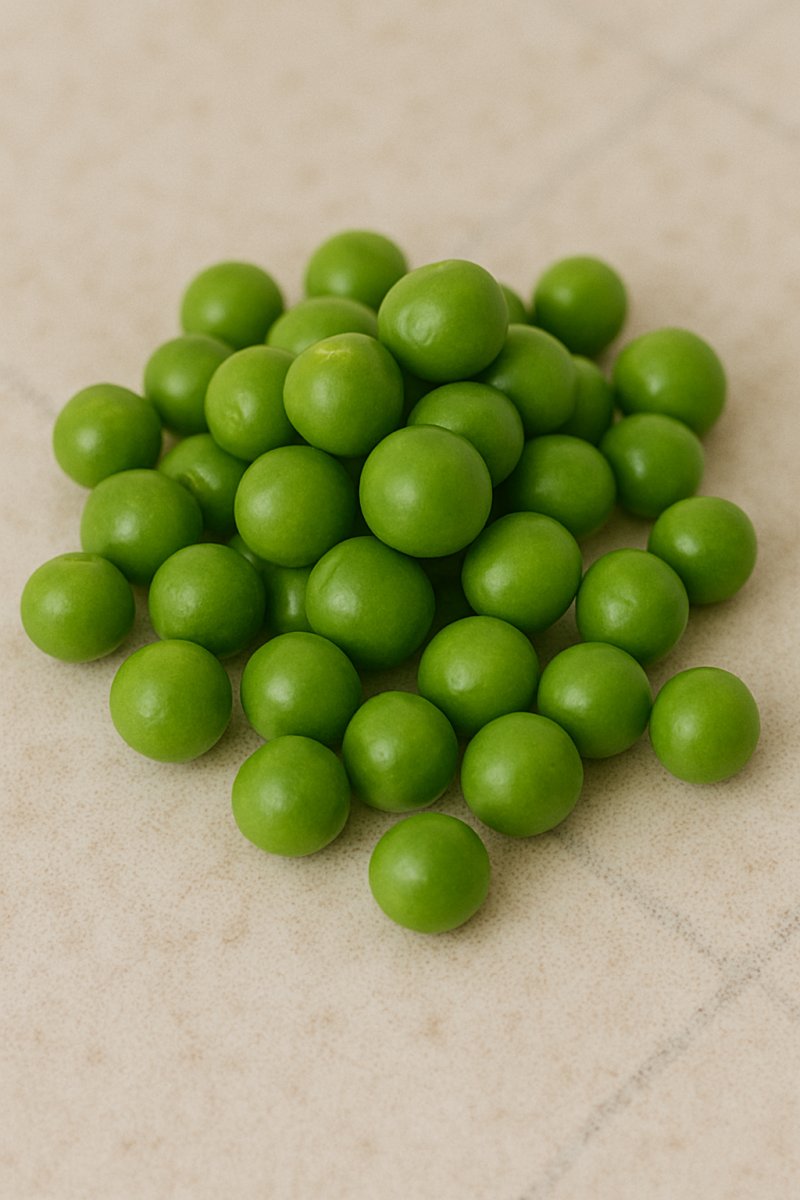
Peas

Protein-rich green legume

Wiki about pea Nutri-Score A Vegan Yes Gluten-free Yes Lactose-free Yes Nut-free Yes
NUTRITION / 100 g
81 kcal 5.4 g Protein 14.5 g Kohlenhydrate 0.4 g Fett

Introduction

Fresh green peas
When I think of peas, I immediately see the deep green of a freshly opened bundle of pods before me and hear the soft click of the round little balls tumbling into a bowl. As a 35-year-old editor who grew up among farmers’ markets, family recipes and the desire to cook seasonally and sustainably, peas are for me much more than just a side dish. They are a versatile ingredient that deliciously connects regional cuisine, modern nutrition trends and culinary creativity. Whether as a sweet-tender companion in a spring risotto, a creamy base for soups or a protein-rich component in plant-based bowls – peas are a culinary all-rounder with character and history.

In Europe peas have a long tradition. They were cultivated already in medieval monastery gardens, and in many families pod-shelling in spring is a fixed ritual: sitting together, shelling, snacking and exchanging recipes. My grandmother told me that as a child she treated the first fresh peas of the year like little candies. This memory still accompanies me today when I open the season and put the first pan on the stove with butter, mint and a pinch of sea salt. In doing so I repeatedly discover how universal peas are: regional favorite dishes, Mediterranean influences and Nordic minimalism – all harmoniously unite in this round, green ingredient.

A colleague of mine, an avid hobby gardener, swears by sugar snap peas straight from the trellis, still warm from the sun. He claims you can taste the hour of the day – more tender in the morning, more aromatic in the evening. Another colleague has relied on frozen peas for years because they reliably preserve harvest freshness. And me? I like both: fresh when the season allows, and frozen when I want to quickly bring an intense green and delicate sweetness to the plate. This creates a flexible everyday cuisine that unites enjoyment and nutritional value.

Peas are not only convincing in taste but also nutritionally interesting. They provide plant protein, fiber and essential micronutrients such as vitamin K, folate and manganese. Therefore they fit excellently into a balanced, plant-forward diet. Especially in combination

Availability & types

Availability and types of peas

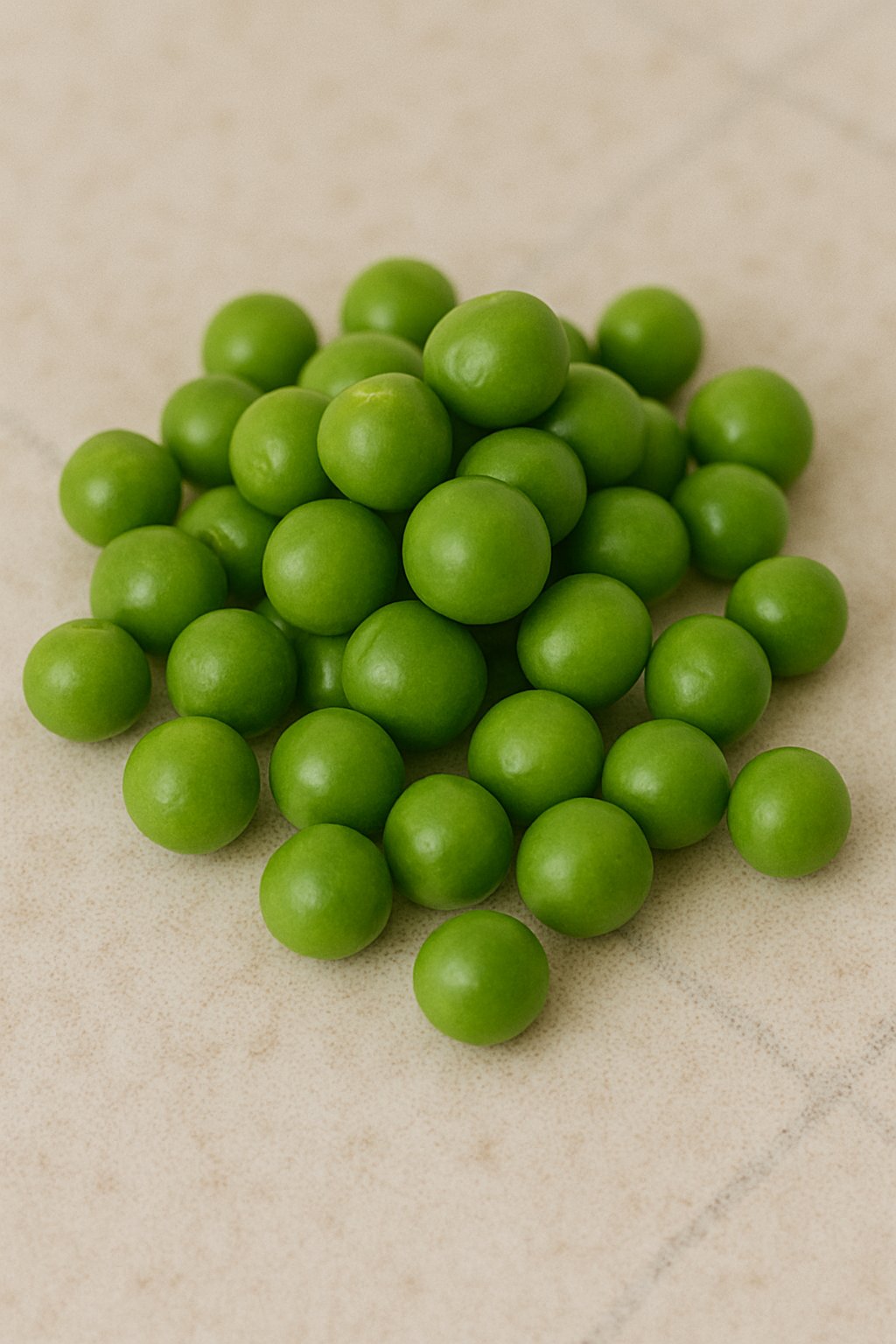
Peas are small green seeds that grow in pods. They belong to the legume family and have been an important part of the human diet for thousands of years. Depending on variety, growing region and processing there are many types of peas. If you know when they are available and what variants exist, choosing when shopping or cooking becomes easier.

Origin and cultivation
Peas originally come from the Mediterranean and Western Asia. They were cultivated already in antiquity. Today they grow in many countries with temperate climates, for example in Europe (Germany, France, Great Britain), North America, China and Russia. Peas like cool weather: they do best in spring and early summer. Therefore the main season for fresh peas in Central Europe is roughly from May to July. In warmer regions harvest sometimes begins earlier, in cooler areas a little later.

Availability throughout the year
Fresh peas are available only briefly, but through various processing methods they can be used year-round:

  • Fresh peas (in the pod): main season in late spring and summer. They taste sweet and tender but need to be shelled.
  • Frozen peas: available year-round. They are blanched and frozen immediately after harvest, preserving color, flavor and nutrients well.
  • Canned or jarred peas: also available year-round. They are pre-cooked and convenient, but often softer in bite.
  • Dried peas: dried peas keep for many months. They must be soaked before cooking (exception: split peas).
Details & nutrition

Property Value
Unit g
Average weight per piece 0.3
Calories per 100 81
Protein per 100 5.4
Carbohydrates per 100 14.5
Sugar per 100 5.7
Fat per 100 0.4
Saturated fat per 100 0.1
Monounsaturated fat 0.05
Polyunsaturated fat 0.2
Fiber per 100 5.1
Vitamin C (mg) per 100 40
Vitamin D (IU) per 100 0
Calcium (mg) per 100 25
Iron (mg) per 100 1.5
Nutri-Score A
CO₂ footprint 0.4 kg CO2e/kg
Origin Europe, seasonally also local
Gluten-free Yes
Lactose-free Yes
Nut-free Yes
Vegan Yes
Note May cause bloating in sensitive individuals; frozen peas preserve nutrients.

Technical & scientific information

Peas (Pisum sativum) are annual herbaceous legumes of the family Fabaceae and rank among the world’s most important protein crops. As a cultivated plant their origins reach back to the Fertile Crescent and Central Asia; today peas are grown globally in temperate climate zones. The plant forms pinnate leaves with tendrils, white to violet flowers and elongated pods that contain several spherical seeds. Varieties differ by use type (garden peas, shelling peas, sugar/snap peas), seed density and starch structure, which affect both sensory properties and technological processing.

Botany and morphology: Peas are self-pollinating reproducers with determinate or indeterminate growth. Roots form symbiotic nodules with rhizobia (Rhizobium leguminosarum), which fix molecular nitrogen and thus increase soil fertility. The shoot reaches 30–150 cm in height; modern semi-leafless or afila types have reduced foliage and improved lodging resistance. Pods mature asymmetrically, which is why harvest windows and control parameters (seed moisture, pod firmness) are agronomically significant.

Constituents and nutritional profile: Peas provide high-quality plant protein (typically 20–26% in dry seeds; 5–7% in fresh peas), rich in arginine, lysine and branched-chain amino acids. The limiting factor is often methionine. The carbohydrate fraction includes resistant starch, amylose/amylopectin, soluble and insoluble fiber (pectin, cellulose, hemicellulose), which benefit the gut microbiota and glycemic control. Micronutrients include folate, vitamin K1, thiamine, manganese, iron and zinc; chlorophyll and carotenoids (lutein, zeaxanthin) contribute to antioxidant capacity. Fat content is low (1–2%), with linoleic acid and ?-linolenic acid as main fractions.

Wiki entry for: pea
Active now: 15 visitors of which 2 logged-in members in the last 5 minutes