Menu & categories

Passion fruit

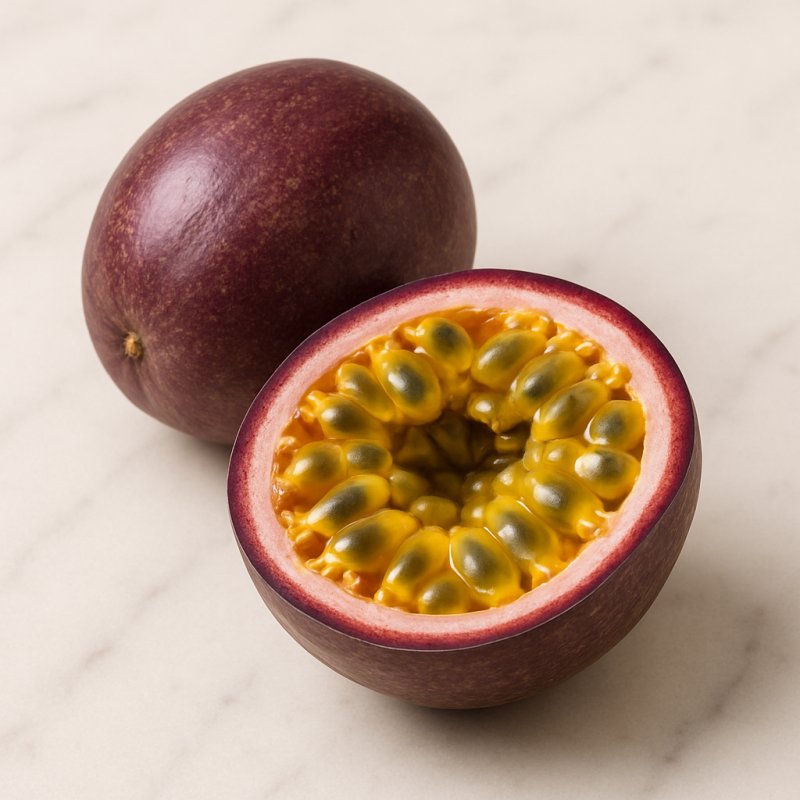
Aromatic tropical fruit with a fruity-tart flavor and edible seeds.

Wiki about passion fruit Nutri-Score A Vegan Yes Gluten-free Yes Lactose-free Yes Nut-free Yes
NUTRITION / 100 g
97 kcal 2.2 g Protein 23.4 g Kohlenhydrate 0.7 g Fett

Introduction

Passion fruit
I still clearly remember the first bite into a passion fruit: the cracked, unassuming exterior that I had bought at a small stall in an old town, and then that explosive, sweet-and-sour juice that almost tickled my tongue. Since then passion fruit has been for me one of those ingredients that immediately tell stories — of tropical markets, summery desserts and surprising pairings in savory dishes. Its aroma is both floral and exotic, with a tangy freshness that wakes up any recipe.

What repeatedly fascinates me about passion fruit is its versatility. I've spooned it over yogurt for breakfast, mixed it into cocktails and used it as a glaze for seared fish. A colleague of mine once swore by hiding it in a vinaigrette; his guests were delighted and didn't want to give up the recipe. Small fruit seeds provide a pleasant texture when eating and remind us that good cooking also plays with consistencies.

  • Taste: intense, sweet-tart, with floral notes
  • Use: desserts, drinks, marinades, salad dressings, sauces
  • Preparation tip: cut the fruit open and use the pulp directly with a spoon or pass it through a sieve if you want a finer consistency
When shopping I look for a slightly yielding shell as a sign of ripeness; very hard fruits are often less aromatic. In the refrigerator passion fruit keeps for a few days; pickled or frozen it still provides a lot of flavor later. Healthwise it scores with vitamins and fiber, making it a nice addition to many dishes that is not only tasty but also sensible.

For those who are still cautious with passion fruit: start with small amounts, pair it with familiar flavors like vanilla, honey or citrus and let the freshness surprise you. I promise it's worth it — and once you have the scent of this fruit in your kitchen, it will stay in your memory for a long time.

Availability & types

Availability and types

The passion fruit is a fruit that originates from warm countries and today grows in many parts of the world. It originally comes from South America, especially areas like Brazil and the northern part of Argentina. From there people brought the plant to other warm or temperate regions, so today it can also be found in Africa, Asia, Australia, New Zealand and parts of southern Europe.

Where does passion fruit grow? Passion fruit grows on climbing plants called tendrils. These tendrils like sun, warmth and regular water, but not too much frost. Therefore large cultivation areas are found in countries such as:

  • Brazil, Colombia, Peru, Ecuador – many varieties for juice and fresh consumption.
  • Kenya, South Africa – important suppliers for export.
  • Australia, New Zealand, Hawaii – there are fruits for the local market as well as for export.
  • India, Sri Lanka – used regionally and offered in markets.
Which types exist? There are several species and cultivars of passion fruit. The most important and most commonly purchased are:

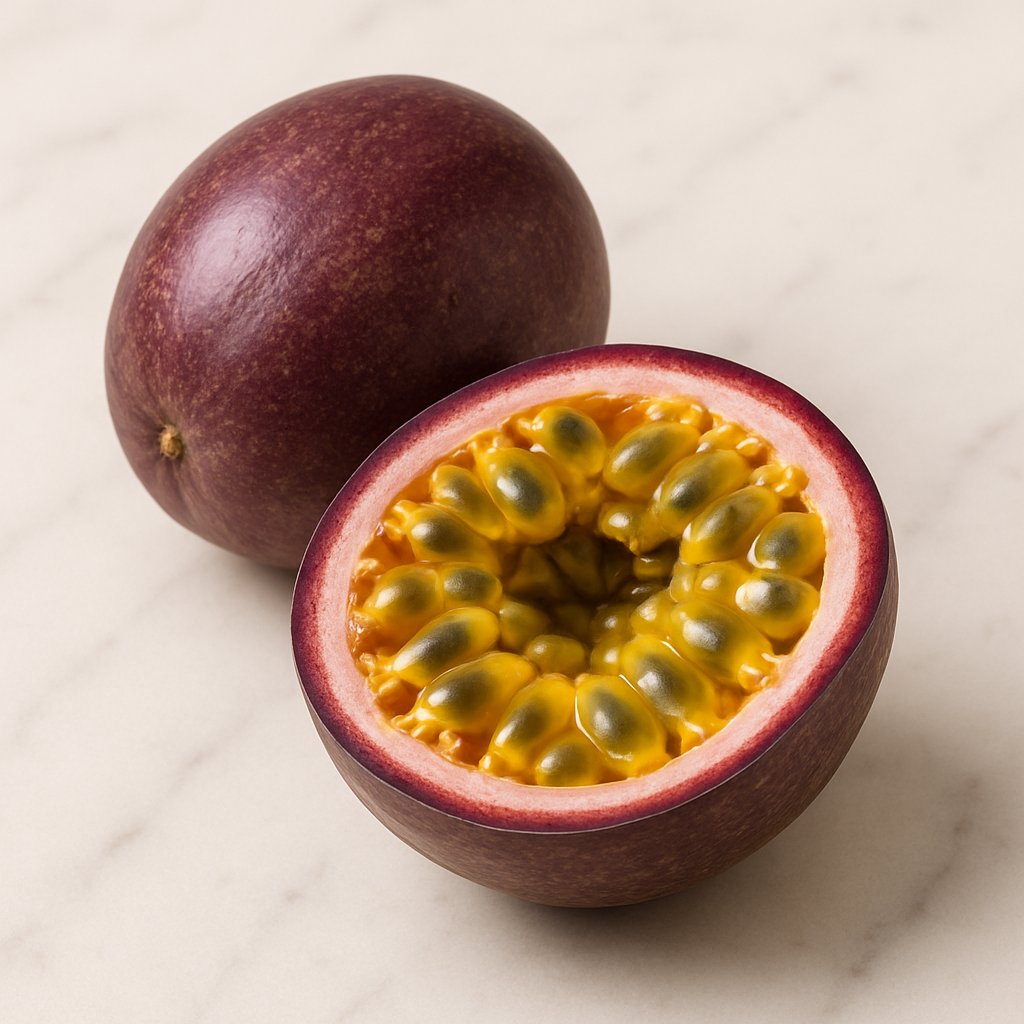
  • Purple Passionfruit (dark purple): Smaller fruits with a dark shell. Inside the pulp is aromatic and somewhat tart. Many like the intense, slightly bitter taste.
  • Yellow Passionfruit (yellow, also called maracujá): Larger than the purple fruits and very popular for juices because they are juicy and strong in flavor.
  • Sweet Granadilla (orange to yellow, round): This variety is sweeter and often a bit firmer. It is sometimes called “granadilla” and works well as a snack.
  • Giant or Banana Passionfruit: There are very large varieties and also elongated, banana-like fruits. These are rarer in supermarkets, more likely found in specialty markets.
How to find passion fruit in stores? You can find passion fruits fresh in supermarkets, at markets and sometimes at farm shops. Because many countries export the fruits, they are often available year-round, especially as juice or fruit puree. Fresh they are seasonal: in the growing regions there are main harvest times. However, due to global trade you can usually buy some throughout the year.

What other forms are there? Besides fresh fruits, passion fruit is offered as:

  • Puree or fruit pulp (in jars or pouches),
  • Juice and concentrates,
  • Frozen pulps (good for smoothies or cakes),
  • Jams and desserts offered.
Tip for recognition: A ripe purple passion fruit often feels slightly wrinkled; that's good. A ripe yellow fruit is bright yellow and feels a bit soft when pressed. The pulp inside is jelly-like with many edible seeds — somewhat like a very juicy jelly with small seeds.

In summary: passion fruit comes from South America, today grows in many warm countries, and there are different types like the purple, the yellow and the sweet granadilla. You can buy it fresh or use juice and puree year-round.
Details & nutrition

Property Value
Unit g
Average weight per piece 50
Calories per 100 97
Protein per 100 2.2
Carbohydrates per 100 23.4
Sugar per 100 11.2
Fat per 100 0.7
Saturated fat per 100 0.1
Monounsaturated fat 0.1
Polyunsaturated fat 0.4
Fiber per 100 10.4
Vitamin C (mg) per 100 30
Vitamin D (IU) per 100 0
Calcium (mg) per 100 12
Iron (mg) per 100 1.6
Nutri-Score A
CO₂ footprint 1.6
Origin South America (e.g. Brazil/Peru)
Gluten-free Yes
Lactose-free Yes
Nut-free Yes
Vegan Yes
Note The black seeds are edible and provide a crunchy texture; the pulp is often scooped out and used in desserts, drinks, or sauces.

Technical & scientific information

Passion fruit (fruit of the genus Passiflora, especially Passiflora edulis) is a tropical to subtropical fruit valued for its intensely aromatic pulp and its wide usability in foods, beverages and cosmetics. Botanically it is a berry with a hard outer shell and a juicy, mucilaginous pulp in which numerous small edible seeds are embedded. Besides its culinary importance, passion fruit has an interesting chemical and nutritional profile.

Chemical composition and constituents
The pulp consists mainly of water and dissolved solids. Key components include:

  • Carbohydrates: predominantly simple sugars such as glucose and fructose and small amounts of sucrose that determine the characteristic sweet-acid balance.
  • Organic acids: mainly citric and malic acid, which together with volatile compounds produce the acidic flavor profile.
  • Fiber: both soluble and insoluble fractions, with the seeds providing a large portion of the crude fiber.
  • Fats: concentrated in the seeds, rich in unsaturated fatty acids such as linoleic and oleic acid; seed oil is therefore suitable for cold pressing and cosmetic applications.
  • Vitamins and minerals: notably vitamin C and carotenoids (provitamin A) as well as potassium, magnesium and phosphorus.
  • Secondary plant compounds: flavonoids, polyphenols and aromatic esters as well as terpenes, which provide antioxidant properties and the characteristic aroma.
Nutritional values (typical magnitude per 100 g pulp)
Typical values are in the range of about 80–100 kcal energy, 15–25 g carbohydrates, around 8–12 g fiber, 1–3 g protein and under 2 g fat. Vitamin C content usually ranges between 20 and 40 mg per 100 g, and potassium concentration is often in the range of a few hundred milligrams per 100 g.

Processing methods
Passion fruit is eaten fresh, processed into juices and concentrates, and used for jams, desserts and flavorings. Commonly applied processes include:

  • Juicing and pasteurization: to extend shelf life; aroma losses can be reduced by controlled heat treatment.
  • Cold pressing of seed oil: to obtain an oil with a high proportion of polyunsaturated fatty acids.
  • Drying and freeze-drying processes: to make powders that preserve aroma and enable use in blends.
  • Enzymatic and mechanical processing: to fractionate pectin and fibers from peel and pulp.
Health aspects and safety
Passion fruit provides antioxidants and fiber that can support digestion and reduce oxidative stress. Oil obtained from the seeds supplies essential fatty acids beneficial for lipid metabolism health. Secondary plant metabolites such as flavonoids show in vitro antioxidant and inflammation-modulating effects. Interactions with sedative medications have been described for concentrated extracts or pharmaceutical preparations of Passiflora species, so caution is warranted in therapeutic use. Allergic reactions occur occasionally, especially in people with pre-existing food allergies. Consumers are also advised to ensure hygienic processing, as raw fruit can be subject to microbial contamination.

Overall, passion fruit combines a characteristic aromatic profile with a nutritionally valuable mix. Its processing requires technical know-how to preserve aroma and nutrients, while medical and nutritional research investigates the health potentials and limits of further use.

Wiki entry for: passion fruit
Active now: 18 visitors of which 2 logged-in members in the last 5 minutes