Menu & categories

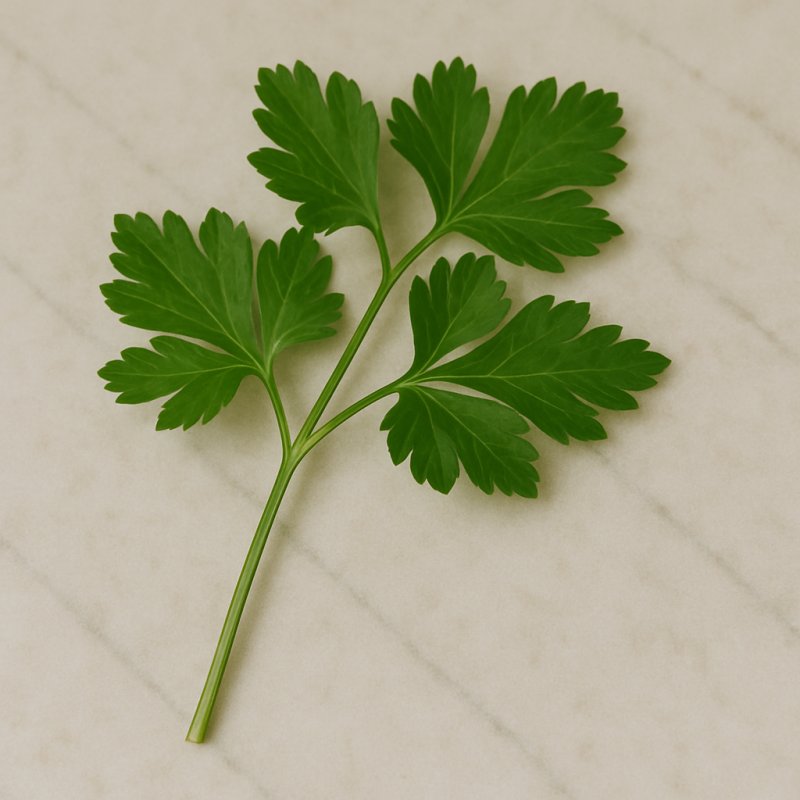
Parsley

Fresh herb with an intense aroma

Wiki about parsley Nutri-Score A Vegan Yes Gluten-free Yes Lactose-free Yes Nut-free Yes
NUTRITION / 100 g
36 kcal 3.0 g Protein 6.3 g Kohlenhydrate 0.8 g Fett

Introduction

Fresh parsley
Parsley is one of the most versatile herbs in European kitchens and beyond. As a 35-year-old editor who has written about food and lifestyle for years, I encounter this green classic in almost every context: from a quick after-work meal to a festive menu. Parsley is more than just decoration. It gives dishes freshness, depth and a harmonious herb note that rounds off both traditional recipes and modern bowls, dips and salads. In my editorial office it is regarded as the secret queen of herbs because it is uncomplicated, affordable and yet elegant.

When I think back to the first cooking moments of my adult life, I remember a simple potato soup that only came alive thanks to a bunch of finely chopped parsley. A colleague of mine, an enthusiastic home cook, swears by adding the parsley only just before serving. His reasoning is as simple as it is convincing: heat takes away parsley's aroma, freshness makes it shine. Since then I do the same. This small change turns a solid dish into an aromatically balanced creation — and that is the magic of this herb.

In Europe parsley is deeply rooted: it crowns German potato salads, complements French persillade, lends lightness to Italian sauces and is indispensable in Middle Eastern cuisine — think of tabbouleh. Whether at the weekly market, in the supermarket or in your own windowsill herb box: a bunch of fresh parsley acts like a green promise of taste, health and creative cooking.

  • Variety: The two main varieties are flat-leaf parsley and curly parsley. The former is more intense and aromatic, the latter more decorative and milder. For salads, dressings and pestos I usually use the flat variety, for garnishes or buttered bread the curly one.
  • Taste and aroma: Parsley tastes fresh, slightly peppery and gently bitter. It brings balance to strong, salty or acidic dishes and rounds off flavors without dominating.
  • Health aspects: It contains vitamin C

Availability & types

Availability and types of parsley

Parsley is a very popular culinary herb that is available almost year-round. It grows in many countries, especially in regions with a temperate climate. In Europe, North America and parts of Asia parsley is cultivated both outdoors and in greenhouses. Because it is easy to grow, you can find it fresh in supermarkets, at weekly markets, in home gardens or even in a pot on the windowsill. Thanks to modern cultivation methods, parsley is available today in many forms: fresh as a bunch, in a pot, dried, frozen or as part of herb mixes.

When is parsley available?
Parsley is basically available year-round. In outdoor cultivation it is usually harvested from spring to autumn. In winter it often comes from greenhouses or is imported. Fresh bunches are particularly common between May and October. Frozen and dried parsley can be obtained at any time.

Origin and history
Parsley originates from the Mediterranean region. The ancient Greeks and Romans already knew it, used it as a culinary herb and sometimes for medicinal purposes. From there it spread throughout Europe. Today it is grown worldwide because it is easy to care for and enhances many dishes. It is very popular in home gardens, as it only needs a bright location, sufficient water and some patience. It is a biennial plant: in the first year it forms leaves and roots, in the second year it shoots up, flowers and produces seeds.

Main types and varieties
Parsley exists in several variants that differ in appearance, taste and use:

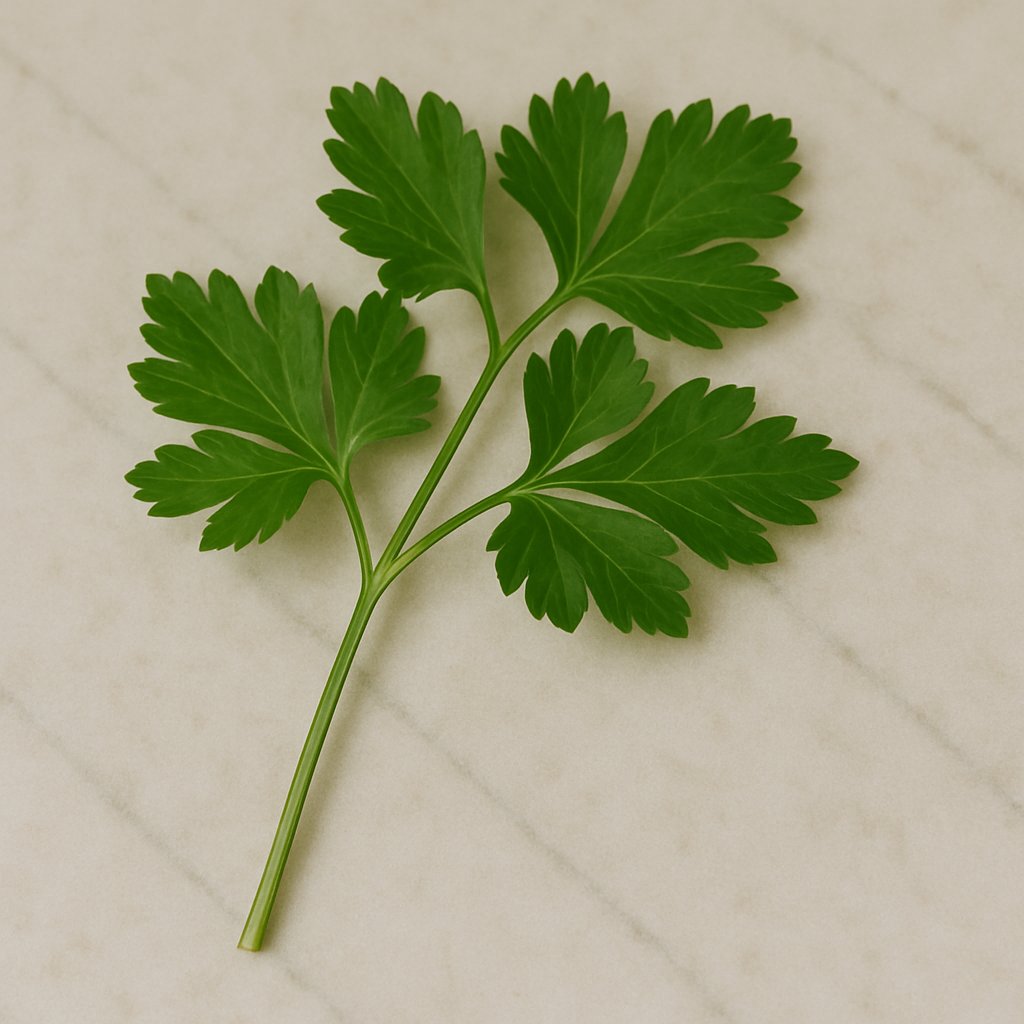
  • Flat-leaf parsley (Petroselinum crispum var. neapolitanum)
    This variety has flat, smooth leaves. It is particularly aromatic and is preferred by many cooks because its flavor is more intense. It is well suited for seasoning soups
Details & nutrition

Property Value
Unit g
Average weight per piece 30
Calories per 100 36
Protein per 100 3.0
Carbohydrates per 100 6.3
Sugar per 100 0.9
Fat per 100 0.8
Saturated fat per 100 0.1
Monounsaturated fat 0.2
Polyunsaturated fat 0.4
Fiber per 100 3.3
Vitamin C (mg) per 100 133
Vitamin D (IU) per 100 0
Calcium (mg) per 100 138
Iron (mg) per 100 6.2
Nutri-Score A
CO₂ footprint 0.15 kg CO2e/100g
Origin Europe/Mediterranean region
Gluten-free Yes
Lactose-free Yes
Nut-free Yes
Vegan Yes
Note Use fresh or frozen; rich in vitamin C and iron.

Technical & scientific information

Parsley (Petroselinum crispum) is a biennial umbellifer of the Apiaceae family and is among the most used culinary herbs worldwide. Botanically, a distinction is made between the flat-leaf form (var. neapolitanum), the curly-leaf form (var. crispum) and root parsley (var. tuberosum). Characteristic are the pinnate leaves with an intense green chlorophyll content and the fresh, slightly peppery scent reminiscent of celery and anise. The herb is used mainly as a leaf seasoning, while the root variety additionally serves as a soup vegetable. The plant prefers deep, humus-rich soils, neutral to slightly alkaline pH, with even moisture and a sunny to semi-shaded location.

Botany and morphology:
In the first growing year parsley forms a rosette of leaves and a spindle-shaped taproot; in the second year a branched inflorescence with typical umbels develops, bearing numerous small yellowish-green flowers. The fruit is a schizocarp (mericarp), rich in essential oils. The leaf tissue is gland-rich and shows a pronounced secretory canal system in which monoterpenes and phenylpropanoids accumulate. The curly form has strongly crinkled leaf margins with increased leaf surface area, which binds aromatic compounds and can be perceived sensorily as more intense.

Phytochemical composition:
Parsley is rich in vitamin C, vitamin K1 (phylloquinone) and vitamin A (as provitamin A/carotenoids such as beta-carotene, lutein). Significant secondary plant compounds are flavonoids (e.g. apigenin, luteolin, rutin), phenolic acids (caffeoyl- and feruloyl-derivatives) and essential oils. Leading substances of the essential oil include myristicin, apiol, 1,3,8-p-menthatriene (phellandrene), limonene and eugenol. Chlorophyll and carotenoids determine the color and act as antioxidants. The minerals

Wiki entry for: parsley
Active now: 15 visitors of which 2 logged-in members in the last 5 minutes