Menu & categories

Paprika powder

Aromatic spice made from dried and ground paprika peppers

Wiki about paprika Nutri-Score A Vegan Yes Gluten-free Yes Lactose-free Yes Nut-free Yes
NUTRITION / 100 g
282 kcal 14.1 g Protein 54.0 g Kohlenhydrate 12.9 g Fett

Introduction

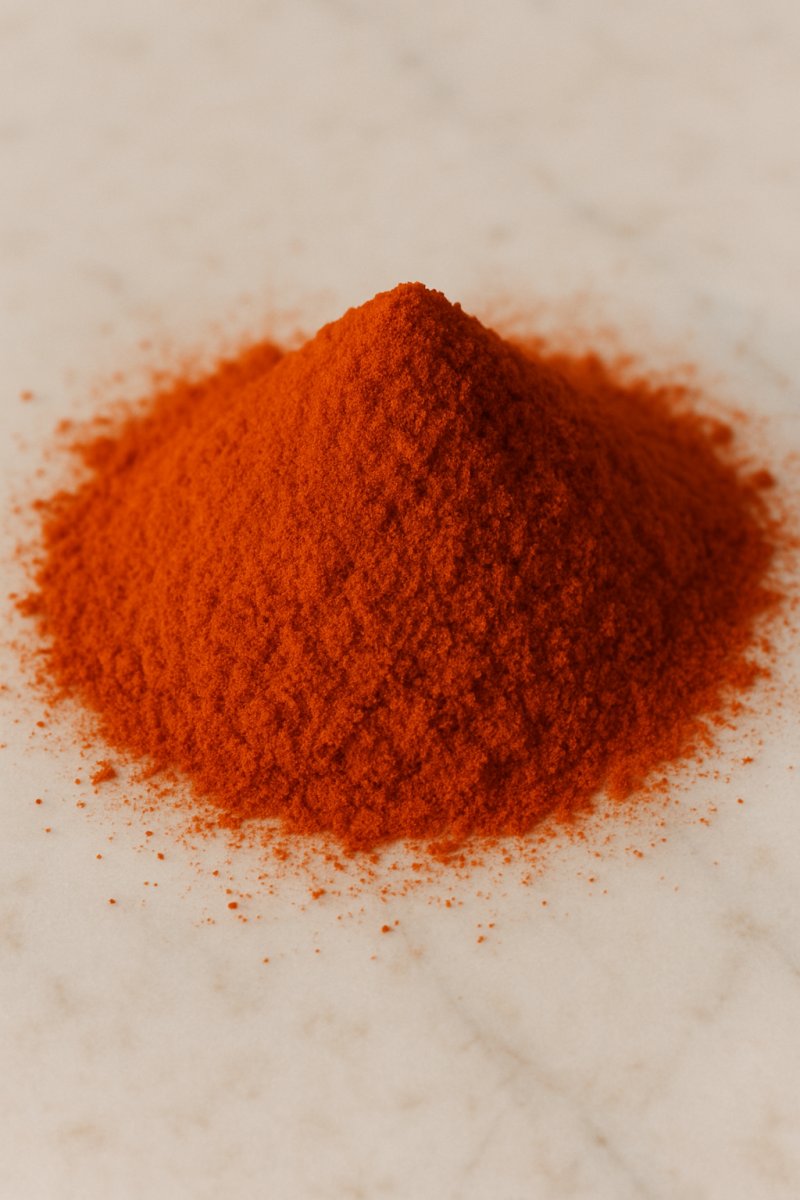
Red paprika powder in a bowl
I love paprika powder because it's more than just a spice on the shelf: it's a small, aromatic storyteller in powder form. When I unscrew the lid, that warm, slightly smoky scent rises to my nose and I can almost see the sunny fields where the fruits ripened. A colleague of mine swears his goulash only tastes like home with the right variety; that made me curious back then and led me on a little flavor expedition.

Paprika powder comes from dried, ground peppers and delivers an astonishing spectrum of flavors: from sweet and fruity to hot and smoky. I still remember once swapping two jars — sweet and smoked — and making a dish taste completely different. Since then I pay detective-like attention to origin and production method, because they often make the decisive difference.

It's worth knowing a few basics:

  • Sweet paprika powder brings mild, fruity notes and color to stews, soups and vegetable dishes.
  • Hot paprika powder provides heat and is often used in savory marinades and spicy sauces.
  • Smoked paprika powder (Pimentón) imparts a deep, smoky aroma that pairs excellently with grilled meat and hearty stews.
I use paprika powder not just for the flavor but also for the color. A pinch is enough and a plain dish immediately looks sunnier and more appetizing. Sometimes I sprinkle it at the end over homemade fries because the contrast of crunchy and spicy is simply joyful. Once I surprised guests with a paprika butter: a small, unspectacular detail that nevertheless made everyone rave.

When shopping I look for freshness and color; old powder quickly loses its aromas. At home I store it protected from light and dry, and I occasionally grind my own dried peppers when I'm feeling particularly experimental. These small rituals are part of the pleasure of cooking for me.

In short: paprika powder is an indispensable all-rounder in my kitchen. It tells stories of regions and traditions, brings warmth and color to the plate, and is often the quiet but effective element that completes a dish.

Availability & types

Availability and types

Paprika powder can be found almost everywhere in the world and is part of many kitchens. It is made from dried and ground peppers. Peppers grow on plants that bear fruits from small to large — some are sweet, others hotter. The dried fruits are processed into a fine powder that can be bought in small jars or larger packages at the supermarket.

Origin and growing areas
Peppers originally come from Central and South America. From there the plant was brought to Europe several hundred years ago, where it spread quickly. Today peppers are cultivated in many countries. Important growing regions include:

  • Spain: Especially known for mild, often sweet varieties. The La Vera region is famous for smoked paprika powder.
  • Hungary: In Hungary paprika powder is beloved — there are many different variants, and it is an important part of the cuisine.
  • Turkey and Balkan countries: These regions also supply a lot of peppers; the varieties can differ in taste and heat.
  • USA, China and other countries: Paprika is also widely cultivated there, especially where demand is high.
Available types and variants
Paprika powder comes in several types. Some are mild and sweet, others are hot. Here are the main variants, explained simply:

  • Sweet paprika powder: This powder is mild in taste and not hot. You can use it as a spice that gives color and a gentle, fruity flavor — for example on potatoes or in sauces.
  • Hot paprika powder: This contains more capsaicin. Capsaicin is the compound that makes peppers and chilies hot. Hot paprika brings warmth and an intense flavor to dishes.
  • Smoked paprika powder: Some peppers are smoked over wood after drying. The powder then smells of smoke and tastes a bit like grilled food — ideal for stews, meat or grilled vegetables.
  • Noble sweet paprika powder (edelsüß): A fine variant of sweet paprika, often with an especially pleasant, mild aroma. It is very popular in European cuisine.
  • Raw or untoasted paprika powder: This powder has not been roasted and often has a fresher, green or vegetal taste.
How to remember the differences
A simple picture: imagine paprika powder like different kinds of juice. There is orange juice, apple juice or grape juice — all are fruit juices, but the taste is different. The same is true for paprika powder: the base is the same (pepper), but depending on variety, processing and origin it tastes sweet, hot or smoky.

In supermarkets small packages often stand next to each other labeled "sweet", "hot" or "smoked". If you're still unsure which type suits a dish, start with sweet paprika powder — it goes with almost everything. For a little kick choose hot, and if you want a smoky aroma try smoked paprika powder. That way you can easily find the right variant for your food.
Details & nutrition

Property Value
Unit g
Calories per 100 282
Protein per 100 14.1
Carbohydrates per 100 54.0
Sugar per 100 10.3
Fat per 100 12.9
Saturated fat per 100 2.1
Monounsaturated fat 1.9
Polyunsaturated fat 7.1
Fiber per 100 34.9
Vitamin C (mg) per 100 0
Vitamin D (IU) per 100 0
Calcium (mg) per 100 229
Iron (mg) per 100 21.1
Nutri-Score A
CO₂ footprint 3.0
Origin Dried and ground paprika peppers, typically from Hungary, Spain or Southern Europe
Gluten-free Yes
Lactose-free Yes
Nut-free Yes
Vegan Yes
Note Nutritional values refer to 100 g of pure paprika powder without additives; the actual amount consumed is usually only a few grams.

Technical & scientific information

Paprika powder is a finely ground spice obtained from air-dried or gently heated fruit pieces of various Capsicum species. There are different varieties that differ in color, aroma and pungency, including noble sweet (edelsüß), rosenscharf and hot paprika. The plants used mainly belong to Capsicum annuum; the fruits are harvested ripe, dried and milled into powder. Quality and processing influence both the sensory profile and the composition of nutrients and constituents.

Chemical composition and constituents
Paprika powder contains a complex mixture of water- and fat-soluble components. Important constituents include:

  • Capsaicinoids: Chief among them is capsaicin, which is responsible for pungency. Content varies widely by variety; noble sweet variants contain hardly any capsaicinoids.
  • Carotenoids: Lycopene, beta-carotene and capsanthin are responsible for the red to orange color and have antioxidant properties.
  • Flavonoids and phenols: These secondary plant compounds contribute to antioxidant activity and the flavor profile.
  • Vitamins and minerals: Especially vitamin C and provitamin A (beta-carotene) are abundant in fresh fruits; during drying some heat-sensitive vitamins are lost, yet the powder still retains relevant amounts of provitamins and minerals such as potassium.
  • Fats and oils: Small amounts of triglycerides and fat-soluble aroma compounds are present, which influence mouthfeel and aroma.
Nutritional values
Paprika powder is low in calories but has a dense nutrient concentration per unit weight. Per 100 grams it typically provides about 200–350 kcal, depending on fiber and fat content. The proportion of carbohydrates and fiber is relatively high, while protein and fat occur in small amounts. Due to the concentration of carotenoids, paprika powder contributes to meeting vitamin A requirements, although absolute values vary by processing and variety.

Processing methods
Industrial and artisanal production includes several steps: harvesting ripe fruits, cleaning, destemming and optionally removing seeds, followed by drying (sun drying, hot-air drying or smoking) and grinding to a fine powder. Smoked paprika is produced by drying over wood fire and develops a smoky aroma through adsorption of smoke-characteristic compounds. Hygienic handling, temperature control and adequate storage are important to avoid microbiological spoilage and to preserve color. In industrial production carrier substances such as maltodextrin are sometimes added to improve flowability and consistency.

Sensorial and culinary properties
Aroma and color are key characteristics: noble sweet paprika provides mild, sweet-fruity notes and intense reddish tones, while hot varieties additionally offer a perceptible warmth. Lipophilic aroma compounds unfold particularly in fat or oil, which is why paprika powder is often used in warm fat phases (e.g. when frying) to achieve maximum color and aroma intensity.

Health aspects
Capsaicin has metabolism-activating effects and can show pain-relieving effects when applied locally; in the diet it can slightly increase energy expenditure and modulate taste perception. Antioxidant carotenoids and polyphenols contribute to protection against oxidative stress. Possible adverse effects include irritation of mucous membranes in sensitive individuals and gastrointestinal complaints from excessive consumption. In rare cases allergies to Capsicum proteins may occur. Because heat-sensitive vitamins are partially lost, consuming fresh peppers is nutritionally more advantageous, but paprika powder offers practical benefits in terms of shelf life and flavor-concentrated seasoning.

Quality criteria and storage
Criteria for evaluation are color, smell, moisture content, particle size and freedom from extraneous matter. Oxidation and light lead to the breakdown of carotenoids and thus to color loss; therefore dark, airtight containers and cool storage are recommended. Microbiological contamination can be minimized by adequate drying and hygienic processing. Pesticide residues should be monitored in accordance with legal limits.

In summary, paprika powder is a versatile spice with characteristic pigments, aroma compounds and pungency-producing capsaicinoids. Its production and storage largely determine the sensory quality and the content of bioactive compounds that provide both culinary value and nutritional effects.

Wiki entry for: paprika
Active now: 12 visitors of which 2 logged-in members in the last 5 minutes