Availability and types of the ingredient Orange
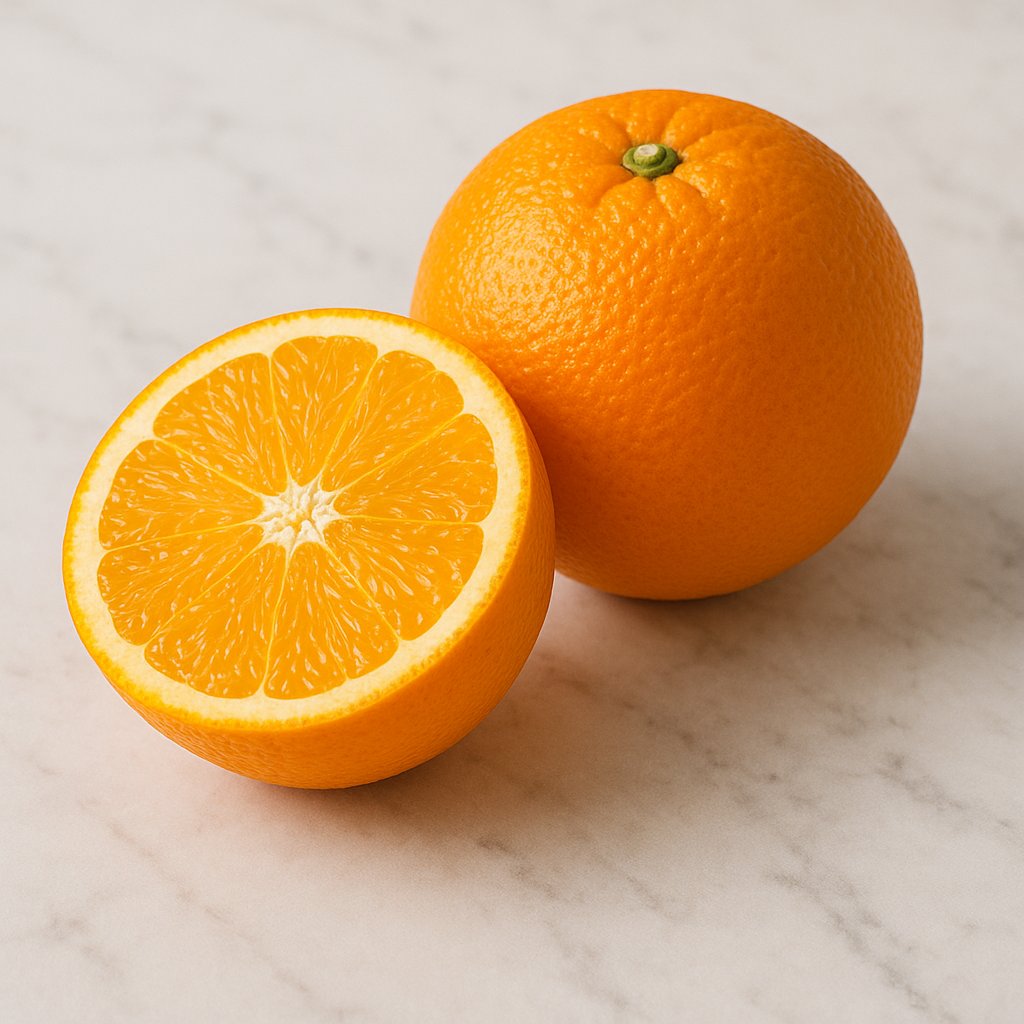
Oranges are one of the best-known fruits in the world. When you hold an orange, think: it is like a small, round sunlight full of juice. Oranges are widely available — that is, you can find them year-round in most supermarkets. Still, there are times when they are especially fresh and flavorful. This is because oranges ripen in different countries at different seasons.
Origin:
Oranges originally grew in Asia, mainly in the area that is today China and India. From there people and traders carried oranges or their seeds to other parts of the world. Over many hundreds of years oranges spread to Europe, Africa, the Americas and Australia. That's why some say: oranges come from the "Old World" (Asia) and were brought to the "New World" (America).
Oranges originally grew in Asia, mainly in the area that is today China and India. From there people and traders carried oranges or their seeds to other parts of the world. Over many hundreds of years oranges spread to Europe, Africa, the Americas and Australia. That's why some say: oranges come from the "Old World" (Asia) and were brought to the "New World" (America).
Growing regions:
Oranges like sunny, warm places. Therefore they often grow where winters are mild and summers warm. Important regions are:
Oranges like sunny, warm places. Therefore they often grow where winters are mild and summers warm. Important regions are:
- Spain: Many oranges for Europe come from here.
- Italy: Known for sweet varieties and blood oranges.
- USA (California and Florida): Large producers of table and juice oranges.
- Brazil: Huge quantities of oranges, mainly for juice.
- China and India: Traditional homelands with many local varieties.
- Mexico, South Africa, Australia: Also important exporting countries.
Available varieties and forms:
Oranges come in many different types. Here are the main ones, simply explained:
Oranges come in many different types. Here are the main ones, simply explained:
- Sweet oranges: This is the variety most people eat. It is juicy and sweet. Examples: Navel (has a small "navel"-like depression, easy to peel) and Valencia (very juicy, good for juice).
- Blood oranges: These sometimes have red-colored flesh that can look almost like an apple juice with pink or red hues. The flavor is often a bit more intense and fruity.
- Bitter oranges (Seville): They are very sour and bitter. They are often used for marmalade or flavoring, not so much for eating fresh.
- Mandarins, clementines, tangerines: These are close relatives of the orange. They are smaller, very easy to peel and often very sweet — ideal for children.
- Processed forms: Oranges are also available as fresh-squeezed juice, canned (in tins), freeze-dried powder, orange oil or candied orange peel. These forms are used in cooking, baking or for flavoring.
Everyday availability:
In your supermarket you will usually find oranges all year. Local fresh ones are best in their harvest season: depending on the country this is usually from winter to spring. Oranges in crates or bags keep for several days to weeks, especially in the refrigerator. When you pick up an orange, smell it: a fresh scent often indicates good quality.
In your supermarket you will usually find oranges all year. Local fresh ones are best in their harvest season: depending on the country this is usually from winter to spring. Oranges in crates or bags keep for several days to weeks, especially in the refrigerator. When you pick up an orange, smell it: a fresh scent often indicates good quality.
In summary: oranges originally come from Asia, are now cultivated worldwide, mainly in warm regions, and there are many varieties — from sweet Navel oranges to red blood oranges or bitter Seville oranges. You can eat them fresh or use them as juice, oil or dried peel. They are almost always easy to find and bring sunshine and flavor to many dishes.