Menu & categories

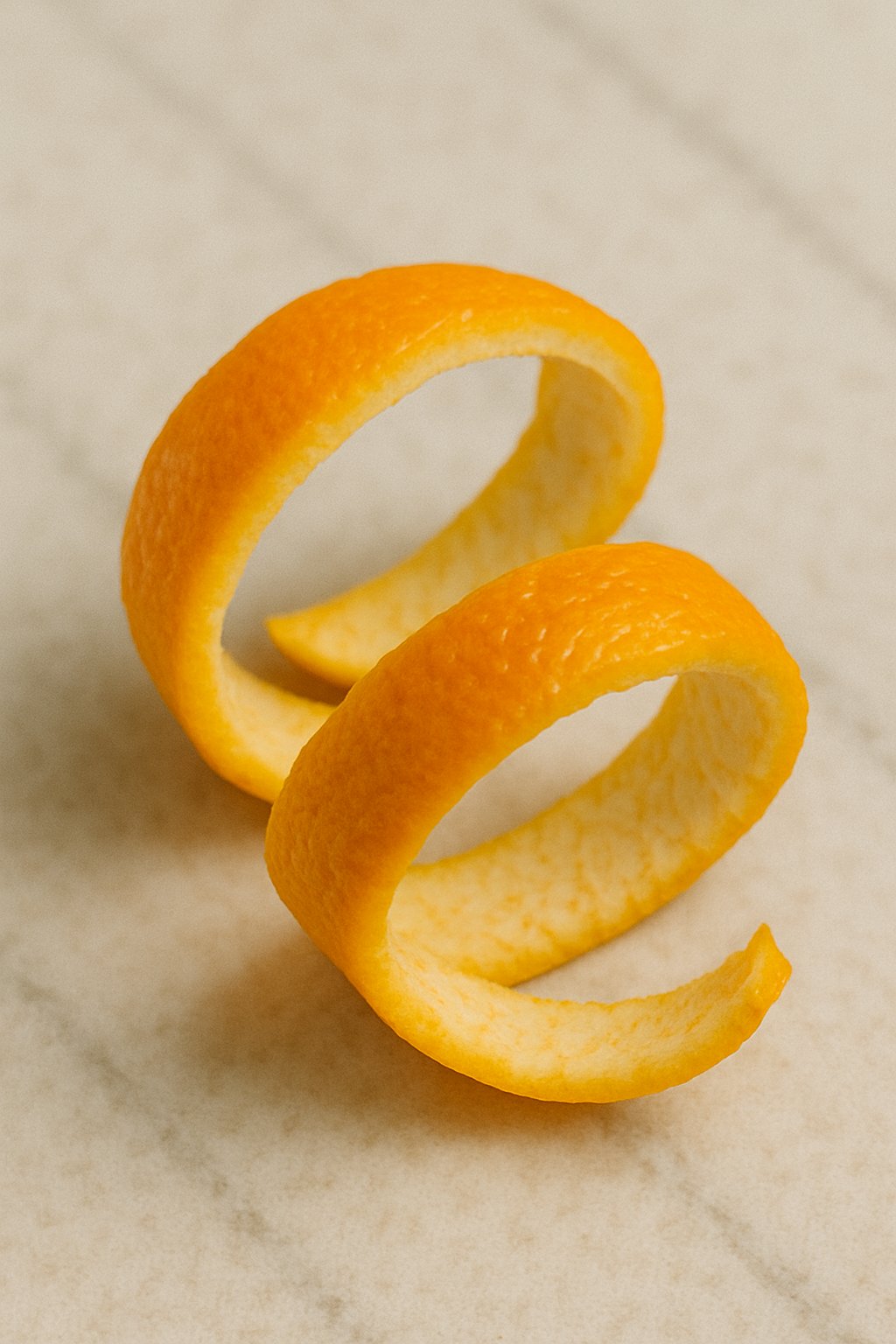
Orange peel

Aromatic orange peel, rich in essential oils and dietary fiber

Wiki about orange peel Nutri-Score A Vegan Yes Gluten-free Yes Lactose-free Yes Nut-free Yes
NUTRITION / 100 g
97 kcal 1.5 g Protein 25 g Kohlenhydrate 0.2 g Fett

Introduction

Fresh orange peel, cut into thin strips and zests
I still clearly remember the moment when I first really understood how much flavor is contained in the orange peel: at a small market in southern France a vendor handed me a freshly peeled spiral, her fingers smelled so intensely of sun that I felt briefly dizzy. Since then it has been clear to me: the peel of an orange is not waste but a small treasure that gives dishes depth, freshness and often surprising elegance.

Orange peel has several faces. On the outside sits the aromatic, oily layer with bitter and floral notes, which works wonderfully as zest in desserts, cocktails or in braised dishes. The white inner skin, the mesocarp, is more bitter, but when used in moderation it brings structure and balance, for example in marmalades or candied as a sweet confection. I use both elements deliberately: for a delicate lemon or orange mousse I carefully remove the bitter skin, while in a hearty roast it may be left in to balance acidity and bitterness.

Practical tips I have gathered over the years:

  • Freshness is everything: An aromatic smell when grating is the best sign of quality.
  • Less is often more: A hint of zest is enough to elevate a dish.
  • Candying and drying: Preservation extends use and creates versatile ingredients.
  • Beware of waxed fruits: Wash well or choose organic if the peel is used.
I love how orange peel turns simple things into special ones: a plain yogurt gains immediate character in the morning with a little zest, and a stew tastes much rounder the next day after the peel has steeped overnight. A colleague of mine even swears by adding a touch of orange zest to his closely guarded curry — a secret that always produces surprised faces at shared meals.

In the end, orange peel for me is a tool of subtlety: it demands respect for balance, a willingness to experiment and the readiness to make something great from a small piece of peel.

Availability & types

Availability and types

The orange peel is available almost everywhere in the world. Oranges grow best in warm, sunny regions, which is why many oranges come from countries around the Mediterranean, the USA (especially California and Florida), Brazil and parts of Asia such as China and India. Picture it: oranges prefer, like people, a warm summer day — lots of sun and not much frost.

There are different types of oranges, and the peels do not always look the same. Some common varieties are:

  • Sweet orange (e.g. Navel, Valencia): These are the oranges we eat most often. Their peel is usually easy to remove and has an intense aroma. They are good for snacking and for cooking.
  • Bitter orange (also Seville orange): These oranges are very aromatic, but the flesh is very sour or bitter. The peel is often used for marmalades, liqueurs or as a fragrance.
  • Blood orange: The flesh can be red or darkly colored. The peel is similar to that of the sweet orange, but the scent can be a bit fruitier or spicier.
  • Williams or citrus hybrids: Sometimes there are crosses between oranges and other citrus fruits, producing distinctive aromas and peel shapes. These are often called by different names, but their peels are also usable.
Orange peel can be bought and used in various forms. Fresh peel is often the most aromatic — when you grate it or remove it with a peeler, essential oils are released that smell very intense. There are, however, other variants:

  • Fresh peel: Grated or peeled directly from the orange. Best for dishes where you need the aroma immediately, such as cakes or salads.
  • Dried peel: The peel is dried so that it keeps longer. Dried pieces or strips are practical for storage and for teas or spice blends.
  • Orange zest (zests): These are fine strips or shavings of the peel, often made with a special grater. They give strong flavor without adding juice.
  • Orange oil: Pressed from the peel, very concentrated. Only a few drops are enough because it is very strong. It is often used in baked goods, confections or as a fragrance.
  • Preserved or candied: Peels can be cooked and thickened in sugar (candied). They are sweet and taste great in desserts.
If you want to buy orange peel, pay attention to quality: organic oranges often have fewer pesticide residues on the peel. If you use fresh peel, choose firm, glossy fruits without brown spots. And if you buy dried or ground peel in the store, the packaging often states which variety was used — this helps you better estimate the flavor.

In summary: orange peel is available in many forms and from various orange varieties. Depending on whether you want a mild, sweet aroma or a strong, bitter flavor, choose the appropriate variety and form. The peel is versatile — it can refine food, add freshness to drinks or even serve as a fragrance in homemade soaps and candles.
Details & nutrition

Property Value
Unit g
Calories per 100 97
Protein per 100 1.5
Carbohydrates per 100 25
Sugar per 100 1.6
Fat per 100 0.2
Saturated fat per 100 0.03
Monounsaturated fat 0.04
Polyunsaturated fat 0.05
Fiber per 100 10.6
Vitamin C (mg) per 100 136
Vitamin D (IU) per 100 0
Calcium (mg) per 100 160
Iron (mg) per 100 0.8
Nutri-Score A
CO₂ footprint 0.3
Origin Subtropical and tropical cultivation areas, especially the Mediterranean region, South America and the USA
Gluten-free Yes
Lactose-free Yes
Nut-free Yes
Vegan Yes
Note Nutritional values refer to fresh orange peel; actual values may vary slightly depending on variety and ripeness.

Technical & scientific information

The orange peel is the outer rind of the fruit Citrus × sinensis and consists of several tissue layers with different functions. Botanically, the colored outer rind, the flavedo, is rich in pigments and essential oils, while the white, spongy albedo (mesocarp) is composed mainly of polysaccharides such as pectin. Both layers provide different chemical and physical properties and are used for the extraction of constituents or as a food ingredient.

Chemical composition and constituents:

  • Essential oils: The flavedo contains volatile terpenes in high concentration, with limonene as the major component (often 70–95% of the oil fraction). Other components include myrcene, α-pinene, β-pinene, linalool and linalyl acetate. These compounds determine aroma, volatility and many biological effects.
  • Flavonoids and polyphenols: The peel contains flavonoids such as hesperidin, narirutin, naringin and polymeric procyanidins. These secondary plant compounds have antioxidant activity and contribute to color and bitterness.
  • Dietary fiber: The albedo is a source of soluble fiber, mainly pectin, but also cellulose and hemicelluloses. Pectin consists of galacturonic acid–containing chains and has gelling properties.
  • Minerals and vitamins: Orange peels contain small amounts of vitamin C, provitamin A (carotenoids), potassium, calcium and magnesium. Concentrations are considerably lower than in the pulp, but can be relevant with high consumption or in extracts.
Nutritional values:

  • The energy-contributing fraction is low; the peel supplies mainly carbohydrates in the form of fiber. The caloric value per 100 g of peel is moderate to low, but raw peel is typically consumed only in small amounts.
  • The content of soluble fiber (pectin) affects digestion and can blunt the postprandial blood glucose response.
Processing methods:

  • Drying: Air- or hot-air drying reduces moisture and enzymatic activity and is used for storage and for the production of spices or tea ingredients.
  • Hydrodistillation / cold pressing: These methods are used to obtain essential oils. Hydrodistillation is more thermally stressful, while cold pressing is mainly used for citrus peels to obtain high-quality aroma.
  • Extraction: For polyphenol or pectin extracts, aqueous, alcoholic or enzymatic methods are used. Pectin is obtained by acidic extraction followed by alcohol precipitation.
  • Zests / candied peel: Culinary processing includes zests (thin peel strips), candied peel and powders, where cleaning (removal of wax and pesticides) is important before processing.
Health aspects:

  • The flavonoids and terpenes present in the peel show in vitro antioxidant, anti-inflammatory and antimicrobial activities. Clinical evidence for concrete therapeutic effects in humans is limited, but nutritionally extracts can have a supportive role.
  • Orange peel can contain allergens or skin-irritating substances; contact reactions are possible in sensitive individuals.
  • A practical safety concern is contamination with pesticides and waxes. Thorough washing, organic cultivation or removal of the outer wax/pesticide layer reduce residues.
  • Pectin from orange peels is used in food technology as a gelling agent, thickener and stabilizer and has beneficial effects on gut health.
Applications and research focuses:

  • In the food industry orange peel serves as a source of aroma, a provider of bitter compounds, a fiber source and a source of pectin.
  • In the cosmetic and perfume industry essential oils are used, taking into account the phototoxicity of certain sesquiterpenes.
  • Current research investigates nano- and microencapsulated extracts for stable delivery of fragrance and active compounds, as well as the use of peel waste in biofuels, adsorbents and as a raw material in the circular economy.
In summary, orange peel is a complex, substance-rich byproduct containing essential oils, flavonoids and pectin, with both nutritional and technological relevance. Safe use requires attention to residues and appropriate processing methods, while ongoing research continues to expand the range of applications.

Wiki entry for: orange peel
Active now: 18 visitors of which 2 logged-in members in the last 5 minutes