Menu & categories

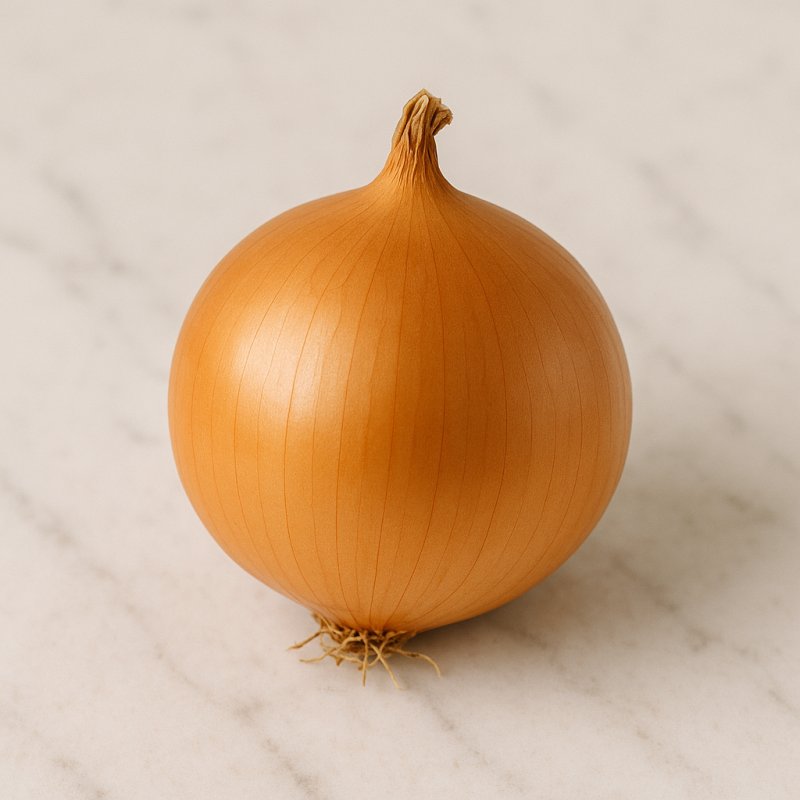
Onion

Aromatic base ingredient for countless savory dishes.

Wiki about onion Nutri-Score A Vegan Yes Gluten-free Yes Lactose-free Yes Nut-free Yes
NUTRITION / 100 g
40 kcal 1.1 g Protein 9.3 g Kohlenhydrate 0.1 g Fett

Introduction

Fresh onion
I confess: onions are my secret favorite kitchen toy. Even the scent when I slice an onion awakens memories of weekly markets, steaming pots of soup and those evenings when a simple onion confit held an entire menu together. I still remember a vendor at a stall who showed me how to slice red onions paper-thin so that they almost melt in salads – a tip I have never forgotten since.

The variety always surprises me: from the sharp white onion to the mild red, the delicate shallot and the tiny pearl onions. Each type brings its own sweetness and texture. Once I tried to impress an entire canteen using only onions; the result was surprisingly versatile and delicious.

Cooking with onions, to me, means working with patience and love. Briefly sautéed they give a gentle base, long caramelized they turn into a golden, almost jam-like concentrated flavor. A colleague of mine who long claimed he couldn't cut onions ended up so enthusiastic about my juice-reduced onion ragout that he threw his prejudices overboard.

A few practical tips I've collected over the years:

  • Cutting: Always use a sharp knife; it protects the onion cells and reduces tearing.
  • Caramelizing: Bring out a lot of flavor with low heat and patience.
  • Storage: Store in a dark, airy, cool place; keep cut onions in the refrigerator.
  • Raw vs. cooked: raw they bring bite and freshness, cooked they bring depth and sweetness.
Onions also offer a lot for health: they contain valuable plant compounds like quercetin, have anti-inflammatory effects and support gut health through inulin. For me onions are an uncomplicated all-rounder that belongs in sauces, stews, marinades and even in sweet variations.

In the end the onion remains for me a small kitchen miracle: modest, versatile and full of character. It only demands a little respect and patience, but rewards every minute with flavor. I can hardly imagine a dish in which it does not at least play a silent but weighty role.

Availability & types


Availability and types

The onion is a very well-known and widespread plant. Originally the onion comes from regions in Central Asia, that is from areas that today belong to countries like Iran or Kazakhstan. From there people took it a very long time ago when they traded or settled new lands. That is how the onion reached Europe, Africa and later America. You can imagine it like a travel story: people took seeds or plants with them and planted them in new places.

Growing regions
Onions are grown almost everywhere in the world. Important growing regions are:

  • Europe: countries like Spain, the Netherlands and Poland grow many onions.
  • Asia: especially China and India are large producers.
  • Africa and North Africa, for example Egypt, also supply a lot.
  • North America: in the USA California and Texas are important regions for cultivation.
Why so many places? Because there are different types of onions adapted to different climates. Some like long days with lots of sun, others also grow with shorter days. Farmers therefore choose the suitable variety for their country – just like choosing a coat according to the weather.

Available varieties and types
Onions differ in shape, color and taste. Here are the main types, simply explained:

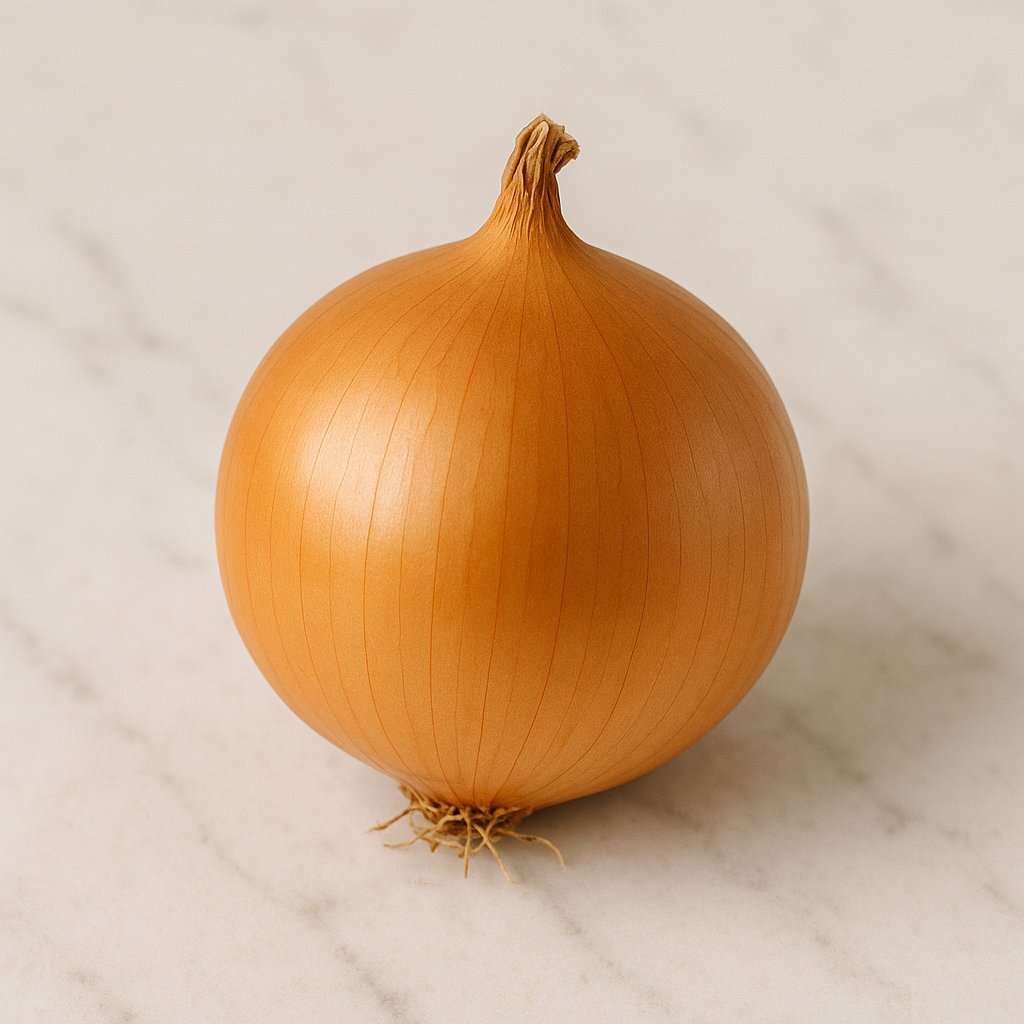
  • Yellow or brown onions: These are the all-rounders. They are pungent and become sweeter when cooked. You can use them in many dishes.
  • Red or purple onions: They look colorful and often have a somewhat milder taste. They are often eaten raw in salads because they look pretty.
  • White onions: They are sharper than yellow ones but also very popular in some cuisines, e.g. in Mexico.
  • Sweet onions: Examples are Vidalia or Walla Walla. They are particularly sweet and almost mild, almost like an apple compared to a regular onion.
  • Shallots: Are smaller and often have several “bulb segments.” Their flavor is very delicate and is often used in sauces.
  • Spring onions / green onions: These have long green stems and small white “bulb heads.” Almost all of it is used – both green and white parts.
  • Pearl onions: Small, round onions often eaten pickled or used in special dishes.
Year-round availability
Thanks to modern storage and global trade, onions are available to buy all year round. Some varieties, like spring onions, are more seasonal and taste best fresh in spring and summer. Storage onions are dried after harvest and stored cool so they last longer – like apples in a cellar.

There are also onion products: dried onion pieces, onion powder, frozen onions or pickled onions. These variants make it easy to have onion flavor in the kitchen at any time.

In summary: onions grow almost everywhere, there are many different types for different tastes and uses, and through storage and trade they are available all year round.
Details & nutrition

Property Value
Unit g
Average weight per piece 110
Calories per 100 40
Protein per 100 1.1
Carbohydrates per 100 9.3
Sugar per 100 4.2
Fat per 100 0.1
Saturated fat per 100 0.04
Monounsaturated fat 0.01
Polyunsaturated fat 0.02
Fiber per 100 1.7
Vitamin C (mg) per 100 7.4
Vitamin D (IU) per 100 0
Calcium (mg) per 100 23
Iron (mg) per 100 0.2
Nutri-Score A
CO₂ footprint 0.03 kg CO2e/100g
Origin Europe (e.g. Germany/Netherlands, seasonal)
Gluten-free Yes
Lactose-free Yes
Nut-free Yes
Vegan Yes
Note Usable raw and cooked; store in a cool, dry, dark place.

Technical & scientific information


Onion (scientific: Allium cepa) is a globally widespread, biennial bulb plant from the family Amaryllidaceae. It forms bulbous storage organs (onions) that are used as culinary and medicinal plants. Onions vary in shape, color (white, yellow, red) and pungency depending on variety and growing conditions.

Chemical composition and nutritional values

  • Water content: about 88–92%; onions are therefore low in calories.
  • Macronutrients (per 100 g, approximate values): energy ~40 kcal, carbohydrates 9–10 g, fiber 1.5–2.5 g, protein ~1–1.5 g, fat <0.2 g.
  • Among the carbohydrates are simple sugars and especially fermentable fructans (oligofructose/inulin‑like compounds), which can act as prebiotic fibers.
  • Vitamins and minerals: onions provide vitamin C (variable, often 5–10 mg/100 g), small amounts of B vitamins (B6, folate) and minerals like potassium and manganese.
Sulfur compounds and secondary plant compounds

Onions contain characteristic S‑Al(ken)yl‑L‑cystein‑S‑oxides (sulfoxides), which on cell disruption are converted by the enzyme alliinase into volatile sulfur compounds. A reaction product is the volatile syn‑Propanethial‑S‑oxide, which causes tearing when cutting. Other reaction products are thiosulfinates and various sulfides, which contribute both to the typical aroma and to antimicrobial effects. In addition, onions are rich in flavonoids, particularly quercetin, concentrated especially in the outer layers; red onions also contain anthocyanins.

Processing and chemical changes during heating

  • Mechanical disruption (cutting, chopping) activates enzymatic reactions that increase pungency and release volatile compounds.
  • Heating degrades many volatile sulfur species, reduces pungency and leads to chemical reactions such as Maillard reactions and caramelization, which create sweetness and complex roasted aromas.
  • Drying, pickling and fermentation alter the profile and bioavailability of constituents; fermentation can enhance prebiotic effects.
Health aspects

Onions are associated with several potential health effects. The flavonoids and sulfur compounds present have antioxidant, anti‑inflammatory and antimicrobial properties in vitro and in some animal and human studies. Fructans in onions serve as a prebiotic and selectively promote the growth of certain gut bacteria, which can have positive effects on gut health. At the same time fructans can trigger symptoms in sensitive individuals (FODMAP intolerance). Due to possible anticoagulant effects of certain plant compounds, people with bleeding disorders or on anticoagulant therapy should seek medical advice.

Safety, storage and culinary notes

  • For storage, dry, well‑ventilated conditions are suitable; light and moisture promote sprouting and spoilage.
  • Raw onions are sharper and rich in volatile sulfur components; heating moderates sharpness and enhances sweet and umami‑like flavors.
  • With allergy to Allium species (Allium allergy) onions can trigger atopic reactions.
Overall, the onion is a nutritionally valuable, flavor‑forming ingredient with complex chemistry. Its organoleptic properties and health‑relevant constituents result from an interplay of water, carbohydrates, sulfur compounds and secondary plant metabolites, which are substantially influenced by variety, cultivation, storage and preparation.

Wiki entry for: onion
Active now: 6 visitors of which 2 logged-in members in the last 5 minutes