Menu & categories

Oats

Whole grain cereal high in fiber and protein

Wiki about oat Nutri-Score A Vegan Yes Gluten-free No Lactose-free Yes Nut-free Yes
NUTRITION / 100 g
389 kcal 16.9 g Protein 66.3 g Kohlenhydrate 6.9 g Fett

Introduction

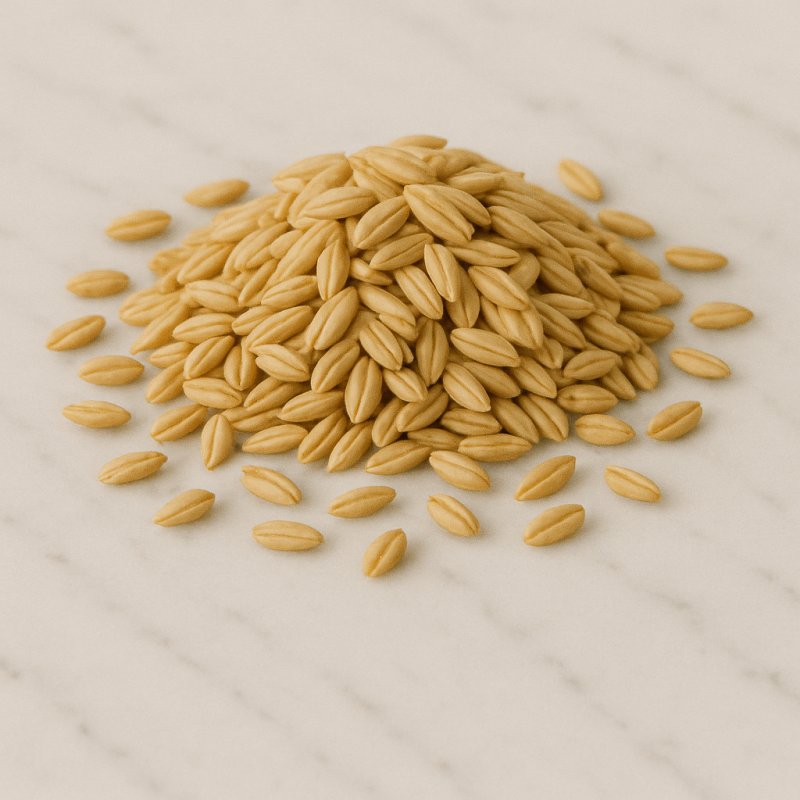
Oat grains in a bowl
I still remember exactly the morning when I first consciously sank into a warm oat porridge and noticed how deceptively simple this ingredient is. Oats seem unspectacular at first glance: a plain grain quietly waiting in every kitchen. Yet the smell of slowly cooked flakes can tell stories — of wet fields, harsh winters and the comfort of a breakfast table where you sort out the world in peace.

For me oats are more than just a basic breakfast food; they are a chameleon of the kitchen. I have used them as a crunchy topping on roasted vegetables, processed them into savory patties and milled them into fine flour to bake bread with a velvety crust. A colleague of mine was once skeptical until I served him a warm Bircher muesli — since then he asks for the recipe at every meeting. Oats adapt, absorb flavors and at the same time give them structure.

What fascinates me particularly are the practical advantages: oats are nutrient-rich, provide long-lasting energy and contain soluble fibers that can positively affect feelings of satiety. In my kitchen I also appreciate the versatility of textures. Coarse flakes add bite, fine flakes make porridge silky and tender, oat flour gives a nutty note to cakes and pancakes. I even once experimented with partially replacing cream with oat cream — a surprisingly fresh, slightly nutty substitute that gave the dessert a new dimension.

Tips from my experience:

  • Toast briefly before cooking to intensify the aroma.
  • Play with liquids and time: lower heat and longer soaking create creamier consistencies.
  • Oat products vary: from whole grain to flakes to flour — each form has its purpose.
In the end oats are for me a comforter and a small culinary chameleon, always ready to take on new roles. Whether as a morning ritual, the centerpiece of a lunch or the surprising star in a dessert — it remains reliable, down-to-earth and full of possibilities. I like this grain because it appears simple and yet can tell so much.

Availability & types

Availability and types of oats

Oats are a very widespread cereal crop grown in many parts of the world. They originally come from the cooler regions of Europe and Asia. In the past they often grew where the soil was not very rich or the weather harsher – oats can cope well with colder temperatures and less fertile soil. Today oat fields are found in many countries: large growing areas include Canada, Russia, the USA, Germany and Poland. You can imagine oats as a hardy “wanderer” that feels at home in many different landscapes.

Major growing regions

  • Canada: One of the largest oat producers. The climate there is often cool, which oats prefer.
  • Russia and Eastern Europe: Large areas of oats because soils and climate are suitable.
  • USA: Farmers grow a lot of oats especially in the northern states.
  • Central Europe (e.g. Germany, Poland): Oats are also common here and easy to find in supermarkets.
What varieties and forms are there?

Oats do not come in a single form. Like apples or potatoes, there are different varieties that differ in appearance, taste and use. Here are the main variants, simply explained:

  • Whole grain oats (whole oat): These are oats in which all parts of the grain are retained – the hull (often removed), the endosperm and the germ. Whole grain oats are particularly healthy because they contain many vitamins and fibers. They can be used, for example, as flakes.
  • Oat flakes: These are oat grains that have been steamed and then rolled flat. They cook quickly and are often eaten for breakfast as porridge or muesli. One distinguishes coarse, rolled and finer flakes — depending on how much the grain has been rolled.
  • Fine and coarse flakes: Fine flakes are like small pieces and soften faster; coarse flakes are larger and remain firmer. For a quick porridge use fine flakes, for a crunchy muesli use coarse ones.
  • Instant oats: These are oats treated so that they only need to be mixed briefly with hot water or milk. They are practical for people in a hurry.
  • Oat flour: Ground oats can be used like wheat flour, for example for baking. It gives cakes or breads a slightly nuttier and moister texture.
  • Oat bran: These are the outer layers of the grain left after milling. They contain many fibers and are often mixed into yogurts or muesli.
  • Oat milk: A plant-based milk alternative made from oats. It tastes mild and is available in many supermarkets. People who do not drink cow’s milk often choose oat milk.
When are oats available?

Oats are easy to obtain year-round. In the supermarket you will constantly find oat flakes, oat flour, oat bran and oat milk on the shelves. Freshly harvested oats are seasonal: they are harvested in summer and then dried and stored. That is why processed products are practically always available, because farmers and factories preserve and distribute the harvest.

In summary: oats grow mainly in cool regions, are very adaptable and come in many variants — from coarse flakes to oat milk. This makes them easy to find and suitable for different recipes and tastes, whether you want a quick porridge in the morning or to bake something.
Details & nutrition

Property Value
Unit g
Calories per 100 389
Protein per 100 16.9
Carbohydrates per 100 66.3
Sugar per 100 0.9
Fat per 100 6.9
Saturated fat per 100 1.2
Monounsaturated fat 2.2
Polyunsaturated fat 2.5
Fiber per 100 10.6
Vitamin C (mg) per 100 0
Vitamin D (IU) per 100 0
Calcium (mg) per 100 54
Iron (mg) per 100 4.7
Nutri-Score A
CO₂ footprint 0.7
Origin Worldwide, mainly Europe and North America
Gluten-free No
Lactose-free Yes
Nut-free Yes
Vegan Yes
Note Nutritional values per 100 g of raw oat grains or rolled oats. Oats naturally contain avenin, a gluten-like protein, and can be contaminated with other gluten-containing grains during processing.

Technical & scientific information

Oats (Avena sativa) are a cereal botanically belonging to the grass family (Poaceae) and cultivated worldwide as food and fodder. The plant is characterized by robust growth properties and a comparatively high tolerance to wetter climatic conditions. Economically important are the seeds (grains), whose structure consists of a starchy endosperm, the germ (embryo) and pleuroplastic hull parts.

Chemical composition and macronutrients: The oat grain consists of approximately 60–70% carbohydrates, 12–20% proteins and 5–10% lipids, with values depending on variety and growing conditions. Carbohydrates are found mainly as starch in the endosperm, supplemented by soluble and insoluble dietary fibers. Notable is the relatively high fat content for a cereal, which mainly consists of unsaturated fatty acids such as oleic acid (C18:1) and linoleic acid (C18:2). Oat proteins contain a more favorable amino acid profile compared with other cereals, with a higher lysine content.

Fiber and beta-glucans: Oats are particularly rich in soluble fibers, especially beta-glucans, which occur in the endosperm matrix and in cell walls. Beta-glucans are albumin-like polysaccharides with demonstrated ability to increase the viscosity of intestinal contents. This property leads to a slowed glucose uptake and a positive effect on cholesterol levels by reducing intestinal bile acid reabsorption.

Vitamins, minerals and secondary plant compounds: Oats provide a range of water- and fat-soluble vitamins, including B vitamins (thiamine, niacin, pyridoxine, folate) and vitamin E (tocopherols) in the germ-rich fractions. Minerals such as iron, magnesium, phosphorus and zinc are present in notable amounts. Additionally, oats contain various secondary plant compounds, including avenanthramides, phenolics and phytic acid. Avenanthramides are characteristic polyphenols with antioxidant and inflammation-modulating properties, whose significance for health is the subject of ongoing research.

Processing methods: For industrial and household use oat grains are processed in several stages: cleaning, dehulling (removal of the hull), steaming, rolling or milling. Common products are:

  • Oat flakes (rolled): steamed and flattened grains with different degrees of fineness.
  • Instant oats: more pre-cooked and finely fragmented for short preparation times.
  • Oat flour: finely milled, suitable for baked goods.
  • Oat bran: fiber-rich by-product after milling.
Nutrition physiology and health aspects: Epidemiological and clinical studies show that regular consumption of oat products is associated with beneficial effects on cardiovascular risk factors. In particular beta-glucans reduce total and LDL cholesterol measurably at adequate daily intake (typically 3 g or more). The high fiber content promotes healthy bowel function and can dampen the postprandial blood glucose response. Due to the relatively high fat content, oat products are energy-dense but provide predominantly unsaturated fatty acids.

Allergy and intolerances: Oats are generally well tolerated but can be problematic for people with celiac disease if products are contaminated with gluten-containing cereals such as wheat. Pure oats do not contain gluten in the strict sense but can still trigger avenin-specific reactions in sensitive individuals. Nut and cereal allergies should also be considered.

Sensory properties and culinary use: Oat products are characterized by a mild nutty aroma and a creamy texture after swelling. They are used as porridge, in baked goods, as an ingredient in muesli mixes and in processed foods, as well as a plant-based milk alternative. Technological adaptations such as germination, fermentation or enzyme treatment can further modify the nutrient profile, digestibility and functional properties.

Conclusion: Oats are a nutrient-dense cereal with a favorable macronutrient balance, valuable soluble fibers such as beta-glucans and bioactive accompanying compounds. Its processing is versatile and influences nutritional properties. Due to positive effects on cholesterol, blood sugar control and gut health, oats are a well-researched and nutritionally relevant ingredient.
Wiki entry for: oat
Active now: 6 visitors of which 2 logged-in members in the last 5 minutes