Availability and types
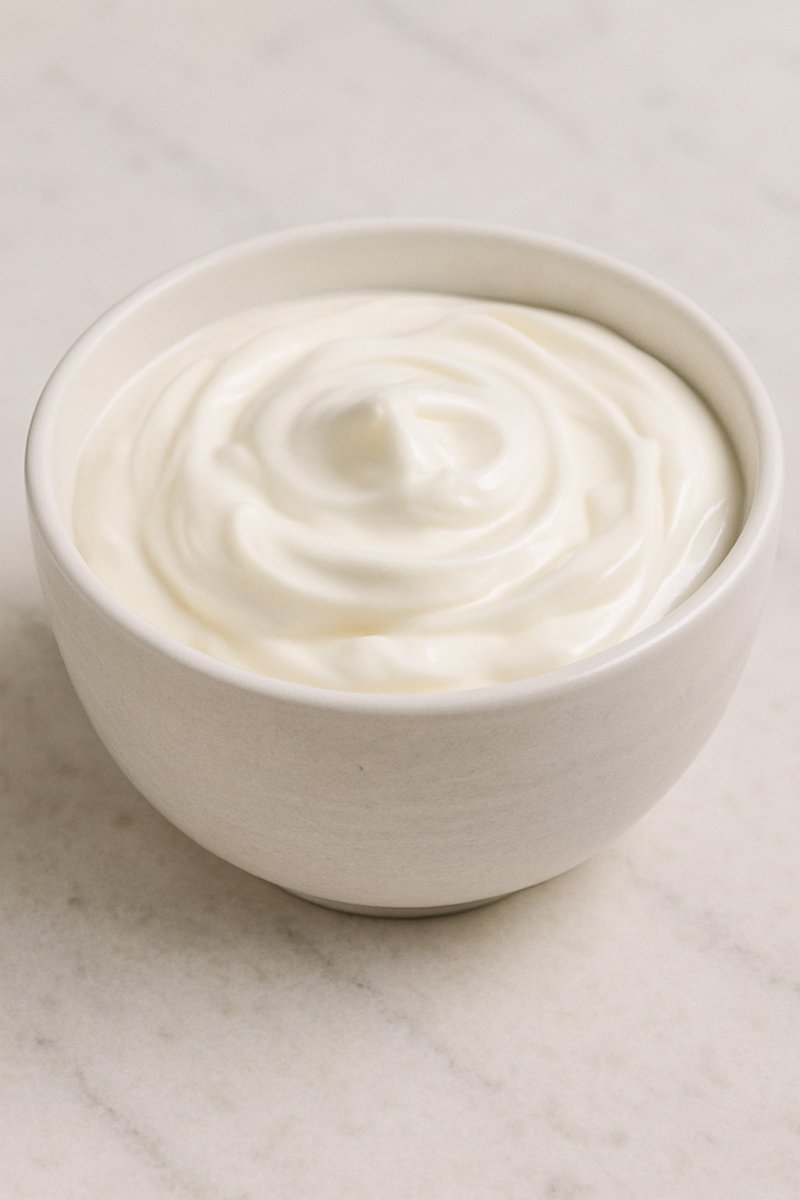
Natural yogurt is a very common ingredient that you can find in most supermarkets, small grocery stores and weekly markets. It is often located in the refrigerated section among dairy products. Some organic shops or farms sell homemade yogurt, which is fresh and sometimes even warmer than store-bought. When you travel to a new city or another country, you will usually find a local variant – yogurt is a familiar food almost everywhere in the world.
Origin
Yogurt is made from milk. Most often the milk comes from cows, less commonly from goats or sheep. The milk is heated and then "inoculated" with small live bacterial cultures – tiny helpers that make the milk thicker and slightly tart. This way of preserving and making milk more digestible has existed for thousands of years. Different regions thus developed different types of yogurt: for example the thick, creamy yogurt in Europe or the very firm yogurt in some parts of Asia. The exact origin of a yogurt therefore depends on the milk source and local tradition.
Yogurt is made from milk. Most often the milk comes from cows, less commonly from goats or sheep. The milk is heated and then "inoculated" with small live bacterial cultures – tiny helpers that make the milk thicker and slightly tart. This way of preserving and making milk more digestible has existed for thousands of years. Different regions thus developed different types of yogurt: for example the thick, creamy yogurt in Europe or the very firm yogurt in some parts of Asia. The exact origin of a yogurt therefore depends on the milk source and local tradition.
Production areas and production sites
The term "growing area" does not apply to yogurt as directly as it does to vegetables, because yogurt is not a field crop. Instead one rather speaks of production sites. The milk from which yogurt is made often comes from the surrounding area: farms that keep cows. In Europe large producers are found in countries such as Germany, France or the Netherlands. In warmer countries other animals (e.g. goats) are used and there are local specialties. Organic yogurt comes from farms that keep animals according to ecological rules – this means, among other things, more space for the animals and feed without synthetic additives.
The term "growing area" does not apply to yogurt as directly as it does to vegetables, because yogurt is not a field crop. Instead one rather speaks of production sites. The milk from which yogurt is made often comes from the surrounding area: farms that keep cows. In Europe large producers are found in countries such as Germany, France or the Netherlands. In warmer countries other animals (e.g. goats) are used and there are local specialties. Organic yogurt comes from farms that keep animals according to ecological rules – this means, among other things, more space for the animals and feed without synthetic additives.
Available types and variants
There are many different kinds of natural yogurt so there's something for every taste. Here are the main variants explained in simple form:
There are many different kinds of natural yogurt so there's something for every taste. Here are the main variants explained in simple form:
- Fat content: Yogurt comes with different fat contents:
- Low-fat yogurt – very little fat, rather runny.
-
- Reduced-fat – a good compromise, creamier than low-fat yogurt.
-
- Full-fat – rich and especially creamy, often very flavorful.
- Texture:
- Drinking yogurt – thin enough to drink, sometimes with sugar or fruit.
-
- Creamy yogurt – thick and spreadable, good for spooning.
-
- Greek yogurt – very thick because it has been strained longer; good for cooking or baking.
- Animal origin:
- Cow's milk yogurt – most common.
-
- Goat or sheep yogurt – often tastes somewhat different and can be better tolerated by some people.
- Organic and conventional: Organic yogurt comes from farms that follow ecological rules. Conventional yogurt comes from regular agricultural operations.
- With or without live cultures: Some yogurts advertise that they contain many "live cultures" (good bacteria). These bacteria often help digestion and make the yogurt "alive." Natural yogurt normally contains such cultures.
Practical tip
If you're wondering which yogurt is right: try different kinds and check the ingredient list. Natural yogurt usually contains only milk and yogurt cultures. If "sugar" or many additives appear on the package, it's no longer a pure natural yogurt. For children, a mild, reduced- to full-fat yogurt is often suitable because it's creamy and provides energy.
If you're wondering which yogurt is right: try different kinds and check the ingredient list. Natural yogurt usually contains only milk and yogurt cultures. If "sugar" or many additives appear on the package, it's no longer a pure natural yogurt. For children, a mild, reduced- to full-fat yogurt is often suitable because it's creamy and provides energy.
In summary: you can get natural yogurt almost anywhere, it is made from milk (usually from cows) and there are many variants by fat content, texture and milk origin. That way you can easily find a type that you like and that fits your needs.
