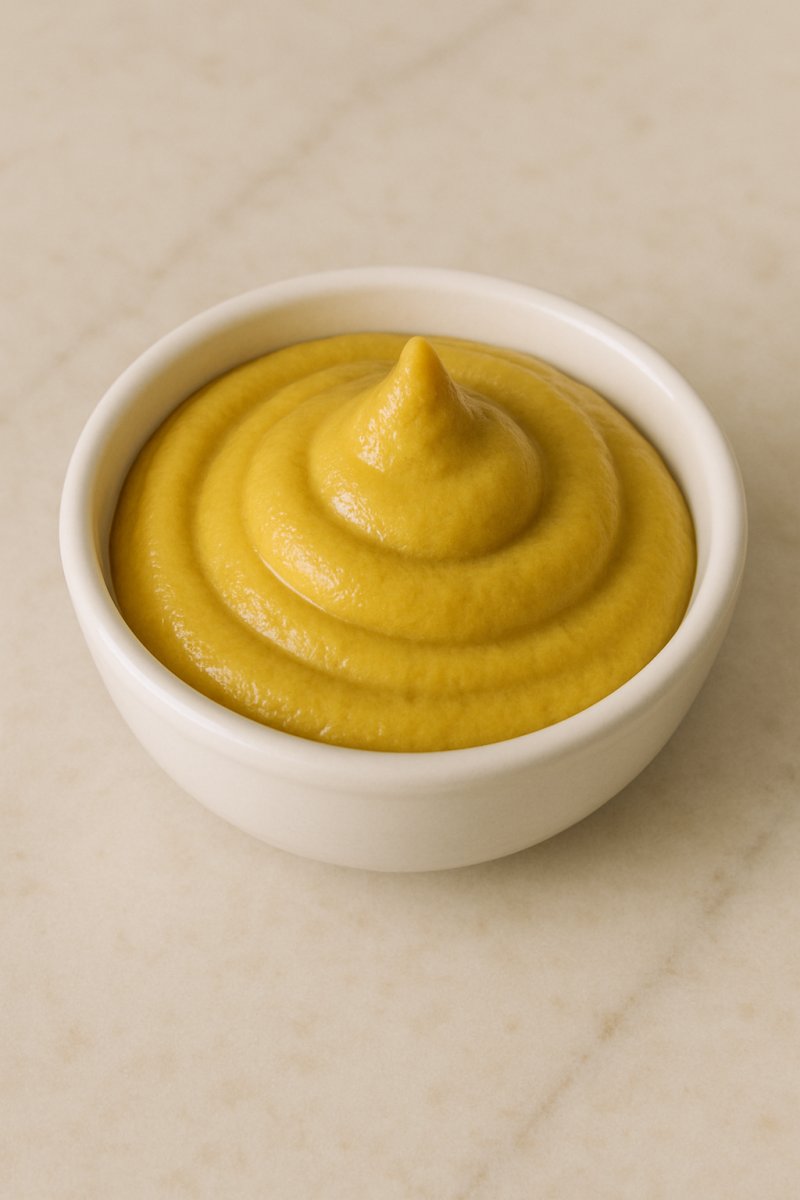
Menu & categories

Mustard

Spicy paste made from ground mustard seeds

Wiki about mustard Nutri-Score C Vegan Yes Gluten-free Yes Lactose-free Yes Nut-free Yes
NUTRITION / 100 g
120 kcal 7 g Protein 7 g Kohlenhydrate 7 g Fett

Introduction

A jar of yellow mustard with mustard seeds next to it
I still remember exactly the first morning when mustard became for me more than just a dollop on the plate: a visit to a small market in Dijon, where an elderly woman handed me a jar and said it was her family recipe. The scent was sharp, nutty and surprisingly complex, and I immediately realised that mustard tells stories — of regions, of seasons and of people who dip their hands into seeds and vinegar.

Mustard is astonishingly versatile. At its core it consists of ground mustard seeds, liquid and often salt and sweetness. But the nuances arise from the choice of seeds — yellow, brown or black — and from the method of preparation. I learned that brown and black seeds provide more heat, while yellow seeds are milder and often found in classic American mustards. A colleague of mine swears by using whole seeds for bread because they create little bursts of flavour when baked.

In my kitchen I use mustard in many ways:

  • Dressings: A spoonful of mustard binds oil and vinegar and gives salads depth.
  • Marinades: Mustard helps to tenderise meat and carry flavours.
  • Sauces: Creamy with cream or sharp in a vinaigrette — mustard creates balance.
  • Baking: In bread doughs or crusts it provides aroma and a fine spiciness.
I confess I have a small collection: French Dijon, English coarse mustard, a sweet German variety and a spicy Asian wasabi mustard. Each jar has its own personality, and sometimes I ask friends for their opinion just to see how passionate the discussions become. Once this led to a dinner where we blind-tasted five different mustards — a delightful chaos of flavour and laughter.

Mustard is also surprisingly healthy: it contains antioxidants and secondary plant compounds that can be beneficial to the body. For me it remains above all a small culinary wonder that lifts dishes, fuels conversations and preserves memories. When I open a jar today I still smell that market in Dijon and the voice of the woman who handed me the recipe — and I smile, because such an unassuming spice can tell so much.

Availability & types

Availability and types of mustard

Mustard is a widely available ingredient that can be found in many supermarkets, at weekly markets or in small grocery shops. It is made from the seeds of the mustard plant. Mustard seeds can be grown in different countries depending on the variety desired. The most common growing areas are in Europe (for example France, Germany and England), in North America (especially Canada) and in parts of Asia. These regions have the right climate and soils for the plants to grow well.

Mustard grows as a field crop with small yellow flowers. From the flowers develop seed pods containing the round or slightly angled mustard seeds. These seeds are the main ingredient for mustard. Depending on which seeds are used and how they are processed, the mustard tastes different.

There are several important types of mustard to distinguish. Here are the best known, simply explained:

  • Yellow mustard: This mustard is light yellow and has a mild, rather gently sharp taste. In many countries, for example the USA, it is very popular on hot dogs or sandwiches. It is often made from yellow mustard seeds and mixed with vinegar and spices.
  • Mildly sharp mustard: Between mild and hot is the mildly sharp mustard. It has more spice than yellow mustard but not as much heat as particularly strong varieties. In Germany this type is very popular, for example with sausages or meats.
  • Black or hot mustard: This mustard has a stronger flavour. It is made from darker, black mustard seeds. Its heat is more intense and can tingle the nose, similar to eating very hot pepper.
  • Grainy or coarse mustard: Here you can still see the whole or coarsely crushed mustard seeds. It feels like small grains in the mouth and many people like the texture, for example on a slice of bread or with cheese.
  • Fine, smooth mustard: This version is completely smooth, without pieces. It is suitable when you want to make an even sauce or marinade.
  • Sweet or honey mustard: Some mustards are refined with sugar or honey. They taste sweet first and then slightly sharp. Such varieties go well with ham or as a dip.
  • Mustard with herbs or spices: There are also many variants that contain herbs (like dill or tarragon) or spices (for example turmeric or pepper). These add additional flavours and make the mustard special, depending on what you eat it with.
If you want to buy mustard, you will find the different types in jars or tubes. Sometimes there are also regional specialties, for example French Dijon mustard, which tastes a little finer and more acidic, or English mustard, which can often be very hot. Pay attention to the label when shopping: it will indicate whether the mustard is sweet, hot, grainy or particularly mild.

In summary: mustard is available in many varieties and flavour profiles because different mustard seeds and ingredients are used. The plants grow in several countries with suitable climates, and depending on processing you get mild, mildly sharp, hot, coarse or sweet variants. So there is something for almost every taste.
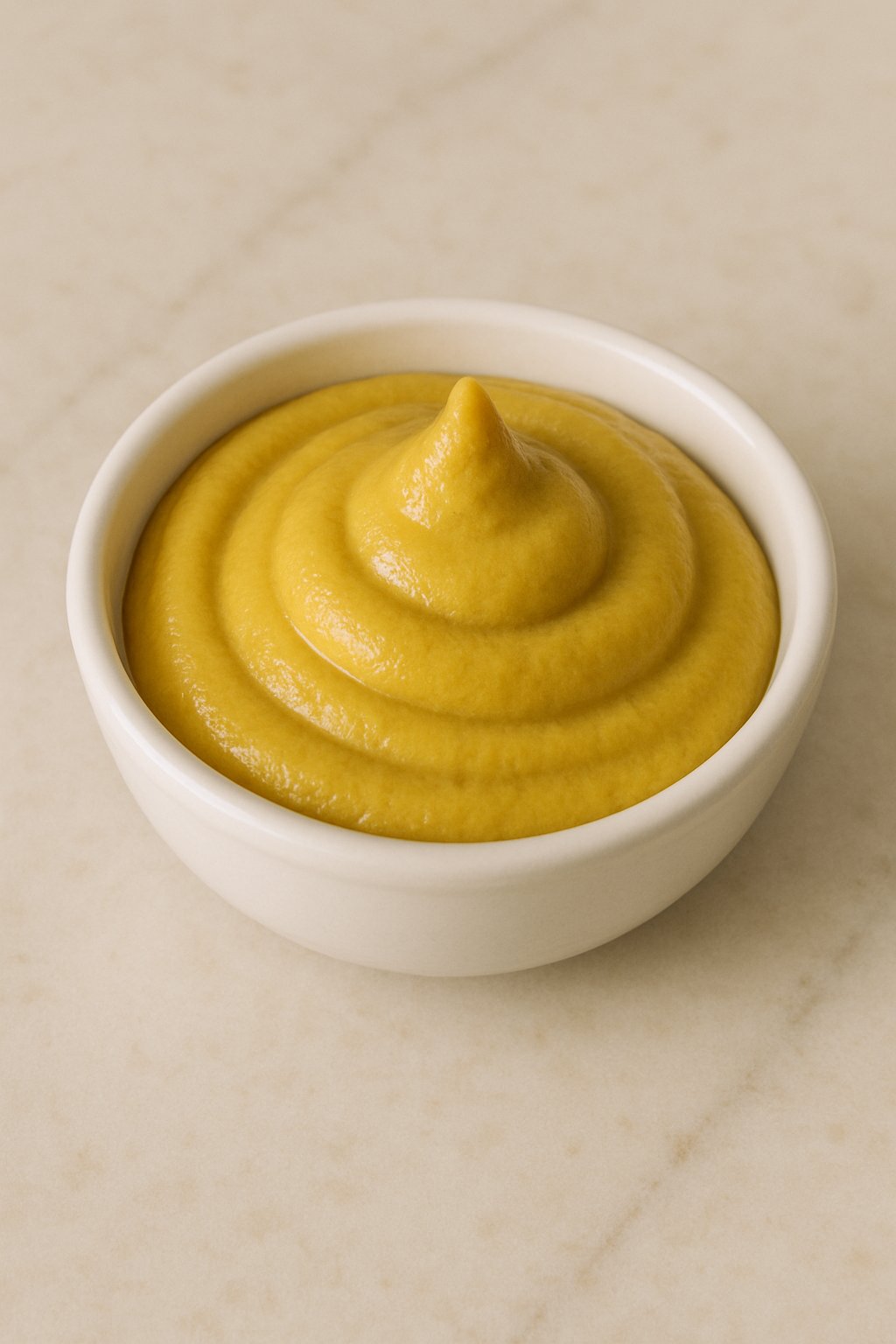
Details & nutrition

Property Value
Unit g
Calories per 100 120
Protein per 100 7
Carbohydrates per 100 7
Sugar per 100 3
Fat per 100 7
Saturated fat per 100 0.4
Monounsaturated fat 4
Polyunsaturated fat 2.6
Fiber per 100 5
Vitamin C (mg) per 100 1
Vitamin D (IU) per 100 0
Calcium (mg) per 100 60
Iron (mg) per 100 1.6
Nutri-Score C
CO₂ footprint 1.2
Origin Depending on the manufacturer, often Europe
Gluten-free Yes
Lactose-free Yes
Nut-free Yes
Vegan Yes
Note Nutritional values for commercially available medium-spicy table mustard; values may vary depending on recipe and brand.

Technical & scientific information

Mustard is a spice obtained from the seeds of mustard plants (genera Brassica and Sinapis), used as a paste, powder or as an ingredient in sauces. Botanically, important species include white mustard (Sinapis alba), black mustard (Brassica nigra) and brown mustard (Brassica juncea). Mustard seeds supply the characteristic pungent aroma, which physiologically is due to enzymatic reactions and the release of volatile isothiocyanates.

Chemical composition and active compounds
Mustard seeds consist mainly of carbohydrates, lipids and proteins. Typical constituents are:

  • Glucosinolates: precursors such as sinigrin and sinalbin, which, when the seeds are mechanically disrupted, are converted by the enzyme myrosinase into isothiocyanates (e.g. allyl isothiocyanate) that convey pungency and antimicrobial properties.
  • Oils: mustard oil (high proportion of mono- and polyunsaturated fatty acids such as erucic acid in some varieties) makes up about 30–45% of the seed mass and influences flavour and mouthfeel.
  • Proteins: storage proteins that are significant for nutrient density and can act as emulsifiers when ground.
  • Fibre and micronutrients: minerals (e.g. calcium, magnesium, potassium), vitamins (especially B vitamins) and secondary plant compounds such as phenols.
Nutritional values
Dry, mustard seeds provide about 400–500 kcal per 100 g, mainly from fat and protein. In processed form, such as table mustard, the calorie content is reduced considerably because of the addition of water, vinegar and mustard powder and the lower fat content. Table mustard is low in calories, provides small amounts of protein and minerals per serving and typically contains sodium from added salt.

Processing methods
Production ranges from simple crushing or grinding of the seeds to complex manufacturing processes for industrial mustards. Typical steps are:

  • Cleaning and drying of seeds to avoid contamination.
  • Cold pressing to obtain mustard oil; the pressed meal can subsequently be used as mustard powder.
  • Activation of pungency by combining ground seeds with water, vinegar or acid sources, which enables or inhibits myrosinase activity and thus controls the pungency profile and aroma.
  • Addition of ingredients such as vinegar, water, salt, sugar, spices and preservatives for flavour, shelf life and texture.
Sensorics and stability
Perception of pungency depends on temperature and medium: isothiocyanates released in water are intensely pungent, in acidic media (vinegar) the enzymatic development of pungency is reduced; heat causes evaporation of volatile mustard components and thus mellows the pungency sensation. Mustard products show good microbiological stability due to acidity, salt and antimicrobial isothiocyanates.

Health aspects
Mustard is generally considered a safe food ingredient. Isothiocyanates are studied for possible antimicrobial, inflammation-modulating and cancer-preventive effects, although effects depend on dose and context. Allergies to mustard seeds are recognised food allergies and are reportable in some regions. High consumption of oils rich in erucic acid has shown health effects on the heart in animal studies; modern breeding has reduced these levels and many countries regulate the use of low-erucic acid varieties.

Applications
In the kitchen mustard is used as a spice, as an emulsifier in dressings and sauces and as a preservative. Industrially mustard is used in food production, in traditional medicinal remedies and, in some cases, as a starting material for aromatic extracts. Research and development focus on optimising flavour, stability, nutritional benefits and hypoallergenic products.

Overall, mustard as an ingredient links complex chemical processes with diverse culinary and functional properties. Its action is based on enzymatically generated volatile compounds that provide flavour and preservative effects, while modern processing and breeding target sensory characteristics and safety profiles.

Wiki entry for: mustard
Active now: 12 visitors of which 2 logged-in members in the last 5 minutes