Menu & categories

Button mushrooms

Versatile mushrooms with a mild aroma

Wiki about mushroom Nutri-Score A Vegan Yes Gluten-free Yes Lactose-free Yes Nut-free Yes
NUTRITION / 100 g
22 kcal 3.1 g Protein 3.3 g Kohlenhydrate 0.3 g Fett

Introduction

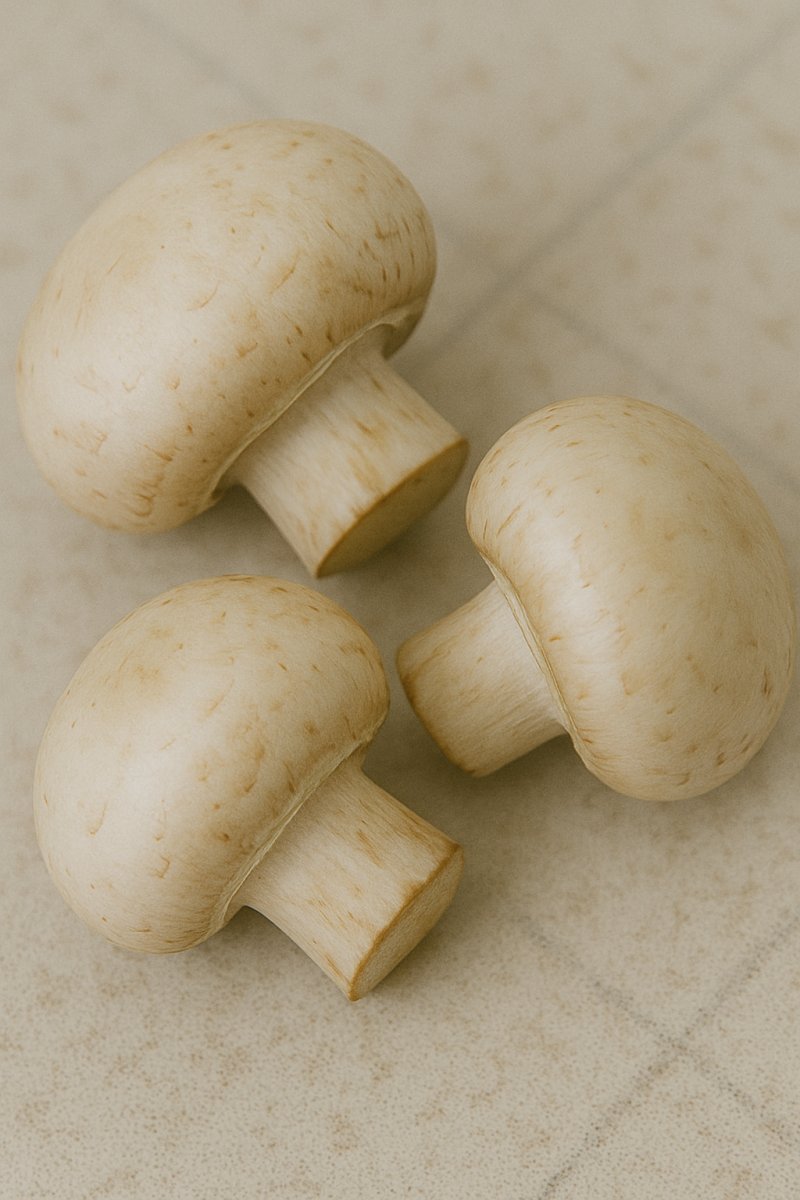
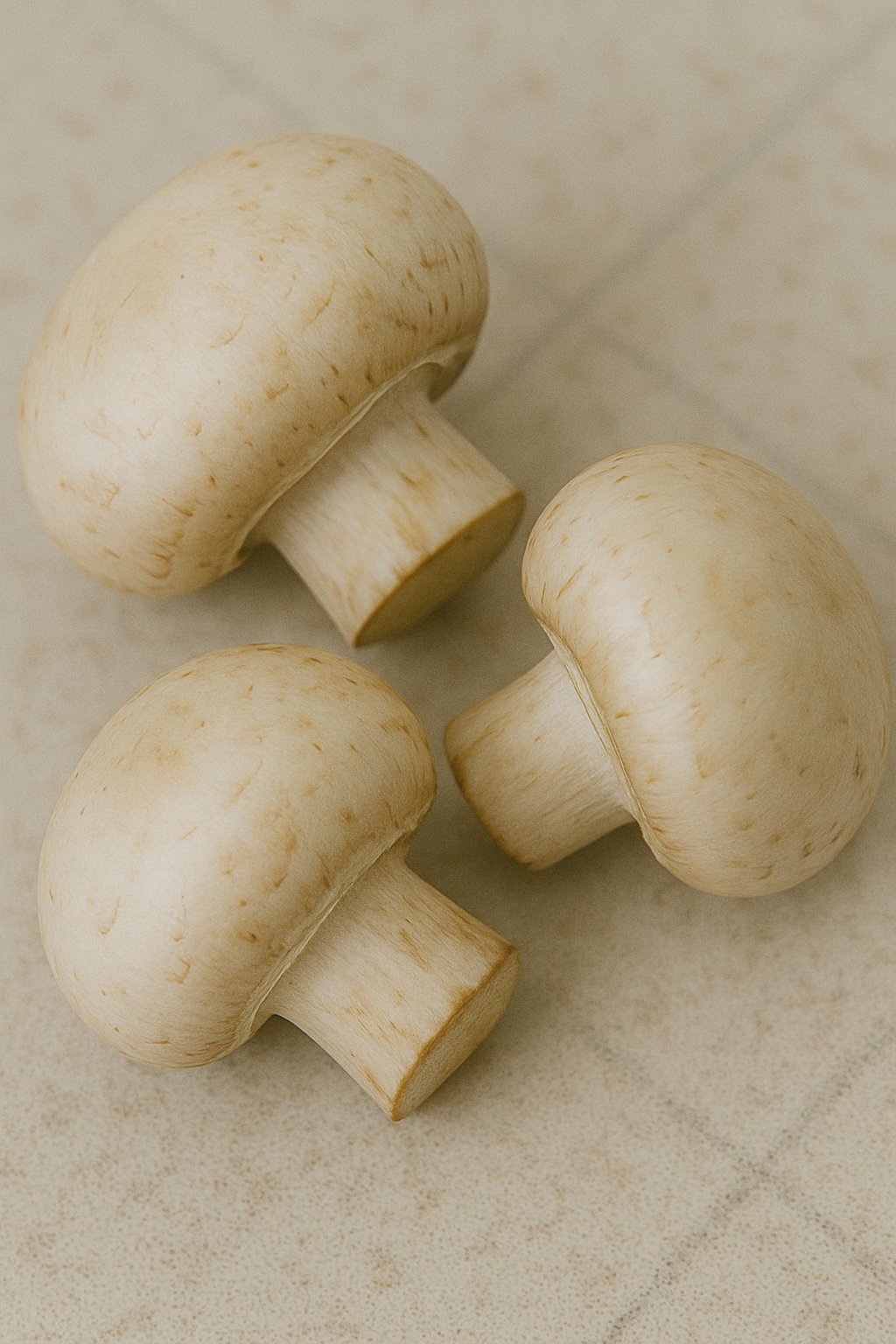
Fresh button mushrooms on a light background
Button mushrooms are among the most versatile ingredients in my European cooking — and I say that as a 35-year-old editor who, between deadlines, the farmers' market and dinner, is constantly looking for reliable, flavorful foods. Whether white or brown, small or substantial: the button mushroom convinces with a mild, nutty taste, juicy texture and impressive adaptability. In creamy soups, on pizza, in pasta, stuffed and baked or raw in salads it shows its strengths. At the same time it scores with a fine earthiness that enriches both light and hearty recipes. A colleague of mine swears by salting mushrooms briefly before frying — the juice that forms creates the ideal base for quick pan sauces to pour over steak, gnocchi or toasted bread.

When I stroll through the market on Saturday morning, I automatically reach for fresh button mushrooms: compact, dry and with a firm cap. The brown variety — often sold as Crimini or chestnut mushroom — smells more intense, while white mushrooms are particularly tender and absorb flavors like leek, herbs and lemon zest wonderfully. At the office there's an anecdote that our photographer once saved a shoot with mushrooms by confiting them in the oven with only olive oil, thyme and a hint of garlic — the result was so concentrated that in the end we needed less seasoning but got more flavor. That's exactly the secret of these fungi: they amplify umami without being dominant.

In Europe button mushrooms are a staple of everyday cooking, but their history goes far back. From the French “champignon de Paris” to modern organic cultivation in climate-controlled facilities, they have come a long way. Controlled cultivation ensures consistent quality, year-round freshness and hygienic safety. At the same time there is room for creativity: from cream mushrooms with parsley to creamy risottos to fine tarts with onions and Gruyère. A friend from Lyon uses them as the base for a vegan bolognese — finely chopped, strongly sautéed and braised with tomatoes, red wine and herbs. The result is so deep and rounded in flavor that nobody misses the meat.

Who Champ

Availability & types

Availability and types of button mushrooms

Button mushrooms are probably the best-known edible mushrooms in the world. You've surely seen them in the supermarket: small, round mushrooms with a light or brown cap. Because they are very popular and tasty, they are grown in large halls. This has a big advantage: mushrooms are available for almost the whole year. Unlike many wild mushrooms that only grow in autumn, you can buy button mushrooms in winter, spring, summer and autumn. In Europe, especially in countries like Germany, France, the Netherlands and Poland, there are many farms that grow button mushrooms in controlled rooms. This keeps quality consistent and the mushrooms clean and safe.

Breeding works like this: button mushrooms grow on a special substrate made of straw, horse or chicken manure and compost. It may sound odd, but it's perfect for mushrooms. On top comes a layer of moist soil (the so-called casing material). Temperature, light and humidity are precisely regulated. This way the mushrooms can be harvested within a few weeks. Because everything is so well controlled, prices remain relatively stable throughout the year and you don't have to look long to get fresh produce.

Origin

The cultivated button mushroom you know is scientifically called Agaricus bisporus. It originally comes from wild mushroom species that grew in Europe. Already several hundred years ago people in France began cultivating mushrooms in dark cellars and old stone quarries. Today the button mushroom is produced worldwide, including in Europe, North America and Asia. Many of the mushrooms in supermarkets are locally grown to keep transport routes short and the mushrooms fresh.

Main varieties and forms

Button mushrooms come in several shapes and colors. Although they belong to the same species, they differ in appearance, taste and size.

  • White button mushrooms (Button Mushrooms)
    These are the classic light mushrooms with a smooth, white to cream-colored cap. They taste mild and go with almost anything: salads, pizza, pasta, pan dishes. They are particularly
Details & nutrition

Property Value
Unit g
Average weight per piece 20
Calories per 100 22
Protein per 100 3.1
Carbohydrates per 100 3.3
Sugar per 100 2.0
Fat per 100 0.3
Saturated fat per 100 0.05
Monounsaturated fat 0.02
Polyunsaturated fat 0.15
Fiber per 100 1.0
Vitamin C (mg) per 100 7
Vitamin D (IU) per 100 10
Calcium (mg) per 100 3
Iron (mg) per 100 0.5
Nutri-Score A
CO₂ footprint 0.6 kg CO2e/kg
Origin Cultivated in Europe
Gluten-free Yes
Lactose-free Yes
Nut-free Yes
Vegan Yes
Note Nutritional values for raw white button mushrooms; values may vary depending on variety and cultivation.

Technical & scientific information

Button mushrooms (Agaricus bisporus) are among the most widely cultivated edible fungi in the world and are of high importance both culinarily and scientifically. The cultivated mushroom includes various color and developmental forms, including the white button mushroom, the brown mushroom (cremini) and the portobello (the fully mature, large-capped form). Botanically, mushrooms belong to the Basidiomycetes, whose fruiting bodies form gills in which spores are produced and dispersed. Their ability to utilize lignocellulose-rich substrates makes them central to nutrient cycles in natural and agricultural ecosystems.

Morphology and anatomy:
The fruiting body of the mushroom consists of cap, gills, stipe and an often pronounced partial veil remnant (the ring). The cap surface is smooth to finely scaly, ivory-colored in white varieties, caramel to chestnut brown in brown varieties. The gills are pink when young, later dark brown to black-brown due to maturation and spore pigmentation. The flesh is compact, whitish and in some strains discolors slightly red or brown after cutting due to enzymatic oxidation of phenolic compounds. Microscopically, two-spored basidia (hence the species name bisporus), hyphae with clamp connections and a dense plectenchyma of branched hyphal strands are visible.

Life cycle and cultivation:
Mushrooms grow saprotrophically on organic substrates. Industrial cultivation takes place on pasteurized, fermented composts made from horse manure, poultry manure, straw and gypsum as a structural and buffering agent. After composting, the substrate is inoculated with mycelium (spawn), followed by a colonization phase under controlled temperatures (approx. 23–25 °C) and moderate moisture. The subsequent casing layer, often made from peat-lime mixes, induces fruit body formation, supporting water balance, gas exchange and microflora. Fruiting occurs under lowered temperatures (16–19 °C), increased air humidity (85–95 %) and controlled CO2 concentration. Typically several harvest waves (flushes) result over
Wiki entry for: mushroom
Active now: 14 visitors of which 2 logged-in members in the last 5 minutes