Menu & categories

Mixed Pickles

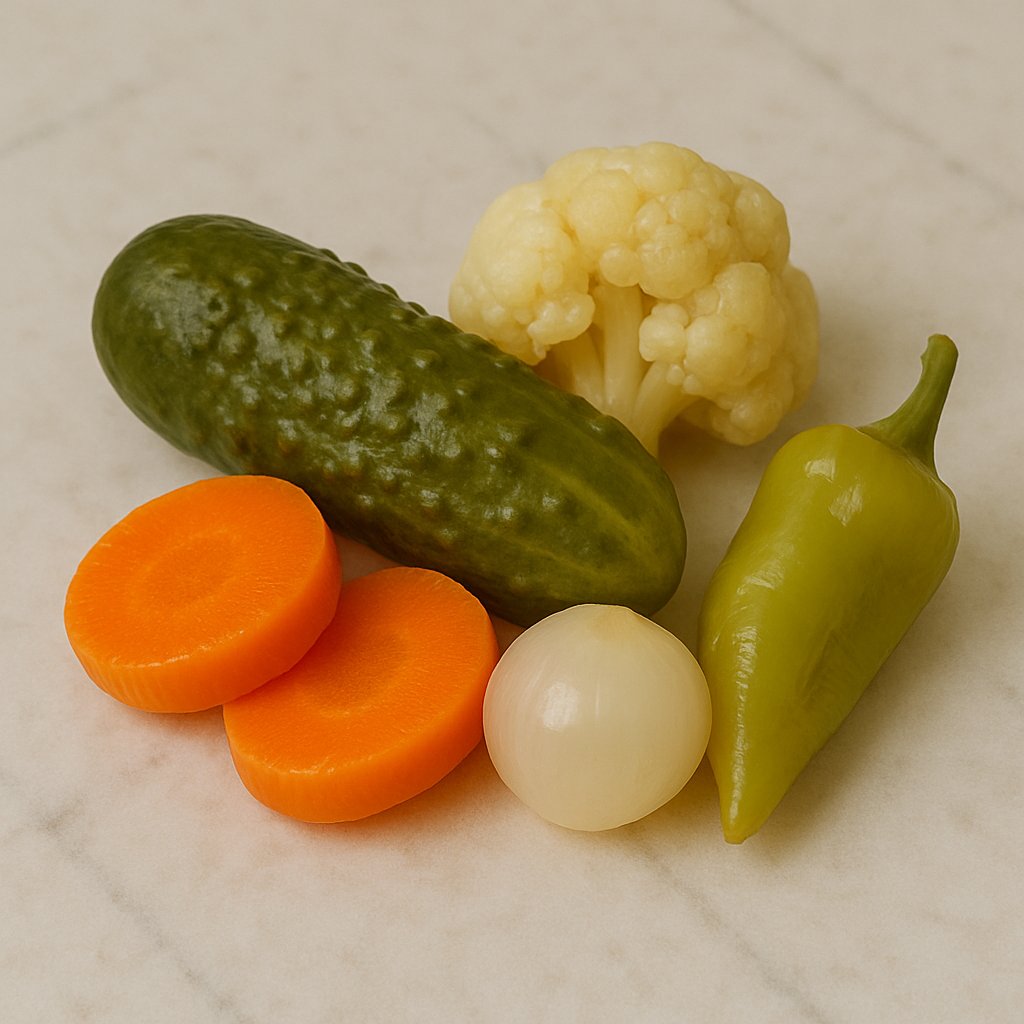
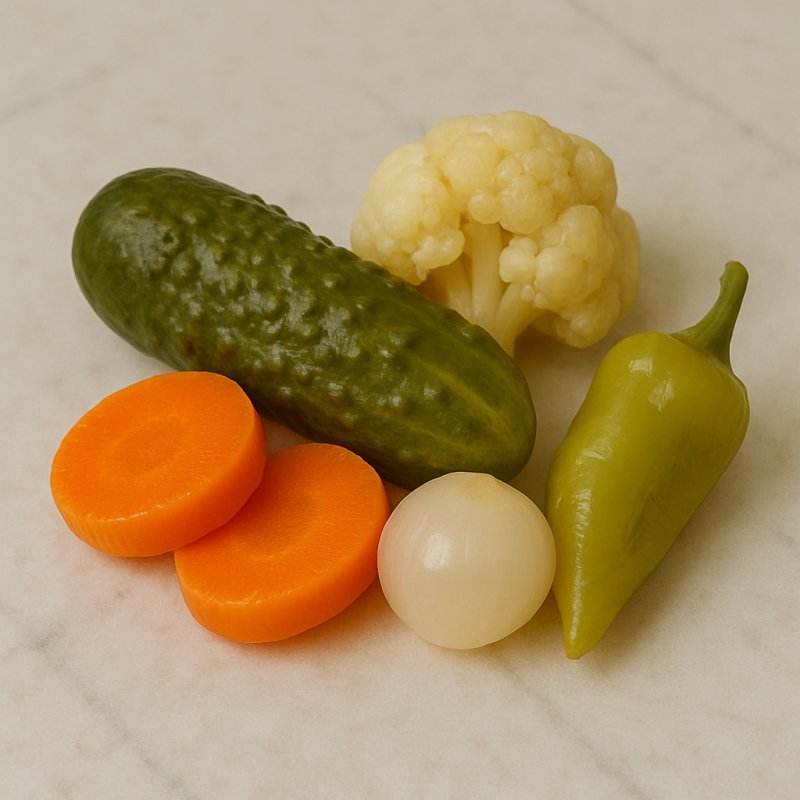
Colorful assortment of vegetables pickled in vinegar in a jar

Wiki about mixed pickles Nutri-Score A Vegan Yes Gluten-free Yes Lactose-free Yes Nut-free Yes
NUTRITION / 100 g
35 kcal 1.0 g Protein 7.0 g Kohlenhydrate 0.2 g Fett

Introduction

Jar with mixed pickles
Mixed Pickles are for me far more than a colorful side in a jar. As a 35-year-old editor who shuttles between deadlines, recipe tests and visits to the weekly market, these crunchy, tangy-spicy vegetable mixes have accompanied me through many kitchen phases. In Europe Mixed Pickles have a long tradition, born of clever food preservation, regional variety and a taste for experimentation. They combine bold flavors, vivid colors and a pleasant texture that works equally well in salads, sandwiches, bowls and warm dishes. Even the scent when opening a freshly pickled jar — a mix of acetic acid, mustard seed, bay leaf and pepper — announces that there is more than just “sour” at play.

What makes Mixed Pickles so special? It is the combination of different vegetables ripening together in a balanced brine of vinegar, water, salt, sugar and spices. Classic ingredients are cauliflower florets, carrot slices, cucumber-like pieces, pearl onions and peppers. Depending on the region, beans, kohlrabi, celery or even small apples may be added. This variety provides not only varied flavors but also an interesting mouthfeel: tender onion meets crunchy carrot, juicy pepper meets firm cauliflower. A colleague of mine swears by chopping Mixed Pickles on a board before grilling, coating them with olive oil and serving them as a quick “salsa substitute” — since then this idea has become one of my favorite shortcuts in summer.

Historically, Mixed Pickles are the result of pragmatism and enjoyment. Before refrigerators existed, pickling was the safest method to preserve harvests and keep vitamins for the winter. Many European kitchens therefore practiced large canning rituals in late summer: people gathered, cleaned vegetables, cooked spiced brines and stocked the pantry. My grandmother told how the jar with the loveliest cauliflower florets was traditionally saved for the first Sunday of Advent, because they wanted to liven up the festive roast with some acidity and color. This tradition continues — today perhaps less ceremonially, but no less pleasurable.

The culinary

Availability & types

Availability and types of Mixed Pickles is an interesting topic, because this colorful mix of pickled vegetables has a long history and is popular in many countries. Mixed Pickles are basically different vegetables preserved in a spicy liquid — usually a vinegar-based brine or a salty brine (also fermented). As a result they are crunchy, tangy, sometimes slightly sweet and often pleasantly spiced. For children from about 12 years old it is good to know: Mixed Pickles are not a complicated specialty product, but something you can find in many supermarkets — and in many tasty varieties.

Origin and history:
The idea of preserving vegetables is very old. People preserved vegetables hundreds of years ago so they would not spoil during the winter. Mixed Pickles — mixed pickled vegetables — are particularly common in Europe, North America and South and East Asia. In Germany Mixed Pickles became popular in the 19th and 20th centuries as a practical, versatile side dish. From England there are similar colorful mixes, often with mustard sauce (e.g. “Piccalilli”). In India there are “Achar”, heavily spiced pickles with chili, mustard, turmeric and oil. Although spices and vegetables vary, the basic idea remains the same: vegetables are made tasty and long-lasting by acid, salt or fermentation.

Where to find Mixed Pickles?
Today Mixed Pickles are very readily available:

  • Supermarkets: Usually on the shelf with pickles, olives and other preserves. Jars are available in various sizes.
  • Delicatessen and Asian shops: There you can find special variants with particular spices, for example Indian- or Korean-inspired mixes.
  • Weekly markets: Regional producers often offer homemade pickles with seasonal vegetables.
  • Online shops: Wide selection of international brands, organic products and rare varieties.
Typical vegetables in Mixed Pickles:
In

Details & nutrition

Property Value
Unit g
Average weight per piece 350
Calories per 100 35
Protein per 100 1.0
Carbohydrates per 100 7.0
Sugar per 100 6.0
Fat per 100 0.2
Saturated fat per 100 0.0
Monounsaturated fat 0.1
Polyunsaturated fat 0.1
Fiber per 100 1.8
Vitamin C (mg) per 100 8
Vitamin D (IU) per 100 0
Calcium (mg) per 100 25
Iron (mg) per 100 0.4
Nutri-Score A
CO₂ footprint 0.4 kg CO2e/kg
Origin EU
Gluten-free Yes
Lactose-free Yes
Nut-free Yes
Vegan Yes
Note Typically composed of cucumbers, cauliflower, peppers, onions, carrots in a vinegar-sugar-salt brine; nutritional values may vary slightly by brand.

Technical & scientific information

Mixed Pickles denote a heterogeneous mix of vegetables preserved in an acidic solution, technologically stabilized by osmosis, acid action and partly by fermentation. Composition varies regionally but typically includes cauliflower florets, cucumber pieces, pearl onions, peppers, carrots, beans and occasionally baby corn. The aim of processing is microbiological stabilization, sensory refinement and extension of shelf life while preserving texture and color.

Raw material selection and pretreatment: For Mixed Pickles fresh, firm vegetables with low physiological ageing are used. Quality control includes determination of dry matter, pH, nitrate content (relevant for leafy and root vegetables) and initial microbial load. Vegetables are washed, graded and, if necessary, blanched (typically 80–95 °C for 1–3 minutes) to inactivate enzymes such as polyphenol oxidase and peroxidase and to achieve a more uniform texture after acidification. Blanching times are validated according to tissue thickness and target texture to partially solubilize pectin structures and hemicelluloses.

Pickling liquid and acid profile: The brine typically consists of potable water, table salt (NaCl), acetic acid (acetate system, pH often 2.8–3.6), optionally citric acid or lactic acid, sugar (sucrose or glucose-fructose syrup) and spices (mustard seeds, pepper, bay leaf, dill, turmeric). The salt-induced osmotic gradient causes partial water release from plant cells and supports crispness. The final pH ensures inhibitory conditions for pathogenic microbes such as Clostridium botulinum; in vinegar-acid pickles without active fermentation a pH below 4.0 is targeted. Total acidity (expressed as acetic acid) often ranges from 0.6–1.5 g/100 g, depending on the recipe.

Fermentative versus non-fermentative production: Mixed Pickles can be produced as direct vinegar-preserved products or as fermented variants

Wiki entry for: mixed pickles
Active now: 17 visitors of which 2 logged-in members in the last 5 minutes