Menu & categories

Mint

Aromatic culinary herb with a fresh, menthol-like note.

Wiki about mint Nutri-Score A Vegan Yes Gluten-free Yes Lactose-free Yes Nut-free Yes
NUTRITION / 100 g
44 kcal 3.3 g Protein 8.4 g Kohlenhydrate 0.7 g Fett

Introduction

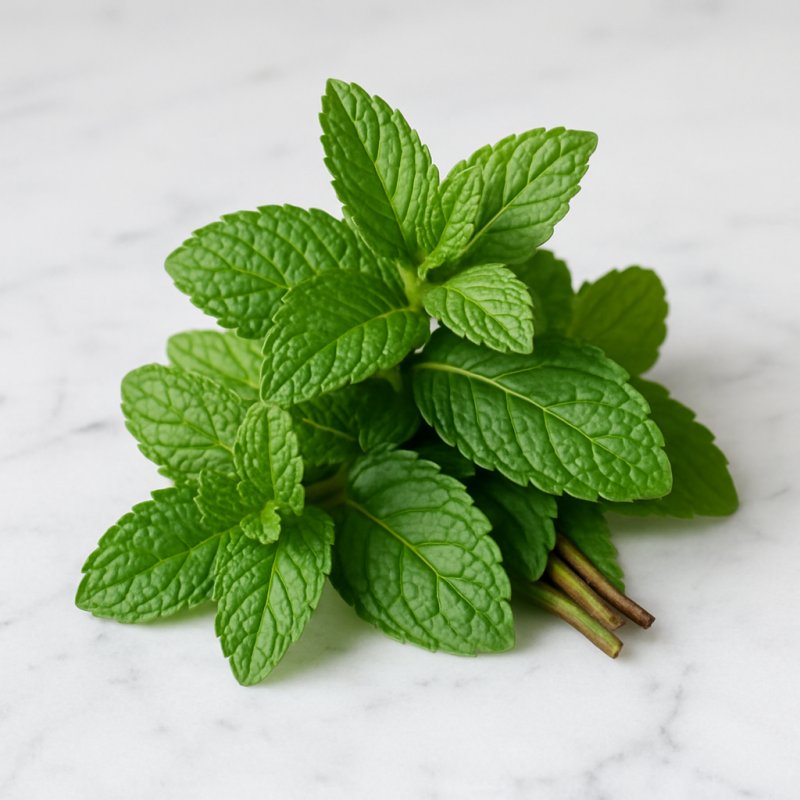
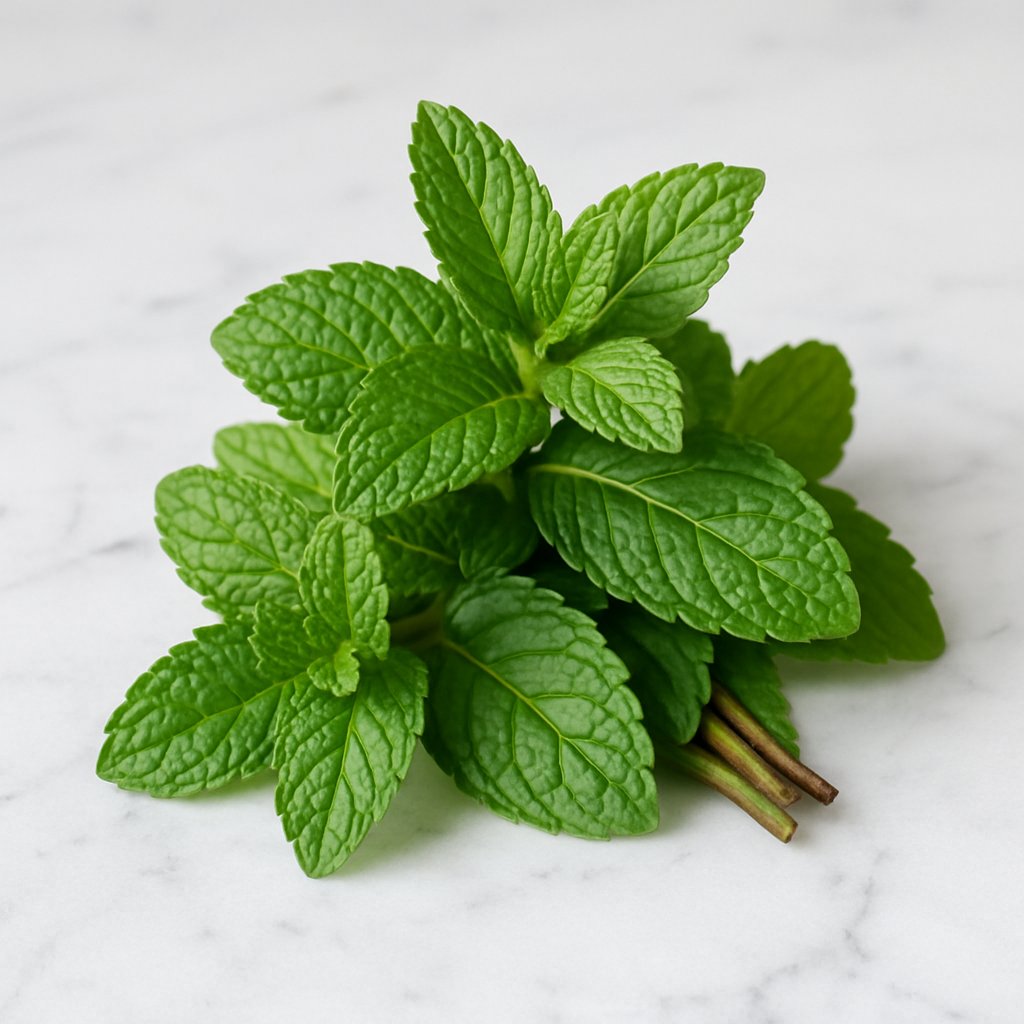
Close-up of fresh mint leaves
Mint, for me, is one of those ingredients that in the kitchen cupboard works like a small energy booster: barely a leaf, and the dish comes alive. I still remember a summer evening when a friend dropped by spontaneously and I only had a pot of mint on the windowsill. From an improvised lemonade a whole menu emerged, because the herb told so many stories.

What I love about mint is its versatility. Fresh or lightly crushed it gives drinks, salads and desserts an instantly recognizable freshness. Dried it remains aromatic, but in a different way – warmer, slightly earthier. In my kitchen I often use mint as a small counterpoint to rich foods, for example with lamb or creamy sauces, because it cleanses the palate and makes the dish feel lighter.

Practical things that have helped me use mint morning and evening:


  • Simple storage trick: place stems in a glass of water and loosely cover with a plastic bag – stays fresh longer.
  • Harvest time: early in the morning the aromas are most intense.
  • Pairings: citrus fruits, cucumber, yogurt, dark chocolate and peas are reliable partners.
I like to experiment: sometimes as mint oil in a quick dressing, sometimes coarsely chopped over a tomato. A colleague of mine was once skeptical until I offered him a jar of mint yogurt with toasted pine nuts – afterwards he was converted and brought a bag of fresh mint leaves to our next meeting.

Mint has not only culinary but also cultural facets. In some countries it accompanies savory dishes, in others it is associated with desserts and sweet drinks. For me it is a multitasker that brings both boldness to a dish and comfort: a leaf that refreshes, soothes and makes you curious about the next recipe.

Availability & types

Availability and types of mint

Mint is a very common and popular plant. You often find it in gardens, in supermarkets or in drinks and confections. Mint grows easily and can be cultivated in many places around the world. Because it is so versatile, it comes in many forms: as fresh leaves, dried, as an oil or in a pot to take home. This makes it fairly available year-round.

Where does mint come from?
Mint originally comes from Europe, Asia and the Near East. People there have used it for a very long time – for cooking, as tea or as medicine. You can imagine it a bit like apples or tomatoes: they were discovered in certain places and then carried everywhere because they are useful and tasty.

Growing regions
Mint grows best in temperate to warm regions with sufficient water. Important growing regions include:

  • Europe (for example in the Mediterranean region)
  • Asia (especially India and China)
  • The Middle East
  • North America (there are also large cultivation areas in the USA)
Many people also grow mint at home in the garden or on the balcony. In warm countries mint is sometimes cultivated on large fields. In colder areas it remains in pots or is made available year-round through greenhouses.

Popular varieties and types
There are many different mint varieties. Each variety tastes a little different — some are stronger, some milder, some even have distinctive aromas. Here are some well-known varieties:

  • Spearmint (green mint): Mild and slightly sweet, often used for salads and cocktails.
  • Peppermint (pfefferminze): Stronger, cooler taste, often found in toothpaste or candies.
  • Apple mint: Has a slightly fruity aroma reminiscent of apples.
  • Chocolate mint: Smells and tastes slightly of chocolate.
  • Water mint: Likes to grow in moist places and has a strong flavor.
Some mints are “wild”, meaning they grow without care in nature. Others are cultivars that people have bred for certain aromas or looks.

In what form is mint available?
You can buy or use mint in various forms:

  • Fresh leaves: In supermarkets or markets, often sold in bunches or pots.
  • Potted plants: Convenient if you want to cut fresh leaves at home.
  • Dried: As tea or for seasoning – longer shelf life but less intense flavor.
  • Frozen: Sometimes as herb cubes or leaves, handy for smoothies or sauces.
  • Essential oil: Very concentrated – only a few drops are enough; use sparingly.
  • Syrups and sauces: For drinks or as a seasoning (e.g. mint sauce for lamb).
Mint is therefore easy to obtain and available in many kinds and forms. If you plant mint in the garden, it often grows like a green carpet and spreads. This is convenient if you like a lot of fresh mint, but you sometimes have to tame it a bit so it doesn't overgrow other plants. That way mint remains for everyone – whether cook, tea drinker or gardener – a simple and tasty ingredient.
Details & nutrition

Property Value
Unit g
Calories per 100 44
Protein per 100 3.3
Carbohydrates per 100 8.4
Sugar per 100 0.7
Fat per 100 0.7
Saturated fat per 100 0.2
Monounsaturated fat 0.1
Polyunsaturated fat 0.2
Fiber per 100 6.8
Vitamin C (mg) per 100 31.8
Vitamin D (IU) per 100 0
Calcium (mg) per 100 199
Iron (mg) per 100 11.9
Nutri-Score A
CO₂ footprint 1.2 kg CO2e/kg
Origin Germany/EU (depending on the season), partly imported
Gluten-free Yes
Lactose-free Yes
Nut-free Yes
Vegan Yes
Note Nutritional values may vary depending on variety (e.g., peppermint/spearmint) and freshness; typically used in small amounts.

Technical & scientific information

Mint refers to a group of several species and varieties of the genus Mentha within the family of Lamiaceae. Well-known representatives include peppermint (Mentha × piperita) and spearmint or curly mint (Mentha spicata). Many cultivated forms are natural or human-favored hybrids; for example, peppermint is a sterile hybrid of water mint and spearmint. Mints are perennial, heavily branching plants with aromatic leaves whose scent is shaped by volatile secondary plant compounds.

Chemical composition and constituents
The characteristic aroma of mint is based mainly on the essential oils stored in the leaf. Important components are menthol, menthone, carvone, 1,8‑cineole and other monoterpenes. The exact composition varies greatly between species, varieties, site factors and harvest time. In addition, mint leaves contain polyphenolic compounds such as rosmarinic acid and various flavonoids, as well as tannins, bitter substances, and small amounts of vitamins and minerals.

Nutritional values
Fresh mint has a high water content and low calorie content. In usual culinary amounts it provides little energy, but it contributes fiber, small amounts of carbohydrates, proteins and fats, and micronutrients. Minerals such as potassium, calcium and iron as well as vitamins C and provitamin‑A carotenoids are present in measurable but not high concentrations. The nutritional significance arises mainly from the supply of secondary plant compounds and aromas.

Processing methods
Different procedures are used for different purposes:

  • Drying: Air drying, gentle hot‑air drying or freeze‑drying for preservation; freeze‑drying preserves aromas best.
  • Distillation: Steam or water‑steam distillation to obtain the essential oil; yield and composition depend on temperature and time.
  • Extraction: Solvent or CO2 extracts to obtain non‑volatile polyphenols or concentrated flavors.
  • Preservation: Freezing, salting or drying for storage; light, oxygen and heat promote the degradation of volatile components.
Pharmacology and health
Mint preparations are traditionally used to relieve digestive complaints, to stimulate appetite and for headaches. Menthol acts as an agonist of the cold receptor TRPM8, which explains the cooling sensation and refreshing effect, and has a spasmolytic effect on smooth muscle. Clinical studies show efficacy of enteric‑coated peppermint oil in irritable bowel syndrome with regard to pain reduction and improvement of bowel transit. Antimicrobial and antioxidant effects are attributed to polyphenolic components, but are dose‑dependent and mostly demonstrated in vitro.

Side effects and contraindications
Concentrated essential oils can be irritating or toxic in overdose; menthol can cause neurological symptoms in small children or with high oral doses. Peppermint oil can relax the lower esophageal sphincter and thereby worsen gastroesophageal reflux. Allergic reactions are rare but possible. In chronic illnesses or with concurrent medication it is advisable to consult medical professionals.

Agronomy and quality factors
Harvest time, site, soil moisture and pruning influence the content and profile of essential oils. For pharmaceutical and food applications, quality parameters such as menthol content, purity, pesticide residues and microbiological quality are controlled.

In summary, mint is a versatile ingredient with clearly definable chemical main components and a wide range of applications in cuisine, pharmacy and cosmetics. Scientific studies support some traditional uses, but also point to precautions when using highly concentrated preparations.

Wiki entry for: mint
Active now: 18 visitors of which 2 logged-in members in the last 5 minutes