Menu & categories

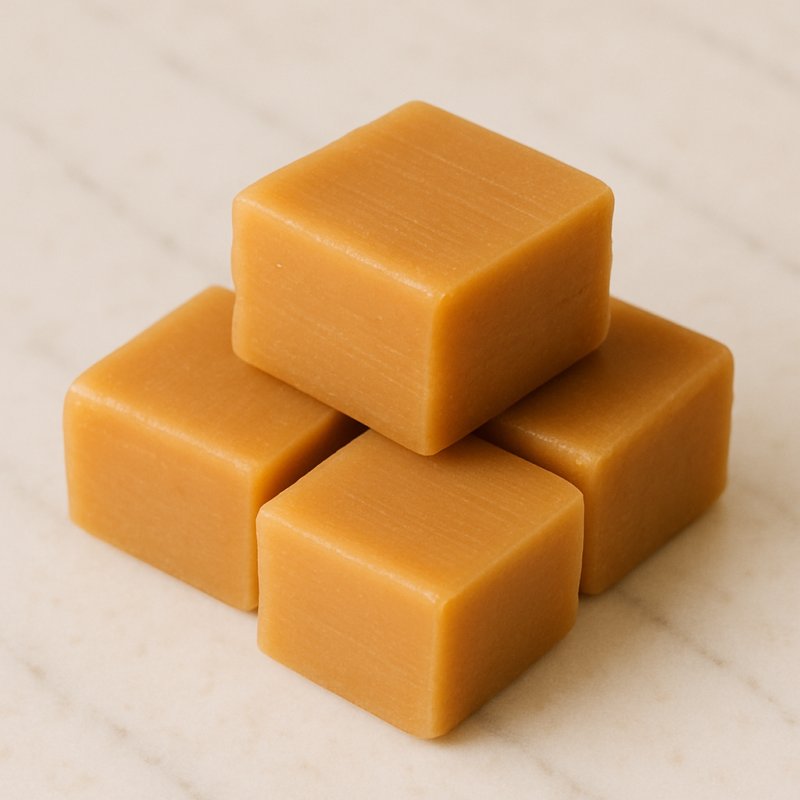
Milk caramels

Soft caramel candies made from milk and sugar

Wiki about milk caramel Nutri-Score E Vegan No Gluten-free Yes Lactose-free No Nut-free Yes
NUTRITION / 100 g
420 kcal 3.0 g Protein 80.0 g Kohlenhydrate 10.0 g Fett

Introduction

Several milk caramels on a plate
I love milk caramels – those velvety bites that taste of childhood and cozy afternoons. When I hear the word I picture a warm kitchen, the sweet aroma of caramelized sugar and the patient stirring motions needed for milk and sugar to become something magical. A colleague once brought a tin of homemade milk caramels to the office; I still remember how we secretly scraped at the lids because we couldn't believe something so plain could be so perfect.

Milk caramels are simple in their basic ingredients and refined in technique. At their core you need sugar, milk or cream and often some butter. The art lies in slow reduction and precise temperature control so the sugar doesn't burn and the mass achieves the right chewy-soft consistency. I once tried to make a large batch on a camping stove – an experiment that required a lot of attention and an improvised sunshade because the sugar cloud became quite dramatic.

The variations are as diverse as the memories they evoke. Some like their caramels with a pinch of sea salt, others add vanilla or roasted nuts. In my family there was a tradition of coating a few pieces with cocoa; that creates a wonderful balance between creamy sweetness and a dark bitter note. I remember a market stall in a small town where an older woman proudly offered her tied bags – she said the secret was patience, and I believe her.

Milk caramels are also practical: they make great gifts, a component for desserts, or simply a quick mood lift. A few tips from my experience:

  • Heat slowly: Temperature control prevents a bitter taste.
  • Stir, but don't overdo it: Too much air makes the mass crumbly.
  • Experiment: A pinch of salt or a splash of liqueur changes the aroma dramatically.
In the end milk caramels are more than just sweets: they are an invitation to take time, to share and to enjoy the small pleasures of life. I often take a piece, close my eyes and think of all the unexpected conversations that a simple sweet once made possible.

Availability & types

Availability and types

Milk caramels are sweets that can be found easily in many countries. They originally come from regions where milk and sugar were abundant, such as parts of Europe and North America. Today milk caramels are produced almost everywhere because the ingredients are simple: milk, sugar and often some butter or cream. You can therefore buy them in supermarkets, corner shops, candy stores as well as at kiosks or vending machines. In some countries they are also sold at weekly markets or made in small manufactories where craftsmen still cook the caramels by hand.

If you look for milk caramels you will discover different types. These differ mainly in texture, flavor and added ingredients. Here are the main types, simply explained:

  • Soft milk caramels: These caramels are chewy and easy to bite, almost like chewing gum but not as elastic. They are ideal for children who like something to nibble on. They are also called "toffees" or "soft caramels".
  • Hard milk caramels: These are firm and brittle, similar to hard candies. You can suck them until they get smaller or carefully bite them. They often keep longer and are convenient to take on the go.
  • Fillings and variations: Some milk caramels have a filling, for example of chocolate, nut paste or fruit jellies. Others are sprinkled with sea salt or contain cookie pieces. These variants bring different surprises when eating.
  • Flavors: Besides the classic milky-sweet taste there are versions with vanilla, caramel butter, coffee, honey or caramel with different degrees of roasting, which can taste more nutty or more malty. These small differences are like different ice cream flavors: they're all ice cream, but each variety has its own taste.
  • Vegan or lactose-free variants: For people who can't tolerate milk or who don't eat animal products, there are also milk-caramel-like sweets. These are made with plant milks such as soy, oat or coconut and taste similar but are free of cow's milk.
Availability also depends on where you live. In larger cities you will usually find a wider selection of brands and specialty varieties, while in smaller towns there are often only the usual supermarket options. Bakeries and confectioneries may offer handmade caramels that are often fresher and made with special ingredients like real vanilla pods, caramel butter or sea salt. Such handmade caramels can be more expensive because they are produced in small quantities and with great care.

When traveling, it's worth trying local specialties: in Argentina, for example, "dulce de leche" is very popular, a kind of milk jam that often serves as a base for caramel bonbons. In Scandinavia there are saltier variants, and in the United Kingdom toffees are often very soft and buttery.

In short: milk caramels come in many forms and flavors, from soft to hard, with or without filling, traditional or vegan. You can find them almost everywhere, but there is more choice in larger cities and specialized shops. Try different varieties – that way you'll quickly find your favorite caramel.
Details & nutrition

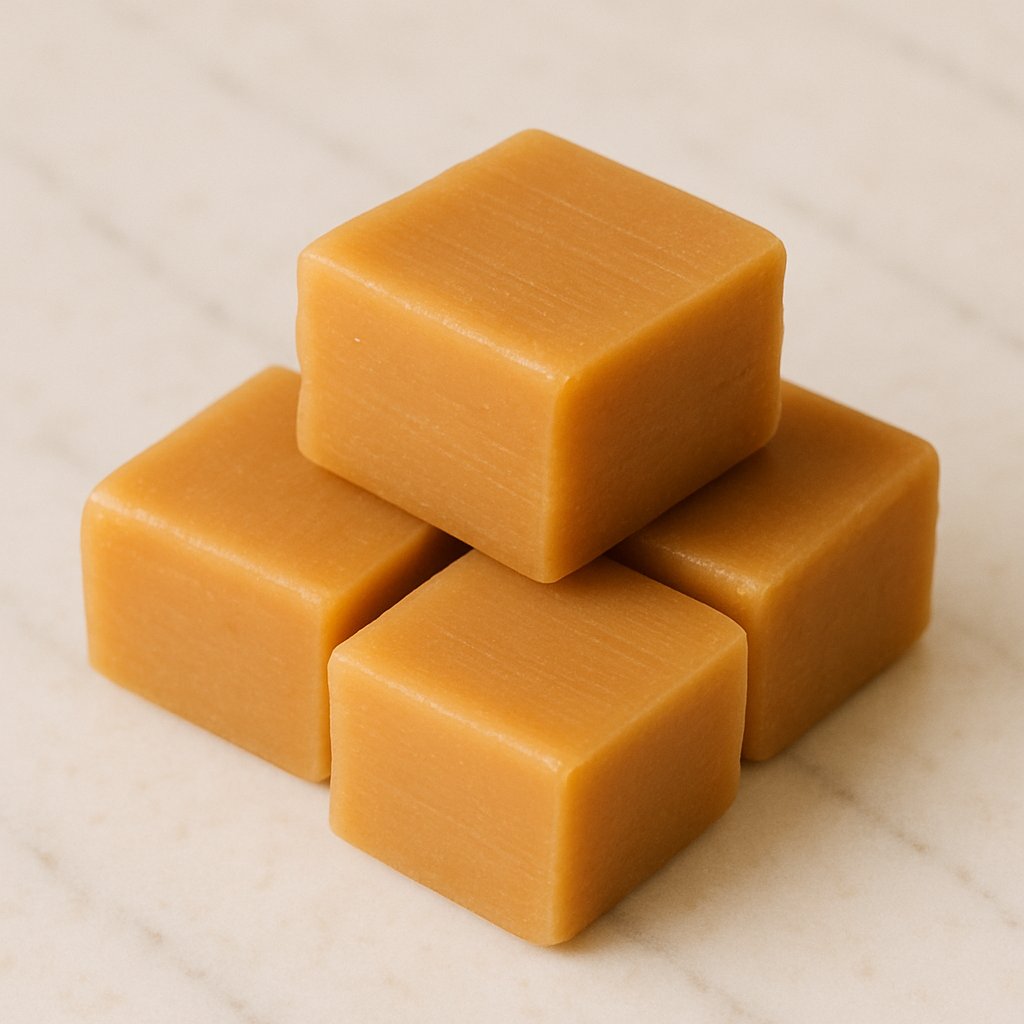
Property Value
Unit g
Average weight per piece 6
Calories per 100 420
Protein per 100 3.0
Carbohydrates per 100 80.0
Sugar per 100 60.0
Fat per 100 10.0
Saturated fat per 100 6.0
Monounsaturated fat 3.0
Polyunsaturated fat 1.0
Fiber per 100 0.0
Vitamin C (mg) per 100 0.0
Vitamin D (IU) per 100 0.0
Calcium (mg) per 100 100
Iron (mg) per 100 0.1
Nutri-Score E
CO₂ footprint 3.0
Origin Varies by manufacturer, often EU
Gluten-free Yes
Lactose-free No
Nut-free Yes
Vegan No
Note Values are average values for commercially available milk caramels; exact nutritional values may vary by manufacturer.

Technical & scientific information

Milk caramels are confectionery products made from heated milk, sugar and often butter or vegetable fats, in which controlled caramelization and Maillard reactions produce characteristic color, texture and flavor diversity. As an ingredient in pastry and food manufacturing, milk caramels are used both as finished candies and as pastes or syrups. Their physicochemical properties depend on the starting raw materials, moisture content and the thermal treatment scheme.


Chemical composition and reaction processes

The basic constituents of milk caramels are lactose, milk proteins (mainly casein and whey proteins), fats, and sucrose or other sugars such as glucose and invert sugar. Under heat two main processes occur: the classical caramelization of sugars (thermal decomposition and polymerization of sucrose) and the Maillard reaction between reducing sugars (e.g. lactose or glucose) and amino groups of proteins. These reactions generate aroma compounds, brown pigments (melanoidins) and influence texture.

Ingredients and nutritional values

  • Typical macronutrient content per 100 g is about 350–450 kcal, predominantly from carbohydrates (50–80 g), followed by fats (5–15 g) and proteins (2–8 g), depending on the recipe and milk content.
  • The content of simple sugars is high; lactose and sucrose contribute to rapidly available energy.
  • Trace minerals such as calcium and phosphorus come from the milk; vitamins are mostly reduced by heating.

Processing methods

Production typically includes the following steps:

  • Preparation of the liquid: milk, cream or whey are mixed with sugar, glucose syrup and fat sources.
  • Thickening by cooking: the mixture is cooked under stirring to remove water and reach the desired Brix value. Temperature and time govern the extent of Maillard and caramelization reactions.
  • Crystallization and texture control: addition of glucose syrup or invert sugar reduces the tendency of sucrose to crystallize. Quenching and mechanical working (kneading/beating) influence the final firmness.
  • Shaping and cooling: the caramel mass is shaped, cut or extruded and then cooled.

Sensory and physical properties

Milk caramels exhibit a wide range of textures: soft and chewy, soft-flaky, or hard to crumbly, depending on residual moisture content and the sugar crystal structure. Colors range from cream-white to deep golden, controlled by reaction intensity. Aroma components include pyran- and furan-like compounds, Strecker aldehydes and other heterocyclic compounds from Maillard and caramelization reactions.

Health aspects

Milk caramels are energy-dense and, due to their high sugar content, are not recommended for excessive consumption. Individuals with lactose intolerance may be sensitive to lactose fractions present in caramelized milk; partial breakdown by heat can reduce symptoms but does not reliably eliminate them. Allergies to milk proteins preclude consumption. Heating can produce small amounts of potentially undesirable compounds such as hydroxymethylfurfural (HMF); concentrations are usually within regulated food limits but are a parameter of quality control.
Storage and quality assurance

Shelf life depends on moisture, packaging and formulation. The hygroscopic nature of sugars requires moisture-free packaging to prevent sticking or sugar crystallization. Sensory and chemical analyses (water activity, HMF, peroxide value for fat stability) are common metrics in industrial quality assurance.

Overall, milk caramels are a technically versatile product with complex chemical processes whose control is decisive for taste, color and texture. They combine energy density with milky flavors, but pose considerations for sensitive individuals and regarding sugar intake that should be taken into account in formulation and consumption.

Wiki entry for: milk caramel
Active now: 21 visitors of which 2 logged-in members in the last 5 minutes