Menu & categories

Milk

Low-fat cow's milk with 1.5% fat – mild and versatile.

Wiki about milk 1.5% fat Nutri-Score B Vegan No Gluten-free Yes Lactose-free No Nut-free Yes
NUTRITION / 100 ml
47 kcal 3.4 g Protein 4.9 g Kohlenhydrate 1.5 g Fett

Introduction

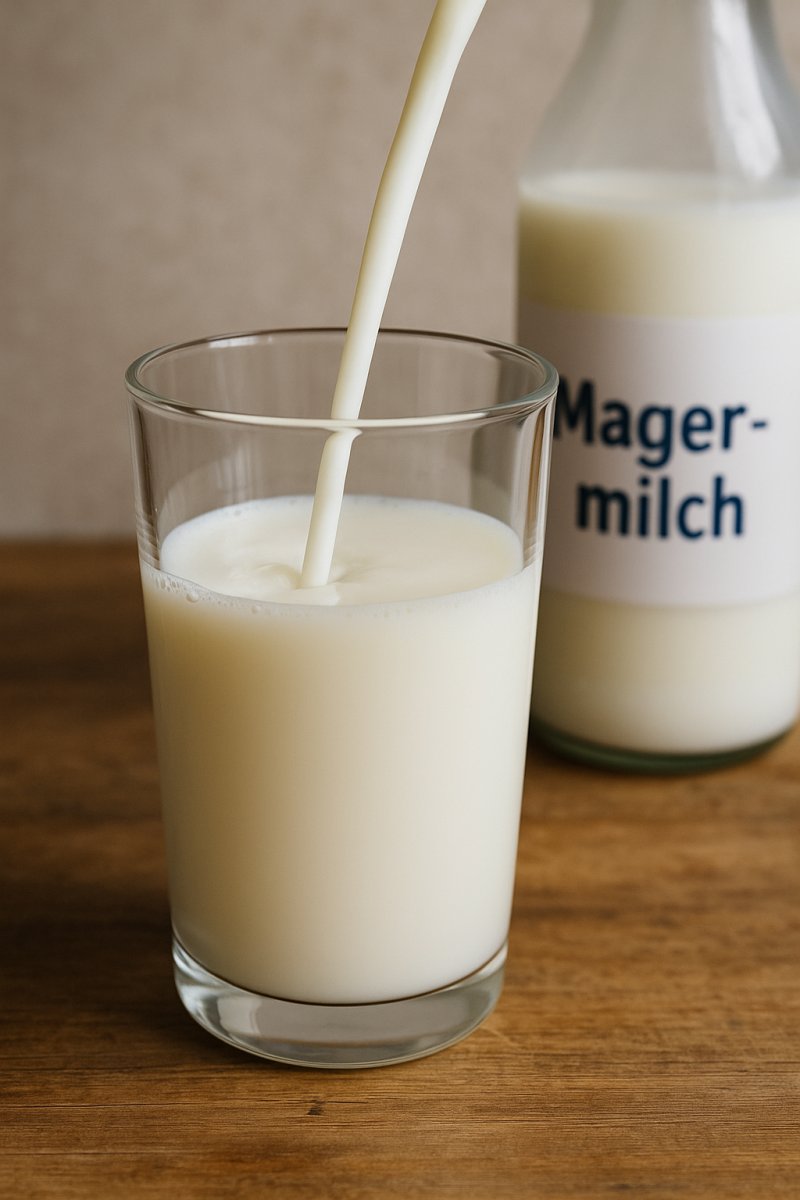
Glasses with fresh milk
I often consider 1.5% fat milk the underrated multitool of the refrigerator. For me it is the perfect bridge between the creamy comfort of whole milk and the lightness of low‑fat variants. I still remember a rainy Saturday when I was making pancakes with a friend and accidentally grabbed the 1.5% instead of whole milk: the result was more tender, but not heavy, and since then I almost always keep this variety on hand.

In terms of taste it gives a pleasant milky note without being intrusive, and the texture is balanced enough to create a fine crema when frothed for a cappuccino. In the kitchen it forgives mistakes; it curdles less quickly in sauces than very skimmed milk and still provides a lighter sauce than whole milk. A colleague of mine swears by using it for his tomato sauce because it rounds the flavor without weighing it down.

Practically it finds use in many areas: from muesli and coffee to puddings and casseroles. I like to use it in baking when I want some moisture without adding too much fat. For béchamel I reduce some butter and let the milk provide a silky consistency. Sometimes I mix 1.5% milk with a splash of cream for desserts when I need a little extra shine.

  • Advantages: Less calories than whole milk, but creamier than skim milk.
  • Uses: Coffee, muesli, sauces, baking, desserts.
  • Tips: Froth briefly over medium heat; do not cook too long to preserve the milky note.
For people with lactose sensitivity it is of course not ideal, but for most households it is a good compromise of taste and lightness. When shopping I pay attention to the freshness date and origin, because that makes a subtle difference. Overall 1.5% fat milk is a reliable, versatile ingredient I never want to be without in my kitchen.

Availability & types

1.5% fat milk is a very common type of milk that can be found in many stores. The name already says a lot: the number 1.5% shows how much fat is in the milk. That is less fat than in whole milk (usually 3.5%), but more than in very lean milk. You can imagine it like different notebooks: each notebook has a different "weight" – for milk this is the fat content.

Origin
Milk comes from cows that live on farms. In Germany and many European countries milk often comes from farms in regions with many meadows, because cows like to eat grass. Well‑known regions are for example Lower Saxony, North Rhine‑Westphalia, Schleswig‑Holstein and Bavaria. But milk can also come from other countries. Sometimes the packaging states whether the milk comes from the local region – that is useful because it is usually processed quickly after milking.

Production areas
Milk is not "grown" like vegetables, but produced. Production takes place where there are many dairy farms. In rural areas with plenty of pasture there are many dairy cows. Milk is milked on the farms, collected in tanks and then brought to dairies. There it is tested, cleaned and processed before being put into cartons or bottles for the shop.

Available types and variants

  • Fresh pasteurized milk: This milk is heated briefly so that germs are reduced. It must be kept in the refrigerator and lasts for several days up to the indicated shelf life.
  • UHT milk (longer shelf life): This milk is heated very strongly so that it can stand in the supermarket uncooled for a long time. After opening it goes into the refrigerator.
  • Organic milk: Comes from farmers who follow ecological rules. That means: more space for the cows, fewer artificial additives and often feed without chemical fertilizers. The word organic is like a seal that says: special attention has been paid to nature here.
  • Lactose‑free milk: Some people cannot tolerate the sugar in milk (lactose) well. In lactose‑free milk this sugar is altered so that it is better tolerated, almost like decaffeinated coffee for people who don't want caffeine.
  • Regionally packaged: Some packages indicate from which farms the milk comes. This is useful if you want to support local milk.
  • Packaging forms: Milk is available in cartons, bottles or even pouches. Cartons are lightweight, bottles are often reusable, and pouches save space.
  • Flavored varieties: For regular 1.5% milk sweet flavors are not common, but there are flavored milk drinks with vanilla or chocolate – those are separate products.
What to look for
When buying it helps to check the expiration date, the "Organic" label or regional indications. Fresh milk needs space in the refrigerator, UHT milk does not before opening. For people with intolerances there are lactose‑free variants.

In summary: 1.5% fat milk is a mild, widespread milk made from cow's milk, often from regional farms. It is available as fresh or long‑life, as organic or lactose‑free versions and in various packaging forms, so that there is a suitable option for almost every taste and need.
Details & nutrition

Property Value
Unit ml
Calories per 100 47
Protein per 100 3.4
Carbohydrates per 100 4.9
Sugar per 100 4.9
Fat per 100 1.5
Saturated fat per 100 1
Monounsaturated fat 0.4
Polyunsaturated fat 0.1
Fiber per 100 0
Vitamin C (mg) per 100 0
Vitamin D (IU) per 100 0
Calcium (mg) per 100 120
Iron (mg) per 100 0.03
Nutri-Score B
CO₂ footprint 0.12
Origin Germany/EU
Gluten-free Yes
Lactose-free No
Nut-free Yes
Vegan No
Note Nutritional values may vary slightly depending on brand and processing.

Technical & scientific information

1.5% fat milk denotes a standardized cow's milk with a fat content of about 1.5 percent by weight. It belongs to the partially skimmed varieties and is offered in Europe and many other regions as everyday milk. The label "1.5% fat" refers to the proportion of milk fat relative to the weight of the liquid and is an important quality and labeling characteristic.

Composition and nutritional values
Typical nutritional information per 100 g of 1.5% milk is approximately: energy 46–50 kcal (190–210 kJ), fat 1.5 g, of which saturated fatty acids about 1.0 g, protein 3.3–3.5 g, carbohydrates (as lactose) approx. 4.7–4.9 g, water around 90–91 g. Minerals and vitamins are present in varying amounts, including calcium (~120 mg/100 g), phosphorus, potassium and the water‑soluble B‑group vitamins (e.g. riboflavin, vitamin B12). Fat‑soluble vitamins like A and D are reduced in partially skimmed milk compared with whole milk; however, they are often re‑added during industrial processing (re‑enrichment).

Main biochemical components
Milk consists mainly of water and dispersed components: caseins form micelles that bind calcium and phosphate and are responsible for the white opacity. Whey proteins (e.g. β‑lactoglobulin, α‑lactalbumin) are soluble and more heat‑sensitive. Lactose is the predominant disaccharide, responsible for sweetness and osmotic properties. Milk fat occurs as fat globules surrounded by the milk fat globule membrane (MFGM), which contains phospholipids and bioactive proteins. The fatty acid composition is characterized by a high proportion of saturated fatty acids (palmitic acid, stearic acid) and a share of unsaturated fatty acids (oleic acid); conjugated linoleic acids (CLA) are also present in trace amounts.

Processing
Production steps include skimming (centrifugation) to set the fat content, homogenization to reduce fat globule size and stabilize the emulsion, and heat treatment for microbial safety. Common processes are pasteurization (HTST, e.g. 72 °C for 15 s) and UHT treatment (e.g. 135–150 °C for a few seconds). Homogenization affects mouthfeel and foaming behavior, pasteurization reduces microorganisms without completely destroying micronutrient properties. Post‑treatments may include re‑enrichment with vitamins A/D and the addition of stabilizers in some products.

Microbiology and shelf life
Pasteurized 1.5% milk has a significantly reduced microbial count, but is not sterile; opened packages should be refrigerated and consumed within a few days. UHT milk is unopened and shelf‑stable for many months at room temperature, but loses slightly altered flavor notes due to thermal treatment. Raw milk carries higher health risks from pathogenic bacteria and is therefore regulated in many countries.

Health aspects and use
1.5% milk offers a balanced nutrient profile with calcium and high‑quality proteins at reduced fat content. Lactose‑free milk is available for people with lactose intolerance. Cow's milk protein allergy is immunologically based and can occur with partially skimmed milk as well. From a nutritional science perspective, the lower fat content reduces energy intake and the share of saturated fatty acids compared with whole milk, while micronutrients are retained or can be supplemented.

Technological and sensory properties
Sensorily 1.5% milk is less full‑bodied than whole milk, but shows neutral milky aromas and good processability in coffee, baked goods and sauces. Homogenization and heat treatment influence foam stability and flavor. Packaging (cartons, PET bottles, glass) protects against light and aroma loss and affects shelf life.

Overall, 1.5% fat milk is a widely used, technically standardized ingredient that combines nutrient density, microbial safety and practical properties for everyday use while nutritionally occupying an intermediate position between whole milk and skimmed milk.

Wiki entry for: milk 1.5% fat
Active now: 23 visitors of which 2 logged-in members in the last 5 minutes