Menu & categories

Leberkäse (Bavarian meatloaf)

Hearty Bavarian meat specialty made from finely ground meat batter

Wiki about meatloaf Nutri-Score D Vegan No Gluten-free No Lactose-free Yes Nut-free Yes
NUTRITION / 100 g
270 kcal 14 g Protein 4 g Kohlenhydrate 22 g Fett

Introduction

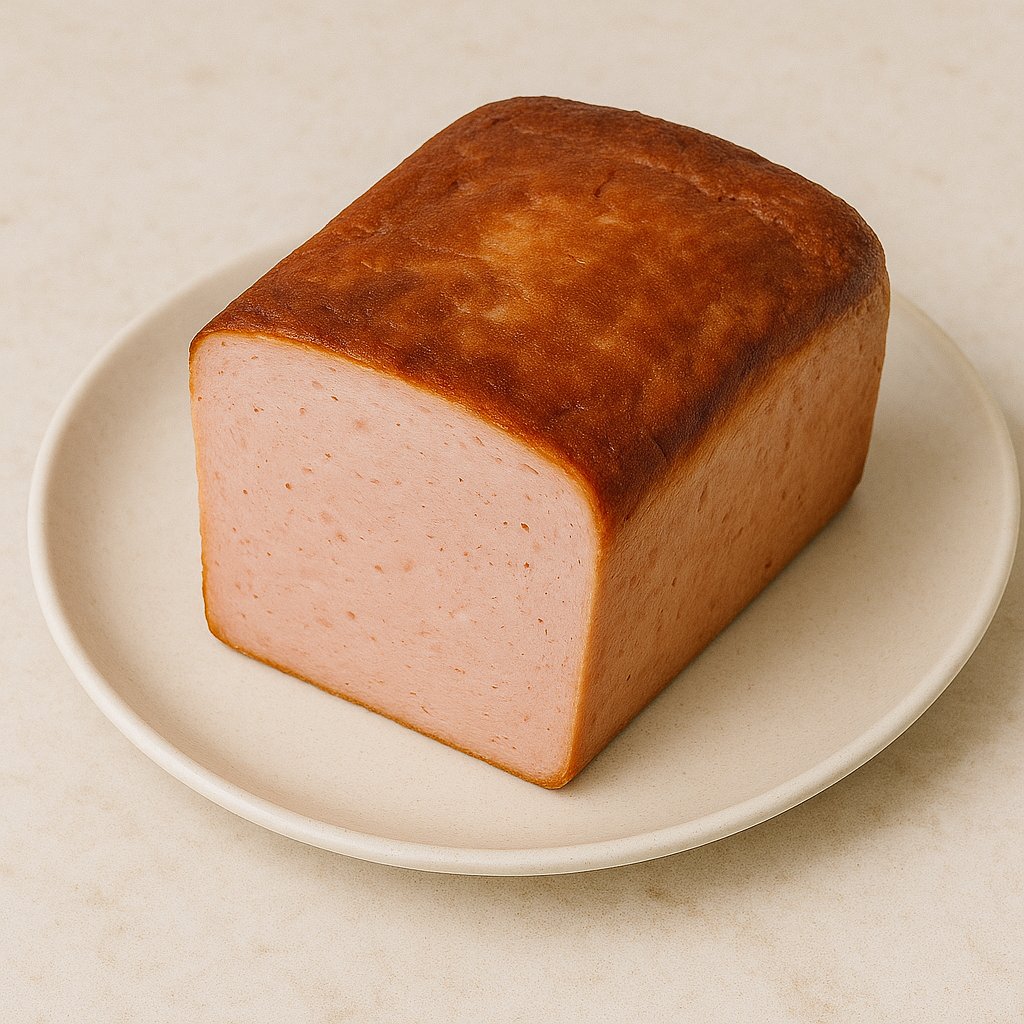
Sliced Leberkäse on a wooden board
Leberkäse is for me one of those simple wonders you prefer to discover warm and with mustard in hand. I still remember a Saturday morning at the market when the scent of freshly fried slices drifted through the stalls and I stopped spontaneously at a small stand. An older gentleman handed me a tiny sample, and in that moment I knew: Leberkäse is more than just a snack, it is a piece of reliable home cooking with surprising versatility.

The preparation looks unspectacular at first glance: finely chopped or finely ground meat, salt, spices and sometimes egg added, then baked until the crust is golden brown. Nevertheless every loaf of Leberkäse holds regional secrets. In some areas people like it coarsely ground and spicy, in others more tender and almost pâté-like. A colleague of mine swears by the breakfast version with a fried egg, while a friend prefers it cold on bread with a pickled gherkin – both valid, delicious interpretations.

For me Leberkäse has a nostalgic side. It recalls family meals, quick breaks between appointments and small everyday pleasures. When sliced the texture reveals itself: homogeneous, yet with character. The crust that forms when searing provides the crispy contrast to the soft center. A good slice needs hardly more than a strong mustard or a piece of freshly baked bread to shine.

I like to try variations and have experimented with versions filled with cheese or piquant herbs. Sometimes I'm adventurous and season lightly with nutmeg and pepper, sometimes I stay classic. When I have guests I serve thin slices with small wooden picks and different mustards; conversations often start with the first bite.

Leberkäse is also practical: it keeps well, can be eaten cold or reheated and is excellent for quick recipes. Anyone looking for an uncomplicated, comforting dish will find in Leberkäse a reliable companion that is down-to-earth but never boring.

  • Typical: fine to coarsely ground, baked, with a golden crust.
  • Serving suggestions: warm with mustard, cold on bread, with fried egg or as finger food.
  • Character: hearty, practical, versatile.
In my kitchen Leberkäse is a faithful friend that always performs well on days when things need to be quick and tasty. I appreciate it because it creates a connection to tradition while leaving room for experiments — a combination that repeatedly brings me back to the stove.

Availability & types

Availability and types

Leberkäse is a very common sausage specialty found in many Central European countries. Although the name "Leberkäse" sounds like it contains liver, most varieties contain little or no liver. It is usually sold fresh in supermarkets, at butcher shops (meat shops) or at bakeries with a deli counter. In rural areas you often get it directly from the butcher; in cities it is also found in supermarket branches or served warm at snack stands.

Origin: Leberkäse originally comes from the German-speaking area, especially Germany and Austria. The term is very old and has developed differently regionally. The best-known form is often simply called "Leberkäse" or "Fleischkäse" in Bavaria and Austria. It is said that the recipe idea dates back to the Middle Ages, but the form we know today emerged in the 19th century. Although the name refers to liver, the recipe was later changed so that liver is usually no longer included.

Production areas / regions of origin: Leberkäse is not grown like vegetables but produced. Nevertheless there are regions particularly known for good Leberkäse producers. These include:

  • Bavaria – here there are many butcheries using traditional recipes.
  • Austria – especially in Vienna and surrounding areas Leberkäse is a popular snack dish.
  • Southern Germany – in regions like Swabia or Franconia you can find local variants with small differences in the spice profile.
Available types and variants: Leberkäse comes in many different variants. You can think of it as a basic recipe that can be changed in many ways. Here are the most common types, simply explained:

  • Classic Leberkäse – this is the standard form, often finely textured and evenly sliced, tasting slightly spiced and distinctly meaty.
  • Leberkäse with Emmental – here cheese (Emmental) is incorporated. When cut, small pieces of cheese can be seen that melt nicely.
  • Herb Leberkäse – instead of cheese there are small herbs or spices like parsley or chives in the batter, giving a fresh flavor.
  • Ham or bacon Leberkäse – with small pieces of ham or bacon, making it somewhat more savory and juicy.
  • Spicy Leberkäse – for those who like more heat; it contains paprika or chili powder.
  • Vegetarian/vegan alternatives – nowadays there are also meat-free Leberkäse alternatives made from plant-based ingredients. These are intended for people who do not want to eat meat but still like the taste or appearance.
How is it offered? Leberkäse can be bought in different forms:

  • As a whole loaf that you can slice at home.
  • As pre-sliced pieces, practical for sandwiches or toast.
  • Warm from a snack stand, fresh from the oven or in a roll, often with mustard or ketchup.
  • As a ready product in the refrigerated section that you can heat at home.
Simply put: Leberkäse is easy to find, has many variants and can taste very different – from mild to spicy, with cheese or herbs, and even in a plant-based version. So there is a suitable variety for almost every taste.
Details & nutrition

Property Value
Unit g
Calories per 100 270
Protein per 100 14
Carbohydrates per 100 4
Sugar per 100 1
Fat per 100 22
Saturated fat per 100 8
Monounsaturated fat 10
Polyunsaturated fat 2
Fiber per 100 0
Vitamin C (mg) per 100 0
Vitamin D (IU) per 100 0
Calcium (mg) per 100 15
Iron (mg) per 100 1.5
Nutri-Score D
CO₂ footprint 4.5
Origin Germany, Austria
Gluten-free No
Lactose-free Yes
Nut-free Yes
Vegan No
Note Typically made from pork and/or beef, bacon, water and spices; exact nutritional values and allergens may vary depending on the recipe and manufacturer.

Technical & scientific information

Leberkäse is a traditional, widely distributed meat product of Central European cuisine that in its classic form is made as a finely comminuted, baked meat emulsion from pork, beef or a mixture thereof. Despite the name, commercial Leberkäse often contains little or no liver; the term historically derives from older recipes with a liver component. It is characterized by a homogeneous, pasty texture and a compact, brownish crust that forms during baking.

Composition and ingredients. The basic ingredients are muscle meat, bacon or back fat, ice, salts and spices and, where applicable, stabilizers and phosphates. Depending on recipes, curing salts (nitrite curing salt) may also be used for color and flavor stabilization and to inhibit spoilage organisms. The protein fraction consists predominantly of myofibrillar and structural proteins (actin, myosin, collagen), which during comminution and emulsification form a network and thus provide the typical fine texture. The fat fraction originates mainly from intramuscular fat and added bacon; lipids consist predominantly of triglycerides with saturated and monounsaturated fatty acids.

Nutritional values (typical average). A typical Leberkäse loaf provides per 100 g approximately 250–320 kcal, 12–18 g protein, 20–28 g fat and 0–2 g carbohydrates. The sodium content can be high due to added cooking or curing salts (often several hundred milligrams per 100 g). Nitrite-treated variants also contain a small amount of nitrites. Minerals such as iron and zinc are present in moderate amounts, whereas products with a liver component may have significantly higher iron content.

Manufacturing process. Production is divided into several technical steps:

  • Selection and cutting: meat and fat pieces are trimmed of sinew, rind and prepared to optimal size cuts.
  • Comminution and emulsification: in grinding and cutter systems meat, fat, ice and spices are finely comminuted and emulsified into a homogeneous batter. The introduced cold (ice) serves temperature control to avoid denaturing heating of the proteins.
  • Filling and forming: the batter is filled into molds or baking trays; industrial processes also use shock-freezing or block formation prior to further processing.
  • Baking and cooling: baking at defined temperatures forms a crust while proteins gel inside. Subsequent controlled cooling stabilizes the structure and reduces microbial growth.
Thermal treatment and pH control are crucial for gel formation, water binding and shelf life.
Microbiology and shelf life. Thermal treatment generally achieves a sufficient reduction of pathogenic organisms. Shelf life depends on moisture content, packaging and the cold chain. Nitrite curing salt can inhibit growth of certain organisms such as Clostridium botulinum, which is why it plays a safety role in cured variants. After opening, vacuum-packed products or those stored in brine should be refrigerated and consumed within a few days.
Health aspects. Leberkäse is an energy-dense, fatty food that, when consumed regularly in large amounts, can contribute to increased intake of saturated fatty acids and sodium and thus affect cardiovascular risk factors. Cured variants contain nitrites which, at high intake and under unfavorable conditions, can contribute to the formation of nitrosamines; modern food law, however, limits the permissible amounts of nitrites. Products containing liver also provide vitamin A and increased iron, which may be beneficial in certain situations but problematic with excessive intake (vitamin A hypervitaminosis).
Variants and labeling. Regional specialties differ in meat blend, spice profile (e.g. marjoram, pepper, nutmeg) and texture. Legal requirements in many countries demand proper labeling of ingredients, meat type and curing salts; in particular the designation "Leberkäse" can be legally regulated if certain traditional characteristics must be met.
Overall, Leberkäse is a technological meat-processing product with definable physico‑chemical and microbiological properties, whose consumption is recommended in moderation, while manufacturing and preservation methods are decisive for quality, safety and the nutritional profile.
Wiki entry for: meatloaf
Active now: 17 visitors of which 2 logged-in members in the last 5 minutes