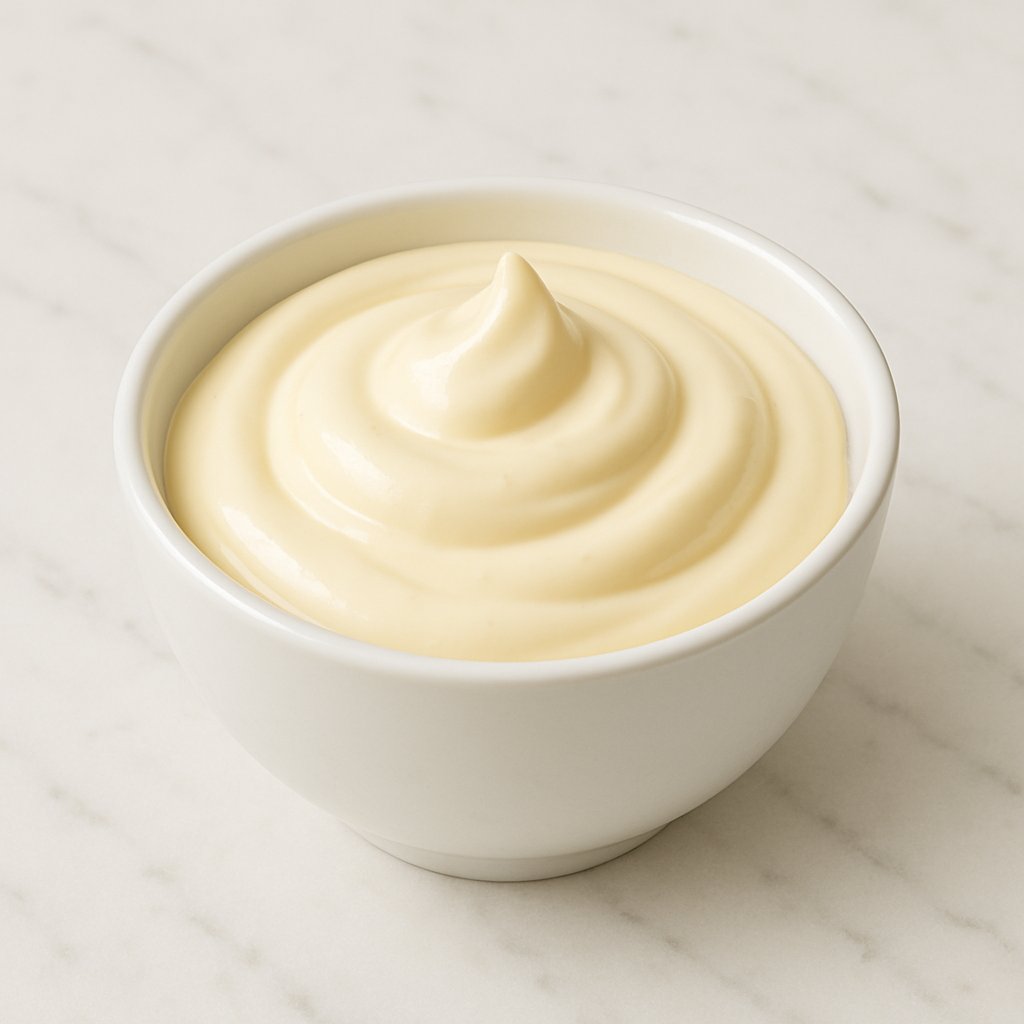
Availability and types of mayonnaise
Mayonnaise is one of the most well-known sauces in the world. It is made from a few basic ingredients: oil, egg yolk, acid (for example vinegar or lemon juice) and some salt. Sometimes mustard and sugar are added. Because these ingredients are very common, mayonnaise is easy to obtain almost everywhere — in supermarkets, delicatessens, take-away stands and of course homemade in one's own kitchen. It is so popular because it tastes mild, is creamy and pairs well with many dishes, for example fries, sandwiches, salads or as a base for other sauces.
Origin and distribution
The exact origin of mayonnaise is not completely clear. The Spanish town of Maó (on Menorca) is often cited as the birthplace. From there the sauce is said to have come to France, where it was refined and became very well known. In the 19th century mayonnaise spread throughout Europe and later to America. Today it is part of the basic fridge stock in many countries and is produced in countless variants.
The exact origin of mayonnaise is not completely clear. The Spanish town of Maó (on Menorca) is often cited as the birthplace. From there the sauce is said to have come to France, where it was refined and became very well known. In the 19th century mayonnaise spread throughout Europe and later to America. Today it is part of the basic fridge stock in many countries and is produced in countless variants.
Everyday availability
Mayonnaise is available year-round. You can find it in different packaging:
Mayonnaise is available year-round. You can find it in different packaging:
- Glass jar: Classic form, good for the fridge, easy to spoon out.
- Tube or dispenser bottle: Practical for everyday use, easy to dose, often with an anti-drip valve.
- Large formats: For catering or large families, usually in buckets or large bottles.
Supermarkets often display several brands side by side. There are cheap private-labels, well-known brands and specialty deli mayonnaises. In organic shops you'll find organic variants that focus on ecological ingredients.
Basic types and taste
Although all mayonnaises look similar, they differ in taste and composition. Important differences are:
Although all mayonnaises look similar, they differ in taste and composition. Important differences are:
- Type of oil: Sunflower oil gives a mild flavor. Rapeseed oil is also neutral and widespread. Olive oil brings a stronger, sometimes slightly bitter note.