Menu & categories

Mashed potatoes

Creamy side dish made from boiled potatoes

Wiki about mashed potato Nutri-Score C Vegan No Gluten-free Yes Lactose-free No Nut-free Yes
NUTRITION / 100 g
110 kcal 2.0 g Protein 18.0 g Kohlenhydrate 3.0 g Fett

Introduction

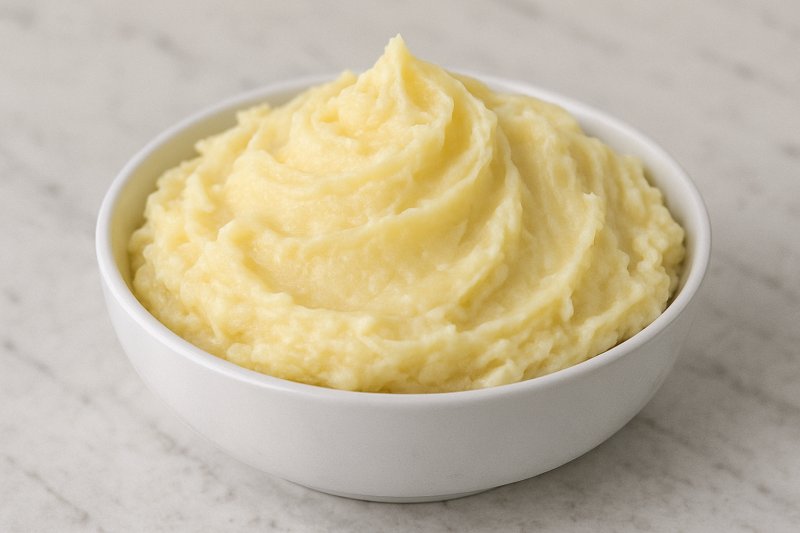
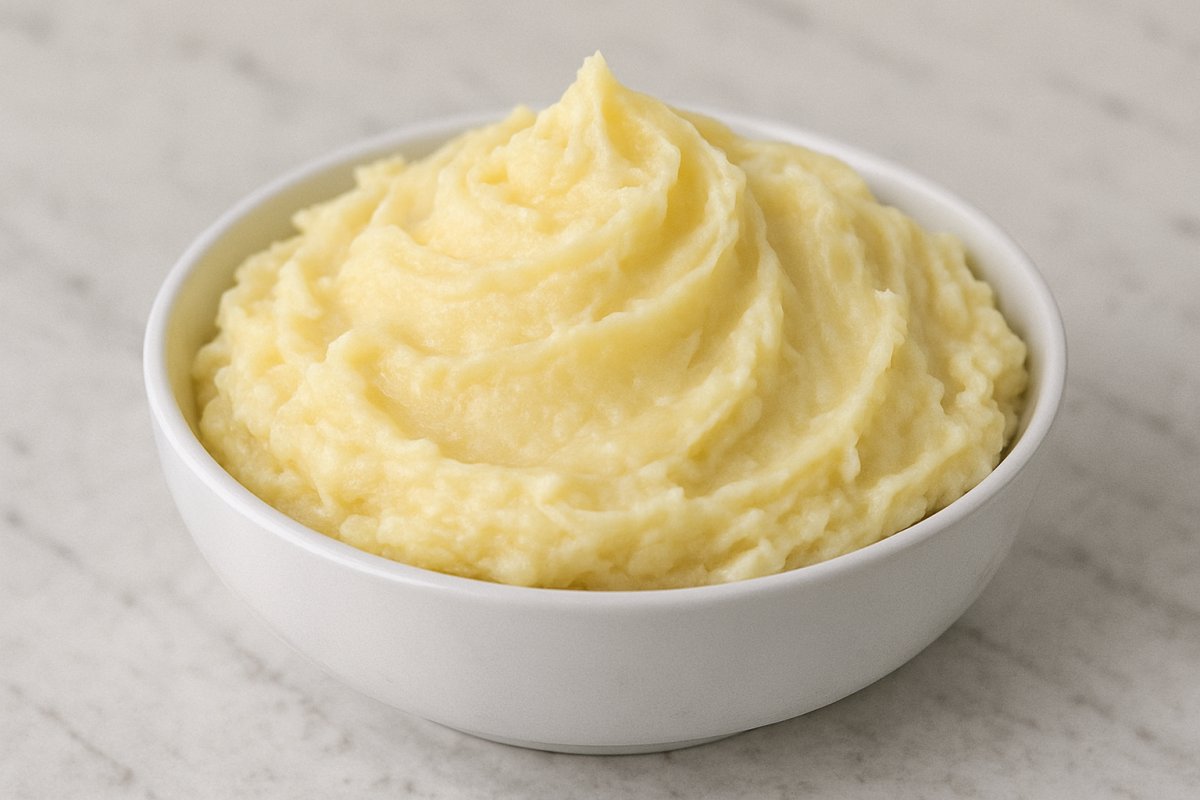
Bowl of creamy mashed potatoes
I love mashed potatoes because it's so much more than just a side dish. For me it's comfort in a bowl: velvety, warm and dependable like an old favorite book. I still remember a rainy Sunday when, after a long walk, I came home and my grandmother served me a portion. The scent of butter and nutmeg alone made all worries seem smaller.

Good mashed potatoes rely on a few but decisive elements. The choice of potatoes makes the first difference: floury varieties give the typical airy result, while waxy potatoes provide a creamier, slightly firmer texture. Once I experimented with a mix of both types; the result was surprisingly balanced and remained nicely spreadable even after cooling.

Preparation is a small ritual. I boil the potatoes in salted water, let them steam well, then press them through a potato ricer or sieve them finely — no immersion blender, that otherwise makes it sticky. Then warm milk or cream and melted butter are added, salt, freshly ground pepper and a pinch of nutmeg. Sometimes I stir in a dollop of sour cream or cream cheese if I want a slightly tangy note. A colleague of mine swears by a small piece of goat cheese that melts into the purée and brings a surprisingly elegant flavor.

Mashed potatoes are amazingly versatile and go with many dishes:

  • Roasts and stews — the classic combination.
  • Fish — a delicate counterpoint to robust sauces.
  • Vegetables — roasted root vegetables or sautéed kale complement the purée wonderfully.
For me mashed potatoes remain a dish that can be both plain and refined. It is the comfort food on hectic days and the elegant side at a special evening. When I have guests, I always pay attention to the little extras: a spoonful of melted butter, some chopped herbs or a mild mustard blended into the purée — small touches that turn a simple classic into something special.

Availability & types

Availability and types

Mashed potatoes are a popular ingredient you can find in many stores year-round. There are two main kinds: freshly made mashed potatoes from real potatoes and dried or instant mash, which you prepare simply by adding hot water or milk. Both types have advantages: fresh mash often tastes more intense and has a softer texture, while instant mash is very quick and convenient when you need something fast.

Origin
Mashed potatoes originally come from the potato, a plant discovered many centuries ago in South America. The potato came to Europe from there and spread quickly because it can feed many people. Ingredients for ready-made mashed potatoes today come from various countries, especially from regions with extensive agriculture. In Europe these include, for example, Germany, the Netherlands and France, but countries like Poland also supply many potatoes.

Growing regions
Potatoes grow best in cooler regions with good soil. These are often fields in rural areas. You can picture it like this: potatoes do not like it too hot and need soil that drains water well so the tubers do not rot. That is why maps often show large cultivation areas where the climate is not too dry and there is regular rainfall. These fields supply the raw materials from which mashed potatoes are then made.

Available varieties and variants
There are many different types of mashed potatoes. Here are the most important, simply explained:

  • Fresh mashed potatoes: Made at home or in restaurants from cooked potatoes. The potatoes are mashed or riced and butter, milk or cream are mixed in. It is creamy and often tastes best.
  • Instant mashed potatoes: These are dried potatoes processed into flakes or powder. Add hot water or warm milk, stir briefly, and the mash is ready. It is convenient because it has a long shelf life and requires little preparation.
  • Ready, refrigerated mash: This mash is often found in the supermarket refrigerated section. It is already prepared but may only need brief reheating. It is a middle ground between fresh and instant.
  • Seasoned variants: Some mashes are enriched with herbs, cheese or garlic. It's like a pizza: the same base but different ingredients change the flavor. For example, there are mashed potatoes with chives, with Parmesan or with roasted garlic.
  • Vegan variants: Instead of milk or butter, plant-based alternatives like oat milk or margarine are used. This is important for people who do not eat animal products.
If you look in the supermarket you will often find several brands and package sizes. Instant mash is usually available in small packets or cups, while fresh mash is often in larger containers in the refrigerated section. Farmers' markets and health food stores sometimes offer mash made from regional potatoes that are particularly fresh.

In summary: mashed potatoes come in many forms – fresh, dried or ready-prepared. They come from countries where potatoes grow well and there are simple variants for quick use as well as finer varieties with special flavors. This way almost everyone can find the right type depending on how much time or which taste they want.
Details & nutrition

Property Value
Unit g
Calories per 100 110
Protein per 100 2.0
Carbohydrates per 100 18.0
Sugar per 100 1.5
Fat per 100 3.0
Saturated fat per 100 1.8
Monounsaturated fat 0.8
Polyunsaturated fat 0.2
Fiber per 100 1.5
Vitamin C (mg) per 100 7
Vitamin D (IU) per 100 4
Calcium (mg) per 100 20
Iron (mg) per 100 0.4
Nutri-Score C
CO₂ footprint 0.3
Origin Europe
Gluten-free Yes
Lactose-free No
Nut-free Yes
Vegan No
Note Nutritional values for classic mashed potatoes made from potatoes, milk and butter, cooked and seasoned with salt.

Technical & scientific information

Mashed potatoes are a prepared potato mass obtained by cooking, mashing or stirring cooked potatoes and adding liquid and fat. It is a versatile food used both as a side dish and as an ingredient in further processing such as casseroles or stuffed dishes. The physical structure and sensory properties of mashed potatoes depend strongly on the choice of variety, the starch content of the starting potatoes and the processing steps used.

Chemical composition

The main components of mashed potatoes are water, starch, protein and smaller amounts of lipids as well as free sugars and mineral salts. Potato starch consists predominantly of amylose and amylopectin. During cooking the starch swells (gelatinization), causing the starch granules to absorb water and form a viscous gel. The amylose content influences the texture: a higher amylose content leads to a firmer, less sticky structure, while a high amylopectin content favors soft, sticky consistencies.

Nutritional values and constituents

  • Calories: mashed potatoes provide depending on preparation about 80–150 kcal per 100 g; plain potatoes have significantly fewer calories, the difference is explained by added fats and dairy products.
  • Carbohydrates: mainly present as starch; resistant starch can increase upon cooling and act like dietary fiber.
  • Proteins: potatoes contain low to moderate protein with a favorable amino acid composition, but not a complete protein like animal sources.
  • Fats: variable depending on the addition of butter or oil; fat-free preparations contain only traces of lipids.
  • Vitamins and minerals: mashed potatoes provide vitamin C, B vitamins (especially B6), potassium and magnesium; the loss of water-soluble vitamins can increase when cooking water is discarded.
Processing methods

Typical steps are washing, peeling (optional), cutting, cooking in water or steam, draining and then mechanical reduction using a masher, potato ricer, immersion blender or mixer. Each method affects texture: intense mechanical pureeing increases cell wall disruption and can release starch, leading to a sticky, gummy consistency. Adding warm dairy products and fat during stirring contributes to a smooth emulsion. Industrial instant mashed potato is produced by drying potato mass (e.g., spray drying or roller drying) and differs in particle size and rehydration behavior.

Physics and texture

The texture of mashed potatoes is an interplay of gel structure from gelatinized starch, finely dispersed fat droplets and air incorporated during mixing. Fat acts as a texture former and flavor carrier, while protein components and cell residues influence water binding. Temperature has a major effect: at higher temperature the mass is softer and more pliable; on cooling the starch gel matrix firms up.

Health aspects

Mashed potatoes can be part of a balanced diet. Important health aspects are the carbohydrate content and the type of fats added. Portion sizes and preparation methods affect glycemic load; using milk instead of cream and reducing butter lowers fat and calorie content. The formation of acrylamide is unusual in boiled and mashed potatoes, since acrylamide mainly forms at high temperatures and browning (frying, baking). In sensitive individuals very soft, easily digestible mash can however lead to a rapid rise in blood sugar; cooling and reheating can increase the proportion of resistant starch and thus moderate the metabolic response.

Storage and shelf life

Freshly prepared mashed potatoes should be consumed within a few days when refrigerated, as starch-rich foods are prone to microbial growth and quality loss. Freezing alters water-binding and crystallization processes, so texture after thawing can become slightly watery or grainy. Industrial preservation, addition of emulsifiers or drying to make instant products alters nutritional content and rehydration behavior.

Overall, mashed potatoes are a technically and biologically interesting product whose sensory and nutritional properties are strongly determined by variety choice, processing and ingredient selection.

Wiki entry for: mashed potato
Active now: 24 visitors of which 2 logged-in members in the last 5 minutes