Menu & categories

Mascarpone

Creamy fresh cheese for desserts and sauces

Wiki about mascarpone Nutri-Score D Vegan No Gluten-free Yes Lactose-free No Nut-free Yes
NUTRITION / 100 g
410 kcal 4.0 g Protein 3.0 g Kohlenhydrate 42.0 g Fett

Introduction

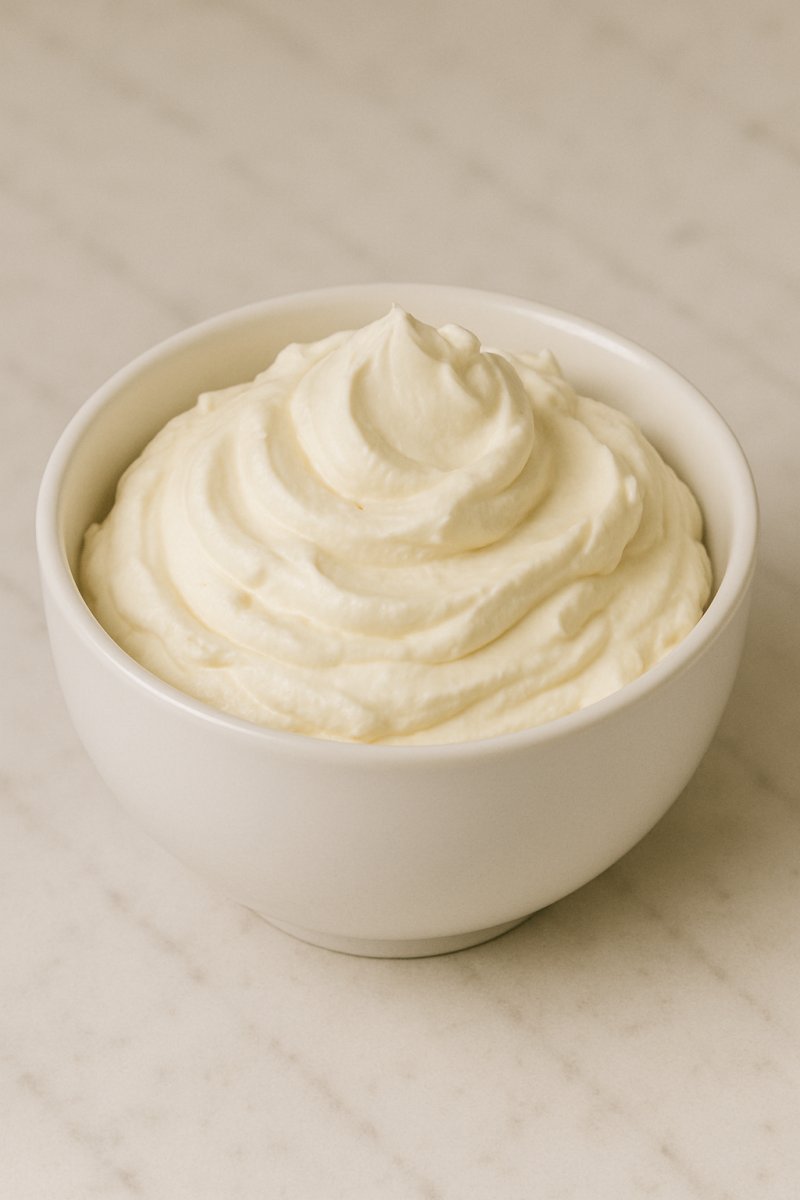
Bowl with mascarpone cream
Mascarpone is one of those ingredients that slips into the kitchen quietly and then lines the whole room with velvet. I am 35, work as an editor in Europe and over the years have gathered countless stories about this soft, creamy delight. For many the journey begins with a spoonful of tiramisu melting on the tongue. But mascarpone is far more than the sweet soul of that classic: it is a versatile fresh cheese from Lombardy, whose mild milky note and luxurious texture convince in both desserts and savory dishes.

Mascarpone is traditionally made from cream that is gently coagulated with acid – often citric acid or tartaric acid – and then drained. Its fat content gives it the famous, almost cloud-like creaminess that clearly differs from the crumbly granularity of ricotta. While ricotta is slightly grainy and fluffy, mascarpone appears silky and dense. This property makes it an ideal base for airy creams, silky fillings and velvety sauces. An older colleague at the editorial office used to say: “Mascarpone is like a good suit – it always fits, never overdoes it, but leaves an impression.”

The history of mascarpone is closely intertwined with northern Italian cuisine. In Lombardy people early on liked to make rich cream products to counter the cold months. The name itself is interpreted in different ways; some trace its root to “mascarpa,” a by-product of cheese making. One thing is certain: mascarpone has made its way from regional Italian kitchens into international restaurants, patisseries and our home refrigerators. A friend who studied in Milan once brought me a small packet from a weekly market – so fresh that a spoonful was enough to convert me forever.

Mascarpone is a natural talent when it comes to carrying and blending flavors. It readily takes on vanilla, citrus zest or espresso and evens out their intensity without losing itself. In savory contexts it acts like a flavor dampener with fine hearing: it softens heat, rounds acidity

Availability & types

Availability and types of mascarpone

Mascarpone is an especially creamy fresh cheese originally from northern Italy, more precisely the Lombardy region. It is traditionally made from cream that is slightly thickened with a mild acid (for example citric acid or tartaric acid). This produces a soft, velvety mass with a mild, slightly sweet taste. Because mascarpone is so versatile, it can be found both in desserts like tiramisu and in savory dishes such as creamy pasta sauces. For children and adults it is interesting to know: mascarpone is so rich because it is made from cream, not from regular milk – that makes it particularly soft and full-bodied.

Availability in trade

  • Supermarkets and discounters: In many European countries, including Germany, Austria and Switzerland, mascarpone is available year-round in well-stocked supermarkets. It is usually located in the refrigerated section near quark, cream cheese and crème fraîche.
  • Delicatessens and Italian specialty shops: Here you will often find particularly high-quality variants, sometimes from small dairies in Italy. These can have a more intense flavor and a finer texture.
  • Organic and health food stores: Organic mascarpone is now widespread. It is produced according to strict guidelines, for example with organic cream from cows kept in appropriate conditions.
  • Online trade: Many online shops offer mascarpone, often also in larger packages for hobby bakers. Pay attention to the cold chain and fast delivery.
  • Seasonal demand: Demand increases especially around holidays (Christmas, Easter) because many people prepare desserts then. Nevertheless, mascarpone remains generally well available year-round.
Origin and traditional production

Mascarpone comes from the Lombardy, a region in northern Italy. Historically it was made from very fresh cream, heated and coagulated with an acid. Afterwards the thicker mass was allowed to drain until the
Details & nutrition

Property Value
Unit g
Average weight per piece 250
Calories per 100 410
Protein per 100 4.0
Carbohydrates per 100 3.0
Sugar per 100 3.0
Fat per 100 42.0
Saturated fat per 100 26.0
Monounsaturated fat 13.0
Polyunsaturated fat 1.2
Fiber per 100 0
Vitamin C (mg) per 100 0
Vitamin D (IU) per 100 8
Calcium (mg) per 100 120
Iron (mg) per 100 0.1
Nutri-Score D
CO₂ footprint 5.5 kg CO2e/kg
Origin Italy
Gluten-free Yes
Lactose-free No
Nut-free Yes
Vegan No
Note Mascarpone is a creamy fresh cheese made from cow's milk with a very high fat content; ideal for tiramisu and creamy desserts.

Technical & scientific information

Mascarpone is a freshly produced, spreadable cream product of Italian origin that, due to its fine texture and mild sweet taste, occupies a special position in cuisine and food technology. Technologically it is not a classic cheese in the strict sense, but an acid- or heat-set cream emulsion with a high fat content. Production is based predominantly on pasteurized cream from cow’s milk, which is coagulated by controlled pH reduction and thermal treatment. The resulting coagulation matrix is then drained until the characteristic creamy consistency is achieved.

Production and process parameters
For mascarpone the cream is adjusted to a typical fat content of 35–45%. Pasteurization usually takes place at 72–85 °C for 15–30 seconds, followed by a tempered heat treatment in the range of about 85–95 °C. Mild organic acids (e.g. citric acid, tartaric acid) or lactic acid produced by culture fermentation serve as coagulants, lowering the pH toward 6.2–6.6 or, in modern processes, to about 5.9–6.3. The combination of elevated temperature and pH reduction partially denatures the whey proteins, which together with the cream casein micelles act as structure formers. After coagulation the mass is allowed to drain in cloths or microfilters, whereby the duration of drainage and temperature control significantly influence the final viscosity and water activity. A short, gentle homogenization can contribute to textural uniformity, but is not mandatory.

Microstructure and physicochemical properties
Mascarpone is characterized by a fine fat-in-water emulsion matrix in which casein micelles, denatured whey proteins and milk fat globules form a weak gel network. Water content typically ranges from 45–55%, fat in dry matter can reach 70–75%. The typical range of water activity (aw) usually lies between 0.92 and 0.97, depending on the degree of drainage. The melting point

Wiki entry for: mascarpone
Active now: 18 visitors of which 2 logged-in members in the last 5 minutes