Menu & categories

Marzipan

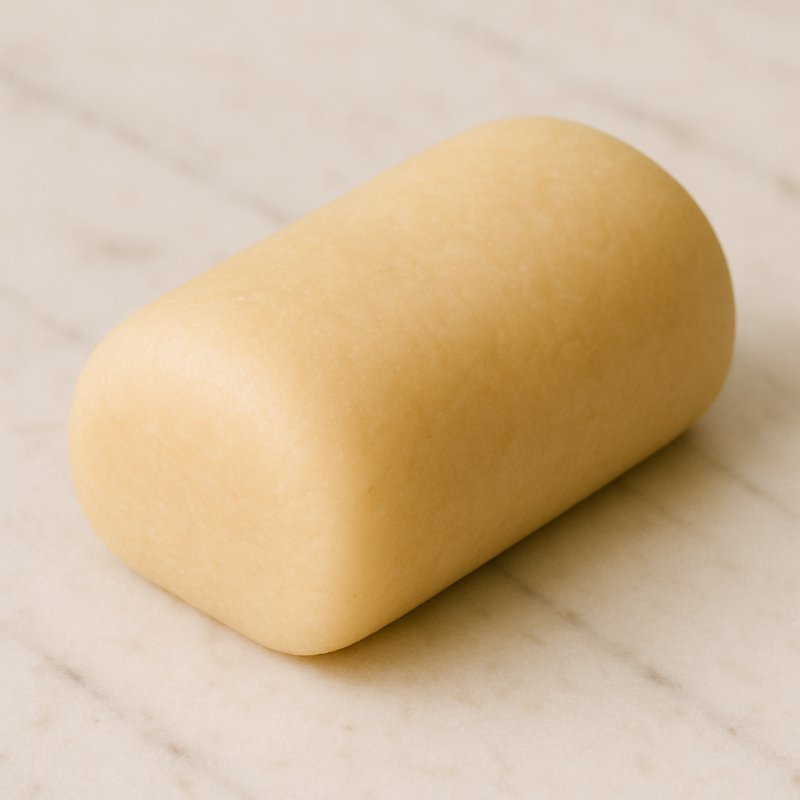
Sweet almond-sugar paste for pastries and pralines

Wiki about marzipan Nutri-Score D Vegan Yes Gluten-free Yes Lactose-free Yes Nut-free No
NUTRITION / 100 g
460 kcal 8 g Protein 45 g Kohlenhydrate 24 g Fett

Introduction

Marzipan
I still remember the first bite of homemade marzipan I pinched as a child: slightly dusty on the outside from powdered sugar, smooth and surprisingly velvety inside. That experience shaped my relationship with the ingredient. For me marzipan is more than a confection; it is a texture, a scent and a memory capsule that brings people together at celebrations, in markets and in home kitchens.

The basic ingredients are as simple as they are convincing: almonds and sugar, sometimes with a hint of rose water or bitter almond oil. Good almonds are essential. When I test a batch, I rub a small lump between my fingers to check fineness and moisture. A colleague of mine swears by tasting marzipan at night because the flavor then feels more "honest" – I always laugh, but a nighttime bite really has something intimate about it.

Marzipan can be used in many ways:

  • As a delicate filling in pralines and stollen.
  • Rolled out as a covering for cakes or tortes, particularly popular for wedding cakes.
  • In artistic form: modeled marzipan figures that make children's eyes light up.
I've experimented myself: once I combined marzipan with citrus zest and a pinch of chili — surprisingly harmonious. The balance of sweet almond cream and contrasting flavors makes marzipan so versatile. In recipes I pay attention to consistency; marzipan that is too dry will crack, too wet will stick and lose shape. I often add a splash of honey or an egg yolk to refine the texture.

There are also cultural stories surrounding marzipan. At Christmas markets it smells alongside roasted almonds, and in some regions it is considered a gift of hospitality. I think of a winter journey when an older woman handed me a piece of marzipan and smiled, as if sharing that treat were a small ritual.

For anyone wanting to try marzipan: start with high-quality almonds, try different flavors and be patient when kneading. Marzipan rewards attention and creativity equally, and for me it remains a reliable companion for sweet moments, whether plain or artfully packaged.

Availability & types

Availability and types of marzipan

Marzipan is a sweet paste made mainly from almonds and sugar. Because it requires only a few ingredients, marzipan is widely available in many countries. In supermarkets you will usually find it with baking ingredients or in the confectionery aisle. It comes in various forms: as ready-to-roll masses, as small figures, as bars or as thin coverings for cakes. You can also buy marzipan frozen or vacuum-packed to keep it fresher longer.

Origin and growing regions
The most important ingredient for marzipan is almonds. Almonds grow on almond trees, which prefer warm, sunny weather and not too much rain. Major growing regions include:

  • Mediterranean region – countries like Spain, Italy and Greece produce many almonds. The climate there is similar to a long, warm season that the trees favor.
  • California – In the USA many almonds come from California. There are large plantations with many almond trees.
  • Turkey and Iran – These regions also supply many almonds, partly for local specialties.
You can therefore think of almonds and marzipan as products from warm-climate places – somewhat like oranges or olives.

Available types and variants
Marzipan is not just one thing. Here are the main types, explained simply:

  • Raw marzipan: this is the purest form, made from ground almonds and sugar. It tastes very nutty and is somewhat grainy. Pastry chefs like to use it when they want to emphasize the almond flavor.
  • Sweetened or sugared marzipan: this contains more sugar, making it sweeter and smoother to bite. This is the type often found on supermarket shelves and that is easy to shape.
  • Marzipan mass vs. modeling marzipan: raw mass is intended more for baking, modeling marzipan is softer and suitable for shaping figures or covering cakes. Modeling marzipan sometimes contains added fat or syrup to remain pliable.
  • Persipan: this is an alternative using apricot kernels instead of almonds. It tastes similar but is cheaper. Sometimes it is mixed with marzipan.
  • Colored or flavored marzipan: for colorful figures or special flavors there is marzipan with food coloring, chocolate coatings or flavors like rose water or lemon.
How to choose the right marzipan?
If you want an intense almond flavor, choose marzipan with a high almond content. For craftwork or cakes, soft modeling marzipan is practical. And if you want to save money, persipan is an inexpensive alternative. In any case it is worth checking the expiration date and sealing opened packs well so the marzipan does not dry out.

In summary: marzipan is widespread and comes in many variants – from pure and nutty to sweet and moldable. It originates from almonds grown in warm regions like the Mediterranean or California, and there are alternatives such as persipan. This way you can find the right marzipan for every idea, whether baking or modeling figures.
Details & nutrition

Property Value
Unit g
Calories per 100 460
Protein per 100 8
Carbohydrates per 100 45
Sugar per 100 45
Fat per 100 24
Saturated fat per 100 2
Monounsaturated fat 16
Polyunsaturated fat 4
Fiber per 100 6
Vitamin C (mg) per 100 0
Vitamin D (IU) per 100 0
Calcium (mg) per 100 70
Iron (mg) per 100 2,5
Nutri-Score D
CO₂ footprint 3,0
Origin Europe
Gluten-free Yes
Lactose-free Yes
Nut-free No
Vegan Yes
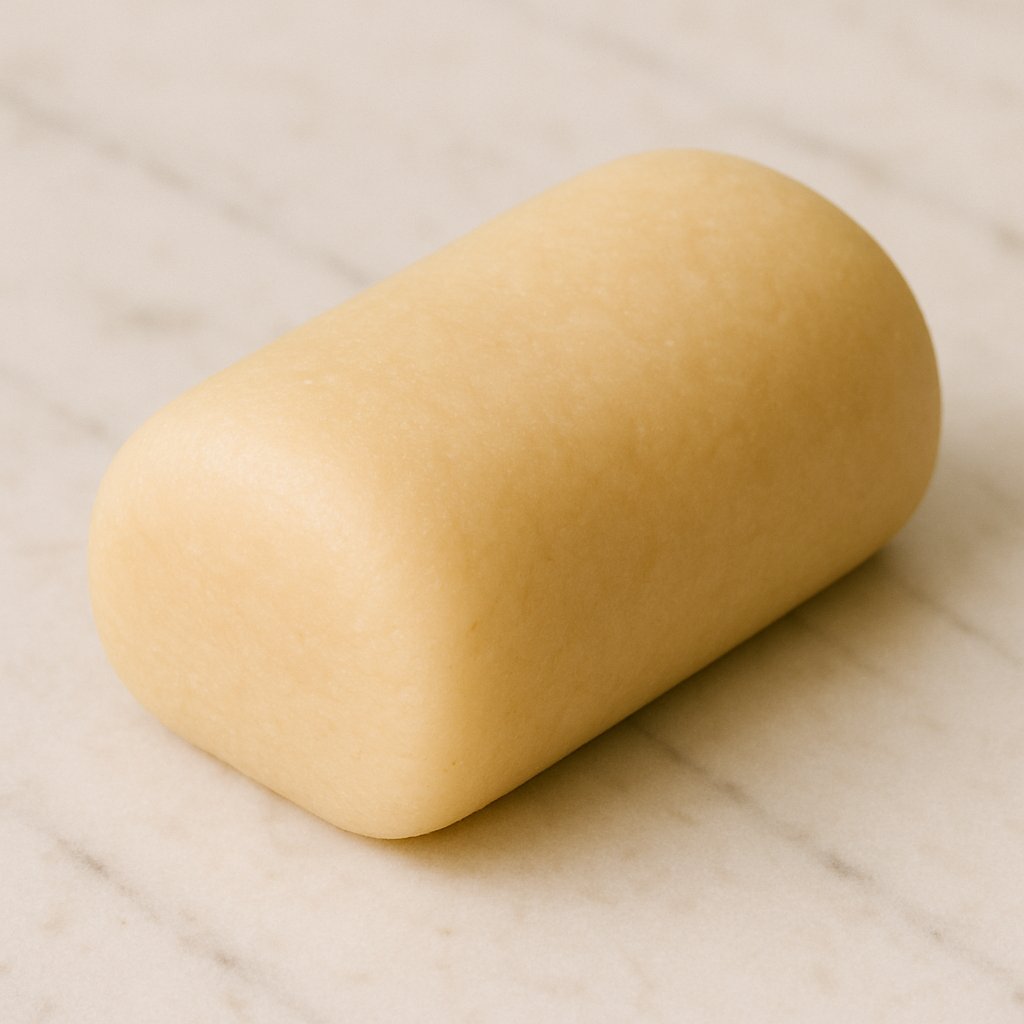
Note Nutritional values for a typical marzipan base (almond-sugar mixture). May contain traces of other allergens in products.

Technical & scientific information

Marzipan is a sweet paste whose main components are finely ground almonds and sugar. In culinary practice marzipan is used as a filling, coating or modeling mass and is a traditional confectionery product in many European countries. The texture- and flavor-giving properties result from the ratio of almonds to sugar as well as from the moisture and fat content of the raw materials used.

Composition and chemical properties. Chemically, marzipan mainly consists of triglycerides (plant fats from the almonds), proteins (primarily albumins and globulins), carbohydrates (predominantly sucrose and other sugars) and water. Almonds also contain free fatty acids, vitamins (especially vitamin E) and minerals such as potassium, magnesium and calcium. The physical structure of the paste arises from the interplay of a fat matrix and the glassiness of sugar crystals; at high temperature or under heavy mechanical stress the texture can soften or become oily because the fat is mobilized out of the matrix.

Nutritional values and macronutrient distribution. Marzipan is energy-dense: 100 grams typically provide between 450 and 550 kcal, depending on the almond fat content. The proportion of carbohydrates (mainly sugars) is often between 40 and 60%; fat makes up about 20 to 35%, and protein 8 to 12%. These values vary with recipes (e.g. persipan uses apricot kernels instead of almonds and has different nutritional values) and with industrial additives such as glucose syrup or stabilizers.

Manufacturing processes and processing methods. Traditional marzipan production includes the following steps:

  • Roasting the almonds: a short roast develops aroma and reduces enzymatic activity.
  • Blanching: removing the brown skin (optional) yields a lighter color and milder flavor.
  • Grinding: fine grinding into a paste reduces particle sizes and releases oil; grinding time affects texture and heat development.
  • Homogenizing: mixing with sugar and, if applicable, syrup, flavor (e.g. rose water, bitter almond oil) and binders such as pectin or egg white stabilizes the emulsion.
  • Shaping and conditioning: kneading and resting improves plasticity; cooling or storage stabilizes the product.
Industrial processes often use contact homogenizers and temperature-controlled mixing vessels to ensure consistent product quality.
Sensory properties and stability. Sources of aroma are mainly the volatile compounds in almonds such as benzaldehyde (pronounced in bitter almonds), aldehydes and pyrazine-like compounds formed during roasting. Shelf life depends on water activity, lipid oxidation and microbial stability. Because almond fat contains polyunsaturated fatty acids, lipid oxidation is a potential quality-degrading process; antioxidants like vitamin E counteract this.
Health aspects and safety. Marzipan is nutritious but, due to its high sugar content, caloric; excessive consumption promotes tooth decay and can contribute to weight gain. People with nut allergies must strictly avoid marzipan, as almonds contain allergenic proteins. Also, products containing bitter almond components require caution: bitter almonds contain amygdalin, which can release cyanide; commercial marzipan typically uses sweet almonds or detoxified flavorings, so cyanide toxicity is not expected in compliant products.
Variants and legal definitions. In Europe legal requirements are common: real marzipan must meet a minimum almond content, while products with low almond content are labeled as "raw marzipan mass" or "almond mass." Persipan is a related mass based on apricot or peach kernels and is often used as a cheaper substitute.
In summary, marzipan combines high-quality plant fats, proteins and sugars into a technologically formable, flavor-rich mass. Quality depends on raw material choice, processing temperatures and storage conditions; nutritionally marzipan is an energy-dense delicacy to consider with regard to allergies or dietary restrictions.
Wiki entry for: marzipan
Active now: 14 visitors of which 2 logged-in members in the last 5 minutes