Menu & categories

Mandarin juice

Refreshing juice from juicy mandarins

Wiki about mandarin juice Nutri-Score B Vegan Yes Gluten-free Yes Lactose-free Yes Nut-free Yes
NUTRITION / 100 ml
46 kcal 0.7 g Protein 11.8 g Kohlenhydrate 0.1 g Fett

Introduction

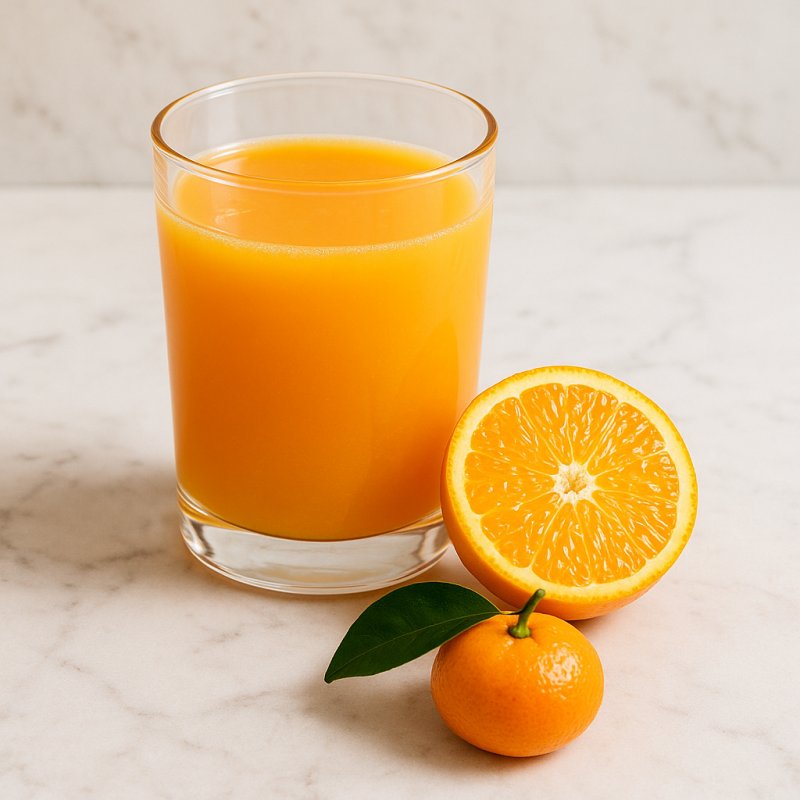
Glass with freshly squeezed mandarin juice
I still remember my first encounter with freshly squeezed mandarin juice very well. It was a sunny Sunday morning, and I had arranged a brunch with friends. The hostess, a passionate cook, surprised us with a large glass of bright orange juice. The first sip was like a little vacation for the senses – sweet and at the same time refreshing, with a light acidity that tickled the palate. I was immediately enchanted and knew I had to invite mandarin juice into my kitchen.

Mandarin juice is not only a taste experience but also a true all-rounder in the kitchen. It can be enjoyed on its own, but it also gives many dishes that certain something. I once watched a colleague, a passionate grill fan, prepare a marinade for chicken with mandarin juice. His eyes lit up when he told me that the citrus fruit makes the meat tender and gives it a sweet-and-sour note. I couldn't resist and had to try it myself – the result was simply delicious.

The health benefits of mandarin juice should not be overlooked. It is full of vitamin C, which strengthens our immune system and protects us during the cold season. In addition, it contains antioxidants that can have anti-inflammatory effects. I like to drink a glass of mandarin juice when I feel tired or need a little energy boost. It's amazing how such a simple drink can brighten the day.

When I think of mandarin juice, many creative uses also come to mind. Here are some of my favorite ideas:

  • In cocktails: Mandarin juice is the perfect base for refreshing cocktails. I like to experiment with a few mint leaves and a squeeze of lime.
  • In desserts: It can be wonderfully incorporated into cakes or mousse. I once tried a recipe for a mandarin tart that delighted all the guests.
  • In salad dressings: A splash of mandarin juice can give any dressing a fruity note and make even the simplest salad exciting.
The magic of mandarin juice lies not only in its taste but also in the variety it brings to our kitchen. I look forward to many more culinary adventures with this wonderful ingredient. Who would have thought that a simple juice could bring so much joy and inspiration?

Availability & types

Mandarin juice is a delicious and refreshing juice obtained from mandarins. But where do these small, juicy fruits actually come from? Let's take a look at the origin, the cultivation areas and the different varieties of mandarin juice.

The origin of mandarins is very fascinating. They originally come from the Asian region, particularly China and Japan. There they have been cultivated and valued for many centuries. The mandarin is named after the “mandarins”, the high-ranking officials in China who received these fruits as a sign of wealth and good fortune.

Today mandarins are grown in many different countries. The main cultivation areas are:

  • Spain – Especially in the Valencia region there are many mandarin plantations.
  • Morocco – This country has an ideal climate for growing mandarins.
  • USA – Many mandarins are also produced in California and Florida.
  • Italy – Here mandarins are a popular product, especially in Sicily.
The cultivation of mandarins is an interesting matter. The trees need plenty of sun and a warm climate to grow well. They bloom in spring and the fruits ripen in the warm months, so they are usually harvested in autumn and winter. Mandarins are very popular because they are easy to peel and taste sweet, making them a perfect snacking fruit.

Now we come to the varieties and types of mandarin juice. There are many different kinds of mandarins, and each variety has its own special taste. Here are some of the best-known varieties:

  • Clemenules – These mandarins are very sweet and juicy. They are one of the most popular varieties in Spain.
  • Saturnus – These mandarins have a flattened shape and are particularly aromatic.
  • Satsuma – This variety is very popular in Japan and has a mild, sweet taste.
  • Honey Mandarin – These mandarins are extremely sweet and have a honey-like flavor.
When it comes to mandarin juice, there are also different varieties you can try:

  • Freshly squeezed mandarin juice – This juice is pressed directly from mandarins and is especially tasty and healthy.
  • Juice from concentrate – In this process the juice is first concentrated to make it more shelf-stable. It is often mixed with water before being bottled.
  • Organic mandarin juice – This juice comes from mandarins grown without chemical fertilizers or pesticides. Many people prefer organic products because they consider them healthier.
Details & nutrition

Property Value
Unit ml
Calories per 100 46
Protein per 100 0.7
Carbohydrates per 100 11.8
Sugar per 100 9.4
Fat per 100 0.1
Saturated fat per 100 0
Monounsaturated fat 0
Polyunsaturated fat 0
Fiber per 100 0.1
Vitamin C (mg) per 100 40
Vitamin D (IU) per 100 0
Calcium (mg) per 100 11
Iron (mg) per 100 0.1
Nutri-Score B
CO₂ footprint 0.2
Origin Europe
Gluten-free Yes
Lactose-free Yes
Nut-free Yes
Vegan Yes
Note Ideal for cocktails and as a refreshing drink.

Technical & scientific information

Mandarin juice is a popular fruit beverage made from the juice extraction of mandarins, a citrus fruit. The mandarin belongs to the Rutaceae family and is closely related to other citrus fruits such as oranges and lemons. The fruit is characterized by its sweet, slightly tart taste and its juicy texture. Mandarin juice is often consumed as a refreshing beverage and is also used in gastronomy and the food industry.

Chemical composition and constituents
The main component of mandarin juice is water, which makes up about 85-90% of the total volume. The juice contains a variety of bioactive compounds and nutrients that are important for human health. The most important constituents include:

  • Vitamin C: Mandarins are rich in ascorbic acid, a strong antioxidant that supports the immune system and contributes to skin health.
  • Flavonoids: These secondary plant compounds are known for their anti-inflammatory and antioxidant properties. Notably hesperidin and naringin.
  • Dietary fiber: Although the juice contains less fiber than the whole fruit, it still contributes to digestive health.
  • Minerals: Mandarin juice contains potassium, magnesium and calcium, which are important for heart health and electrolyte balance.
Nutritional values
The nutritional values of mandarin juice can vary depending on the production process and added ingredients. On average, 100 ml of mandarin juice contains:

  • Calories: 40-50 kcal
  • Protein: 0.6 g
  • Fat: 0.2 g
  • Carbohydrates: 10-12 g
  • Sugars: 8-10 g
Processing methods
The production of mandarin juice involves several steps, starting with the selection of ripe mandarins. The most common processing methods are:

  • Pressing: The mandarins are washed, peeled and then pressed to extract the juice.
  • Pasteurization: To extend shelf life, the juice is often pasteurized, which inhibits the growth of microorganisms.
  • Filtration: Filtration removes suspended solids and pulp to obtain a clear juice.
  • Concentration: In some cases the juice is processed into concentrate to facilitate transport, before being reconstituted with water prior to bottling.
Health aspects
Consumption of mandarin juice can offer various health benefits. The vitamins and antioxidants it contains contribute to strengthening the immune system and may have anti-inflammatory effects.

Wiki entry for: mandarin juice
Active now: 20 visitors of which 2 logged-in members in the last 5 minutes