Menu & categories

Madeira

Fortified wine from the Portuguese island of Madeira

Wiki about Madeira Nutri-Score E Vegan Yes Gluten-free Yes Lactose-free Yes Nut-free Yes
NUTRITION / 100 ml
140 kcal 0.2 g Protein 7.0 g Kohlenhydrate 0.0 g Fett

Introduction

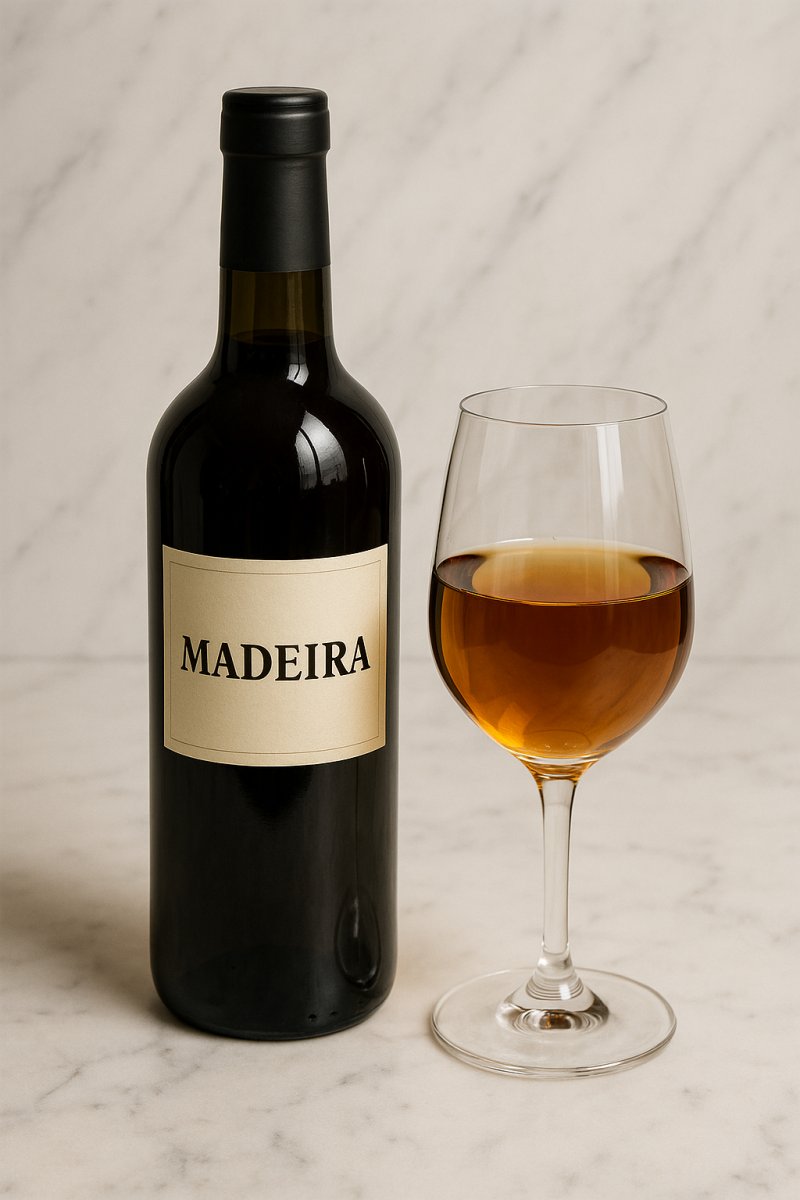
A glass of brown-golden Madeira wine on a wooden table
I still remember the first evening I consciously tried Madeira: a small, cozy restaurant, rain against the windows and a kitchen that smelled of roasted meat and caramelized onions. A colleague of mine ordered a dish with a Madeira reduction, and when the sauce gleamed on the plate, I knew immediately that I had discovered something special. Since then Madeira has accompanied me through numerous recipes, from the simple Sunday roast to experimental desserts.

Madeira is more than just a wine; in the kitchen it is a versatile tool. I use it to give sauces depth, to glaze meat and even to elevate mushrooms. Its blend of sweet and nutty notes creates an elegant balance that lifts even simple ingredients. Once I rescued an improvised mushroom risotto with a splash of Madeira — the result was so comforting that my guests actually applauded.

When I talk about Madeira, I think of these characteristics:

  • Versatility: pairs well with beef, pork, poultry, mushrooms and desserts.
  • Aromas: notes of caramel, dried fruit, nuts and sometimes a hint of smoke.
  • Stability in cooking: its intense flavor compounds withstand heat well and reduce to a smooth sauce.
A small kitchen experiment I like to pass on: reduce Madeira with shallots and a bay leaf, then whisk in butter — this sauce instantly elevates a simple steak to restaurant level. I confess I also once made a dessert sauce from Madeira, combined with chocolate and a pinch of sea salt; friends asked for the recipe, and of course I shared it generously.

For anyone who wants to introduce Madeira into their cooking, I recommend starting with small amounts and watching the acid–sweet balance. A few drops can work wonders, and sometimes less really is more. Madeira is to me the secret hero of many dishes: quiet but effective, and always ready to tell a story on the plate.

Availability & types

Availability and types of Madeira

Madeira is a distinctive, often sweet wine originally from the Portuguese island of Madeira in the Atlantic. If you imagine Madeira, think of a small island with many vineyards on the slopes — that is where the grape grows and the wine is made. Because Madeira is so long-lasting and has its own distinctive flavor, you can find it in many shops, but not always next to ordinary table wines.

Origin and growing areas
Madeira mainly comes from the island of Madeira, which belongs to Portugal. Wine has been grown on this island for several hundred years. The vineyards are often on steep hills so the vines receive plenty of sun. Sometimes grapes are also cultivated on the nearby Porto Santo, but most good Madeiras really come from the main island. Because the island's climate is warm and somewhat windy, the grapes acquire a distinctive flavor.

How easy is it to get Madeira?
Madeira is available in well-stocked supermarkets, wine shops and online. Sometimes it is placed in the dessert wine or specialties section. There are also different price ranges: some bottles are inexpensive and good for trying, others are pricier because they are older or rarer. In restaurants and delicatessens you can often find it as a digestif (drink after the meal) or for finishing sauces.

Available types and variants

  • Madeira by grape variety: There are different grapes from which Madeira is made. The best known are Sercial, Verdelho, Bual (Boal) and Malmsey (also called Malvasia). You can picture it like this: each grape is like an ice cream flavor — vanilla is different from chocolate. Similarly, each grape has its own flavor character:

    • Sercial: Very dry and fresh, suitable for people who prefer less sweet drinks.
    • Verdelho: Medium-dry to lightly sweet, with a pleasant acidity.
    • Bual (Boal): Milder and sweeter than Verdelho, with caramel notes.
    • Malmsey (Malvasia): The sweetest and fullest, often with honey or caramel flavors.

  • By aging time: Madeira is often also labeled by the time it has matured. Some bottles are only a few years old, others mature 10, 20 or even 50 years. Longer-aged Madeiras are usually more expensive and have deeper, more complex aromas. You can compare it to cheese or chocolate: the longer it ages, the more intense the flavor.
  • By style: There are dry (not very sweet) and sweet variants. Dry Madeiras are sometimes drunk as an aperitif (before the meal), sweet ones as a dessert wine or for nibbling.
  • Characteristic production process: Madeira is often "heated" or stored warm, historically called "Estufagem" or "Canteiro". This warming changes the flavor and makes the wine particularly stable — therefore an opened bottle of Madeira remains good for a long time. You should think of it like some honeys or jams: properly stored they last much longer.
Practical tips for buying
If you want to buy Madeira, pay attention to the grape variety or the level of sweetness, depending on whether you intend to use it for cooking or drinking. For sauces and roasts many chefs choose a medium to sweet Madeira (e.g., Bual or Malmsey). If you just want to try it, an inexpensive bottle from a specialty shop is often sufficient. And because Madeira keeps so well, you can comfortably hold a bottle and open it for special occasions.

In summary: Madeira almost always comes from the island of Madeira, is available in various grape varieties and sweetness levels, and stores well. This way everyone — whether for cooking or drinking — can usually find the right kind of Madeira.
Details & nutrition

Property Value
Unit ml
Calories per 100 140
Protein per 100 0.2
Carbohydrates per 100 7.0
Sugar per 100 7.0
Fat per 100 0.0
Saturated fat per 100 0.0
Monounsaturated fat 0.0
Polyunsaturated fat 0.0
Fiber per 100 0.0
Vitamin C (mg) per 100 0.0
Vitamin D (IU) per 100 0.0
Calcium (mg) per 100 10
Iron (mg) per 100 0.3
Nutri-Score E
CO₂ footprint 1.5
Origin Madeira Island, Portugal
Gluten-free Yes
Lactose-free Yes
Nut-free Yes
Vegan Yes
Note Madeira is a fortified, oxidatively aged wine with typical caramel and nut aromas; nutritional values may vary slightly depending on sweetness level and alcohol content.

Technical & scientific information

Madeira refers in culinary and food-science practice both to an aromatically characteristic cooking wine and to the style of wine originating from the Portuguese island of Madeira that serves as its basis. Madeira wine is often sweet to semi-dry, oxidatively aged, a stable fortified wine with pronounced roasted, caramel and nut aromas that arise from heat treatment and controlled oxidation. Typical features are long-lasting toasted notes, increased acidity and an unusually high storage stability that protects the wine from rapid quality loss even after opening.

Production and processing methods
The production of Madeira wine encompasses several characteristic steps that shape its sensory and chemical properties. First, normal grape musts undergo fermentation, and depending on the desired style fermentation can be stopped early by adding neutral spirit (Mosto) to retain residual sugar. A central procedure is heat exposure: in the traditional Estufagem method the wine is heated for weeks to months to about 45–50 °C; in the historic Canteiro system the wine matures for years in warm lofts. This thermal treatment catalyzes Maillard reactions and oxidative polymerizations of phenols and sugars, which lead to a darker color and more complex aromas.

Chemical composition and constituents
Madeira is characterized by a number of chemical parameters that distinguish it from other wines:

  • Alcohol content: Typically 17–22 % vol., due to partial enrichment with spirits.
  • Acids: High total acidity, mainly tartaric and malic acid, contribute to freshness; the acid concentration remains relatively stable through heating.
  • Residual sugar: Varies by style from dry (Sercial) to very sweet (Malmsey/Malvasia).
  • Phenols and melanoidins: Oxidation and Maillard chemistry produce melanoidin-like compounds that affect color, bitterness and antioxidant activity.
  • Volatile compounds: Furfural, 5‑HMF, acetaldehyde‑like compounds as well as odor-active esters and lactones contribute to toffee-, sherry- and nut-like aromas.
Nutritional values
Like other wines, Madeira provides mainly energy in the form of alcohol and sugar. Per 100 ml it can contain about 120–230 kcal depending on sweetness. Macronutrients are negligible: minimal amounts of proteins and fats, low mineral contents (potassium, calcium, magnesium), and traces of B vitamins. The calorie contribution comes mainly from ethanol (7 kcal/g) and sugar (4 kcal/g).

Health aspects
Consumption of Madeira should be considered under the same health aspects as other alcoholic beverages. Moderate consumption has been linked in epidemiological studies to certain cardiovascular effects, while alcohol-related risks should not be neglected. Phenolic compounds and Maillard products in Madeira show antioxidant properties in vitro; however the clinical relevance of these effects is limited and can be outweighed by alcohol toxicity. With increased consumption there is the known risk of liver disease, raised blood pressure, cancers and metabolic disorders. People with fructose or histamine sensitivity as well as pregnant women and people taking medications that interact with alcohol should exercise caution.

Sensory properties and culinary use
Madeira is used both as a table wine and in the kitchen because of its aroma concentration and shelf life. Typical sensory characteristics are notes of dried fruit, caramel, roasted nuts, coffee and a distinct, elegant acidity. In the kitchen Madeira serves as a basis for sauces, for deglazing and for reductions, since heat exposure intensifies aromas and provides stable, complex flavor components.

Overall, Madeira is a technically interesting product in which targeted thermal treatment and controlled oxidation significantly shape the chemical composition and sensory profile. Its composition reflects the balance between alcohol, residual sugar, acids and oxidized phenols, which has both nutritional and food‑technological consequences and explains its special role in wine science, gastronomy and sensory analysis.

Wiki entry for: Madeira
Active now: 20 visitors of which 2 logged-in members in the last 5 minutes