Menu & categories

Lingonberries

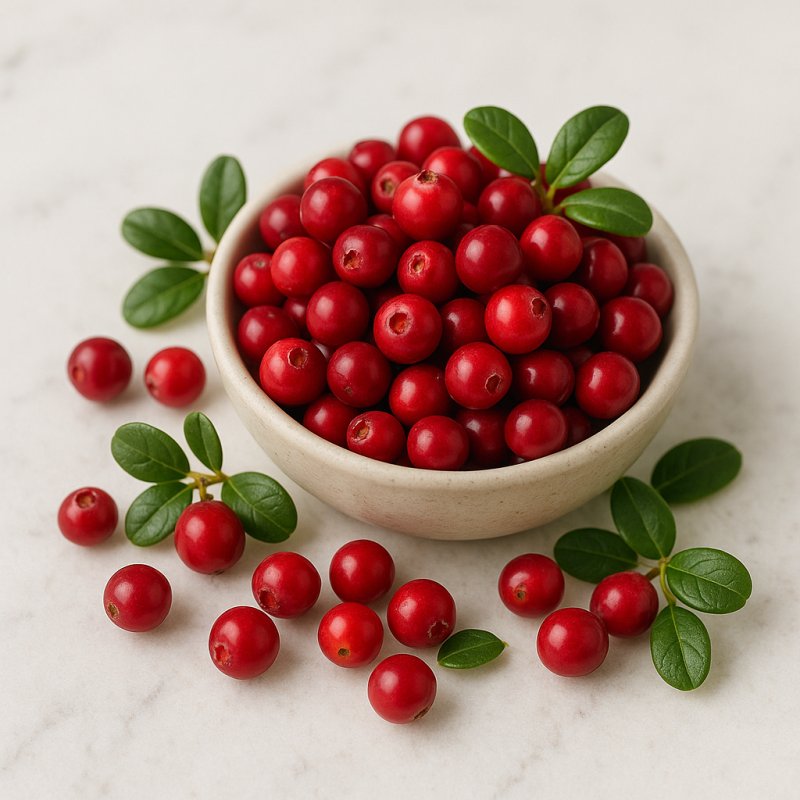
Tart-sweet berries with fruity freshness – ideal with game, desserts and sauces.

Wiki about lingonberry Nutri-Score A Vegan Yes Gluten-free Yes Lactose-free Yes Nut-free Yes
NUTRITION / 100 g
46 kcal 0.4 g Protein 12.0 g Kohlenhydrate 0.5 g Fett

Introduction

Fresh lingonberries
Cranberries have something distinctive for me: that sharp, slightly bitter bite that immediately evokes memories of cool autumn days and hot soups. I still remember a Sunday in the woods when an acquaintance rummaged deep into his pocket and offered me a small jar of these ruby-red beads. The first spoonful was like a little surprise – tart, fresh and at the same time fruity, as if someone had squeezed the summer sun into a berry.

I like how cranberries in the kitchen swing between tradition and experiment. They are the classic accompaniment to game dishes, wonderful with strong cheeses and a secret tip with baked Camembert. At the same time I have tried them in desserts, with yogurt and even in a surprising cocktail. A colleague of mine swears by a pinch in homemade barbecue sauce; I was skeptical and wrong, because the acidity really lifts the flavors.

As far as preparation is concerned, cranberries are pleasingly uncomplicated. Fresh or canned they work, but I have a weakness for the homemade version with little sugar and a bit of lemon zest. In this I prefer little effort, big flavor. Once, for lack of time, I put frozen berries in the oven while preparing a pâté, and the result was so surprisingly aromatic that I have done it more often since.

It's worth keeping a few characteristics and uses in mind:

  • Taste: tart, slightly acidic, aromatic.
  • Pairs with: game, poultry, cheese, balanced sweets.
  • Preparation: raw, cooked, as compote or jam.
For me cranberries are more than just an ingredient; they are a small carrier of flavor that enlivens dishes and tells stories. Sometimes a spoonful and a good conversation are enough to make an ordinary evening something special. I hope my little anecdotes inspire you to use the red berry more often and create your own memories.

Availability & types

Availability and types

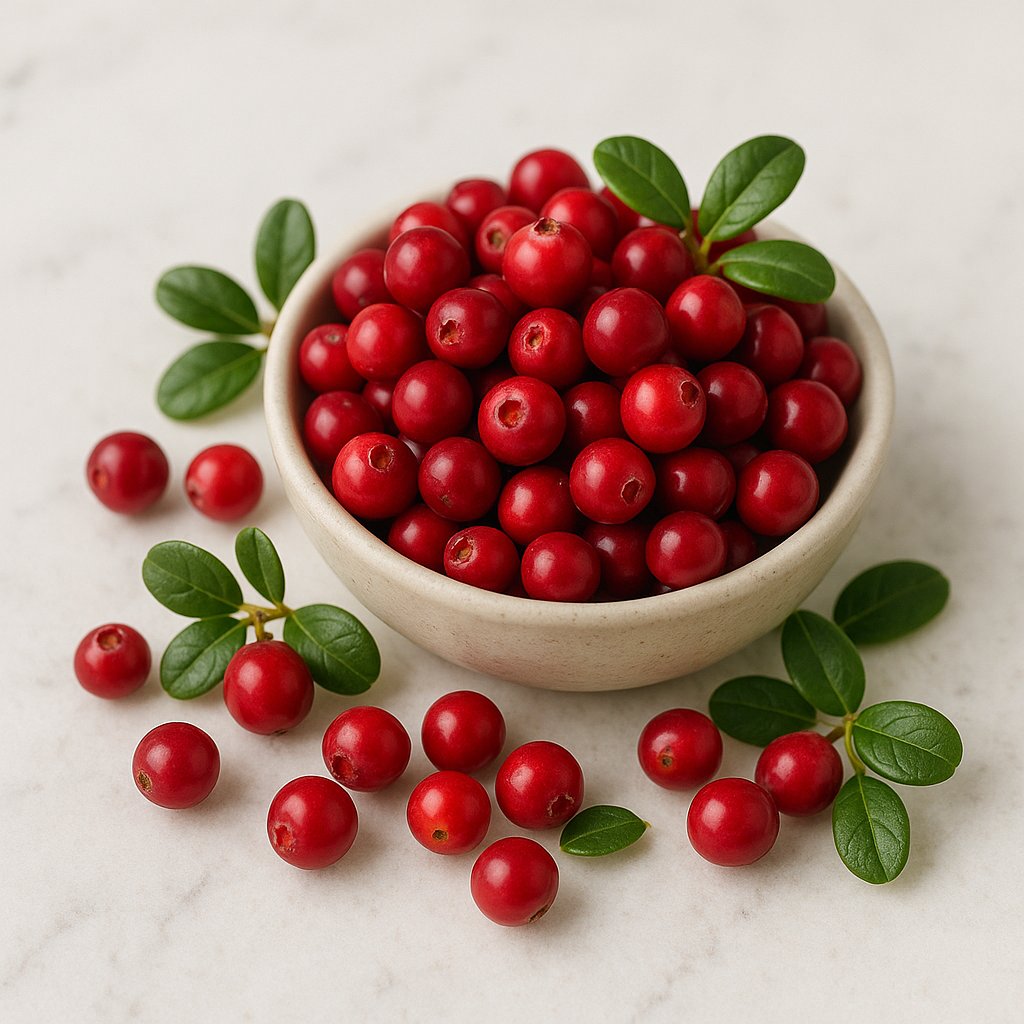
Cranberries are small red berries loved by many people. They grow in cool regions and are a bit reminiscent of cranberries (Vaccinium macrocarpon), but are distinct. If you want to know where they come from and what types there are, I'll explain it simply and clearly.

Origin
Cranberries originally come from the northern parts of Europe and Asia. They occur naturally in forests, bogs and open areas where it is not too warm. In countries like Sweden, Norway, Finland, Estonia or Russia they are part of the natural landscape. Similar small red berries also grow in parts of North America. In the past people picked them in the forest; today they are also cultivated in fields.

Growing regions
Cranberries prefer cool temperatures and generally acidic soils. That does not mean the soil tastes sour, but that it has certain properties the plants like – similar to how some people like lemon juice and others do not. Important growing regions include:

  • Scandinavia (Sweden, Norway, Finland): many wild harvests and also trade.
  • Eastern Europe (e.g. Estonia, Latvia, Russia): large areas with wild cranberries.
  • Central and Northern Europe: in Germany and Poland there are cultivations and collection sites.
  • North America: related species grow there, some are also cultivated.
  • Gardens and small plantations: more and more people plant cranberries in their own gardens or on small fields.
Available varieties and forms
When one says “varieties” one means: different types of cranberries that differ a bit. They can be roughly divided into two groups:

  • Wild cranberries: These grow in the forest and are often smaller but very aromatic. They are often hand-picked and have a strong, slightly tart flavor.
  • Cultivated varieties: Farmers have bred plants that produce larger berries or more fruit. These varieties are practical for plantations because they are easier to harvest. Some are more vigorous or give higher yields in the garden.
There are also cranberries in various processed forms that you find in stores:

  • Fresh: in season, usually late summer to autumn.
  • Frozen: convenient because the berries are available year-round.
  • Preserves and jars (e.g. cranberry jam or compote): shelf-stable and very popular with many dishes.
  • Juice and syrup: for drinks or as an addition to food.
  • Dried: like raisins, good for snacking or in muesli.
Everyday availability
Fresh cranberries are usually seen only briefly during the year, but frozen, as jam or juice they are almost always available. You can find different variants in supermarkets, farmers' markets or specialist wild fruit retailers. If you look for them in the supermarket, pay attention to the label “wild” or “cultivated”, depending on whether you prefer the intense flavor of wild berries or the larger fruits from plantations.

This gives you a good overview: cranberries exist wild and cultivated, fresh in season or processed year-round. They mainly come from northern, cooler regions and are versatile in use.
Details & nutrition

Property Value
Unit g
Average weight per piece 100
Calories per 100 46
Protein per 100 0.4
Carbohydrates per 100 12.0
Sugar per 100 8.0
Fat per 100 0.5
Saturated fat per 100 0.1
Monounsaturated fat 0.1
Polyunsaturated fat 0.2
Fiber per 100 4.5
Vitamin C (mg) per 100 10
Vitamin D (IU) per 100 0
Calcium (mg) per 100 8
Iron (mg) per 100 0.4
Nutri-Score A
CO₂ footprint 0.4 kg CO2e/kg (Schätzung)
Origin Northern Europe/Scandinavia (wild harvest and cultivated)
Gluten-free Yes
Lactose-free Yes
Nut-free Yes
Vegan Yes
Note Naturally very tart; when made into compote/jam they are often sweetened – nutritional values then change significantly.

Technical & scientific information

Cranberries (Vaccinium vitis-idaea) are small, bright red berries of the heath family that occur wild in boreal and montane regions of the Northern Hemisphere and are also cultivated. They are characterized by a pronounced tart-acidic aroma and are processed fresh, as jam, juice, syrup or dried. Botanically they belong to the same genus as blueberries and cranberries (Vaccinium macrocarpon), but have their own phytochemical composition.

Chemical composition and constituents. Cranberries contain a complex mixture of secondary plant metabolites responsible for color, taste and bioactive properties. The main components include:

  • Anthocyanins: predominantly cyanidin and pelargonidin glycosides, which provide the red color and act as strong antioxidant pigments.
  • Flavonols: including quercetin and kaempferol derivatives.
  • Phenolic acids: such as chlorogenic acid and protocatechuic acid.
  • Proanthocyanidins (tannins): oligomeric compounds that can affect microbial adhesion properties and contribute to the astringent perception.
  • Organic acids: mainly malic and citric acid; cranberries also naturally contain benzoic acid, which has preservative properties.
  • Macro- and micronutrients: the fruits consist mostly of water; they provide carbohydrates (mainly fructose and glucose), fiber and small amounts of protein and fat. Vitamin C is present in moderate amounts, along with minerals such as potassium and traces of manganese.
Nutritional values (approximate per 100 g, variable): Energy 40–60 kcal, carbohydrates 7–12 g, of which sugars 5–8 g, fiber 3–5 g, protein 0.5–1 g, fat <1 g; vitamin C about 3–15 mg. Actual values vary depending on variety, ripeness and processing.

Processing methods significantly influence the chemical stability of the constituents. Common procedures include:

  • Freezing and frozen storage: preserve color and phenolics best with minimal losses.
  • Pasteurization and cooking: necessary for shelf-stabilizing juices and jams but lead to reduced vitamin C concentration and partial degradation of heat-sensitive anthocyanins.
  • Drying: concentrates sugars and phenolics, but thermal drying can cause losses; freeze-drying preserves bioactivity best.
  • Juice / juice clarification: use of pectinases to improve yield; clarification reduces fiber and suspended solids.
  • Fermentation: microbial processing can increase the bioavailability of certain phenolics and alter organoleptic profiles.
Analytical methods for determining constituents include HPLC-MS for identification of anthocyanins and phenolics, the Folin–Ciocalteu assay for total phenols, spectrophotometric measurements for antioxidant capacity (e.g. ORAC, DPPH) and GC-MS for aroma compounds.

Health aspects: in vitro and animal studies show antioxidant, inflammation-modulating and antimicrobial effects of many phenolic components. Clinical data are limited, but some studies suggest possible positive effects on modulation of inflammatory markers and maintenance of vascular health. Specifically the anti-adhesive properties of proanthocyanidins studied in cranberries are also present in these berries, although evidence for preventive effects is not conclusive. When using processed products, attention should be paid to added sugars and possible preservatives. Allergic reactions are rare.

In summary, cranberries are a nutritionally interesting fruit with a characteristic composition of anthocyanins, flavonoids, proanthocyanidins and organic acids; processing techniques significantly influence nutrient and functional properties, experimental research provides good indications of health-relevant effects, while robust human clinical evidence remains limited.

Wiki entry for: lingonberry
Active now: 17 visitors of which 2 logged-in members in the last 5 minutes