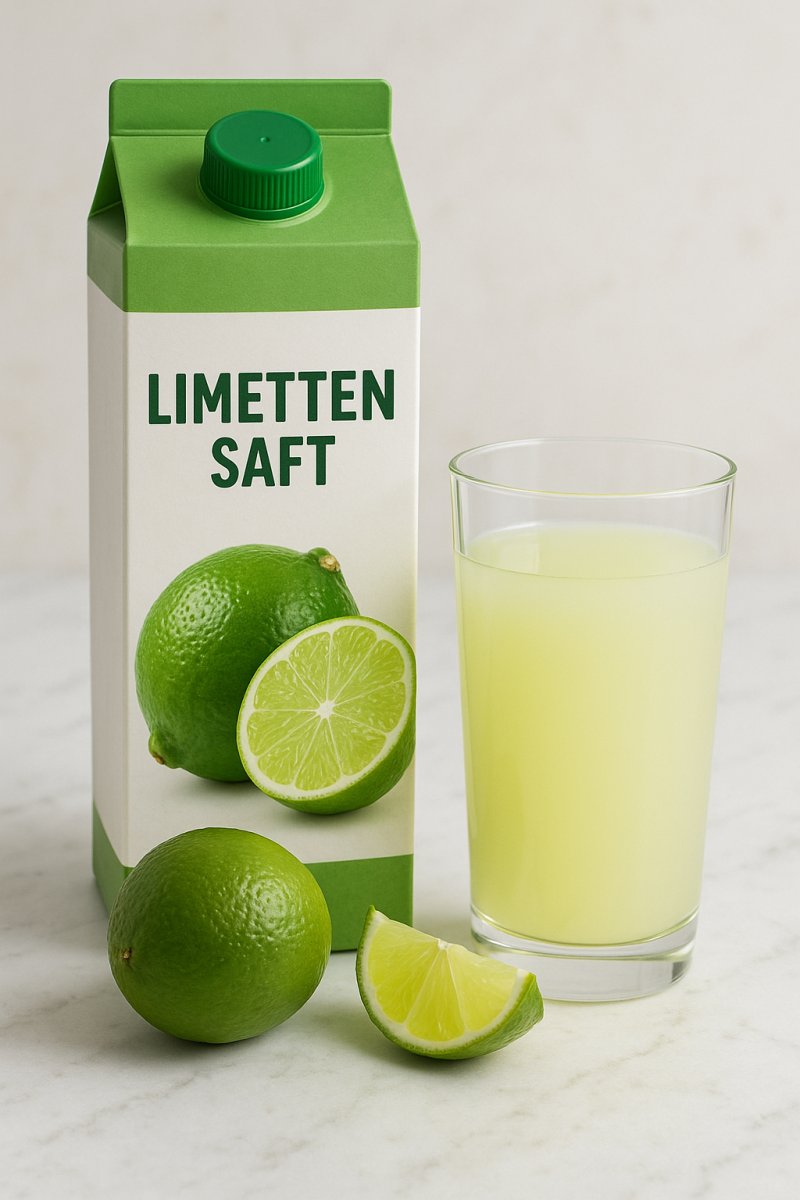
Availability and types of lime juice
Lime juice comes from fruits called limes. Limes grow mainly in warm regions of the world. You can find lime juice almost everywhere today: in supermarkets, at the farmers' market or bottled in the pantry. Because many countries grow and trade limes worldwide, lime juice is usually available year-round, not only in a short season.
Where do limes come from?
- Mexico and Brazil: Large producers; they supply a lot of juice to supermarkets.
- India and Southeast Asia (Thailand, Vietnam, Philippines): Many different varieties grow here, including small and very aromatic ones.
- USA (Florida) and Mediterranean regions: Also places where limes are grown for the local market.
You can think of it a bit like this: limes are like apples or oranges — depending on where they grow, they taste a little different.
Which varieties of lime exist?
- Persian lime (Tahiti lime): The most commonly sold in supermarkets. It is medium-sized, juicy and not too sour.
- Key lime (Mexican or West Indian lime): Small and very sour. Often used in cocktails like the mojito or in traditional dishes.
- Kaffir lime: Better known for the leaves used in Asian cuisine. The juice is strong, but the fruit is somewhat different from common limes.
- Rangpur and calamansi: Small relatives with a distinctive flavor; in some regions they are used instead of limes.
In which variants is lime juice available?
- Freshly squeezed juice: The best flavor, like from a freshly cut lime. Short shelf life and often found in restaurants or freshly made at home.
- Bottled juice (in bottles or Tetra Pak): Convenient for home. It has a longer shelf life because it is heat-treated (pasteurized) — meaning it was briefly heated to reduce bacteria. This changes the flavor slightly.
- Concentrate: Water is removed so the juice is more compact and easier to transport. At home water is usually added again. It saves space and often costs less.
- Frozen juice: Good if you want to keep juice for a long time. The taste is almost like fresh if properly frozen.
- Powder or dried juice: Very practical for taking along or in dry products. You simply mix the powder with water.
- Organic variants and blends: Organic lime juice comes from plants grown without chemical pesticides. There are also blends with other citrus fruits or sweeteners.
In short: If you want the best flavor, choose freshly squeezed juice. For everyday use and storage, bottled, concentrate or frozen variants are practical. Because limes are grown in many countries, you have a choice between different varieties and processing methods — almost like different ice cream flavors in the shop, except here it's about juice.
