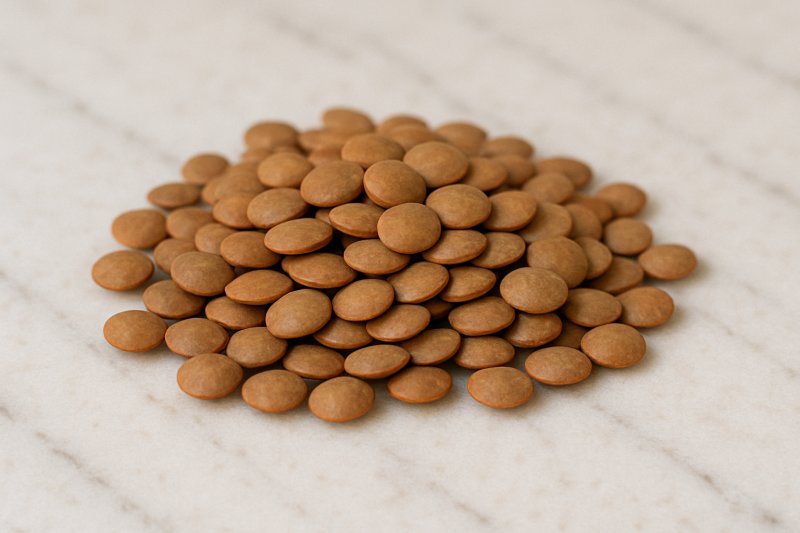
Availability and types
Lentils are small legumes grown in many parts of the world. You can buy them easily in supermarkets, health food stores, farmers’ markets or online. In some regions they are even a staple food because they are inexpensive, long-lasting and very nutritious. Think of lentils like small dried beans: they are easy to store and keep for a long time if kept dry and dark.
Origin and growing regions
Lentils have been cultivated for thousands of years. They originally come from regions around the eastern Mediterranean and the Middle East. Today lentils grow in many countries on different continents, for example:
Lentils have been cultivated for thousands of years. They originally come from regions around the eastern Mediterranean and the Middle East. Today lentils grow in many countries on different continents, for example:
- India: One of the largest producers. There they are often grown in warm, dry areas.
- Canada: An important growing country for lentils in large quantities, especially in the northern prairies.
- Turkey and Turkish regions: Traditional growing areas near the Mediterranean.
- Australia: Also a major supplier, especially for export.
- Europe: In countries like France, Spain and Germany lentils are grown on smaller plots.
The lentil plant often prefers sunny and relatively dry fields, but there are many different varieties that can also grow well in different climates. This allows people in many countries to cultivate lentils and make fresh dishes from them.
Available varieties and types
Lentils come in many colors and shapes. Each type has its own taste, cooking time and use. Here are the most common types, explained simply:
Lentils come in many colors and shapes. Each type has its own taste, cooking time and use. Here are the most common types, explained simply:
- Green lentils: They are usually a bit larger and keep their shape well when cooked. They work well in salads or as a side dish. They taste slightly nutty.
- Brown lentils: Very common and versatile. They are the all-rounders among lentils — for stews, soups or patties.
- Red lentils: These look orange because they are peeled. They cook quickly and break down easily, so they are good for purées, soups or curries. You could say they are like mashed potatoes: quickly soft and creamy.
- Yellow lentils: Similar to red lentils, often used in Indian dishes. They also soften quickly and provide a creamy texture.
- Black lentils (Beluga): Small and shiny, they look like caviar (hence the name Beluga). They remain firm when cooked and are nice in salads or as an elegant side.
- Puy lentils: These are green lentils from the French Puy region. They are a bit smaller, have a strong flavor and keep their shape very well.
There are also lentils sold dried or pre-cooked/canned. Dried lentils are cheaper and last a long time but usually require some soaking or cooking time. Pre-cooked lentils in cans or jars are convenient when you need something quick — they save time but often have slightly less flavor and a higher price.
Which lentils you choose depends on your recipe and time: if you want something quick and creamy, choose red or yellow lentils. If you want them to hold their shape, choose green, brown, black or Puy lentils. Whatever variety you pick, lentils are easy to find and a great, healthy ingredient for many dishes.
