Menu & categories

Lentils

Protein-rich legume with high fiber content

Wiki about lentil Nutri-Score A Vegan Yes Gluten-free Yes Lactose-free Yes Nut-free Yes
NUTRITION / 100 g
352 kcal 24.0 g Protein 60.0 g Kohlenhydrate 1.1 g Fett

Introduction

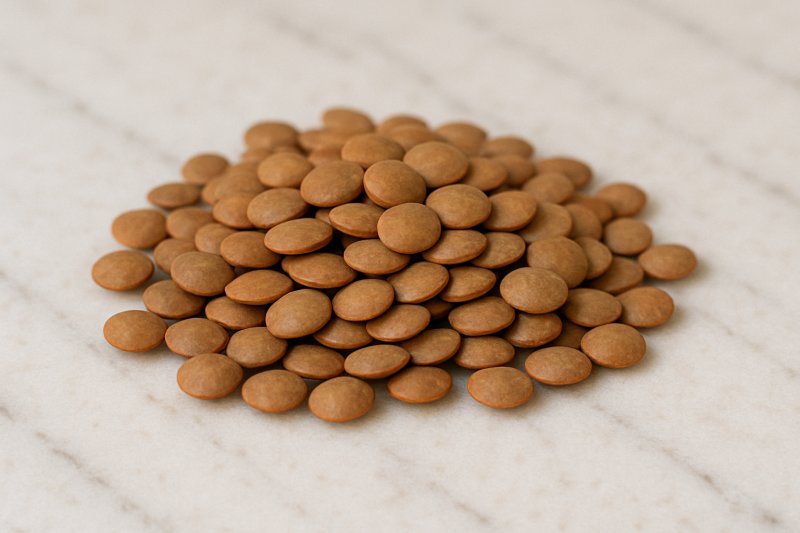
Dried lentils in a bowl
I still remember my first real encounter with lentils: it was on a rain-washed Sunday when a neighbor handed me a bowl of steaming lentil soup over the fence. The aroma was earthy and comforting at once, and with the first spoonful I knew that this little legume could do more than one gives it credit for. Since then lentils have become regular companions in my kitchen – uncomplicated, versatile, and always ready to perform small culinary miracles.

What I particularly appreciate about lentils is their variety. There are brown, green, red, black and yellow types, each with its own character: red lentils become soft and creamy when cooked, ideal for soups and purées; brown and green lentils hold their bite and are excellent for salads or as a side; black Beluga lentils look almost like little pearls in a dish and appear very elegant. Once I served a friend a lentil dish that looked so pretty he said it seemed like a Michelin-worthy experiment.

Besides taste, lentils are real nutrient packages. They provide a lot of plant protein, fiber and a range of important minerals like iron and magnesium. For me they are the uncomplicated answer to how to get satiety and nutrition into a bowl without standing at the stove for hours. On hectic days I especially appreciate that lentils can be prepared quickly and pair well with fresh herbs, lemon or spicy seasonings.

Practical tips I have gathered over time:

  • Rinse briefly before cooking to remove dust.
  • There is no standard rule for all lentils: cooking times vary, so taste as you go.
  • Broth, a bay leaf or a splash of vinegar can wonderfully deepen the flavor.
What fascinates me again and again: lentils are both down-to-earth and surprisingly transformable. They fit into stews, salads, pasta sauces, patties and even sweet experiments if you’re brave enough. A colleague of mine was quite amazed when I served him lentil brownies that were wonderfully moist. For me lentils are a culinary chameleon — reliable, nutritious and always ready to tell something new. I hope you will give them a place in your basket on your next shopping trip.

Availability & types

Availability and types

Lentils are small legumes grown in many parts of the world. You can buy them easily in supermarkets, health food stores, farmers’ markets or online. In some regions they are even a staple food because they are inexpensive, long-lasting and very nutritious. Think of lentils like small dried beans: they are easy to store and keep for a long time if kept dry and dark.

Origin and growing regions
Lentils have been cultivated for thousands of years. They originally come from regions around the eastern Mediterranean and the Middle East. Today lentils grow in many countries on different continents, for example:

  • India: One of the largest producers. There they are often grown in warm, dry areas.
  • Canada: An important growing country for lentils in large quantities, especially in the northern prairies.
  • Turkey and Turkish regions: Traditional growing areas near the Mediterranean.
  • Australia: Also a major supplier, especially for export.
  • Europe: In countries like France, Spain and Germany lentils are grown on smaller plots.
The lentil plant often prefers sunny and relatively dry fields, but there are many different varieties that can also grow well in different climates. This allows people in many countries to cultivate lentils and make fresh dishes from them.

Available varieties and types
Lentils come in many colors and shapes. Each type has its own taste, cooking time and use. Here are the most common types, explained simply:

  • Green lentils: They are usually a bit larger and keep their shape well when cooked. They work well in salads or as a side dish. They taste slightly nutty.
  • Brown lentils: Very common and versatile. They are the all-rounders among lentils — for stews, soups or patties.
  • Red lentils: These look orange because they are peeled. They cook quickly and break down easily, so they are good for purées, soups or curries. You could say they are like mashed potatoes: quickly soft and creamy.
  • Yellow lentils: Similar to red lentils, often used in Indian dishes. They also soften quickly and provide a creamy texture.
  • Black lentils (Beluga): Small and shiny, they look like caviar (hence the name Beluga). They remain firm when cooked and are nice in salads or as an elegant side.
  • Puy lentils: These are green lentils from the French Puy region. They are a bit smaller, have a strong flavor and keep their shape very well.
There are also lentils sold dried or pre-cooked/canned. Dried lentils are cheaper and last a long time but usually require some soaking or cooking time. Pre-cooked lentils in cans or jars are convenient when you need something quick — they save time but often have slightly less flavor and a higher price.

Which lentils you choose depends on your recipe and time: if you want something quick and creamy, choose red or yellow lentils. If you want them to hold their shape, choose green, brown, black or Puy lentils. Whatever variety you pick, lentils are easy to find and a great, healthy ingredient for many dishes.

Details & nutrition

Property Value
Unit g
Calories per 100 352
Protein per 100 24.0
Carbohydrates per 100 60.0
Sugar per 100 2.0
Fat per 100 1.1
Saturated fat per 100 0.2
Monounsaturated fat 0.2
Polyunsaturated fat 0.6
Fiber per 100 17.0
Vitamin C (mg) per 100 4.0
Vitamin D (IU) per 100 0
Calcium (mg) per 100 56
Iron (mg) per 100 7.5
Nutri-Score A
CO₂ footprint 0.9
Origin Worldwide, commonly Canada, India, Turkey, Europe
Gluten-free Yes
Lactose-free Yes
Nut-free Yes
Vegan Yes
Note Nutritional values refer to dried lentils, uncooked. Lentils are a good plant-based source of protein and rich in fiber and iron.

Technical & scientific information

Lentils are the edible seeds of the plant genus Lens, mainly the species Lens culinaris. They belong to the family Fabaceae (legumes) and have been cultivated as food for several millennia. Lentils are available in various shades, including green, brown, red, yellow and black, with varietal differences affecting appearance, cooking behavior and nutrient composition.

Botanical and agronomic characteristics
Lentil plants are annual herbs of low stature grown in temperate to subtropical climates. Pods typically contain two seeds; the seed coat (testa) varies in thickness and influences texture and cooking time. Lentils are relatively undemanding regarding soil and water needs, have a short growing period and are useful in crop rotations due to nitrogen fixation by rhizobia.

Chemical composition and nutritional values
Lentils are rich in macronutrients and secondary plant compounds. Typical nutritional values (per 100 g raw lentils) are about 20–26 g protein, 1–2 g fat, 50–60 g carbohydrates (of which 10–15 g fiber) and approximately 300–350 kcal energy. Proteins show a high proportion of essential amino acids such as lysine but are low in methionine, so combining with cereals complements the protein profile. Lentils also provide minerals such as iron, magnesium, phosphorus and zinc as well as B vitamins, particularly folate (vitamin B9). Antioxidant compounds like polyphenols and flavonoids are concentrated in the seed coat.

Processing methods and technological aspects
After harvest, lentils are cleaned, dried and graded. Further processing steps can include dehulling (common for red and yellow lentils), splitting and polishing. Dehulling reduces fiber and extends shelf life but also accelerates water uptake and disintegration during cooking. Industrial processing can also include germination, roasting or pureeing to alter texture and sensory properties for pre-cooked products. Extrusion and drying processes enable the production of lentil flour, protein isolates and snacks, with temperature and shear conditions affecting the functionality of proteins and starches.

Physiological and health aspects
Regular consumption of lentils is associated with positive health effects. High fiber content supports gut health, promotes satiety and modulates blood glucose by slowing glucose release. Lentils are a plant source of iron; however, bioavailability can be reduced by phytates in the seed coat. Soaking, sprouting or brief cooking reduces phytate content and increases mineral availability. The protein content makes lentils an important source of plant-based protein, especially in vegetarian and vegan diets. Furthermore, lentils are cholesterol-free and contain little saturated fat, which may benefit cardiovascular health.

Anti-nutrients and tolerability
Lentils contain, besides phytates, oligosaccharides such as raffinose and stachyose, which in some cases can cause flatulence. Heat treatment, soaking and fermentation reduce these carbohydrates. In rare individuals, legumes can trigger allergic reactions. Due to purine content, people with gout should moderate consumption.

Food technology use and sustainability
Lentil flour and proteins are increasingly used as functional ingredients in the food industry, for example to improve texture and binding in meat alternatives, baked goods and convenience products. Ecologically, lentils are well-regarded: they require less water and nitrogen fertilizer than many other protein-rich crops and contribute to soil fertility through symbiosis with nodulating bacteria. This makes them an increasingly important crop in strategies for sustainable food systems.

In summary, lentils are versatile, nutrient-dense legumes with a favorable nutrient profile, diverse processing techniques and positive ecological characteristics. Technological interventions like dehulling or fermentation can improve nutritional properties, while simple preparation steps like soaking enhance tolerability and mineral bioavailability.

Wiki entry for: lentil
Active now: 15 visitors of which 2 logged-in members in the last 5 minutes