Menu & categories

Lemon aroma

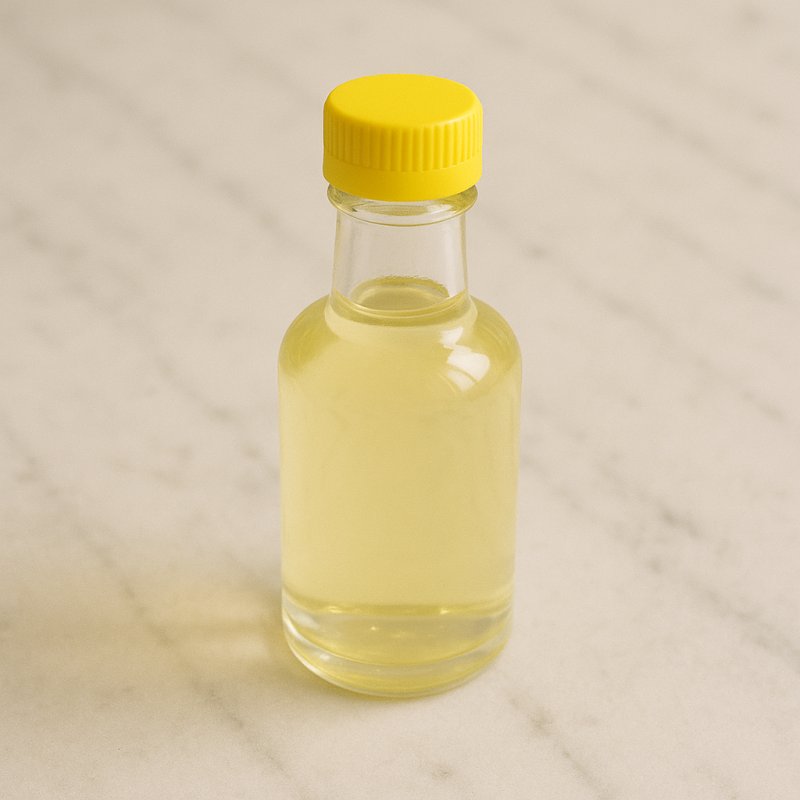
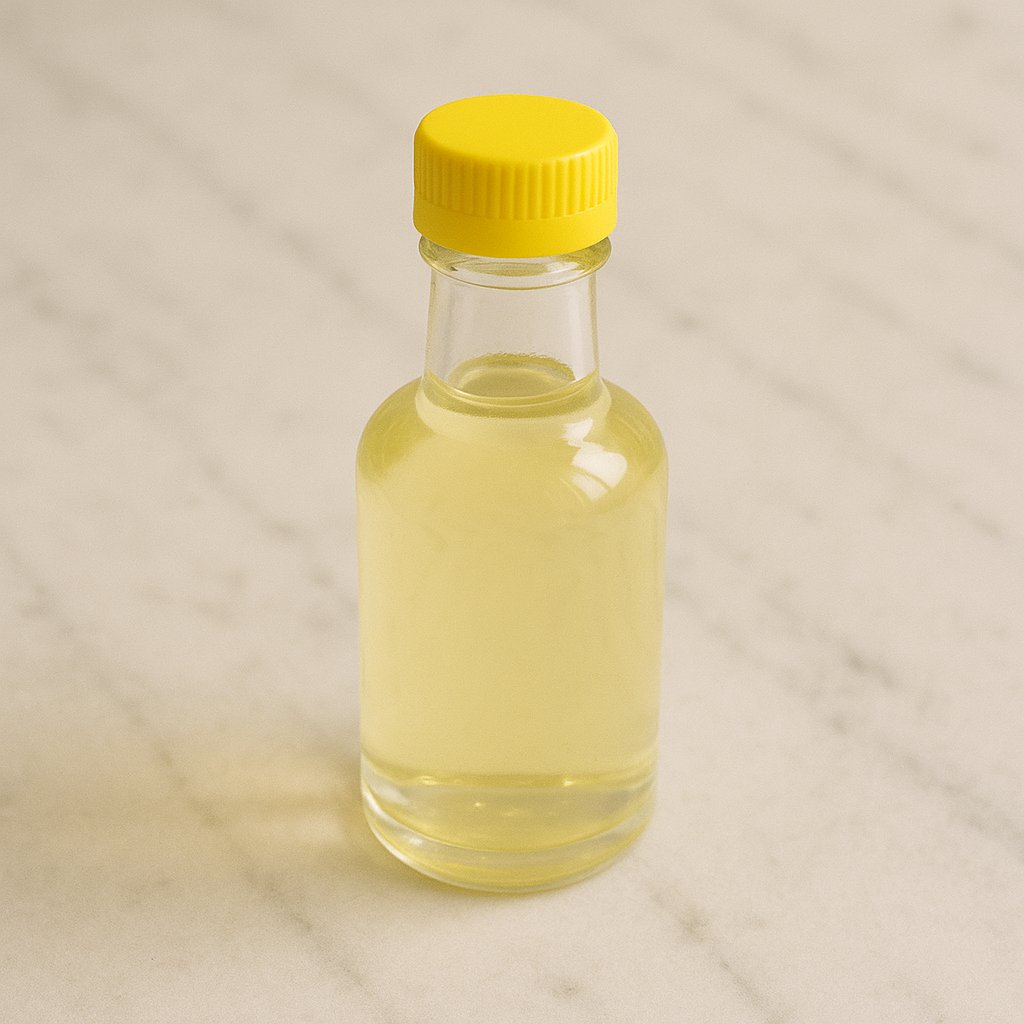
Concentrated lemon-flavored aroma for foods and beverages

Wiki about lemon flavoring Nutri-Score D Vegan Yes Gluten-free Yes Lactose-free Yes Nut-free Yes
NUTRITION / 100 g
120 kcal 0 g Protein 0 g Kohlenhydrate 13 g Fett

Introduction

Small bottle of lemon aroma next to a fresh lemon
I confess: Lemon flavor is for me one of those little kitchen wonders that's both practical and a bit magical. The first time I consciously worked with artificial lemon flavor was in a tiny bakery where the air was filled with the scent of fresh yeast and caramelized sugar. A colleague handed me a tiny bottle with a clear, intense liquid and said dryly: "This is the turbo for your lemon cake." Skeptically I dropped a few drops into the batter — and was surprised how much brightness so little concentration could create.

Lemon flavor is not all the same. There are liquid extracts, nature-identical flavors and synthetic concentrates, and each variant has its own role: some bring fresh, citrusy notes, others enhance existing flavors without changing texture. I still remember one late afternoon when I was experimenting on a dessert with a friend and we accidentally used too much flavor. The result literally shouted "Soap!", and we laughed before rescuing it with meringue and a bit of acid. Since then I measure drops very deliberately.

Typical uses are diverse:

  • Bakery products like cakes, muffins and cookies, where lemon flavor simulates the freshness of citrus fruits.
  • Confectionery and ice cream, for clear, bright notes without added moisture.
  • Beverages and syrups, to achieve an intense citrus flavor without squeezing fresh lemons.
  • Commercial foods, where consistency and shelf life are more important than the variable qualities of fresh fruit.
What I like about lemon flavor is its versatility: it can be used sparingly to add accents, and it is stable in mixes where fresh lemon would quickly fade. At the same time caution is needed, because too much can taste artificial and monotonous. A small pinch of acidity (e.g. lemon or wine vinegar) combined with the flavor can often perfect the illusion of freshness.

For those who like to experiment: start with a few drops, try blends with vanilla or ginger and remember that ambient temperature can change the perception of the flavor. For me lemon flavor remains a practical ally in the kitchen — not as a replacement for real lemons, but as a complementary tool that enhances dishes with a clear, sunny note.

Availability & types

Availability and types

When we talk about lemon flavor we mean the taste or smell that recalls fresh lemons. This flavor can come from different sources and is available in many forms in stores and online. You can think of it like different kinds of lemon voices: they all say "lemon!", but each sounds a little different.

Origin
Lemon flavor can be produced in two main ways. Either it comes directly from real lemons, or it is made artificially in a laboratory. Real lemon flavor is often obtained as an essential oil from the lemon peel. Essential oils are like little scent bottles in the peel that are released when rubbed. Artificial lemon flavor is made from other plant substances or chemical building blocks that are mixed together to taste like lemon. Both have advantages and disadvantages: natural flavor often smells more complex, artificial is often cheaper and longer lasting.

Growing regions
The lemons from which real lemon flavor is obtained grow particularly well in warm areas. Important growing regions are:

  • Mediterranean region – Countries like Spain, Italy and Greece are large lemon suppliers.
  • USA (California, Florida) – many lemons are also grown here.
  • Southern regions – Countries like Argentina, South Africa and Australia also export many lemons.
You can compare it to a garden: lemon trees like warmth, sun and not too much frost. That's why they grow where it is often sunny.

Available types and variants
Lemon flavor exists in many forms, depending on how it is made or packaged. The main variants are:

  • Lemon essential oil – This is the oil pressed from the fruit peel. It has a strong, fresh smell and is often used in cooking, cosmetics or cleaners.
  • Lemon extract – Active substances from the peel usually dissolved in alcohol. It is often used in baking because it is easy to dose.
  • Artificial lemon flavor – Flavors produced in a laboratory, sometimes called "nature-identical". They taste like lemon but are not made directly from lemons. This variant is practical when you need an inexpensive or very stable flavor.
  • Lemon oil concentrate – A stronger blend used sparingly, e.g. in beverages or sweets.
  • Dry or powdered flavors – For drink mixes or baking powders there are also lemon flavors in powder form.
A simple comparison: imagine you want to make lemonade. You can squeeze fresh lemons (real flavor), buy a bottle of lemon juice (extract or oil in liquid form) or take a packet of powder that tastes like lemon (powdered flavor). All give you lemon taste, but they feel a bit different and vary in practicality.

Tips for choosing
If you value natural taste, essential oil or a real extract from the peel is a good choice. If you want to save money or get a very consistent result, an artificial flavor is practical. Check labels for terms like "natural lemon flavor" or "artificially produced", depending on which you prefer.

In summary: lemon flavor comes either from real lemons or from the lab, lemons grow mainly in warm countries such as around the Mediterranean or in California, and there are many forms – oil, extract, artificial flavors or powders – so there's something for every use and budget.
Details & nutrition

Property Value
Unit g
Calories per 100 120
Protein per 100 0
Carbohydrates per 100 0
Sugar per 100 0
Fat per 100 13
Saturated fat per 100 1
Monounsaturated fat 9
Polyunsaturated fat 3
Fiber per 100 0
Vitamin C (mg) per 100 0
Vitamin D (IU) per 100 0
Calcium (mg) per 100 0
Iron (mg) per 100 0
Nutri-Score D
CO₂ footprint 3.0
Origin Industrial flavouring, raw materials predominantly from the EU
Gluten-free Yes
Lactose-free Yes
Nut-free Yes
Vegan Yes
Note Used in very small quantities; nutritional values per 100 g are calculated figures for a concentrated oil-based aroma. Actual intake per serving is minimal.

Technical & scientific information

Lemon flavor refers to flavoring substances manufactured synthetically or isolated from natural sources that reproduce the characteristic smell and taste of lemon. In foods, beverages, baked goods and cosmetics lemon flavor is frequently used because it delivers fresh, acidic and slightly floral notes without bringing the perishability or stability requirements of whole fruit components.

Chemical composition
Lemon flavor usually consists of a mixture of several volatile organic compounds that together form the sensory profile of lemon. Important individual components are:

  • Limonene: a monoterpene that dominates many citrus peels and is responsible for the fruity-fresh note.
  • Citral (a mixture of neral and geranial): aldehydes with a distinctly lemon-like, citrus perception and high flavor potential.
  • β-Pinene, γ-Terpinene: other terpenes that contribute floral and spicy nuances.
  • Acetaldehyde, ethyl acetate, octanal: small esters and aldehydes that enhance subtle fruity accents.
Natural versus artificial flavors
As natural lemon flavor are considered extracts obtained from lemon peel or oil by physical (e.g. cold pressing, distillation) or biotechnological methods. These contain the natural spectrum of terpenes and aldehydes in proportions similar to those in the fruit. Artificial lemon flavor is produced by chemical synthesis of individual components or by combining isolated substances in defined ratios. Both variants can be very similar sensorially; differences appear particularly in complexity and background notes.

Manufacturing methods
Typical processing methods are:

  • Cold pressing of lemon peel to obtain the essential oil, which after purification and fractionation serves as a flavor.
  • Distillation, often steam distillation, to separate volatile components.
  • Extraction with solvents or CO2 extraction, to also obtain less volatile aroma constituents.
  • Synthesis of chemical single compounds and their mixing into complex flavor formulas, supplemented if necessary with carriers and stabilizers.
Nutritional values and additives
Pure flavoring substances provide practically no significant calories or nutrients, as they are used in very small amounts (milligrams to a few grams per kilogram of product). Flavors are often dissolved in solvents, oils or ethanol and contain carriers. Label-required additives, allergens or solvent residues must be indicated on the product according to applicable legislation.

Health aspects and safety
For most substances used in lemon flavor there are toxicological assessments and residue data available. Limonene and citral are regarded as safe at typical consumption levels, but can cause skin sensitization or allergic reactions in sensitive individuals, especially with topical use in cosmetics. When handling concentrated flavorings, eye contact and inhalation should be avoided. Food law approvals and limits vary regionally; manufacturers must document purity, origin and usage concentrations.

Sensory properties and application
Sensorily, lemon flavor is characterized by sharp, slightly bitter and fresh top notes that enhance drinking water, confectionery, baked goods, beverages, dressings and jams. In combination with sweetness or herbs it amplifies freshness effects, while high concentrations can quickly be perceived as artificial or soapy. Good flavor profiles try to balance volatile, intense top notes (e.g. limonene) and longer-lasting, more complex components (e.g. citral).

Sustainability and quality aspects
With natural flavors, cultivation, harvest time and processing methods influence the composition of the oil. Sustainable sourcing, use of by-products (e.g. peels as co-products) and transparent labeling are gaining importance. Analytical methods such as gas chromatography coupled with mass spectrometry (GC-MS) are used to characterize the profile, check purity and detect adulteration or residues.

Overall, lemon flavor is a technically versatile ingredient with clearly defined main chemical components, offered in various forms. When used properly it provides intense freshness notes with small amounts; regulatory requirements and toxicological findings should always be considered in production and application.

Wiki entry for: lemon flavoring
Active now: 6 visitors of which 2 logged-in members in the last 5 minutes