Menu & categories

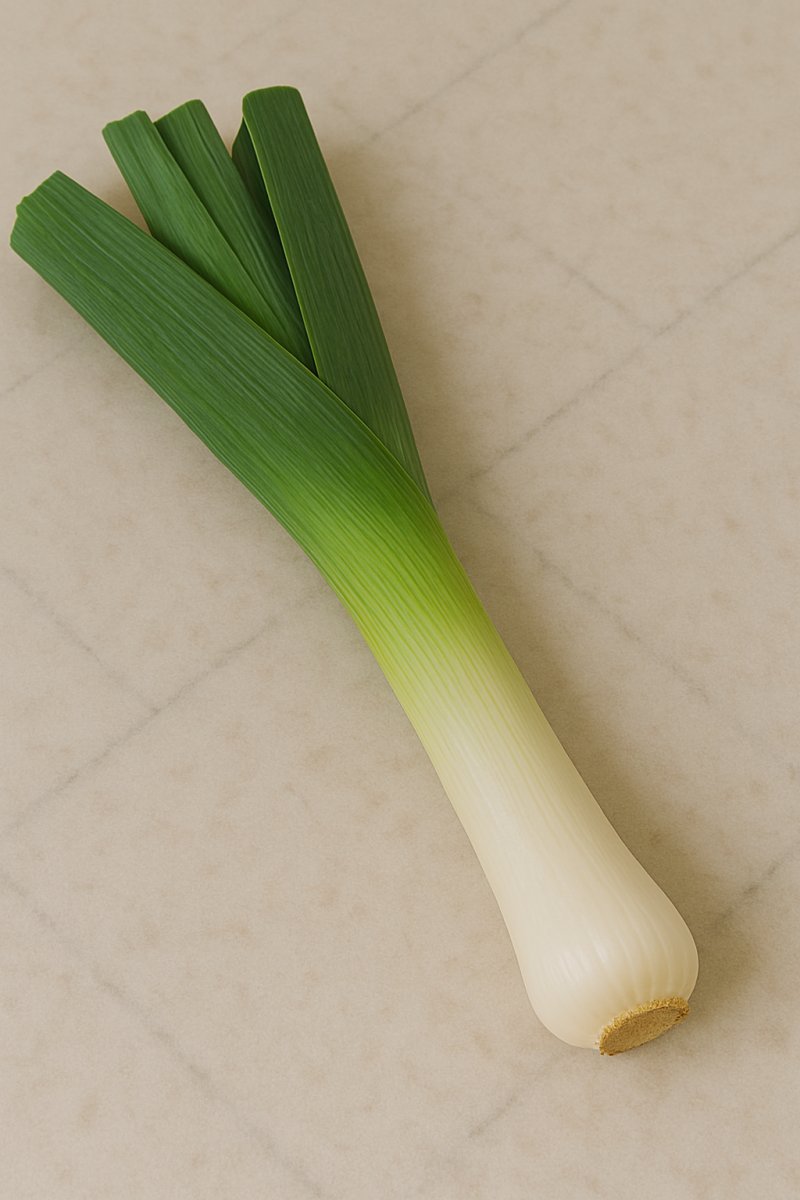
Leek

Aromatic stalk vegetable for soups, stews and pans

Wiki about leek Nutri-Score A Vegan Yes Gluten-free Yes Lactose-free Yes Nut-free Yes
NUTRITION / 100 g
31 kcal 1.5 g Protein 7.0 g Kohlenhydrate 0.3 g Fett

Introduction

Fresh leeks
Leek, Leek is one of the underrated stars of European cuisine. As a 35-year-old editor who commutes between the weekly market, the editorial office and the home kitchen, I have come to love this mild-sweet all-rounder over the years. Hardly any ingredient combines as much aroma, digestibility and versatility as leek – whether as a delicate companion in soups, as a robust base for braised dishes or as a standalone leading role in quiche-like tarts. Especially on cool days leek shows its strengths: it warms, fills you up and fills the kitchen with a scent that immediately evokes homemade comfort food.

Botanically speaking, leek belongs to the Amaryllidaceae family and is closely related to onions and garlic, but milder. The taste is fine, slightly sweet and develops a creamy depth when braised. In many European regions leek has a tradition: in France it is the soul of Vichyssoise, in Wales a national emblem and in Germany an indispensable part of soup greens. My grandfather always called leek "the quiet onion" – a fitting nickname, because it gives a sauce substance without pushing itself to the fore.

A colleague of mine swears by cutting the white stem into rings, sautéing briefly in butter and finishing with a little cream and nutmeg. This simple side dish turns potatoes or pasta into a small feast in no time. A friend, meanwhile, prepares leek in the oven as braised vegetables: halved stalks with olive oil, lemon zest and thyme until the edges caramelize. This way leek moves from supporting actor to main course.

What I look for when shopping
Fresh leek has tightly closed, crisp leaves, a white, juicy stem and a discreet scent. Yellowish or too soft leaves indicate age. Leek is in season all year, but it is particularly aromatic in the cooler months. For delicate, finer flavors I choose slimmer stalks; sturdier ones are ideal for stews and broths.

How to clean leek properly
Between

Availability & types

Availability and types of leek (Porree)

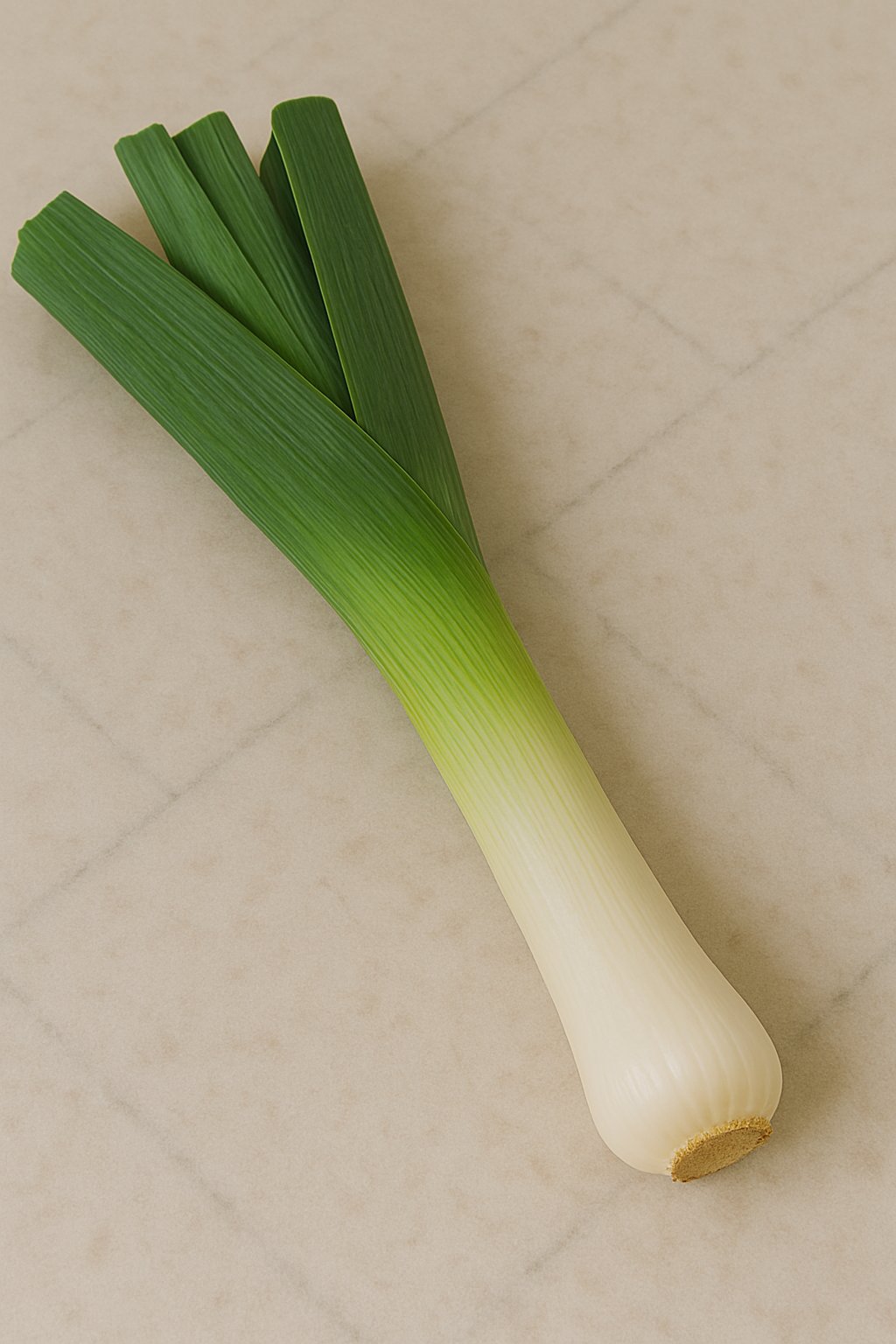
Leek, also called porree, is a mild, onion-like vegetable that is grown and eaten in many regions of the world. It belongs to the large family of alliums, like onions, garlic and chives. Unlike onions, leek does not form a round bulb but long, firm, overlapping leaf sheaths with a white lower part and green, fan-shaped foliage at the top. For cooking and shopping it is useful to know when leek is available, where it comes from and what varieties exist. That way you can better understand why some stalks are thicker, milder or stronger – and when leek is particularly fresh and affordable.

Origin and distribution
Leek originally comes from the eastern Mediterranean and Western Asia. The ancient Egyptians and Romans already knew it and valued its mild, slightly sweet flavor. From there it spread to Europe and later to the whole world. Today leek is mainly found in temperate climates because it tolerates cool temperatures well. Major growing areas are in Europe (for example Germany, France, the Netherlands, Belgium, the United Kingdom, Poland), but also in North America and parts of Asia. In many countries leek is a true everyday vegetable offered year-round in supermarkets and at weekly markets.

Availability throughout the year
One advantage of leek is that it is very hardy. Depending on the variety and cultivation time you can get it practically all year round:

  • Spring and summer leek: Harvested in spring and summer. The stalks are often slimmer, more tender and the flavor is milder. Ideal for light dishes, stir-fries, salads (blanched) and quick soups.
  • Autumn and winter leek: Matures in late summer and autumn and often remains in the field into winter. These stalks are more robust, thicker and more aromatic. They are particularly suitable for stews, braised dishes and hearty casseroles.
  • Year-round availability: Through staggered sowing, different
Details & nutrition

Property Value
Unit g
Average weight per piece 220
Calories per 100 31
Protein per 100 1.5
Carbohydrates per 100 7.0
Sugar per 100 3.2
Fat per 100 0.3
Saturated fat per 100 0.05
Monounsaturated fat 0.02
Polyunsaturated fat 0.15
Fiber per 100 2.2
Vitamin C (mg) per 100 12
Vitamin D (IU) per 100 0
Calcium (mg) per 100 60
Iron (mg) per 100 2.1
Nutri-Score A
CO₂ footprint 0.4 kg CO2e/kg
Origin Europe, regional depending on the season
Gluten-free Yes
Lactose-free Yes
Nut-free Yes
Vegan Yes
Note Mild onion flavor; wash well, as soil residue can sit between the layers.

Technical & scientific information

Leek, Leek (Allium ampeloprasum var. porrum) is a cultivated leek plant from the Amaryllidaceae family and botanically belongs to the genus Allium, which also includes onion, garlic and shallot. Characteristic is the long, sheath-like pseudostem made of overlapping leaf sheaths, which transitions from the dark green leaf fan down into a whitish-green, tender stem. Unlike the onion, porree does not form a pronounced bulb, but stores reserve substances in the stem tissue. The aroma is mild, sweetish and at the same time pungent-spicy, shaped by sulfur-containing compounds that are converted into volatile components by the enzyme alliinase when mechanically injured.

Botany and morphology: The plant is biennial. In the first year the edible stem is formed; in the second year a round flower stalk develops with a spherical, dense umbel of small, whitish to violet flowers. The roots are fibrous and relatively shallow-reaching. Leaves are strap-shaped, parallel-veined and coated with wax, which contributes to transpiration control. Varieties are usually classified into summer, autumn and winter leek, which differ in stem length, leaf color, frost hardiness and harvest window. Winter leek often shows a stronger wax layer and higher cold tolerance down to below -10 °C, which extends the field supply in temperate climates.

Constituents and nutritional profile: Leek is low in energy (around 25–35 kcal per 100 g, depending on variety and maturity) and provides mainly water, fiber and small amounts of protein. Carbohydrates are present predominantly as fructans (particularly inulin and fructo-oligosaccharides), which act prebiotically and promote the growth of beneficial gut bacteria such as bifidobacteria. In terms of minerals, potassium, manganese, iron and small amounts of calcium and magnesium are relevant; for the trace element selenium, contents can vary depending on soil conditions. Vitamin data show notable contributions of folate, vitamin K1, vitamin C (especially in the green leaf portion) and provitamin A (carotenoids such as lutein and zeax)
Wiki entry for: leek
Active now: 18 visitors of which 2 logged-in members in the last 5 minutes