What is "Lattella natur" and where does it come from?
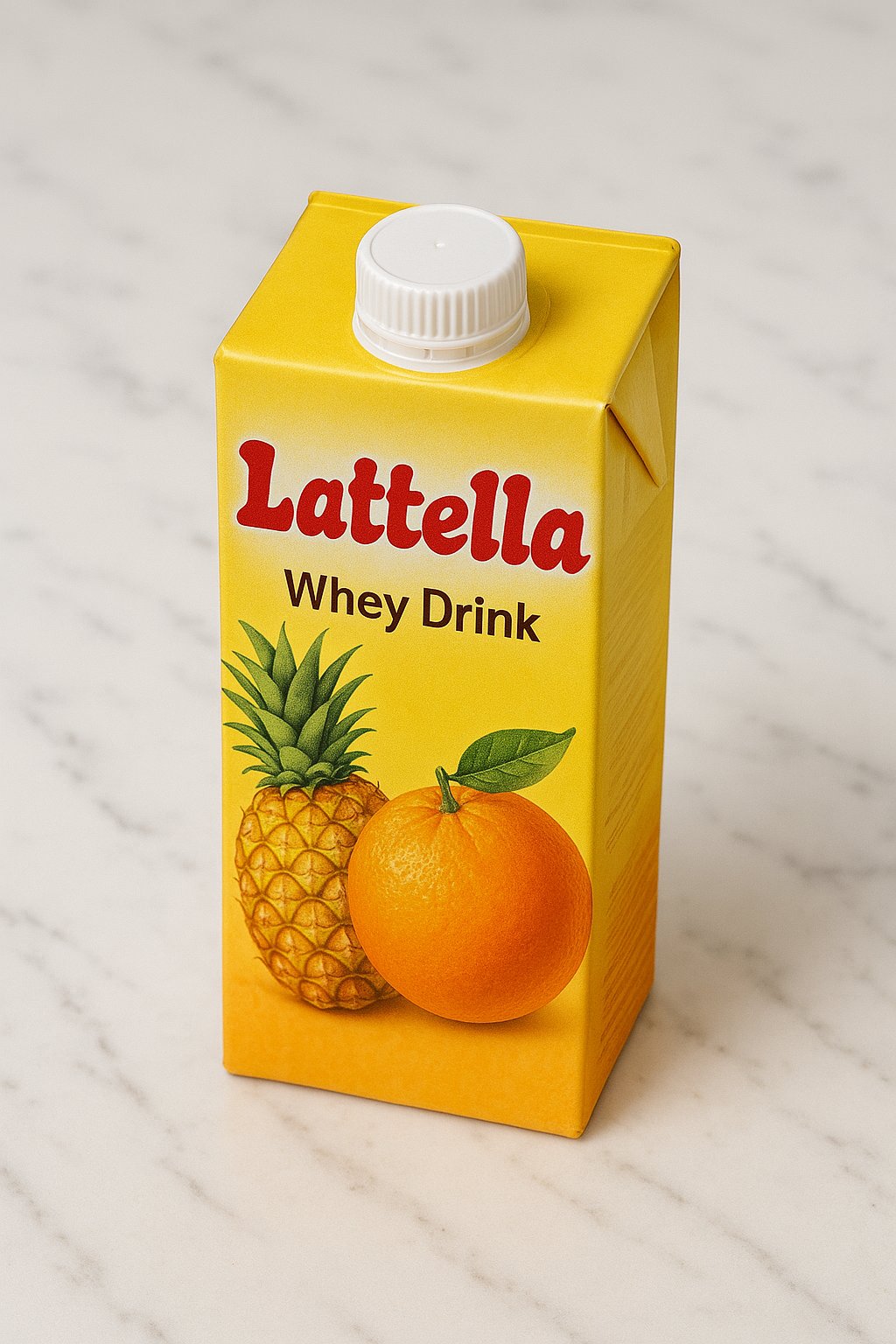
Lattella natur is a refreshing whey drink. Whey is the thin, clear liquid that remains when cheese is made from milk. You can think of whey like the water that stays after wringing out a wet sponge: it is light, still contains proteins and minerals, and is processed into beverages. Lattella itself has its origins in dairy processing in Central Europe – especially in regions where many cows are kept and dairy products are produced.
Lattella natur is a refreshing whey drink. Whey is the thin, clear liquid that remains when cheese is made from milk. You can think of whey like the water that stays after wringing out a wet sponge: it is light, still contains proteins and minerals, and is processed into beverages. Lattella itself has its origins in dairy processing in Central Europe – especially in regions where many cows are kept and dairy products are produced.
Origin and production
The main ingredient of Lattella natur is therefore whey, supplied by dairy farmers. These farmers often come from rural and mountainous areas where cows graze on meadows. Many producers rely on fresh milk from regional farms because short transport distances and fresh raw materials are important. In a dairy plant the whey is cleaned, sometimes gently heated, supplemented with minerals or natural flavor and then bottled. This is called processing. You can think of it like cooking: the farmer delivers the milk, the dairy plant turns it into a finished drink that we can buy in the supermarket.
The main ingredient of Lattella natur is therefore whey, supplied by dairy farmers. These farmers often come from rural and mountainous areas where cows graze on meadows. Many producers rely on fresh milk from regional farms because short transport distances and fresh raw materials are important. In a dairy plant the whey is cleaned, sometimes gently heated, supplemented with minerals or natural flavor and then bottled. This is called processing. You can think of it like cooking: the farmer delivers the milk, the dairy plant turns it into a finished drink that we can buy in the supermarket.
Growing areas? – Where does the raw milk come from?
The word "growing areas" doesn't fit a whey‑based drink quite like it does for vegetables, but you can look at it this way: the "growing areas" are the regions where the milk is produced. These are often:
The word "growing areas" doesn't fit a whey‑based drink quite like it does for vegetables, but you can look at it this way: the "growing areas" are the regions where the milk is produced. These are often:
- Alpine and pre‑Alpine regions with many meadows – where cows graze in summer.
- Rural areas in Central Europe where dairy farming is traditional.
- Regional dairies that further process the whey.
Available varieties and types
When you look for Lattella in the store, you'll find different variants. The main types are:
When you look for Lattella in the store, you'll find different variants. The main types are:
- Lattella natur: the simple, non‑fruity version. It tastes mild and slightly "milky", without strong additives.
- Fruit variants: whey drinks with lemon, peach or other fruit flavors – like a fruit juice, only much lighter.
- Light or low‑calorie variants: less sugar or less fat, for people watching their calories.
- Large and small packages: bottles or cartons in various sizes – for school, for home or to share.
- Special versions: sometimes there are seasonal flavors or editions with added taste.
Availability in trade
Lattella natur is usually found in the refrigerated section of supermarkets, in the beverage shelf among dairy products or in cafés. The exact selection depends on the country and the shop: in some countries many variants are available, in others only the basic version. You can often also order Lattella online or buy it in regional stores. If you want to be sure a particular variant is available, it's worth checking the manufacturer's website or making a quick phone call to the shop.
Lattella natur is usually found in the refrigerated section of supermarkets, in the beverage shelf among dairy products or in cafés. The exact selection depends on the country and the shop: in some countries many variants are available, in others only the basic version. You can often also order Lattella online or buy it in regional stores. If you want to be sure a particular variant is available, it's worth checking the manufacturer's website or making a quick phone call to the shop.
In summary: Lattella natur is a simple, refreshing whey drink made from the liquid that arises during cheese production. The raw milk mostly comes from rural and mountainous regions, the products are processed in dairies, and in trade, besides the natur variant there are also fruity, light and different packaging sizes – so everyone can find what suits them best.