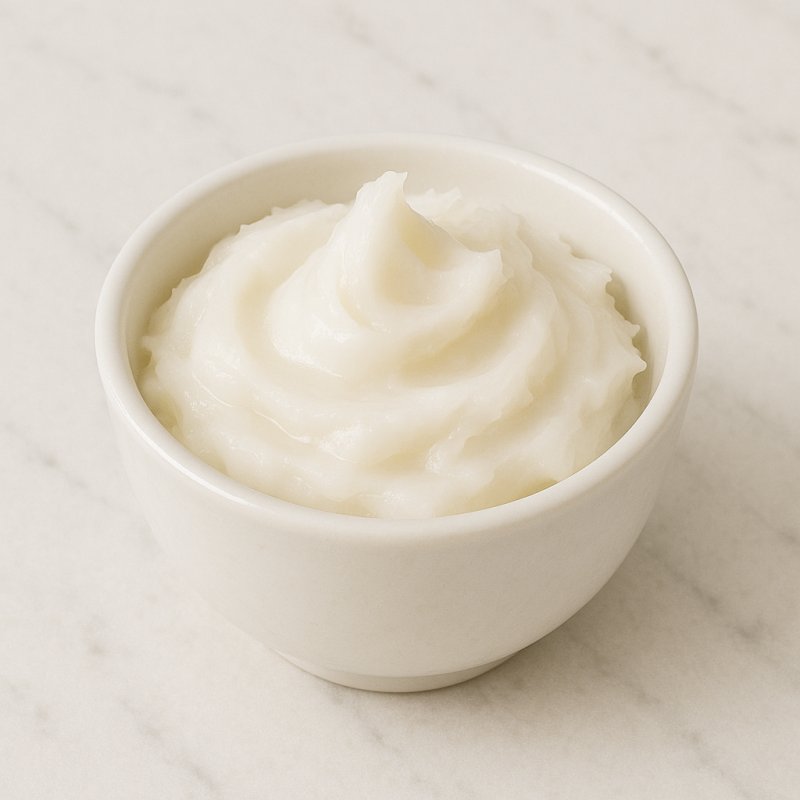
Availability and types of lard
Lard is a fat obtained from pig tissue. In many countries it is a traditional cooking fat because it withstands high temperatures when frying, baking and deep-frying and gives dishes an aromatic taste. For children from about 12 years old it can be imagined like this: just as butter is made from milk fat, lard is made from pig fat. However, it is firmer than oil and softer than cold butter, depending on the temperature. Important: good lard is clean, smells mild and does not taste sharp.
Where can you get lard?
Today lard is available in many shops if you know where to look:
Today lard is available in many shops if you know where to look:
- Supermarkets: Usually in the chilled section, by butter and margarine, or on the shelf with baking ingredients. Often in tubs, jars or firmly packaged blocks.
- Butcher shops: Often particularly fresh, sometimes even homemade. Here you can ask for specific types, for example from back fat or belly fat.
- Weekly markets and farm shops: Regional variants, often artisan-made. Sometimes refined with herbs or onions.
- Online shops: Wide selection, including organic quality, special cuts (e.g. “leaf lard”) and international variants.
- International: In stores with Eastern European, Spanish, Latin American or Asian foods, sometimes under other names (e.g. “manteca” in Spanish).
Why are there different types?
The fat comes from different parts of the pig. Depending on where it comes from and how it is processed, flavor, color and consistency change. Filtering, clarifying and possible additions (such as onions) also play a role.
The fat comes from different parts of the pig. Depending on where it comes from and how it is processed, flavor, color and consistency change. Filtering, clarifying and possible additions (such as onions) also play a role.
Origin within the animal
- Back fat (Back Fat): Provides fairly firm lard with a mild flavor. Good for frying and as a spread on bread
