Menu & categories

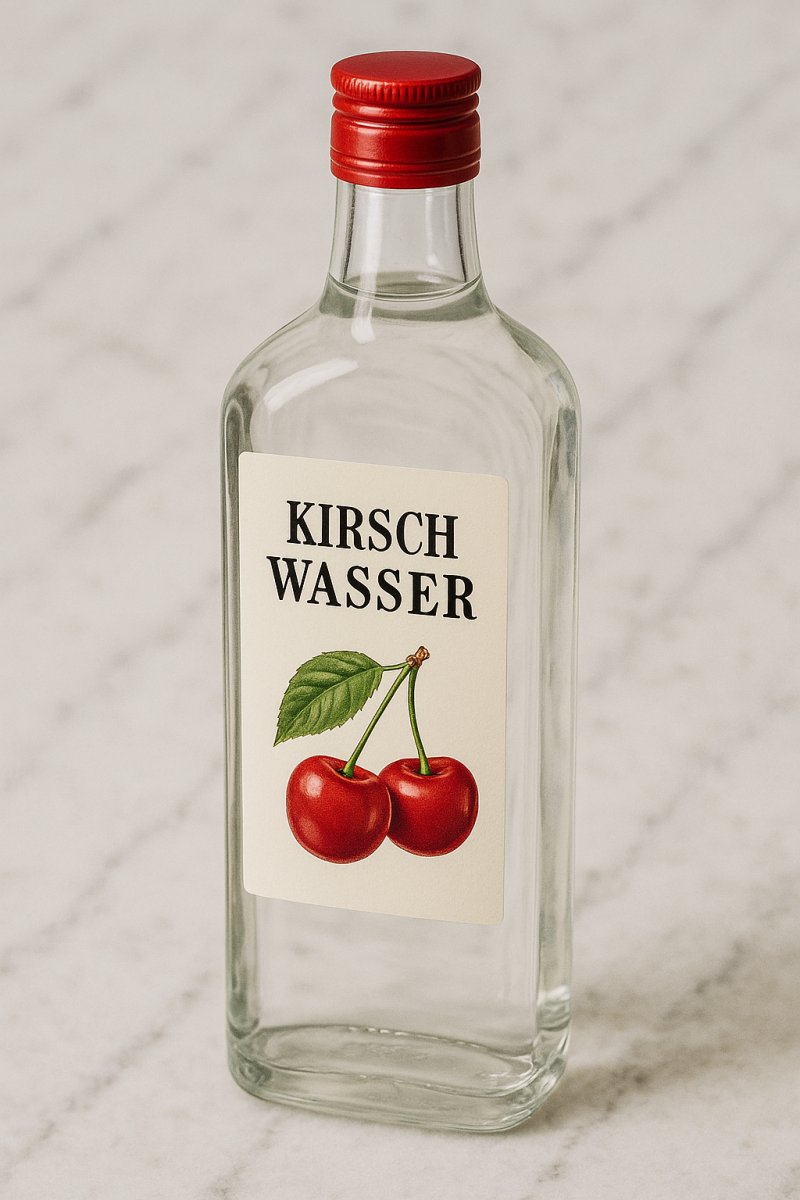
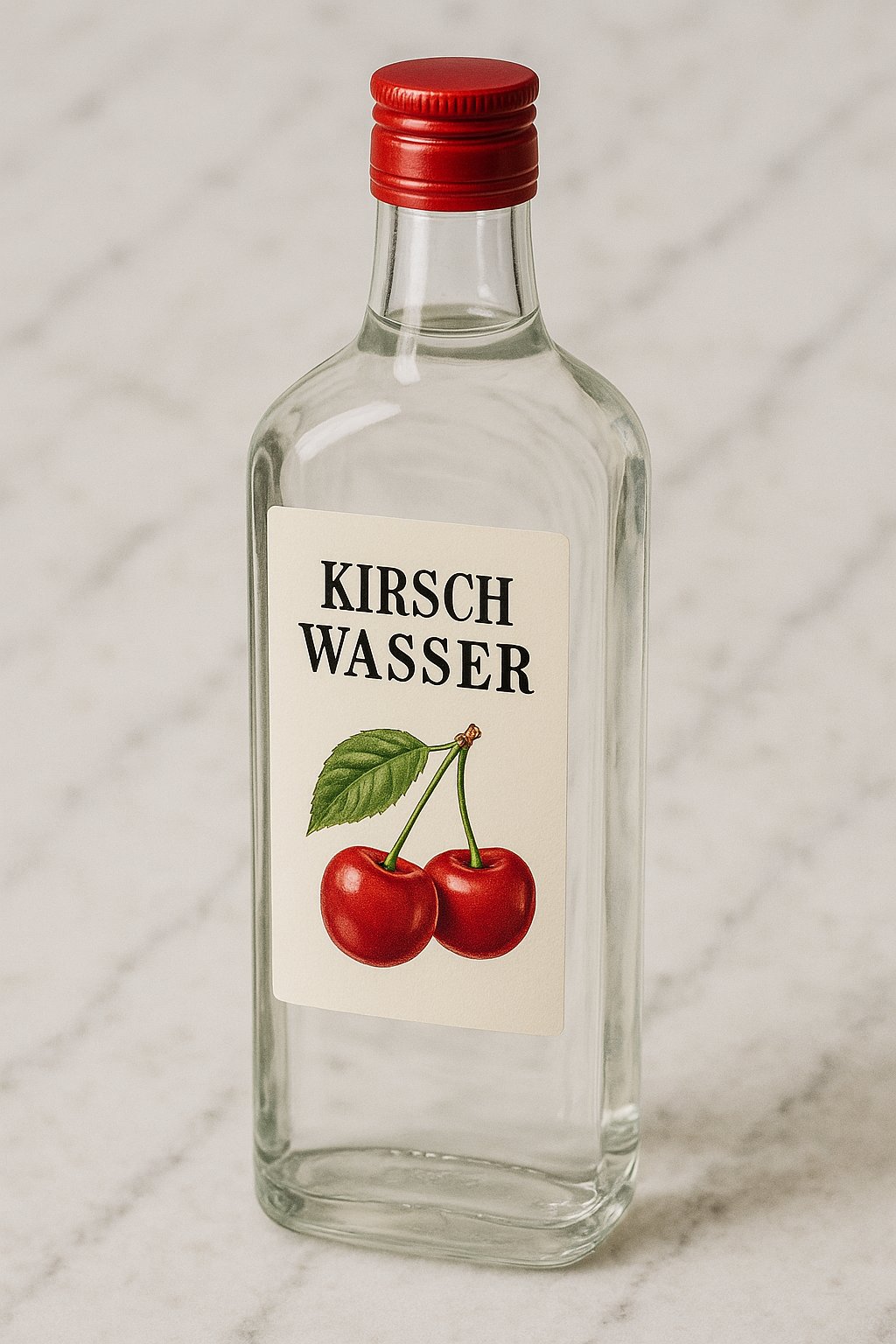
Kirschwasser (cherry brandy)

Clear fruit brandy made from cherries with a high alcohol content

Wiki about kirsch Nutri-Score E Vegan Yes Gluten-free Yes Lactose-free Yes Nut-free Yes
NUTRITION / 100 ml
230 kcal 0 g Protein 0 g Kohlenhydrate 0 g Fett

Introduction

A glass of clear cherry brandy (kirsch) next to fresh cherries
I still remember well my first conscious contact with Kirschwasser: it was a rainy Saturday at a market, where an old distiller presented a bottle like a treasure and offered me a little cloud of scent against the cold. The smell was clear, fruity and surprisingly lively, quite different from the sweet liqueurs I had known until then. Since then this clear spirit essence has accompanied me repeatedly — in the mortar for desserts, as a tiny sip to celebrate a successful evening or simply as a storyteller at the bar.

Kirschwasser, often also called Eau de Vie de Kirsch, is a fruit brandy made from fermented cherries, to which no sugar is added and which derives its aromatics exclusively from the fruit and the distillation. I have learned that quality depends strongly on the cherry variety used and the distiller's touch. A colleague of mine swears by regional Schattenmorellen, while a friend in the south prefers to use sweeter heart cherries. Both variants have charm, but completely different characters.

What fascinates me about Kirschwasser is its versatility. I like to use it in the kitchen:

  • As a fine finish in chocolate desserts — a few drops release the fruit aromas in the most elegant way.
  • In cocktails, where it serves as an aromatic substitute for bitters or syrup and brings depth.
  • To refine compotes or sauces, when I want fruitiness without added sweetness.
Some people enjoy Kirschwasser neat at room temperature, others prefer it lightly chilled. I find that a small sip after a heavy meal can work wonders: it cleanses the palate and once again tells of summer, sun and orchards. When tasting, I like to learn the stories behind the bottle — which year, which farm, which story of the distiller. These anecdotes bring every drop to life.

Kirschwasser is more than just a drink; for me it is a bridge between kitchen, culture and memory. It brings clarity to desserts, depth to drinks and warmth to conversations, and every time I open a new bottle I look forward to the small discoveries it brings.

Availability & types

Availability and types of Kirschwasser

Kirschwasser is a clear, strong spirit made from cherries. You can imagine it like a very concentrated cherry flavor in a bottle. It is popular in many countries and can be bought in various varieties. Here I explain where Kirschwasser comes from, where it is cultivated and which types exist — simply and easy to understand, so that even younger people can follow.

Origin
Kirschwasser originally comes from regions where many cherries grow. The name comes from German: “Kirsch” means cherry and “Wasser” is here an old word for a clear spirit. In the past people in farmhouses processed their own fruit by fermenting and distilling cherries. That was practical: when the trees gave many cherries in summer, one could make something to keep throughout the year.

Growing regions
Cherry trees grow best where temperatures are not too hot and not too cold. Well-known regions for good cherries are:

  • Central Europe – Countries like Germany, Austria and Switzerland have long traditions in cherry cultivation.
  • Eastern Europe – Regions like Poland and the Czech Republic also produce many cherries and Kirschwasser.
  • Italy and France – There are also regions there with special cherries used for distillates.
  • North America – In some parts of the USA and Canada cherries are grown and processed.
Some cherry trees prefer hills or mountains because the air is a bit cooler there and the cherries ripen slowly. Slow ripening often helps the fruits develop more flavor — similar to when fruit tastes better at rest than when it ripens too quickly.

Available varieties and variants
Kirschwasser is not always the same. There are different types that differ in taste, strength and production. Important variants are:

  • True cherry brandy (Kirschwasser) – This is the classic, clear spirit made only from cherries. It smells strongly of cherry and has a high alcohol strength, often between 40 and 50 percent.
  • Apricot or cherry liqueur – This is sweeter than Kirschwasser because sugar is added. Liqueurs are milder and work well in cocktails or as a dessert companion.
  • Geist – This is a variant in which whole fruits, sometimes only their aromas, are placed in alcohol so that the flavor transfers. The alcohol is not only made from the fruit, but draws out the taste.
  • Bottled with/without oak aging – Some Kirschwasser are briefly stored in wooden casks after production, which can slightly change the flavor. Most, however, are clear and go straight into the bottle.
Where to find it
Kirschwasser can be found in well-stocked supermarkets, liquor stores and online. Smaller distilleries in cherry-growing areas often sell special varieties that are only available locally. If you are looking for something special, it's like homemade jam: sometimes you find the best flavor directly from the farmer or in a small distillery.

In summary: Kirschwasser comes from countries with many cherries, there are different types from clear to sweet and you can buy it in shops, distilleries or online. For adults it is a popular enjoyment, and for children the idea behind it is easy to understand: many cherries are collected and processed so that an intense cherry flavor is produced that can be kept in a bottle.
Details & nutrition

Property Value
Unit ml
Calories per 100 230
Protein per 100 0
Carbohydrates per 100 0
Sugar per 100 0
Fat per 100 0
Saturated fat per 100 0
Monounsaturated fat 0
Polyunsaturated fat 0
Fiber per 100 0
Vitamin C (mg) per 100 0
Vitamin D (IU) per 100 0
Calcium (mg) per 100 0
Iron (mg) per 100 0
Nutri-Score E
CO₂ footprint 1.5
Origin Europe
Gluten-free Yes
Lactose-free Yes
Nut-free Yes
Vegan Yes
Note Kirschwasser is a clear fruit brandy made from cherries, typically around 40% vol. It contains virtually no macro- or micronutrients other than alcohol and should be consumed only in moderation.

Technical & scientific information

Kirschwasser is a clear fruit brandy obtained by distilling fermented cherries. Unlike cherry-juice-based liqueurs, Kirschwasser contains no added sugars or colorings; it is a pure fruit brandy typically made from sweet or sour cherries. The name varies regionally; in Germany and Austria the term “Kirschwasser” is often used, while in other countries similar products are known as “kirsch” or “eau-de-vie de cerise”.

Raw material and fermentation
Whole cherries including flesh and pits are used for production. Especially in traditional methods the fruits are crushed and subjected to spontaneous or controlled alcoholic fermentation. During fermentation yeasts convert the sugars present into ethanol and carbon dioxide. Using whole fruits influences the aroma: the flesh supplies esters and terpenes that provide fruity notes, while the pits can contain bitter substances and especially cyanogenic derivatives (amygdalin), which can be problematic if processed improperly.

Distillation and maturation
After fermentation is complete the mash is distilled. Distillation separates volatile components by boiling points; the distiller monitors the heads, heart and tails to minimize dangerous or unwanted substances such as methanol or high-boiling phenolic compounds. The heart is the desired middle cut with the largest share of ethanol and characteristic aroma esters. Kirschwasser is often distilled once or twice in copper stills. Copper promotes chemical reactions that reduce sulfurous, unpleasant compounds.

Chemical composition
Kirschwasser consists mainly of ethanol and water. Typical alcohol contents are between 38% and 45% by volume, but can vary according to regulation and tradition. Other important components in low concentrations are:

  • Esters: ethyl acetate, ethyl butyrate and other esters contribute intense fruity aromas.
  • Fusel alcohols: higher-boiling alcohols like propanol or butanol, which in small amounts contribute to flavor but in larger amounts are considered off-putting.
  • Terpenes and aldehydes: these arise partly from fruit oils and during fermentation and influence the bouquet.
  • Traces of cyanogenic compounds: pits contain amygdalin; with proper distillation and processing, however, hazardous amounts of free hydrogen cyanide are generally not detectable.
Nutrition and constituents
As a spirit, Kirschwasser primarily provides energy in the form of alcohol (≈7 kcal/g ethanol). Noticeable amounts of macronutrients, vitamins or minerals are not present. With moderate consumption there are no substantial nutrient contributions; with excessive consumption the caloric effects and health risks of alcohol predominate.

Health aspects and safety
The health effects of Kirschwasser correspond to those of other high-proof spirits. In the short term moderate consumption can be experienced as appetite-stimulating or relaxing. Risks include acute intoxication, impairment of cognitive and motor skills as well as long-term damage such as liver disease and dependence with regular excessive consumption. A specific hazard in fruit brandies are methanol and cyanogenic compounds; proper distillation, removal of the heads and control of raw materials minimize these risks.

Sensory and use
Kirschwasser is described sensorially as clear, fruity and slightly almond-like, with variable sweetness of the aroma depending on the cherry variety and production method. It is consumed neat as a digestif, used in fine dining to refine desserts and chocolate dishes and as an aroma giver in cocktails. In food processing it can serve as a carrier of volatile aromas.

Legal and quality aspects
In many countries there are legal definitions for fruit brandies that regulate minimum alcohol content and requirements for raw materials. Quality is determined by raw material selection, hygienic processing, controlled fermentation and careful distillation. Traditional production methods and protected designations of origin can provide additional quality features as well as consumer protection.

In summary, Kirschwasser is a fruit-forward fruit brandy with a clear chemical base of ethanol and water, enriched by characteristic esters, alcohols and aroma compounds, whose quality and safety depend strongly on the choice of raw materials and care in fermentation and distillation. With responsible enjoyment it offers a concentrated aromatic spectrum of the cherry, whereas improper processing or excessive consumption can pose health risks.

Wiki entry for: kirsch
Active now: 11 visitors of which 2 logged-in members in the last 5 minutes