Menu & categories

Kidney beans

Protein- and fiber-rich legume with complex carbohydrates

Wiki about kidney bean Nutri-Score A Vegan Yes Gluten-free Yes Lactose-free Yes Nut-free Yes
NUTRITION / 100 g
333 kcal 24 g Protein 60 g Kohlenhydrate 1.1 g Fett

Introduction

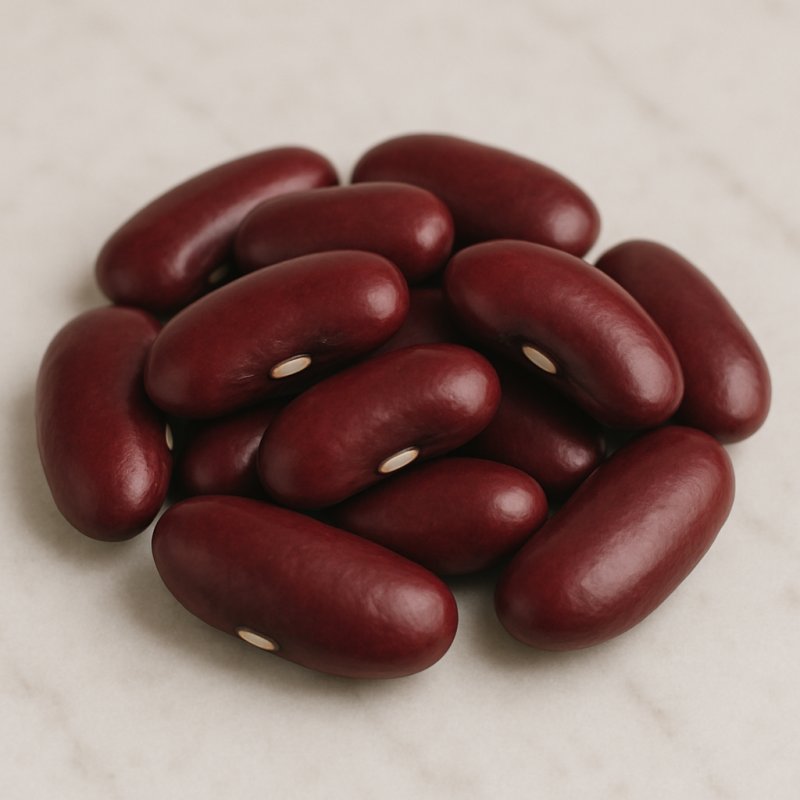
Dried red kidney beans in a bowl
I can still clearly remember the first moment I encountered a bowl of kidney beans that brought not only a color contrast on the plate but also stories. To me, kidney beans are more than mere legumes: they are a small culinary chameleon that brings warmth to stews, gives bite to salads and warms the soul in chilis. A colleague once swore that a chili without kidney beans tastes only half as heroic; since then I like to judge the strength of a dish by the quality of this bean-red companion.

What I particularly appreciate about kidney beans is their versatility. They are sturdy in cooking, keep their shape and soak up flavors without disappearing themselves. That makes them perfect for dishes that need time and love. I recall a long autumn evening when a portion of chili saved the day in the editorial office: simple ingredients, but the beans gave the whole thing structure and satiety. Such memories are as important to me as nutritional values.

What I pay attention to when cooking

  • Preparation: soak dried beans and cook them thoroughly to avoid intolerances.
  • Combinations: tomatoes, cumin and paprika go wonderfully with the earthy flavor.
  • Texture: I often add beans toward the end of the dish so they do not fall apart if I want them to keep their shape.
Apart from taste and texture, kidney beans are a real nutrient package. They provide plant protein, fiber and minerals that keep you full for a long time — ideal for days when I need energy but don’t have endless snack breaks planned. Once I prepared several salads for a small party; the salad with kidney beans was the first to be eaten up. That taught me that these beans, in their simplicity, can indeed be crowd-pleasers.

For anyone who wants to experiment with kidney beans, I have a small personal tip: don’t shy away from strong spices and acids like lime or vinegar. They lift the earthy notes and make the flavors shine. As simple as a bean may seem, with a little attention it becomes the star of the plate.

Availability & types

Availability and types of kidney beans

Kidney beans are well-known beans that, because of their shape and color, resemble a kidney – hence the name kidney. They are popular in many countries because they taste good, keep you full for a long time and can be used in many dishes. If you want to know where they come from and what types exist, it helps to think of them like apples or tomatoes: there are different varieties that grow in different places and look or taste slightly different.

Origin
Kidney beans originally come from Central and South America. Hundreds of years ago people there began to cultivate beans. Later they were brought to other parts of the world by travelers and traders, for example to Europe, Africa and Asia. Today they are grown almost everywhere because they adapt well to different climates.

Growing regions
Kidney beans are cultivated in many countries. Important growing regions include:

  • North and South America: They were first cultivated there and are still important crops.
  • Mexico and Central America: Many traditional recipes with kidney beans come from these regions.
  • USA: Especially in the South and the Midwest there are large growing areas.
  • India and China: In Asia beans are also widely grown, often in warm-climate areas.
  • Africa: In many countries beans are an important food source because they provide a lot of protein.
The beans prefer warm temperatures and enough rain or irrigation. Farmers sow them in rows in fields; after a few months they can harvest the mature pods.

Available varieties and variants
Kidney beans come in different colors and sizes. Here are the most common variants, explained simply:

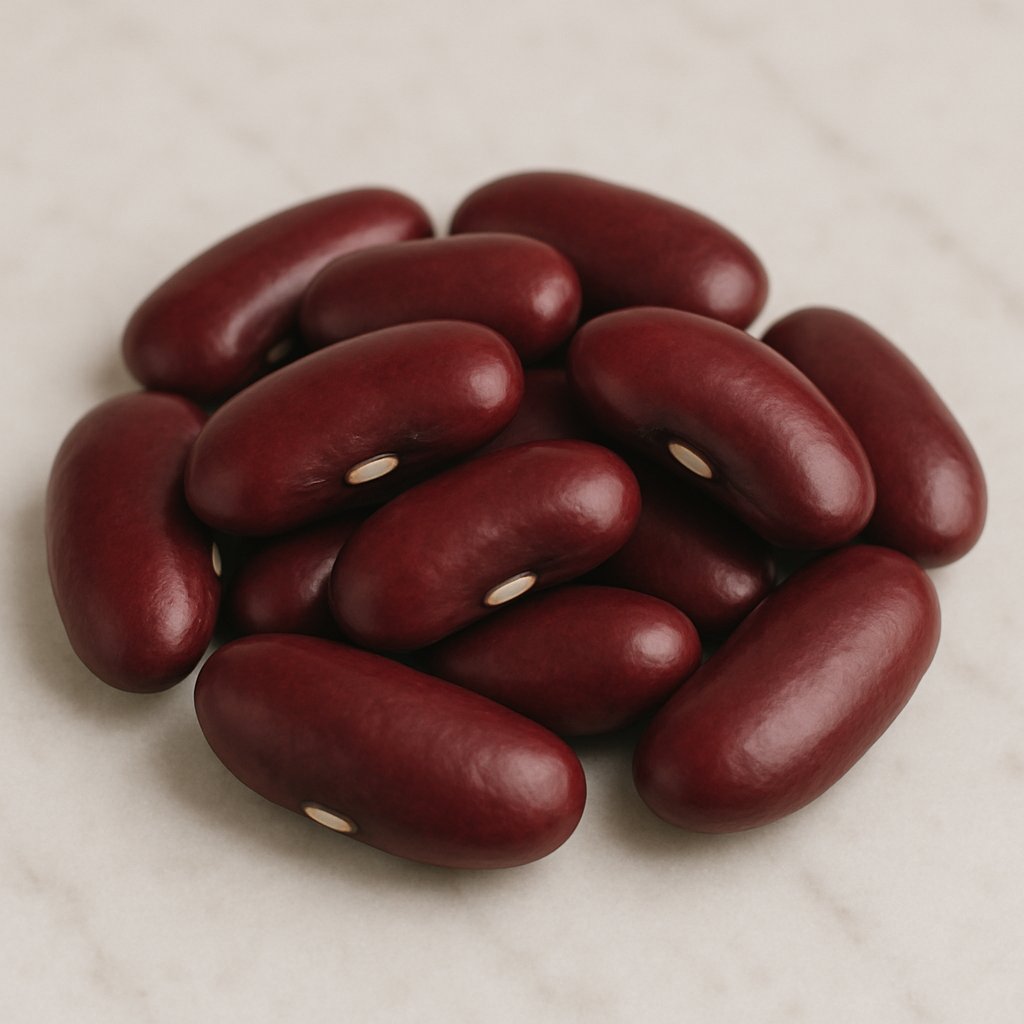
  • Red kidney beans: This is the classic variety. They are dark red and have the typical kidney shape. Many know them from chili con carne or stews. You can buy them dried or already cooked in cans.
  • White kidney beans (Cannellini): They look like the white siblings of red kidney beans. Their flavor is a bit milder and they are popular in soups or salads.
  • Striped or colorful varieties: Some kidney beans have patterns or different shades, such as red-and-white stripes. They look nice and taste similar to the red varieties.
  • Dried vs. precooked (canned): Dried beans are like raw beans and take longer to cook. Canned beans are precooked and ready to use — very practical because you can use them quickly.
  • Organic and conventional beans: Organic beans are grown without certain chemical pesticides. Conventional beans may use such products. Organic products are often more expensive; some people still buy them because they are satisfied with them.
Brief tips on availability
In supermarkets you can easily find kidney beans either in cans (precooked) or in the dry goods aisle (dried). Fresh beans in the pod are rarer because kidney beans are usually harvested for drying. At farmers’ markets or in health-food stores you sometimes find special varieties.

In summary: kidney beans come in many variants and are grown worldwide. Whether red, white, dried or canned — there is always a suitable type for your dish. They are practical, nutritious and easy to find in most supermarkets.
Details & nutrition

Property Value
Unit g
Calories per 100 333
Protein per 100 24
Carbohydrates per 100 60
Sugar per 100 2
Fat per 100 1.1
Saturated fat per 100 0.2
Monounsaturated fat 0.1
Polyunsaturated fat 0.6
Fiber per 100 25
Vitamin C (mg) per 100 4
Vitamin D (IU) per 100 0
Calcium (mg) per 100 140
Iron (mg) per 100 8
Nutri-Score A
CO₂ footprint 0.7
Origin Worldwide, commonly USA, Canada, China, Argentina
Gluten-free Yes
Lactose-free Yes
Nut-free Yes
Vegan Yes
Note Information refers to dried, uncooked kidney beans. Always soak sufficiently and cook thoroughly before consumption to inactivate natural toxins (e.g., phasin).

Technical & scientific information

Kidney beans are a variety of the cultivated plant Phaseolus vulgaris, characterized by their bean-shaped, kidney-like form and their usually deep red to chestnut brown color. Botanically they are legumes and are grown worldwide as a nutritious food. Their structure consists of a multilayer seed coat (testa), the nutritive tissue (endosperm) and the embryo, with the largest share of seed volume made up of storage proteins and starch.

Chemical composition and nutritional values
Kidney beans contain significant amounts of macronutrients and secondary plant compounds. The average composition of dry pulses is about 20–25% protein, 40–45% carbohydrates (of which a large proportion is starch and soluble and insoluble fiber) and 1–2% fat. Energy intake is approximately 300–350 kcal per 100 g of dry product. Micronutrients are plentiful, including folate, iron, magnesium, potassium and B vitamins. Also present in relevant concentrations are phytic acid (as a phosphorus store and chelator) and various polyphenols and flavonoids which have antioxidant properties.

Proteins and amino acid profile
Kidney bean protein consists mainly of storage proteins such as legumin-like and vicilin-like globulins. The amino acid profile is favorable for a plant source, but has relative limitations in the sulfur-containing amino acids methionine and cysteine, so combining with cereals (e.g. rice) improves biological value.

Antinutritional factors and toxins
Raw or insufficiently heated kidney beans can have harmful effects on health. In particular some varieties contain phytohaemagglutinin, a lectin that at low doses can cause gastrointestinal symptoms and at higher doses can trigger more severe poisoning. Phytohaemagglutinin is, however, inactivated by adequate cooking (at least 10–30 minutes at 100 °C after discarding the soaking water). Other antinutritive constituents include phytic acid, which can impair mineral absorption, and tannins. Processes such as soaking, sprouting, fermenting or pressure cooking reduce these factors and improve nutrient availability.

Processing and culinary aspects
Kidney beans are marketed fresh in the pod, as dried beans or in cans. Dried beans typically require soaking and longer cooking; canned beans are precooked and immediately usable, but they may have higher sodium levels unless labeled as low-salt. Industrial processing steps include sorting, drying, sizing, thermal treatment and packaging. In taste kidney beans are mild to nutty with a firm texture, suitable for stews, chili con carne, salads and spreads.

Health aspects
Regular consumption of kidney beans can have positive effects on health: the high fiber content supports gut health and blood sugar control, proteins contribute to satiety, and micronutrients such as folate and iron are important for metabolism and blood formation. Studies also indicate cardioprotective effects associated with legume-rich diets, for example through lowering LDL cholesterol. People with certain conditions should, however, be cautious: in gout or uric acid problems, legumes can be purine-rich, and those with known legume allergies may experience reactions.

Storage and quality
Dried kidney beans remain shelf-stable for long periods under cool, dry and light-protected conditions, while moisture and pest infestation must be avoided. Sensory quality attributes are even color, intact seeds and absence of musty odor. Quality analysis examines moisture content, protein content, germinability and microbiological parameters.

In summary, kidney beans are a nutrient-rich, versatile legume with significant proteins, fiber and micronutrients. Correct processing methods reduce antinutritional factors and ensure food safety, while regular consumption can contribute to a balanced diet.

Wiki entry for: kidney bean
Active now: 20 visitors of which 2 logged-in members in the last 5 minutes