Menu & categories

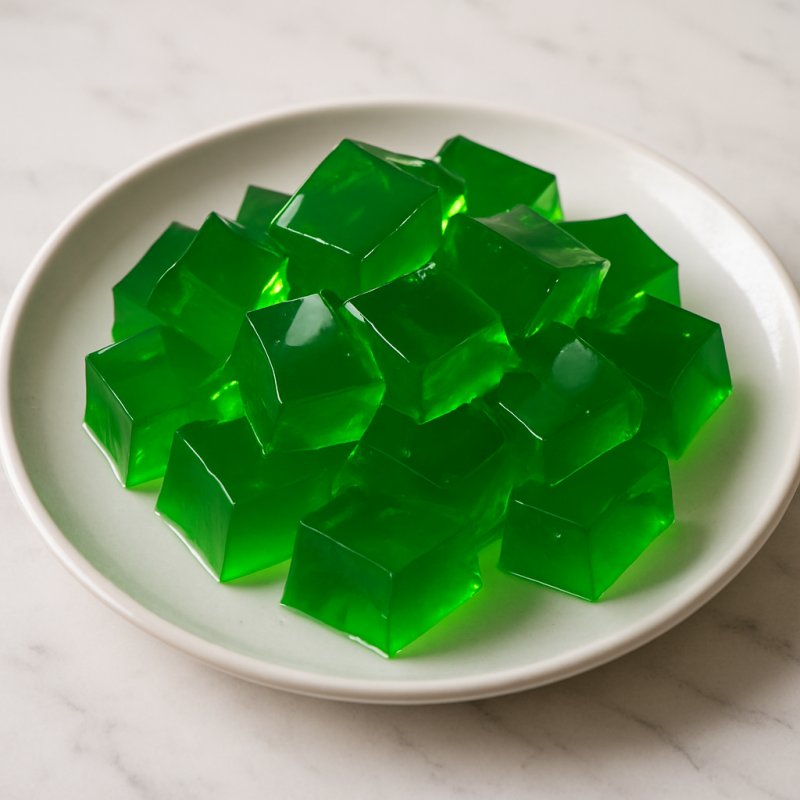
Jelly dessert

Low-calorie gelatin dessert based on sugar

Wiki about gelatin dessert Nutri-Score C Vegan No Gluten-free Yes Lactose-free Yes Nut-free Yes
NUTRITION / 100 ml
60 kcal 2.0 g Protein 13.0 g Kohlenhydrate 0.1 g Fett

Introduction

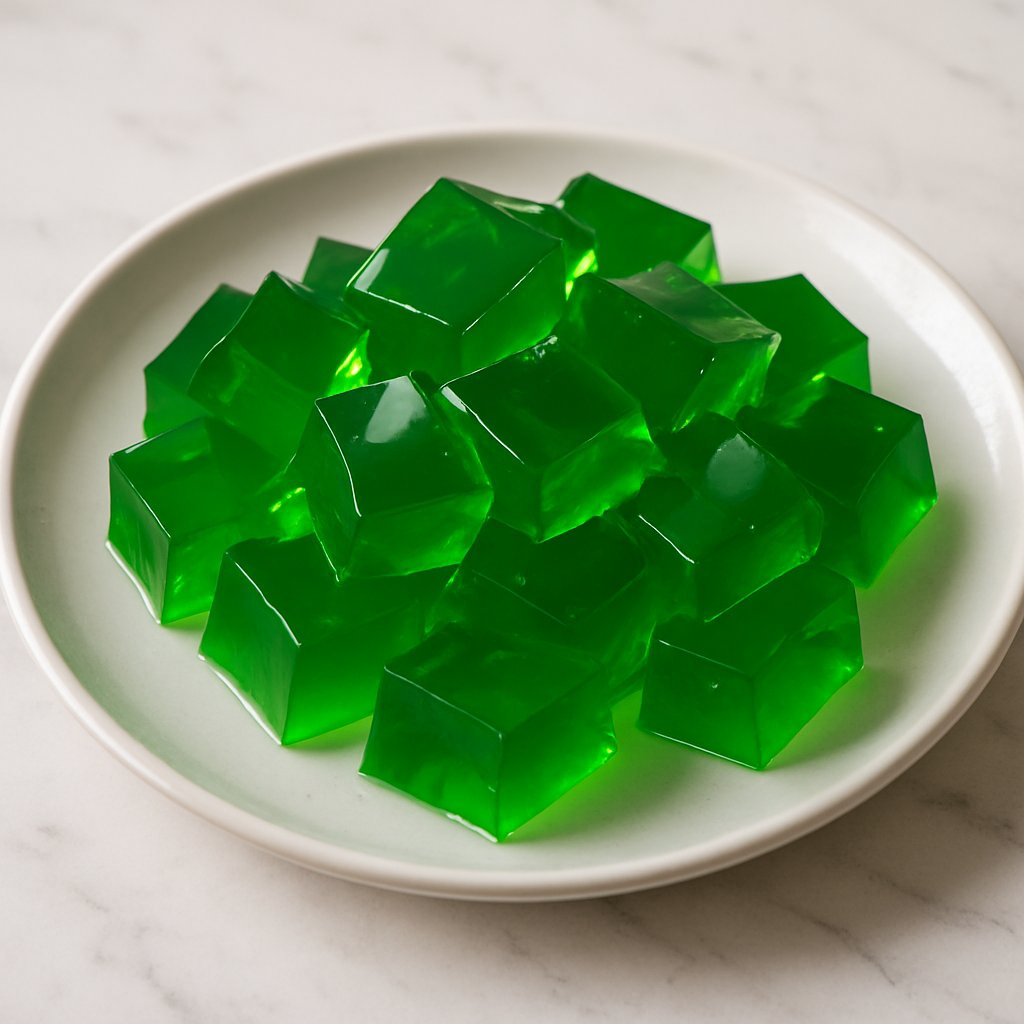
Colorful jelly in a glass bowl
I still remember my first encounter with gelatin dessert well: a small, sparkling bowl on the dessert table at a summer party that melted so feather-light on my tongue at the first spoonful that for a moment I thought time had stopped. Since then this simple but wonderful sweet treat has repeatedly surprised me. Often underestimated, the gelatin dessert is more than just a nostalgic classic; it is a flexible, uncomplicated element in the kitchen that practically invites creativity.

What I particularly appreciate about the gelatin dessert is its versatility. You need only a few basic ingredients, it can be combined in color and flavor like a dream, and it suits both festive tables and an impromptu Sunday afternoon coffee. An anecdote: a friend once conjured a bowl of raspberry gelatin so intense that even skeptical guests widened their eyes after the third spoonful. The art lies not only in the aroma but also in the texture — that springy, almost dance-like wobble is part of the charm.

For those who want to look more closely, here is a brief overview of typical characteristics:

  • Basic ingredients: gelatin (or agar-agar), water, sugar and flavorings.
  • Ways to vary: fruit juices, liqueurs, fresh fruit, yogurt or cream for marbling.
  • Texture: from light and delicate to firm and chewy, depending on the gelling agent and quantities.
Over the years I have served the gelatin dessert not only in the classic way but also reinvented it: as a filling for small cakes, as a layer in dessert glasses and even as a surprising element in cocktails. A colleague once had the idea of placing small gelatin cubes on ice cubes — it looked so pretty that I had to recreate it immediately for a garden party. Small decoration ideas like edible flowers or mint leaves further enhance the appearance.

In conclusion, I think the gelatin dessert is an underrated treasure of our kitchens: uncomplicated, adaptable and always a little playful. It connects childhood memories with modern flavor ideas and remains a perfect example of how simple ingredients can become something very special. I love experimenting with it, and every time the spoon dives in again I enjoy that little, cheerful wobble.

Availability & types

Availability and types

What is the gelatin dessert and where does it come from?
The gelatin dessert is a sweet, colorful jelly-like pudding that many people enjoy as a dessert or snack. The basic ingredient for classic gelatin dessert is gelatin, a substance made from animal bones and skins. Therefore traditional gelatin dessert is indirectly animal-derived. There are also variants using plant-based gelling agents, such as agar-agar, which is obtained from algae. You can imagine it like this: gelatin acts like a net that holds liquid so that it becomes a solid but soft jelly form.

Where is it produced and sold?
Gelatin dessert is mainly manufactured in factories, often where confectionery or desserts are produced. The familiar packet form known to many comes from factories in Europe, particularly from countries with a large food industry such as Germany. In supermarkets, discount stores and even small corner shops you often find colorful sachets of powder that you mix with water. Ready-to-eat varieties are available in the chilled section or as small portion cups.

Which varieties and flavors are there?
There are many different varieties of gelatin dessert. Here are some typical types you can find in stores:

  • Fruity – The most common flavors are strawberry, raspberry, lemon, orange or woodruff. These are often very colorful and pleasantly aromatic.
  • Combination varieties – Some packages contain multiple layers or colors, for example red and yellow together, so it looks like a rainbow in the cup.
  • Ready dessert cups – These are already prepared and ready to eat. They are convenient for parties or when you don't have time to mix the powder.
  • Light variants – Gelatin desserts with less sugar or no added sugar. They taste similar but are lower in calories.
  • Vegan or vegetarian variants – Instead of gelatin, agar-agar or carrageenan (another gelling agent derived from algae) is used. These products are suitable for people who do not want to eat gelatin.
Special variants and extras
There are also special versions that are more colorful or unusual: gelatin with glitter effect, varieties with a cream or vanilla layer on top, or versions that you can cut and shape into fun figures. For children's parties there are sometimes even glowing or color-changing variants that look particularly exciting.

Where are which variants easiest to find?
The normal fruit flavors and ready cups can be found in every supermarket. Vegan or special varieties are often easier to find in health food stores or larger supermarkets. If you are looking for something very unusual, it's worth checking online: manufacturers often display their full range there and sometimes offer kits to make creative gels yourself.

Overall, gelatin dessert is very easy to obtain and available in many different types. Whether as inexpensive powder, convenient ready cup, or vegan variant — there is a suitable version for almost every taste and dietary preference.
Details & nutrition

Property Value
Unit ml
Calories per 100 60
Protein per 100 2.0
Carbohydrates per 100 13.0
Sugar per 100 13.0
Fat per 100 0.1
Saturated fat per 100 0.05
Monounsaturated fat 0.01
Polyunsaturated fat 0.01
Fiber per 100 0.0
Vitamin C (mg) per 100 0.0
Vitamin D (IU) per 100 0.0
Calcium (mg) per 100 5.0
Iron (mg) per 100 0.1
Nutri-Score C
CO₂ footprint 0.3
Origin Industrial sweet dessert; ingredients mainly from EU and non-EU countries
Gluten-free Yes
Lactose-free Yes
Nut-free Yes
Vegan No
Note Nutritional values refer to the ready-prepared jelly dessert made from a commercially available powdered product mixed with water. Depending on the brand, it may contain colorings, flavorings and gelatin of animal origin.

Technical & scientific information

Gelatin dessert is a common German term for a dessert-like product based on gelling agents, with a consistency reminiscent of jelly. Typical industrial blends consist of various gelling agents, sugar or sweeteners, colorants and flavorings. Traditionally gelatin dessert is dissolved in hot water and, after cooling in the refrigerator, sets into a firm, translucent gel.

Chemical composition and gelling mechanisms
As gelling bases in commercial products, gelatin or plant-based alternatives such as pectin, gellan or modified starch are commonly used. Gelatin is an animal protein obtained by partial hydrolysis of collagen. On cooling, gelatin solutions form a three-dimensional network through hydrogen bonds and hydrophobic interactions that trap water and thus create the jelly-like structure. Pectin, a polysaccharide composed of esterified galacturonic acid units, gels in the presence of sugar and acid (high-methoxyl pectin) or under the action of calcium ions (low-methoxyl pectin). Gellan forms extracellular polysaccharide gels through divalent cation-mediated crosslinking and is also suitable for clear, thermoreversible gels.

Ingredients and nutritional values
Nutrient composition varies greatly depending on the formulation. Conventional gelatin dessert contains predominantly carbohydrates from sugar and typically provides little fat and protein. In standard portions (approx. 100 g prepared) the energy content is often in the range of 50–150 kcal, whereas reduced-sugar or "light" variants show significantly lower values. Gelatin itself contributes few calories and provides amino acids, but not a complete protein profile in the nutritional sense. Pectin and other fibers can marginally affect the nutritional profile by increasing the amount of non-digestible carbohydrates.

Processing methods
The production of industrial powders includes drying and milling of the gelling agents, blending with sugar, acidulants (e.g. citric acid), flavorings and colorants and, where appropriate, anti-caking agents or acidity regulators. In gelatin-based products precise dosing is required because gel strength and texture are sensitive to concentration and temperature. For home preparation the powder is dissolved in hot water; complete hydration and dissolution of the gelling agent is a prerequisite for uniform gel formation. Gelation occurs upon cooling; depending on the gelling agent, hot-setting or ion-mediated processes may also be relevant.

Health aspects
For the general population, gelatin dessert consumed in moderation does not pose a health risk provided common commercial quality and hygiene standards are met. When gelatin of animal origin is used, the animal source and associated religious or ethical restrictions as well as possible allergenic contamination should be considered. Sugar-rich varieties can contribute to increased calorie intake and are relevant for people with diabetes or at risk of dental caries. Pectin- or gellan-based products offer vegan alternatives; pectin may also slow gastric transit and have a slight satiating effect. Excessive consumption of intense sweeteners or synthetic dyes should prompt attention to individual intolerances.

Sensory and technical properties
The rheological properties of a gel can be controlled by parameters such as network concentration, swelling behavior of the polymers, temperature and pH. Gelatin-dominated gels are often soft-elastic and thermoreversible, while pectin- or algae-based gels can show different fracture characteristics and crispness. Transparency depends on particle size, gel structure and additives; clear gels require finely dispersed, homogenized systems and, where necessary, clarifying aids.

In food technology the gelatin dessert remains a versatile model product for studying gelation processes, texture development and the stability of hydrophilic networks, while also being an everyday dessert with variable nutritional and technological properties.

Wiki entry for: gelatin dessert
Active now: 20 visitors of which 2 logged-in members in the last 5 minutes