Menu & categories

Honey

Natural sweetener from nectar with a high sugar content

Wiki about honey Nutri-Score D Vegan No Gluten-free Yes Lactose-free Yes Nut-free Yes
NUTRITION / 100 g
304 kcal 0.3 g Protein 82.0 g Kohlenhydrate 0.0 g Fett

Introduction

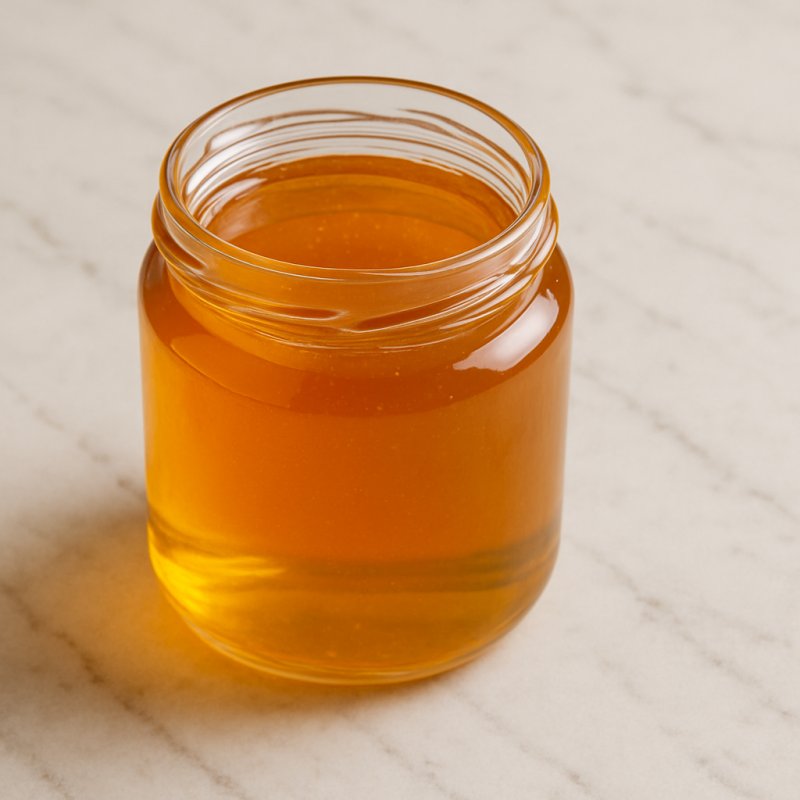
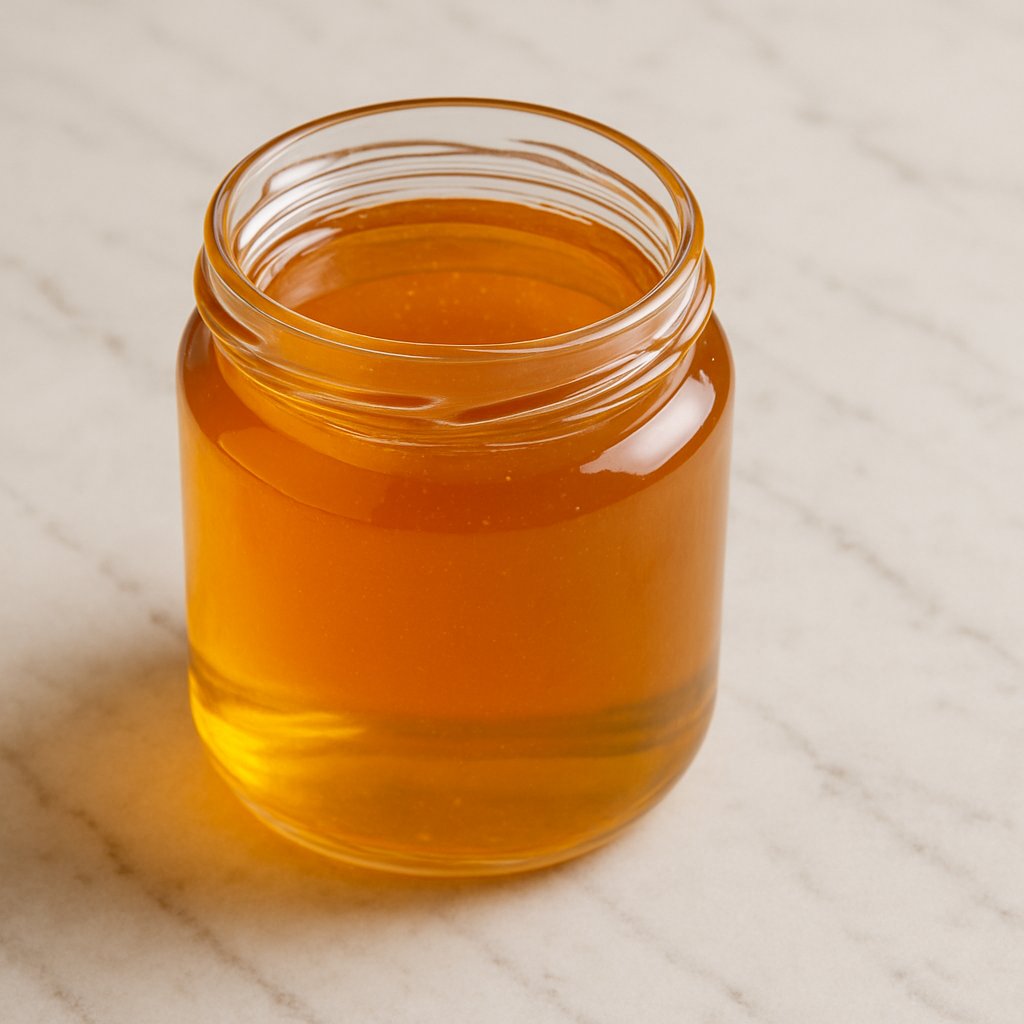
Golden liquid honey in a glass jar with a spoon
Honey is for me more than just a sweetener; it is a carrier of flavor full of stories. I still remember a rainy Sunday afternoon when I stood with a friend in front of a small market stall and smelled each jar as if it were a perfume. The seller smiled mischievously and explained that blossoming linden trees in her area make the honey so velvety. This experience permanently changed my relationship with honey.

I love the versatility of this golden ingredient. A teaspoon in yogurt immediately gives it depth, a dollop on cheese turns a simple snack into a little celebration. In my kitchen honey always has a fixed place: not only because it provides sweetness, but because it adds texture, shine and a subtle acid balance that sugar often lacks. A colleague of mine swore for years by using honey instead of sugar in his marinade recipe; the result was a caramelized crust that caused a stir at every barbecue.

The range of flavors fascinates me. Acacia honey brings a delicate, floral note, while buckwheat honey tastes deep, almost malty. In tasting I learned that origin and season have an enormous impact. A jar of wildflower honey from a mountain region can have surprisingly herbal nuances, while Mediterranean orange blossom honey brings a sunny fruitiness.

Besides the taste I also appreciate the cultural significance of honey. In some families it is part of traditional recipes and rituals; in our family a spoonful of honey for a sore throat meant balm and comfort. I find it nice how this natural product is passed down through generations, often associated with memories of beekeepers, markets and baking together.

Practical tips I have collected over time:

  • Storage: Honey should be stored in a dark, dry place so that aroma and consistency remain.
  • Crystallization: A natural process that says nothing about quality; gentle warming makes honey liquid again.
  • Use: Hot water destroys some fine aromas, so I often add honey only after it has cooled slightly.
To me honey remains a small wonder in the kitchen: versatile, full of stories and always ready to turn simple dishes into special moments.

Availability & types

Availability and types of honey

Honey is a sweet ingredient found almost everywhere in the world. In the supermarket you'll find it in jars or in squeeze bottles, at weekly markets beekeepers offer their own honey, and in some regions you can even buy fresh honey directly from the farmer. Because bees are the main producers, honey availability depends heavily on how many hives there are and how well the plants in the surrounding area bloom. In years with a lot of rain or cold some plants bloom less, so there may be less honey — similar to when a harvest is smaller.

Origin
Honey is formed when bees collect nectar from flowers, transform it in their bodies and store it in combs. One can therefore say: honey is the work of the bees and the flowers together. The origin of a honey describes where the bees had the nectar source. That can be a particular country, a region or even a single meadow. A jar often states from which country or region the honey comes. Sometimes the beekeeper's name is also shown.

Production areas and landscapes
Although bees are not "cultivated" like plants, they live better in certain areas because more flowers bloom there. Important honey regions are:

  • European countries such as Germany, Spain or Greece — here there are many meadows, orchards and wildflowers.
  • Asia with large areas where, for example, acacias grow.
  • North America with large fields and forests that give bees good forage.
  • Australia and South America — there are also special plants that produce distinctive honey varieties.
Available varieties and types
Honey comes in many different varieties. These differ in taste, color and consistency (how thick or runny they are). Here are some simple explanations:

  • Blossom honey: The most common type. It is produced from nectar of various flowers. It tastes sweet and mild.
  • Monofloral honey: This is honey in which the bees have collected mainly nectar from one plant species. Examples:
    • Acacia honey – very light and mild, stays liquid for a long time.
    • Lavender honey – slightly floral and aromatic, often from regions with many lavender fields.
    • Blossom honey from fruit trees – sometimes with the taste of apple or cherry blossoms.
  • Forest honey (also called honeydew honey): This honey is produced not only from flowers but from sugary substances secreted by other insects on plants. Forest honey is often darker and has a stronger taste.
  • Creamy (or spreadable) honey: By special stirring liquid honey is finely crystallized so that it becomes soft and spreadable — ideal for bread.
  • Raw/natural honey: This honey has been little heated or filtered. It can contain small pieces of wax or pollen and often tastes more intense.
Tips for choosing honey
When you buy honey you can check whether a jar comes from your region or whether it is a particular variety. Feel free to try different sorts — some are very mild, others taste strong like syrup or malt. For children a creamy or mild blossom honey is often pleasant because it is not so strong. And remember: honey is a natural product, so color and taste can vary a little from jar to jar.

In summary: honey is available almost everywhere, it comes from bees that collect nectar, and there are many varieties — from light, mild acacia honey to dark, robust forest honey. Each variety tells a little about the landscape and the flowers it comes from.
Details & nutrition

Property Value
Unit g
Calories per 100 304
Protein per 100 0.3
Carbohydrates per 100 82.0
Sugar per 100 82.0
Fat per 100 0.0
Saturated fat per 100 0.0
Monounsaturated fat 0.0
Polyunsaturated fat 0.0
Fiber per 100 0.0
Vitamin C (mg) per 100 0.5
Vitamin D (IU) per 100 0
Calcium (mg) per 100 6
Iron (mg) per 100 0.4
Nutri-Score D
CO₂ footprint 0.5
Origin Varies depending on the apiary and region
Gluten-free Yes
Lactose-free Yes
Nut-free Yes
Vegan No
Note Honey is a natural sweetener made from nectar collected and processed by bees. It consists mainly of fructose and glucose, contains only small amounts of vitamins and minerals, and is not recommended for children under 1 year of age.

Technical & scientific information

Honey is a natural food produced by honey bees (mainly Apis mellifera) from nectar and other sugary plant secretions; it is enzymatically modified and stored in combs. Chemically, honey is a supersaturated sugar mixture with water as the main solvent; its physical and biochemical properties depend strongly on botanical origin, processing and water content.

Composition: About 70–80 percent of honey's dry matter consists of carbohydrates. The main sugars are fructose (approx. 38 %) and glucose (approx. 31 %); sucrose, maltose, isomaltose, turanose and other oligosaccharides are present in smaller amounts. Water content typically ranges between 14 and 20 percent; above 20 % the risk of fermentation by yeasts increases. Honey also contains around 0.2–1.0 percent organic acids (mainly gluconic acid, the product of glucose oxidation), proteins and enzymes, traces of amino acids (especially proline), vitamins (B group, vitamin C in very small amounts), minerals (potassium, calcium, magnesium, trace elements) and a complex mixture of secondary plant compounds such as flavonoids and phenolic acids that provide antioxidant activity.

Enzymes and biochemical features: Key enzymes in honey are invertase (splitting sucrose into glucose and fructose), glucose oxidase (oxidation of glucose to gluconic acid with concurrent formation of hydrogen peroxide) and diastase (amylase-like activity). The activity of these enzymes is indicative of freshness and gentle handling; it decreases with strong heating or prolonged storage. The formation of hydrogen peroxide is one of the biochemical bases of the antimicrobial properties of many honeys, complemented by low water content and low pH (typically 3.2–4.5).

Nutritional values: 100 grams of honey supply approximately 300–330 kilocalories, mainly from simple sugars. The macronutrient distribution is almost exclusively carbohydrates; fat and fiber are negligible, protein content is below 1 percent. Due to the high sugar content, honey has a high glycemic effect, with the exact glycemic load varying according to the fructose-to-glucose ratio.

Harvest and processing: Beekeepers collect honey from combs; for commercial extraction uncapping (removal of the wax capping), centrifugal extraction or pressing and subsequent filtration are used to remove wax and impurities. Pasteurization by brief heating reduces the tendency to crystallize and inactivates yeasts, but also reduces enzymes and can alter sensory properties. Raw honey is unfiltered and unheated; it contains pollen and microscopically visible components relevant for traceability and health aspects. Industrial processing may also include blending of different batches to achieve consistent color and flavor.

Crystallization: Crystallization is a natural process controlled by the ratio of glucose to fructose, moisture content and temperature. Glucose tends to crystallize more readily than fructose; honeys with a high glucose content (e.g., rapeseed honey) crystallize quickly, while honeys with a high fructose content (e.g., acacia honey) remain liquid.

Health aspects: Honey has antibacterial, antioxidant and anti-inflammatory-modulating properties documented in vitro and in some clinical contexts. Medically used honeys, such as Manuka honey with a high methylglyoxal content, are used for wound treatment. Despite positive effects, honey is calorie-dense and should be consumed in moderation. For infants under one year there is a risk from Clostridium botulinum spores, so honey is not recommended for this age group. Allergic reactions to pollen components are possible, but rare.

Quality parameters and regulation: Quality controls record moisture, hydroxymethylfurfural (HMF) as a heat/storage marker, diastase activity, sugar profile and pollen analyses for botanical labelling. National and international standards set limits for HMF and other parameters to detect spoilage or improper processing.

In sum, honey is a complex natural product with characteristic chemical composition and diverse technological and health-related properties. Its quality and effects are strongly influenced by botanical origin, beekeeping practices and processing methods, which requires nuanced assessment depending on the variety.

Wiki entry for: honey
Active now: 20 visitors of which 2 logged-in members in the last 5 minutes