Availability and types
Sauce Hollandaise is a warm, buttery sauce most enjoyed with vegetables like asparagus, with fish or with eggs. Although the sauce itself does not "grow," its availability and varieties follow from its ingredients (eggs, butter, lemon) and from the way it is prepared or sold. You can find hollandaise almost everywhere: in restaurants, at supermarkets as a ready-made product or as a simple mix to prepare at home.
Origin and regions
Hollandaise comes from European cuisine, especially French, although its name "hollandaise" sounds Dutch. Cooks in the 17th–19th centuries gave it this name. Because the main ingredients are butter, eggs and lemon, the "production areas" depend on where those foods are produced:
- Butter: often comes from dairy regions in Europe (e.g. France, Germany, Ireland) or North America.
- Eggs: are produced locally; almost every country with agriculture supplies eggs.
- Lemons: grow more easily in warm regions like the Mediterranean (Spain, Italy) or California.
In countries with a strong asparagus tradition (e.g. Germany, Austria) hollandaise is especially common in restaurants and supermarkets during asparagus season.
Available types and variants
There are several simple types of hollandaise to suit different tastes and situations:
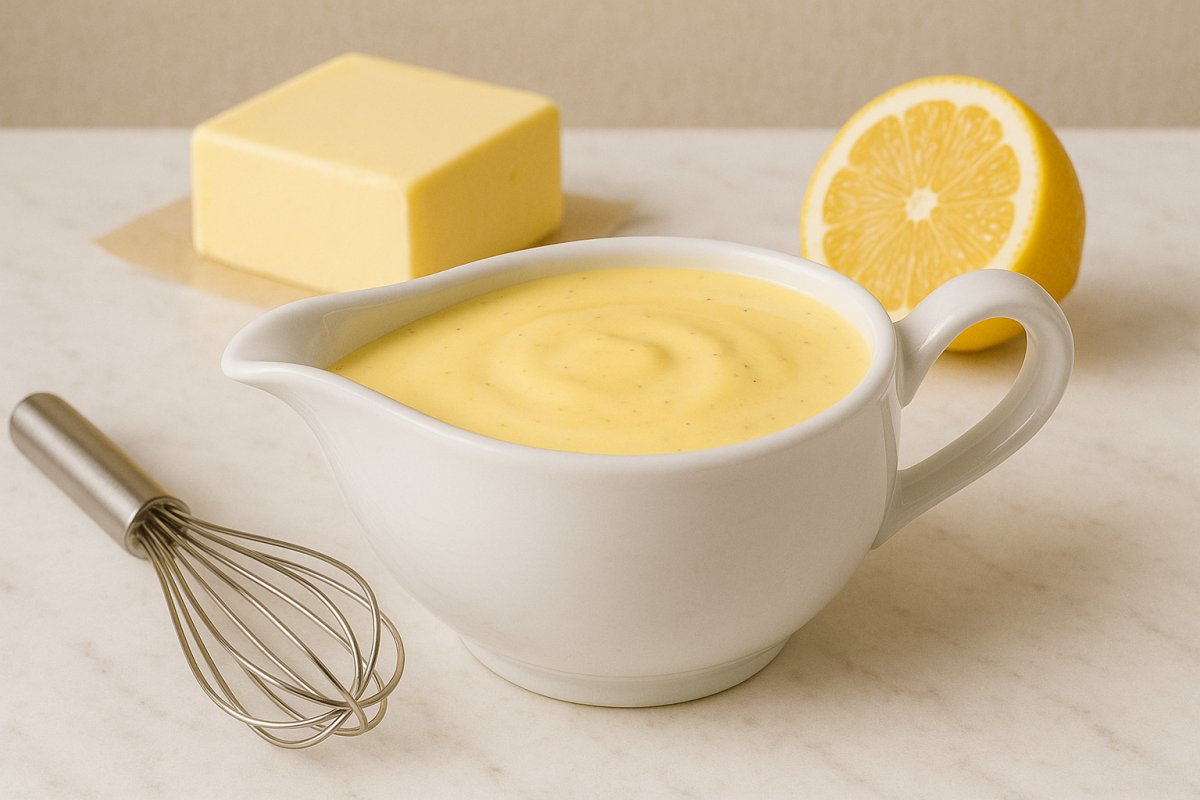
- Classic hollandaise: made from egg yolks, melted butter and lemon juice. It is very creamy and tasty but should be served warm.
- Mousseline (or Crème Mousseline): like hollandaise but with whipped cream or crème, making it lighter and airier.
- Béarnaise: a relative of hollandaise, flavored additionally with tarragon and shallots; often served with steak.
- Ready-made sauces: in jars or sachets at the supermarket. They keep longer and are quick to prepare, but taste a little different from freshly made hollandaise.
- Powders and mixes: dry mixes reconstituted with water or milk — practical when time is short.
- Light versions: made with yogurt or less butter, for people who want less fat.
- Vegan alternatives: without eggs or butter; use plant "butter," soy yogurt, or chickpea water (aquafaba). They taste different but are suitable for vegans.
- Creative variants: with herbs, garlic, smoky notes or truffle – these versions are offered in restaurants to elevate special dishes.
A simple picture: imagine hollandaise as a combination of oil (butter) and water (the water in the yolk). Normally oil and water separate, but the yolk acts like a glue that holds everything together. Because raw eggs are used, many ready-made products use pasteurized eggs (meaning the eggs have been briefly heated to reduce microbes), making the sauce safer. Overall hollandaise is very versatile: classic or modern, freshly made or as a convenient ready product — there is a suitable version for every taste.