Availability and types of herbs
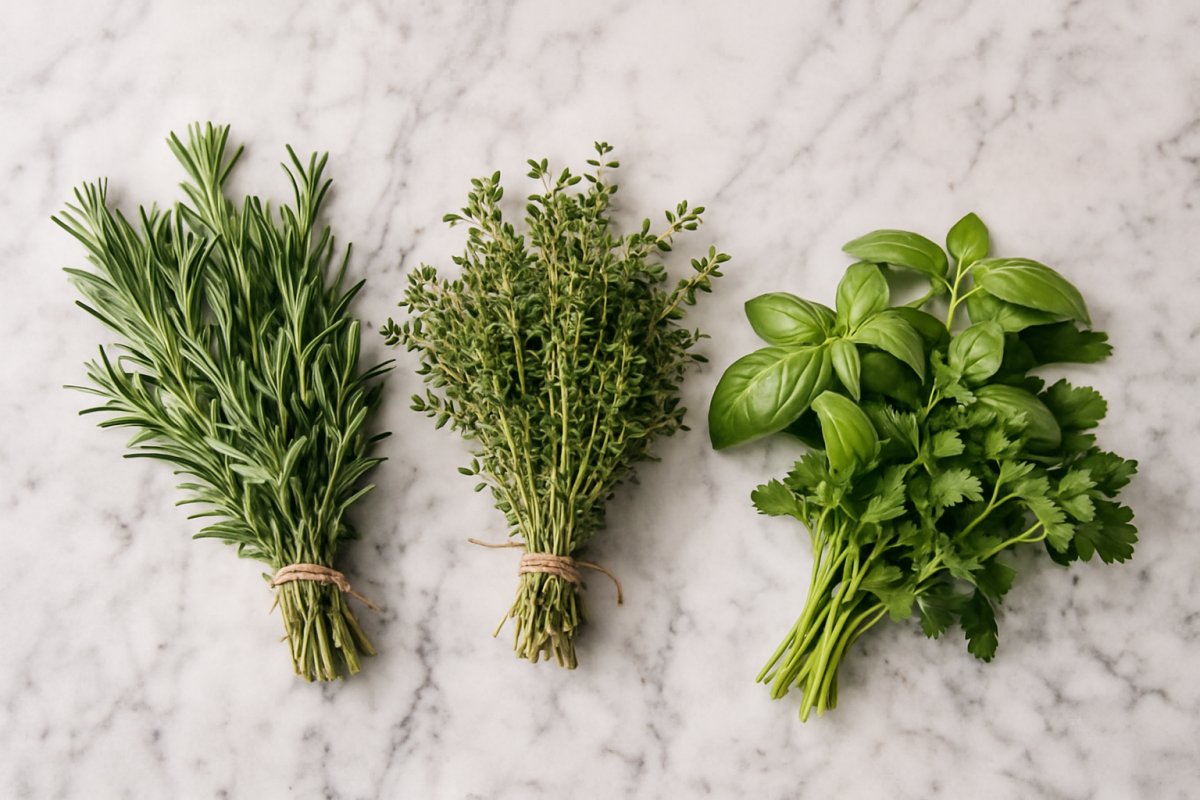
Herbs are small plants that give our dishes fresh flavor, scent and often color. They can be found almost everywhere in the world, because many herbs grow well in gardens, on balconies or in fields. Some herbs originally come from a particular country or region but are now at home in many other countries. For example, basil originally comes from Asia and Africa, yet today it grows in many gardens in Europe and America.
Where do herbs come from?
Herbs can originate from different regions. Some examples:
Herbs can originate from different regions. Some examples:
- Mediterranean herbs such as rosemary, thyme and oregano originally come from countries around the Mediterranean. There it is often warm and dry – these plants prefer that.
- Asian herbs such as coriander (also called cilantro) and lemongrass are native to South and Southeast Asia. They often bring a fresh, citrusy or slightly spicy aroma.
- Central European herbs like parsley, chives and dill grow well in cooler climate zones and are very common in Germany, Austria and Switzerland.
How and where do herbs grow?
Herbs can be cultivated in different environments:
Herbs can be cultivated in different environments:
- Garden bed: Here the plants have enough space to grow. A bed is like a small room for plants where each has its place.
- Pots on the balcony or windowsill: Many herbs also thrive in pots. This is practical when you have little space. A pot is like a mini-garden.
- Greenhouse cultivation: In greenhouses herbs can grow protected from cold, so they are available for longer during the year.
- Field cultivation for supermarkets: Some herbs are grown on large fields or in specialized farms so supermarkets can offer fresh bunches.
Which varieties and types exist?
Herbs are very diverse. They can be distinguished by use or flavor:
Herbs are very diverse. They can be distinguished by use or flavor:
- Fresh herbs: These include basil, parsley, dill, chives and coriander. They are added to dishes shortly before eating because they taste best that way. Fresh herbs are like freshly picked flowers: full of fragrance.
- Dried herbs: Oregano, thyme or rosemary are often sold dried in jars. Drying means the herbs lose water and thus last longer. Dried herbs often taste more intense, but somewhat different from fresh ones.
- Frozen herbs: Some herbs are frozen to better preserve their flavor than drying does. Frozen herbs are practical when you want to have them available longer.
- Herb varieties with different aromas: There are, for example, several types of basil – some smell strongly of lemon, others are sweeter. Mint also exists in many varieties: peppermint is sharp and cooling, while Moroccan mint is milder.
- Flowering and ornamental varieties: Some herbs like borage or chives flower and look pretty. The flowers are sometimes edible and give salads a special touch.
How can you get herbs?
Herbs can be bought at the supermarket, at the weekly market, in garden centers or grown yourself in the garden. Those who like to experiment can buy seeds and raise the plants themselves. It's like a small project: sow, water and watch them grow.
Herbs can be bought at the supermarket, at the weekly market, in garden centers or grown yourself in the garden. Those who like to experiment can buy seeds and raise the plants themselves. It's like a small project: sow, water and watch them grow.
In summary: herbs come from many parts of the world, grow indoors and outdoors and are available in many forms – fresh, dried or frozen. Each form has its own advantage: fresh for intense aroma, dried for long shelf life and frozen for preserved flavor. That way every kitchen finds the right herb for the desired taste.