Menu & categories

Hemp seeds

Nutty, protein-rich seeds with valuable omega fatty acids

Wiki about hemp seed Nutri-Score B Vegan Yes Gluten-free Yes Lactose-free Yes Nut-free Yes
NUTRITION / 100 g
553 kcal 31.6 g Protein 8.7 g Kohlenhydrate 48.8 g Fett

Introduction

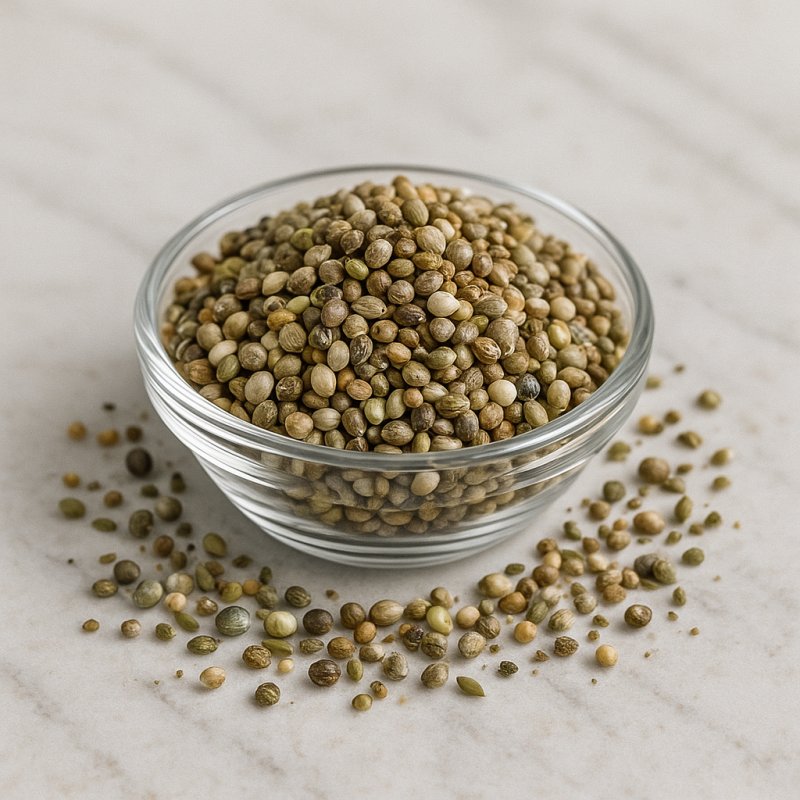
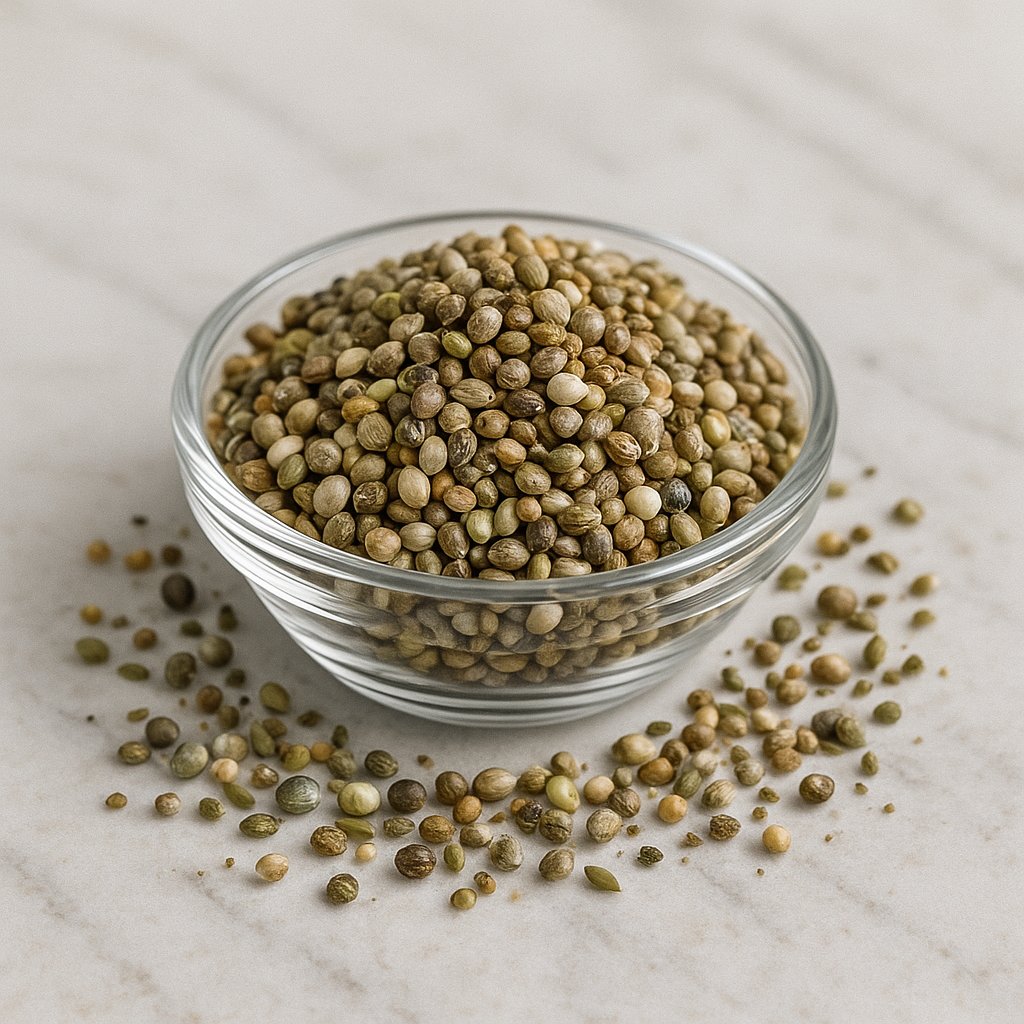
Hemp seeds in a bowl and scattered on a table
I have a surprising ingredient in my kitchen that has accompanied me for years: hemp seeds. The first time I was skeptical, because the word hemp immediately conjures associations that should not have anything to do with my baking tray. But already after the first spoonful in a pot of yogurt it was clear: these little seeds have flavor, texture and a useful dose of everyday magic. They are nutty, tender and almost melt buttery in the mouth without feeling heavy.

What impresses me particularly is the versatility of hemp seeds. I sprinkle them over a salad for a crunchy finish, puree them into a creamy dressing or stir them into porridge when I need energy in the morning. A friend once brought them to a picnic and we were all amazed how they immediately added depth and satiety even to simple tomato on bread bites. The seeds are also protein rich and provide valuable omega fatty acids, which makes them especially attractive for plant based diets.

Preparation is very simple: they need no pre treatment when used as a topping and can be ground into hemp flour or processed into hemp milk if needed. I remember a rainy Sunday when I accidentally cooked too much oats and quickly added hemp seeds and cinnamon — the result was so successful that I have deliberately repeated the recipe ever since. This little inspiration changed my view on using leftovers.

Practical tips I like to pass on:

  • As a topping: On salads, soups and smoothie bowls for more bite.
  • In baking: In bread or muffins for a nutty flavor and extra nutrients.
  • As a base: For homemade hemp milk or pesto — surprisingly creamy and flavorful.
For me hemp seeds are more than just a trendy product; they are a small kitchen friend that gives dishes overall balance. Every time I tear open the pack and notice the mild scent, it reminds me of uncomplicated, good cooking — and that simple ingredients often hold the greatest surprises.

Availability & types

Availability and types of hemp seeds

Hemp seeds are the small seeds of the hemp plant. You can think of them as tiny, hard seeds that are grown in many countries. They are often easy to find because they are sold in supermarkets, health food stores and online. Sometimes they are also called hemp seeds or hemp hearts — these are just different names for the same thing or slightly processed variants.

Origin and growing regions
Hemp is grown in many parts of the world. In the past it was cultivated in Europe, Asia and North America. Today hemp seeds often come from countries like Canada, France, the Netherlands, China and some Eastern European states. Farmers grow hemp in fields just like wheat or corn. Hemp likes sunny fields and tolerates different soils, which is why it grows in many places. Important: not all hemp contains the substances that cause a high. For the seeds eaten as food, specially cultivated industrial hemp is used, which contains very little of these substances.

Available varieties and forms
There are different kinds of hemp seeds that vary in taste, shape and processing. Here are the main types, explained simply:

  • Whole hemp seeds: These are the seeds in their natural hull. They look like small, oval grains with a darker shell. They are a bit harder to chew but have a nutty taste.
  • Hemp hearts (hulled hemp seeds): These come from whole seeds but the hard outer shell has been removed. This makes them softer and a bit milder in taste — almost like thinly sliced nuts. Many people like them because they distribute well in yogurt, muesli or salads.
  • Chopped hemp seeds: These are hemp hearts that have been cut into small pieces. They are even easier to sprinkle over dishes or incorporate into batters. They can be compared to sesame or chopped nuts.
  • Roasted hemp seeds: Like nuts, hemp seeds can also be lightly roasted. This strengthens the flavor and gives a crunchy texture — similar to roasted sunflower seeds.
  • Hemp seed oil: Oil can be pressed from the seeds. This oil comes in bottles and is often used to dress salads or cold dishes. It is not suitable for high heat frying because it would lose its delicate flavor.
  • Flavored varieties: Sometimes hemp seeds are sold combined with salt, spices or sweeteners. So there are savory or sweet variants, similar to seasoned nuts or snack mixes.
Where to find them and what to look out for
Hemp seeds are often located with seeds, nuts or in the health food section. Look for the words industrial hemp or food hemp on the package — this indicates that they are edible, non hazardous seeds. Sometimes the package also states the country of origin. If the package is organic it usually says Organic, similar to other produce, and that means fewer chemicals were used in cultivation.

Overall, hemp seeds are a versatile ingredient: you can eat them plain, sprinkle them over your muesli or mix them into bread and cookies. Because of their different forms and processing, you can easily find a variant you like and that suits your recipes.
Details & nutrition

Property Value
Unit g
Calories per 100 553
Protein per 100 31.6
Carbohydrates per 100 8.7
Sugar per 100 1.5
Fat per 100 48.8
Saturated fat per 100 4.6
Monounsaturated fat 5.4
Polyunsaturated fat 38.1
Fiber per 100 4.0
Vitamin C (mg) per 100 0
Vitamin D (IU) per 100 0
Calcium (mg) per 100 70
Iron (mg) per 100 7
Nutri-Score B
CO₂ footprint 1.8
Origin Worldwide, especially Europe, Canada and China
Gluten-free Yes
Lactose-free Yes
Nut-free Yes
Vegan Yes
Note Nutritional values for hulled hemp seeds (hemp hearts); naturally gluten-free, but may contain traces of gluten or nuts depending on processing.

Technical & scientific information

Hemp seeds (also called hemp kernels) are the edible seeds of the industrial crop Cannabis sativa. They consist of a hard seed hull and a nutty interior, referred to as the hemp kernel or hemp heart. Hemp seeds are consumed both raw and roasted and are used as an ingredient in muesli, baked goods, smoothies or as a component of hemp oil and hemp protein powder. Botanically, like other oilseeds and grain fruits, they are storage tissues of the parent plant's metabolism and contain the main nutrients required for germination and the early development of a new plant.

Chemical composition and nutritional values
Hemp seeds have a balanced nutrient profile. They comprise about 25–35% fat, 20–25% protein and 20–30% carbohydrates, with a large part of the carbohydrates present as fiber. The fat fraction is rich in polyunsaturated fatty acids, particularly omega 6 fatty acid (linoleic acid) and omega 3 fatty acid (α linolenic acid), typically in a ratio of roughly 3:1, which is nutritionally advantageous. Other lipid components include phospholipids and tocopherols (vitamin E).

Protein profile
Hemp seeds contain all nine essential amino acids and thus provide a complete amino acid profile. The main proteins are edestin and albumin, characterized by high solubility and good digestibility. The biological value is lower than that of whey protein, but compared to many plant proteins it is high. Hulled hemp seeds show a protein content of up to 30% and are often used for producing hemp protein powder.

Micronutrients and secondary plant compounds
Hemp seeds contain a range of minerals such as magnesium, phosphorus, zinc, iron and potassium as well as B vitamins, particularly vitamin B1, B2 and B6. In addition, phytosterols, polyphenols and other antioxidant compounds are present in small amounts, which help protect lipids and can confer health benefits.

Processing methods
Common processing steps include cleaning, dehulling (to obtain the soft hemp heart), cold pressing for oil extraction and subsequent production of protein powders by residue removal, drying and grinding. Cold pressing leaves a protein rich press cake, which can be further filtered, dried and processed into hemp protein. Temperature control is important to preserve sensitive unsaturated fatty acids and heat labile vitamins. Fermentation and sprouting are also used to improve digestibility and nutrient availability.

Health aspects
Because of their fatty acid profile, protein content and fiber proportion, hemp seeds are considered nutrient dense foods with potential cardiovascular and metabolic benefits. Omega 3 and omega 6 fatty acids contribute to maintaining a healthy lipid profile, while proteins and fibers promote satiety and may attenuate blood sugar fluctuations. Phytosterols can reduce cholesterol absorption in the intestine.

Safety and legal notes
Hemp seeds from cultivations approved for food production contain only negligible amounts of psychoactive cannabinoids such as THC. Industrial varieties are bred so that THC content does not exceed legally permitted limits. Nevertheless, consumers should pay attention to origin and quality information, as contamination by environmental toxins or improper processing is possible.

Use in food technology
In product development, hemp seeds are increasingly used for their nutrient profile and nutty flavor. They are suitable for fortifying baked goods, snacks and plant based milk alternatives. In formulation, oxidative stability and storage conditions must be considered, since the high proportion of polyunsaturated fatty acids makes products more susceptible to rancidity. Antioxidants, light protective packaging and refrigeration are common measures to extend shelf life.

In summary, hemp seeds are a versatile, nutrient rich ingredient with a favorable fatty acid composition, a complete amino acid profile and relevant micronutrients. Their processing requires technical know how to preserve nutrients and ensure quality, while health and legal aspects should be considered when selecting raw materials and finished products.

Wiki entry for: hemp seed
Active now: 21 visitors of which 2 logged-in members in the last 5 minutes