Menu & categories

Hazelnut chocolate spread

Sweet spread made from hazelnuts, cocoa and sugar

Wiki about hazelnut spread Nutri-Score E Vegan No Gluten-free Yes Lactose-free No Nut-free No
NUTRITION / 100 g
540 kcal 6.0 g Protein 57.0 g Kohlenhydrate 31.0 g Fett

Introduction

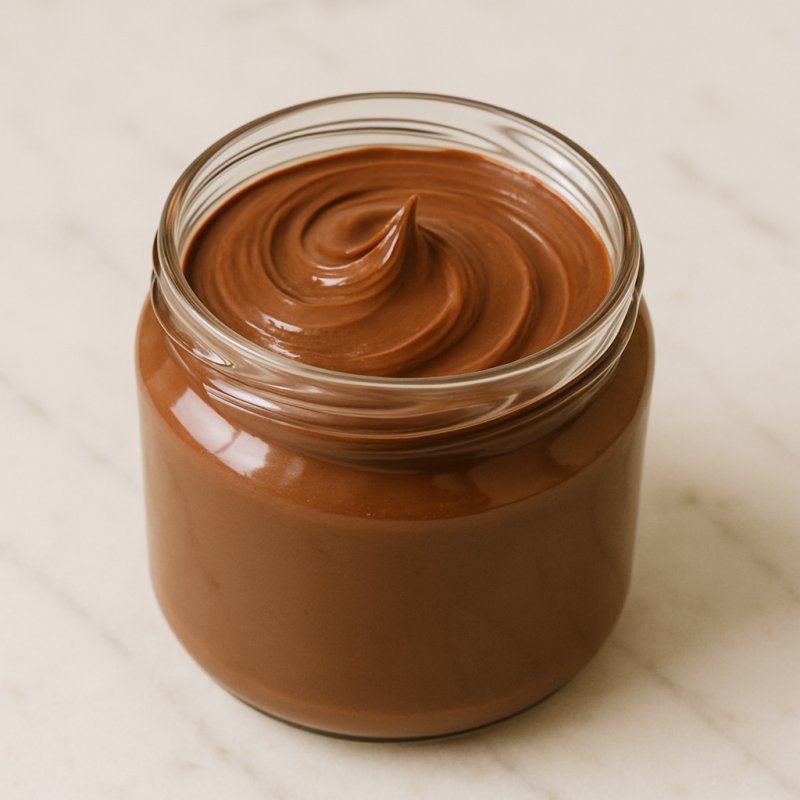
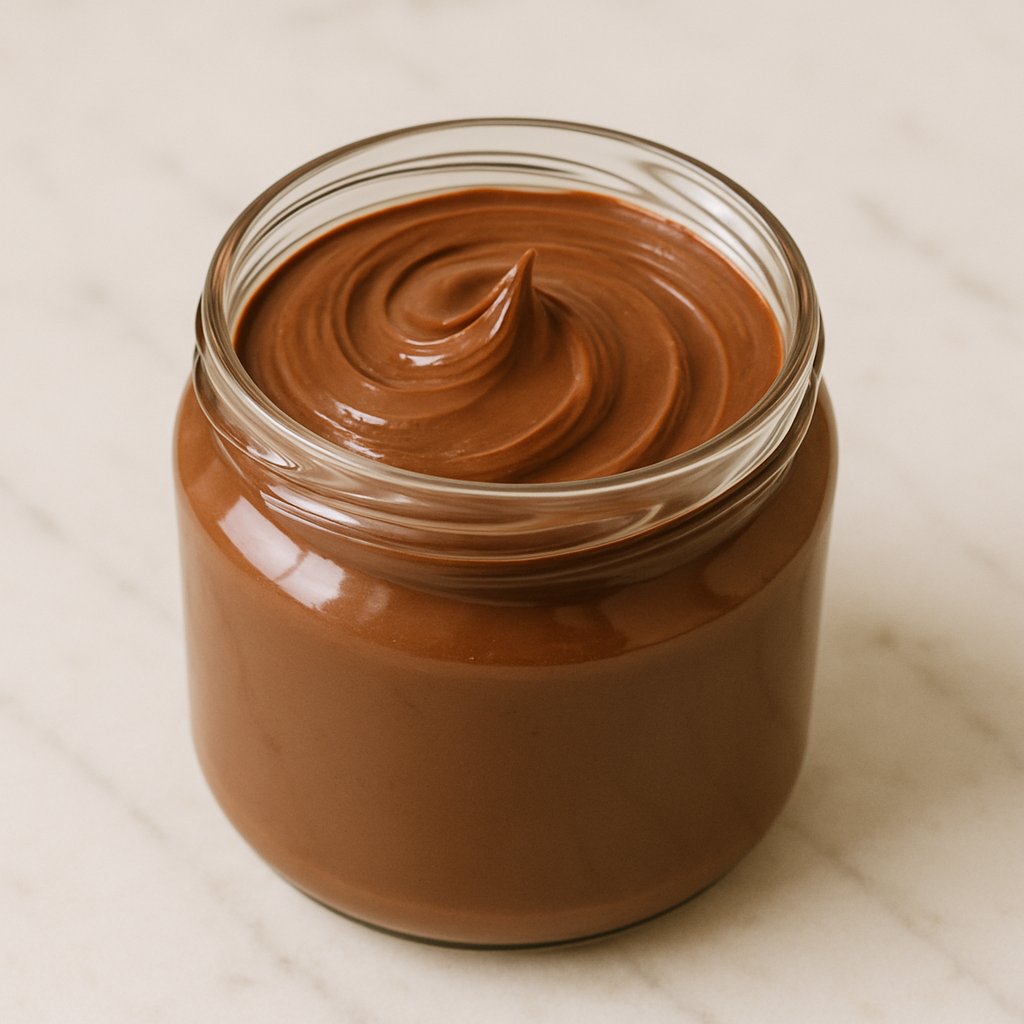
Jar of spreadable hazelnut chocolate cream
I still remember well the first spoonful of hazelnut-nougat cream I secretly stole from a jar while the kitchen smelled of freshly brewed beans and warm rolls. That moment was not only sweet but oddly comforting: a velvety texture that melted on the tongue and an interplay of roasted hazelnut notes and dark chocolate. Since then this cream has been a kind of culinary comfort for me, a small morning ritual or a creative ingredient when I want to experiment in the kitchen.

What makes hazelnut-nougat cream so fascinating are its simple yet rich components. At its core it consists of roasted hazelnuts, sugar, cocoa powder or mass, and a fat carrier, usually vegetable oil. Some recipes use milk chocolate, others rely on more intense, darker cocoa varieties. The result is always a fine balance between nutty warmth and chocolate depth.

I've experienced the cream in many ways: on fresh croissants, as a filling for pancakes, under warm banana slices or even in a homemade glaze for muffins. A colleague of mine swears by adding a pinch of sea salt to make the flavors more contrasting; I can confirm that this little trick works wonders. Also, hazelnut-nougat cream can be used surprisingly well in savory dishes, for example as a base for a spicy BBQ sauce with chocolate notes.

When shopping, it's worth checking the ingredient list: the higher the hazelnut content and the shorter the ingredient list, the more honest the product seems. Homemade cream is certainly more labor-intensive, but the roasting of the nuts and the slow blending produce a texture you wouldn't expect from a jar.

Tips summed up:

  • Use: Bread spread, baking ingredient, dessert filling, creative sauce base.
  • Quality: Pay attention to hazelnut content and natural fats.
  • Variation: Add a little sea salt or espresso for more depth.
In the end, hazelnut-nougat cream remains for me a small piece of happiness in a jar: uncomplicated, versatile and always ready to turn an everyday meal into something special.

Availability & types

Availability and types

The hazelnut-nougat cream is easy to find in many shops. You may know it as a spread in jars or as a sweet filling in bars and baked goods. The ingredients — especially hazelnuts, sugar, cocoa and sometimes milk — come from various countries. Hazelnuts grow particularly well in warm but not overly hot regions. Large growing areas include countries like Turkey, Italy and the USA. Cocoa, on the other hand, mostly comes from tropical countries near the equator, for example in West Africa, South America or Southeast Asia. Milk is often supplied by cows in Europe, North America or Australia. When all these ingredients come together, the familiar creamy mixture is produced.

What kinds and variants exist?

  • Classic hazelnut-nougat cream: This is the most widespread variant. It tastes sweetly of hazelnut and chocolate and is usually spreadable, so easy to smear on bread.
  • Milky variants: These creams contain more milk powder or milk fat. They are somewhat lighter and taste “creamier” and milder, similar to milk chocolate.
  • Dark chocolate nougat cream: Here there is more cocoa, so it tastes stronger of chocolate and less sweet. Some people like this variant because the chocolate flavor is more intense.
  • Whole-nut or crunchy types: Some creams have small nut pieces or are made from particularly many nuts. Eating them is reminiscent of cracking nuts because the cream has more bite.
  • Vegan alternatives: For people who do not consume milk, there are vegan nougat creams. These use plant-based milk (for example almond or oat) and omit animal products.
  • Light or reduced-sugar variants: These contain less sugar and sometimes sweeteners. They often taste less sweet but are intended for people who want to watch their sugar intake.
  • Regional specialties: In some countries there are local versions with typical regional ingredients — for example different or additional nut varieties, or a particular roasting style that changes the flavor.
How do you find the right variety?

If you're unsure which hazelnut-nougat cream you like best, small tests help. Buy a small jar first or try a different variety in a café. Pay attention to these things:

  • Do you prefer a stronger chocolate taste? Then choose a darker variant.
  • Do you love the nutty taste? Then look for “high hazelnut” content or a variety with nut pieces.
  • Do you need a product without milk? Then look for “vegan” or “plant-based”.
  • If you need to watch sugar, choose a reduced-sugar variety.
Where can you buy it?

Hazelnut-nougat cream is available in supermarkets, health food stores, specialty shops and often in small grocery stores. Branded products are usually on large shelves, while special or handmade varieties are often offered in delicatessens or markets. Online you can also order many variants, sometimes even special types from other countries.

In summary: hazelnut-nougat cream is widespread worldwide and comes in many variants — from very chocolatey to very nutty, with or without milk, with or without added sugar. So almost everyone can find a suitable variety, depending on whether they prefer an intense chocolate taste, more nutty crunch or a milk-free option.
Details & nutrition

Property Value
Unit g
Calories per 100 540
Protein per 100 6.0
Carbohydrates per 100 57.0
Sugar per 100 56.0
Fat per 100 31.0
Saturated fat per 100 11.0
Monounsaturated fat 14.0
Polyunsaturated fat 3.0
Fiber per 100 3.0
Vitamin C (mg) per 100 0
Vitamin D (IU) per 100 0
Calcium (mg) per 100 100
Iron (mg) per 100 1.5
Nutri-Score E
CO₂ footprint 3.0
Origin Varies by manufacturer, often produced in the EU
Gluten-free Yes
Lactose-free No
Nut-free No
Vegan No
Note Nutritional values and allergens may vary slightly depending on the manufacturer and recipe; the information refers to a typical commercially available hazelnut chocolate spread with hazelnuts, sugar, vegetable oil, cocoa and milk components.

Technical & scientific information

Hazelnut-nougat cream is a spreadable food product that consists mainly of roasted nuts, sugar, vegetable fats and cocoa powder. Hazelnuts are typically used as the nut base because they provide an intense, aromatic profile with oily properties that are crucial for the creamy texture. The composite matrix of the cream combines solid and liquid components, emulsifiers and flavor compounds, resulting in a homogeneous, viscous emulsion.

Composition and ingredients
The main components are:

  • Hazelnut paste: Contains mainly triacylglycerols, oleic acid and linoleic acid, plant protein (predominantly albumins and globulins) as well as fiber and secondary plant compounds such as flavonoids.
  • Sugar: Sucrose is frequently the main sweetener; it increases the dry matter content, affects water activity and acts as a preservative.
  • Vegetable fats: Sunflower oil, palm kernel oil or palm oil are used to achieve a stable consistency; their fatty acid profile affects melting behavior and storage stability.
  • Cocoa and cocoa powder: Provide flavor compounds (e.g. theobromine), pigments and additional fat-soluble components; cocoa constituents are important for the classic chocolate aroma.
  • Emulsifiers and stabilizers: Lecithin (soy- or sunflower-based), polyglycerol polyricinoleate (PGPR) and sometimes mono- and diglycerides are used to improve processability and prevent phase separation.
  • Flavorings and salt: Vanillin or vanilla extract and small amounts of salt for flavor adjustment.
Manufacturing process
Production involves several technical steps that serve structure, shelf life and taste:

  • Roasting the hazelnuts to develop the typical roasted aroma and reduce moisture; Maillard reactions and pyrolysis products form and shape the flavor.
  • Grinding the roasted nuts into a fine paste; the mechanical comminution process releases oils and forms the basis of the cream consistency.
  • Mixing and conching with sugar, fat and cocoa powder, where shear and heat achieve a fine particle distribution; emulsifiers are also added in this stage to stabilize the phases.
  • Refining reduces particle sizes to under about 30–40 µm to avoid grittiness and improve mouthfeel.
  • Tempering and filling ensure homogeneous viscosity and prevent oil separation during storage.
Nutritional and health aspects
Hazelnut-nougat creams are energy-dense: the caloric content typically ranges between 500 and 600 kcal per 100 g, mainly from fats and sugars. Protein comes from the hazelnuts, while fiber and micronutrients (e.g. vitamin E, magnesium) are present in small amounts. From a nutritional perspective:

  • The high sugar and fat content makes the product an energy-dense indulgence with limited health benefits if consumed in large amounts.
  • The vegetable fats used can have a partly unfavorable fatty acid profile, especially if hydrogenated fats or palm oil–rich blends are employed.
  • Allergens are represented by hazelnuts and possibly soy lecithin; appropriate labeling is mandatory.
  • Dietary variants use sugar substitutes, less saturated fats or increased nut content to improve nutritional profiles.
Physical and sensory properties
Physically, the cream is a viscoelastic, non-Newtonian fluid whose flow behavior depends on temperature. The melting behavior in the mouth is determined by the ratio of the oil phase to solid particles; typically the fat melts at body temperature, producing the creamy mouthfeel. Sensorially, roast aromas, cocoa bitterness, texture (fineness, creaminess) and sweetness all interact.

Shelf life and safety
Shelf life is determined by water activity, fat oxidation and microbiological stability. Low water activity and antioxidant components (e.g. vitamin E from the nuts) delay spoilage. Packaging in airtight containers and storage under cool, dark conditions minimize fat oxidation and aroma loss. Overall, hazelnut-nougat cream is a technologically optimized product whose formulation and processing are targeted to taste, texture and industrial storage requirements.

Wiki entry for: hazelnut spread
Active now: 17 visitors of which 2 logged-in members in the last 5 minutes