Availability and types of ham
Ham is a very popular food that can be found in almost every part of the world. When we talk about ham we usually mean the meat from a pig's hind leg that is prepared in various ways. The good news: ham comes in many varieties, so there is something for every taste – from sweet breakfast ham to salty, air‑dried specialty hams.
Origin
Ham originally comes from regions where pigs are kept. Pigs have been bred by people in many regions of the world, so ham exists in Europe, the Americas, Asia and other continents. Some countries are particularly well known for their ham types because people there have used certain methods for a long time. Examples include Italy, Spain and Germany. In those places families have passed down recipes and traditions for generations, resulting in distinctive varieties.
Ham originally comes from regions where pigs are kept. Pigs have been bred by people in many regions of the world, so ham exists in Europe, the Americas, Asia and other continents. Some countries are particularly well known for their ham types because people there have used certain methods for a long time. Examples include Italy, Spain and Germany. In those places families have passed down recipes and traditions for generations, resulting in distinctive varieties.
Production areas or regions of origin
Ham is not "grown" like plants, but is made from pork. Still, people often speak of regions of origin because climate and feed influence quality. Important regions include:
Ham is not "grown" like plants, but is made from pork. Still, people often speak of regions of origin because climate and feed influence quality. Important regions include:
- Spain – Here you find the famous Serrano and Jamón ibérico hams. The climate and the pastures, where some pigs eat acorns, give the meat a distinctive flavor.
- Italy – Well‑known types include Prosciutto di Parma and Prosciutto di San Daniele. They are often air‑dried for long periods.
- Germany – Here you find cooked hams and raw hams such as Black Forest ham, which has characteristic smoky aromas.
- Other countries – Local ham varieties are also produced in the USA, France, Poland and the Scandinavian countries.
Available types and variants
There are many different kinds of ham. They can roughly be divided into a few groups to make them easier to understand:
There are many different kinds of ham. They can roughly be divided into a few groups to make them easier to understand:
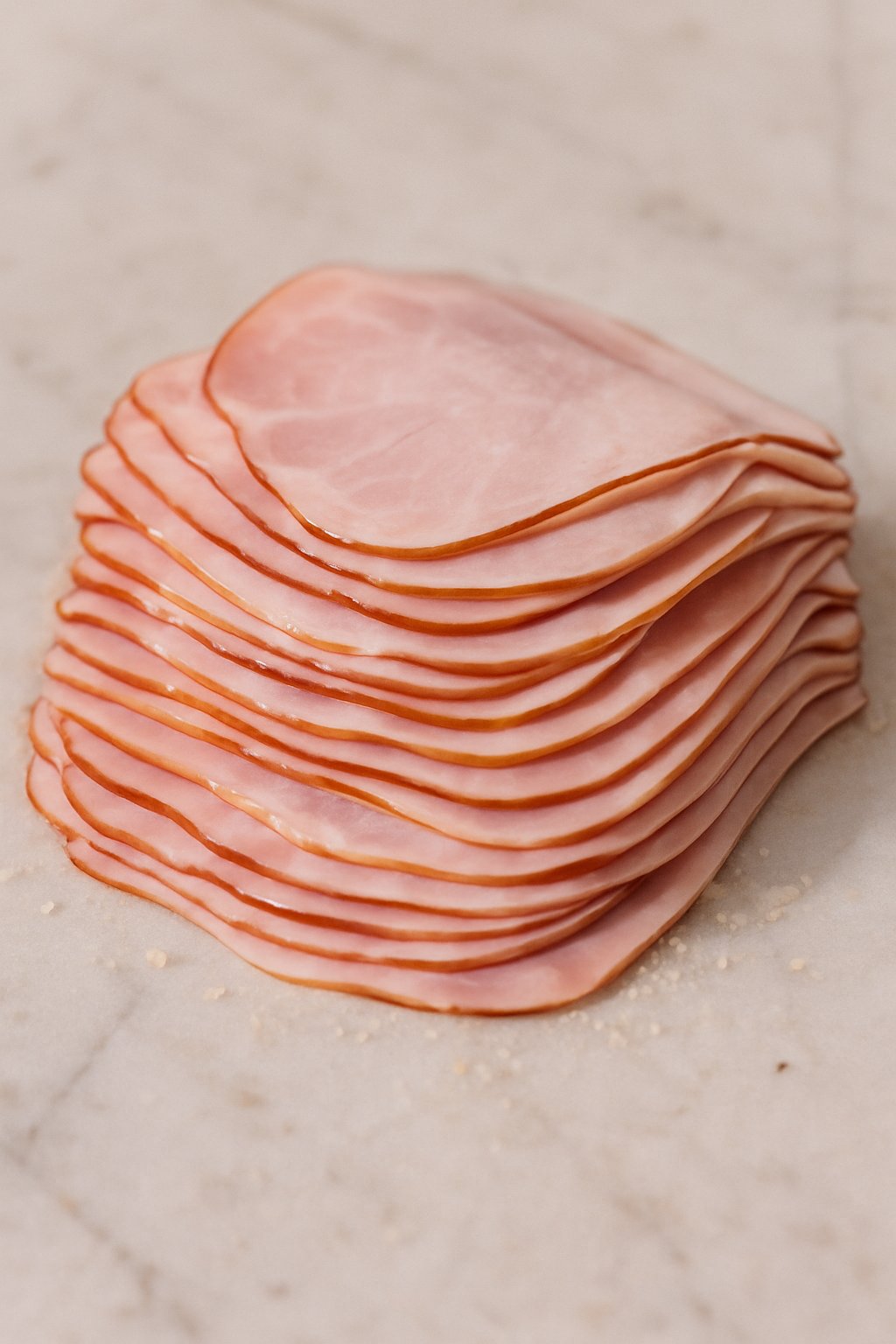
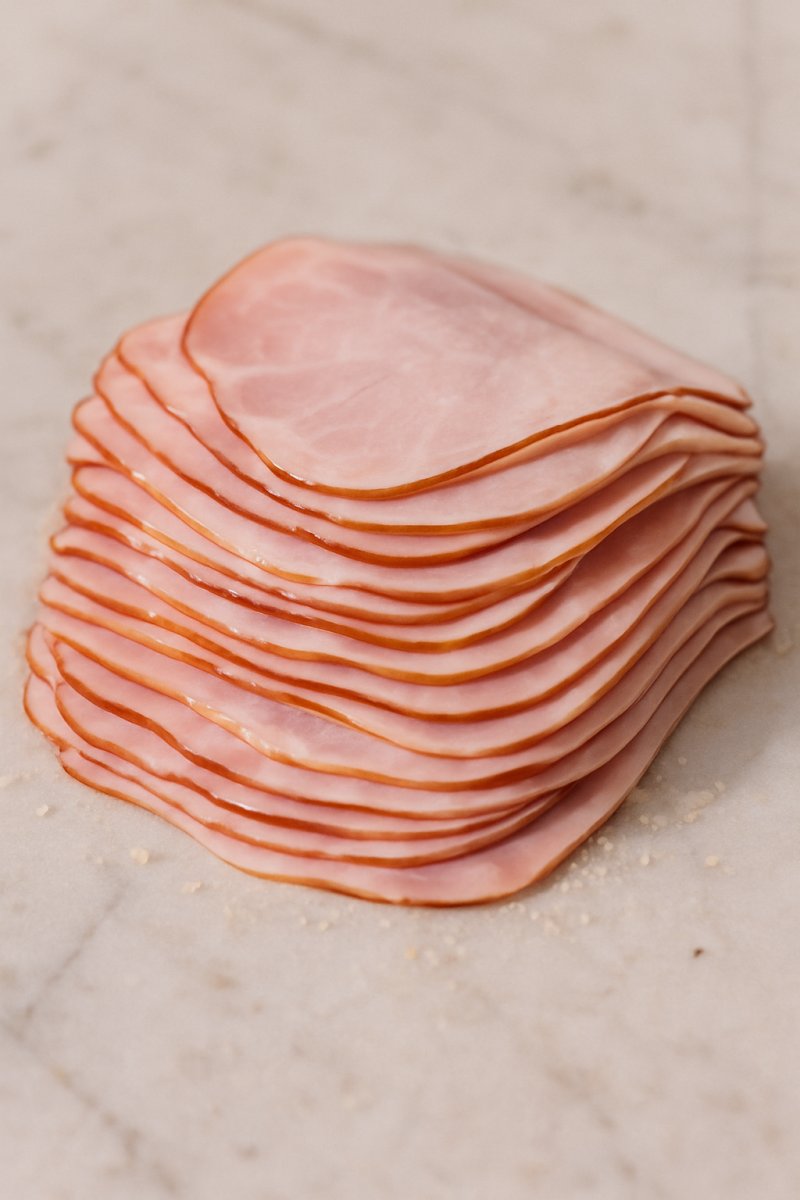
- Cooked ham: this ham is cooked or steamed. It is juicy, tender and mild in flavor. You often find it thinly sliced in supermarkets for sandwiches.
- Raw‑cured ham: raw‑cured ham is not cooked but salted and air‑dried. It is firmer and often more intense in flavor. Examples are prosciutto and Serrano.
- Smoked ham: this ham is smoked over wood smoke. Smoking gives it a smoky aroma, as in Black Forest ham.
- Air‑dried ham: with this type the ham hangs in the air for long periods, sometimes months or even years. That makes it tender and very aromatic.
- Ham specialties: some hams come from special pig breeds or from particular regions (e.g. Jamón ibérico). These are often more expensive because the animals grow more slowly or receive special feed.
Where to find them
In supermarkets you will usually find cooked and smoked hams, fresh or vacuum‑packed in slices. Delicatessens and butcher shops often offer freshly sliced raw hams and specialties. Some hams, especially the more expensive air‑dried ones, are displayed whole at the counter or sliced on a special stand — this is called "carving". If you are looking for something special, just ask in the shop or try small amounts.
In supermarkets you will usually find cooked and smoked hams, fresh or vacuum‑packed in slices. Delicatessens and butcher shops often offer freshly sliced raw hams and specialties. Some hams, especially the more expensive air‑dried ones, are displayed whole at the counter or sliced on a special stand — this is called "carving". If you are looking for something special, just ask in the shop or try small amounts.
Overall: ham appears in many forms and flavor profiles depending on how it was treated and where it comes from. That makes it easy to find the right one — whether mild and cooked for a lunchbox or bold and air‑dried as a special treat.