Menu & categories

Grünkern

Half-ripe harvested and roasted/dried spelt with a nutty aroma

Wiki about green spelt Nutri-Score B Vegan Yes Gluten-free No Lactose-free Yes Nut-free Yes
NUTRITION / 100 g
350 kcal 13 g Protein 63 g Kohlenhydrate 2.7 g Fett

Introduction

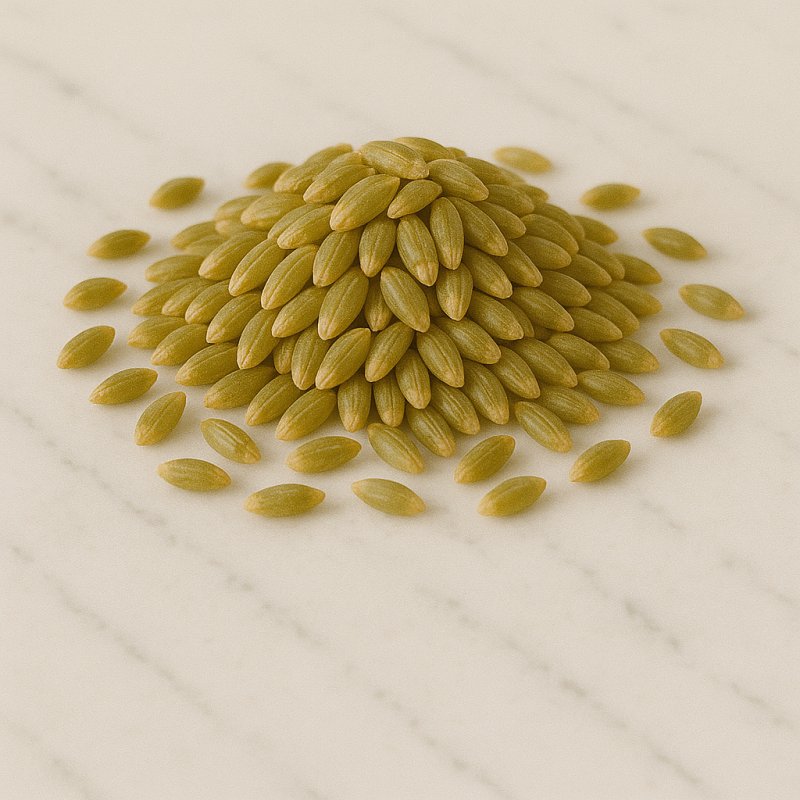
Dried Grünkern grains in a bowl
I still clearly remember the first scent of Grünkern I consciously noticed: smoky, nutty and somehow homely, like the warm end of a campfire in an autumn kitchen. Grünkern is not just a cereal product, it is a small culinary adventure that arises between field and fire bowl. I used to think it was simply “green spelt” until a friend explained that it is spelt harvested immature and then gently dried to develop that distinctive flavor.

Grünkern has a steady little stage in my kitchen. I like its versatility: whether as a savory patty, in soups or as the base for a hearty salad – Grünkern absorbs flavors and at the same time gives a pleasant bite. Once, at an improvised dinner with guests, I replaced rice with Grünkern in a Mediterranean pan dish. The verdict was unanimously enthusiastic; a colleague of mine swore he would try every future risotto in a savory version with it.

What I particularly appreciate about Grünkern are not only the sensual qualities but also the down-to-earth story behind it. It is harvested at the green, early ripening stage and then dried – that gives it the smoky note and makes it more storable. For those in a hurry here are the key facts:

  • Taste: nutty, slightly smoky, savory
  • Use: patties, soups, salads, casseroles
  • Texture: firm to the bite, filling
I like to try new combinations: Grünkern with roasted pumpkin and goat cheese, or marinated with fresh herbs and lemon as a surprisingly light accompaniment to grilled fish. For beginners I recommend cooking the Grünkern until soft first, then toasting it in a pan with onions and spices – that way it develops its full aroma.

To me Grünkern feels like the small, robust secret of regional cuisine: unpretentious, but deep in flavor. It links tradition with modern cooking and can be rediscovered again and again.

Availability & types

Availability and types of Grünkern

Grünkern is a special form of spelt that is often found in organic shops, health food stores, larger supermarkets and at weekly markets. It is not as widely known as rice or wheat everywhere, but in many regions, especially in Germany and Austria, it is well available. If you look for it, you will usually find it dried in bags or tins, sometimes also as flour or as ready-made products like burger patties, spreads or soup mixes.

Where does Grünkern come from?
Grünkern is produced when spelt grains are harvested before they are fully ripe. Normally cereals are left in the field to fully ripen and dry. For Grünkern the spelt ears are harvested earlier, when the grains are still greenish and soft. These semi-ripe grains are then gently dried or smoked — that is, they are exposed to hot, dry air or smoke. This drying process gives them their special flavor, which slightly resembles nuts and toasted bread. You can imagine it like corn harvested green and then cooked — except Grünkern is later dried and used for cooking.

Growing regions
Grünkern is mainly grown where spelt is already cultivated. The main regions are:

  • Central Europe: Especially Germany and Austria. In some regions, for example Franconia and Swabia, Grünkern has a long tradition.
  • Adjacent areas: Spelt is also grown in Switzerland and parts of Eastern Europe, which can be used to make Grünkern.
  • Smaller cultivation areas: In some organic and specialty farms spelt is deliberately grown for Grünkern production.
These areas often have cooler weather and fields suitable for spelt cultivation. Spelt is more robust than common wheat and can grow on less fertile soils.

Which varieties and variants exist?
Grünkern is not just a single variety — there are different ways it is offered and processed. Important variants include:

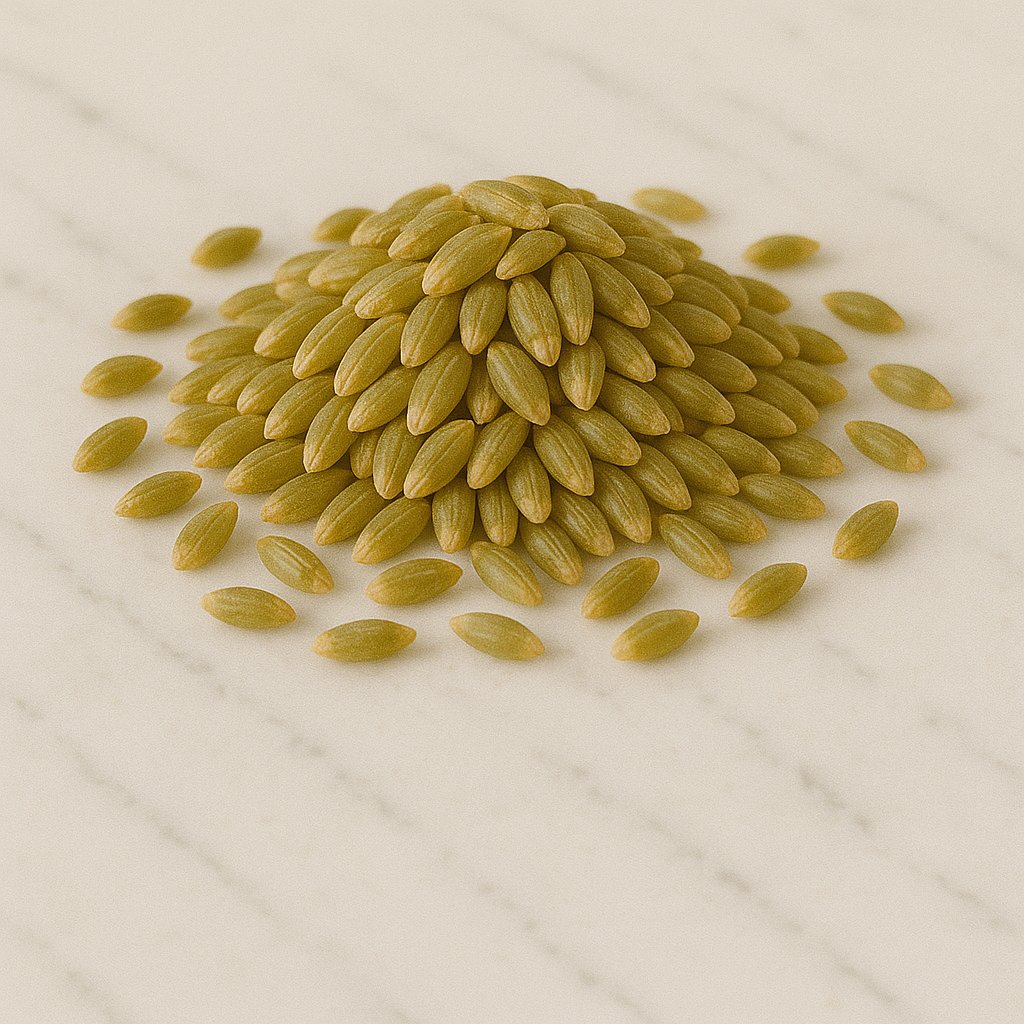
  • Whole Grünkern grains: These are the dried, dârated spelt kernels. They look like small, brownish grains and can be cooked like rice.
  • Grünkern groats (schrot): The grains are coarsely milled. Groats are good for patties or as an addition to stews because they soften more quickly.
  • Grünkern flour: Finely milled, ideal for baking bread or rolls and for thickening sauces. It can be mixed with other flours.
  • Smoked vs. unsmoked Grünkern: Traditionally Grünkern is lightly smoked, which brings the typical flavor. There are also unsmoked variants that taste milder. Smoked Grünkern is like bread that has been lightly browned in the oven; unsmoked is more like fresh bread.
  • Pre-cooked products and ready mixes: Some producers sell Grünkern already pre-cooked so it only needs to be heated. There are also mixes with herbs or vegetables for quick dishes.
How to find good Grünkern?
Look for fresh packaging and preferably organic labels if you want it grown with fewer additives. In small bags you often find the whole grains, in larger packages flour or groats. If you are unsure, ask in the store — vendors can often tell you where the Grünkern comes from and whether it is smoked.

Overall Grünkern is versatile and available in several forms: whole grain, groats, flour, smoked or unsmoked and as ready products. That allows you to use it in soups, salads, casseroles and as a base for burgers — similar to rice or couscous, but with a distinct nutty flavor.
Details & nutrition

Property Value
Unit g
Calories per 100 350
Protein per 100 13
Carbohydrates per 100 63
Sugar per 100 1
Fat per 100 2.7
Saturated fat per 100 0.4
Monounsaturated fat 0.3
Polyunsaturated fat 1.3
Fiber per 100 10
Vitamin C (mg) per 100 0
Vitamin D (IU) per 100 0
Calcium (mg) per 100 30
Iron (mg) per 100 3.5
Nutri-Score B
CO₂ footprint 0.7
Origin Central Europe
Gluten-free No
Lactose-free Yes
Nut-free Yes
Vegan Yes
Note Grünkern is spelt that was harvested half-ripe and then roasted/dried; it naturally contains gluten; nutritional values may vary slightly depending on variety and processing.

Technical & scientific information

Grünkern refers to the immaturely harvested grain of certain spelt varieties, removed from the ear before full ripening and then dried or roasted. Traditionally Grünkern was produced in regions such as Baden-Württemberg to avoid weather impacts at harvest. Due to the early harvest stage, Grünkern grains have a higher moisture content and a different starch and protein profile than fully ripe spelt or wheat grains, which leads to its characteristic nutty, slightly roasted aroma.

Production process

  • Harvest time: Grünkern is harvested in a state between milky and dough ripeness, typically about four to six weeks before full maturity.
  • Drying and roasting: After harvest a controlled drying process takes place, often in barns or drying facilities. Historically the grain was smoked or dried over beech wood, creating the typical aroma. Modern methods use gentler hot-air drying to control sensory properties.
  • Further processing: After drying Grünkern can be cracked, milled or used as whole grain. Roasting after drying further intensifies the aroma.
Chemical composition and nutritional values

Grünkern consists mainly of carbohydrates in the form of starch, but compared to ripe spelt kernels it contains a somewhat higher proportion of soluble components and a different starch granule morphology. Typical nutritional values per 100 g Grünkern (rounded) are about 320–360 kcal, 10–15 g protein, 2–4 g fat, 60–70 g carbohydrates and 6–12 g fiber. The protein fraction shows an amino acid profile similar to spelt, with a relatively high content of glutamic acid and proline.

Constituents

  • Starch: main energy supplier; structure and digestibility can be altered by early harvest and roasting.
  • Proteins: mixture of storage proteins (albumins, globulins, prolamins) with relatively good biological availability compared to other cereals.
  • Lipids: mainly in the germ components; moderate content with a proportion of unsaturated fatty acids.
  • Fiber: cellulose, hemicelluloses and other non-digestible polysaccharides supporting bowel function.
  • Minerals and vitamins: mainly magnesium, phosphorus, iron and B vitamins; exact concentrations vary with soil and growing conditions.
  • Secondary plant compounds: phenolic compounds and other antioxidant substances, whose levels can be influenced by roasting.
Technological properties

Grünkern differs in water uptake, swelling behavior and cooking properties from mature cereals. Due to the higher moisture at harvest and the preliminary thermal treatment, cooking time is often shorter, and cracked Grünkern forms a slightly binding, creamy consistency when cooked. The flour quality is less suitable for classic high-volume yeast doughs, but is appropriate for savory baked goods, patties, fillings and soup inclusions.

Health aspects

  • Grünkern provides complex carbohydrates and satiating fiber that can moderate blood sugar response compared with simple sugars.
  • The proteins contribute to nutrient supply; for people with gluten intolerance Grünkern is not suitable because spelt contains gluten.
  • Antioxidant secondary plant compounds may help reduce oxidative stress; the actual effect depends on availability after preparation.
  • In sensitive individuals compounds formed during drying or smoking can cause allergic reactions; hygienic drying minimizes microbiological risks.
Applications

Grünkern is used in many culinary applications: as a side dish similar to rice or barley, cracked in patties and burgers, as a flour component in savory baked goods and as an aromatic element in soups, salads and fillings. Industrially Grünkern flour is used as a functional additive for texture and flavor.

Summary

Grünkern is a traditionally produced spelt product harvested immature with a characteristic aroma, altered physico-chemical properties and a nutrient profile that includes complex carbohydrates, proteins, fiber, minerals and secondary plant compounds. The production method — harvest timing, drying and possible smoking or roasting — shapes flavor, shelf life and health-relevant components. For consumers Grünkern offers a nutritious, flavorfully distinctive alternative to ripe cereal products, but it is unsuitable for people with gluten intolerance.

Wiki entry for: green spelt
Active now: 18 visitors of which 2 logged-in members in the last 5 minutes