Menu & categories

Green olives

Savory and aromatic, unripe-harvested olives as a versatile Mediterranean ingredient

Wiki about green olive Nutri-Score C Vegan Yes Gluten-free Yes Lactose-free Yes Nut-free Yes
NUTRITION / 100 g
145 kcal 1.0 g Protein 3.8 g Kohlenhydrate 15.3 g Fett

Introduction

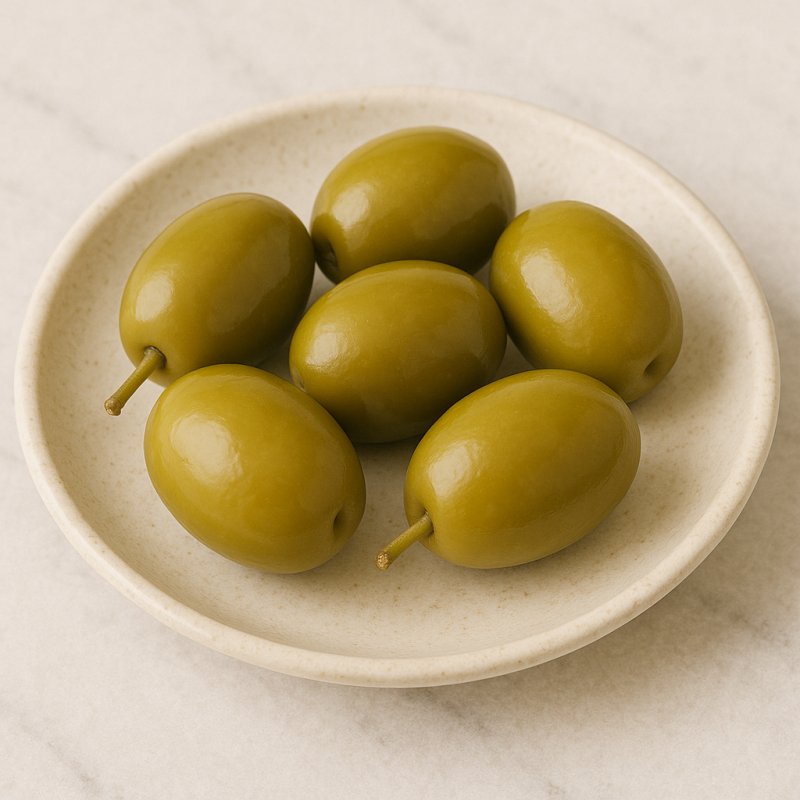
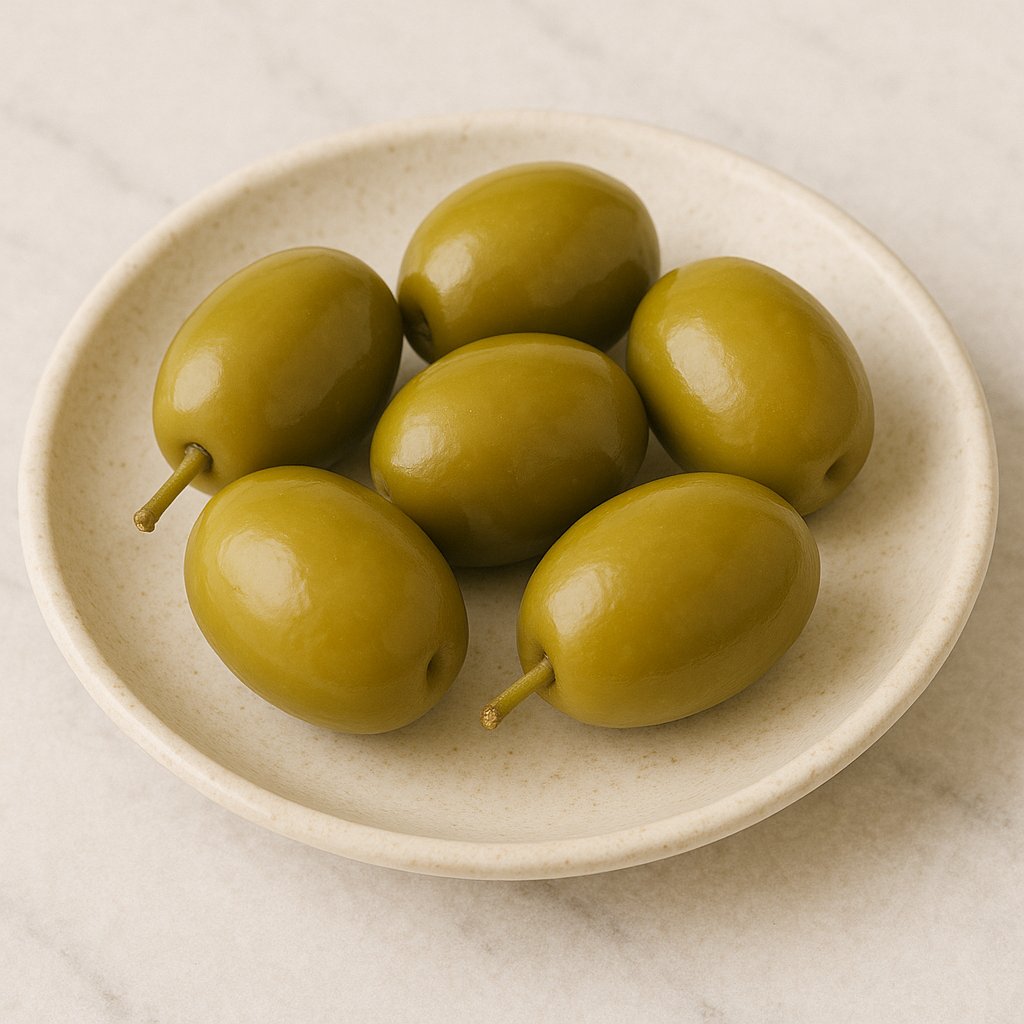
Bowl with green olives
I love green olives, and every time I pick one it feels like holding a small Mediterranean story in my hand. I still remember a market in a warm summer town where an old vendor handed me an olive as a sample and said: 'Taste the soul of our country.' That olive was crisp, slightly bitter and at the same time fruity – a flavor I have encountered often since then and that keeps surprising me.

Green olives are not just a snack; they are versatile ingredients that elevate salads, sauces and tapas. Unlike black olives, they are harvested unripe and often preserved in brine or with herbs. This treatment largely determines their aroma: some are tart and piquant, others mild and buttery. Once at dinner I tried an olive that tasted of citrus and juniper – an unexpected moment that started the conversation at the table.

When I plan recipes, I think of three things that make green olives special:

  • Texture: They often remain a bit firmer than black olives and give a nice bite to a dish.
  • Aroma: From salty to bitter to herbaceous – their range is wide and pairs wonderfully with many flavors.
  • Versatility: They go well with bread, pasta, fish and even sweet-and-sour combinations.
Once a colleague of mine mixed a green olive paste that was so good I wrote down the recipe while we were still standing in the kitchen crumbing bread. Small surprises like that show how adaptable this fruit is. When I shop I like to check the origin and the method of preservation. Olives from different regions bring different nuances: a Spanish Manzanilla tastes different from a Greek Amphissa or an Italian Gaeta.

Finally, I want to emphasize that green olives do more than please the palate: they connect culturally. They are firmly rooted in many European cuisines and beyond, and tell stories of harvest, tradition and community. When I offer a bowl of green olives, it's more than an appetizer: it's an invitation to take time, share and tell stories.

Availability & types

Availability and types

Green olives are widely available worldwide because they are grown in many countries and sold in many different forms. When you think of green olives, picture small, firm fruits that are not fully ripe yet – somewhat like an apple that is still a bit green and firm. These olives are either freshly cured, preserved in brine or oil, or processed and sold in jars and cans, so you can buy them year-round.

Origin and growing regions
Olive trees prefer warm regions with lots of sun and not too much rain. The best-known growing regions for green olives are:

  • Mediterranean region: Countries such as Spain, Italy, Greece and Turkey are major producers. There climate and soil suit olive trees very well.
  • North Africa: Morocco, Tunisia and Algeria supply many olives, often for preservation and oil production.
  • West Asia: Countries like Syria and Lebanon also cultivate olives.
  • New growing regions: Olive cultivation is also expanding in California, Australia, South Africa and parts of South America (e.g. Chile, Argentina), where similar climate conditions can be reproduced.
Some regions are particularly famous for certain varieties – like a town known for its special bread. This is helpful if you prefer a specific taste or shape.

Available varieties and variants
Green olives come in many varieties. A variety is simply a specific type that differs in shape, size and taste. Here are some of the most common variants, explained in an easy-to-understand way:

  • Manzanilla (commonly from Spain): These olives are round and have a mild, slightly nutty flavor. They are often pitted or stuffed with pieces of pepper.
  • Gordal (Spain): Very large, meaty olives that are good for stuffing. They can be filled with cheese, almonds or peppers – like wrapping a small gift.
  • Castelvetrano (Italy): These olives are known for their bright green color and sweet, buttery taste. Many people like them because they are mild and not too salty.
  • Picholine (France): Slightly elongated with a fresh, mildly bitter taste. They go well in salads.
  • Arbequina (Spain): Smaller olives with a fruity aroma; they are often also used for oil production but are good as whole olives as well.
There are also different processing methods you'll find in stores:

  • In brine: This is water with salt – the olives sit in it and acquire flavor. It's one of the most common methods.
  • In oil: Some olives are kept in olive oil, which makes them richer in taste.
  • Stuffed: Olives can be filled with garlic, lemon peel, almonds, cheese or peppers – this makes them especially tasty as a snack.
  • Pitted: Many olives are sold pitted to make them easier to eat or stuff.
In supermarkets, markets or delicatessens you can find green olives fresh in jars, in cans or vacuum-packed. If you like to experiment, try different varieties to find which you prefer. Just like apples — some are sweeter, some crisper — olives also have many small differences that make tasting exciting.
Details & nutrition

Property Value
Unit g
Average weight per piece 3
Calories per 100 145
Protein per 100 1.0
Carbohydrates per 100 3.8
Sugar per 100 0.5
Fat per 100 15.3
Saturated fat per 100 2.0
Monounsaturated fat 11.3
Polyunsaturated fat 1.7
Fiber per 100 3.3
Vitamin C (mg) per 100 0
Vitamin D (IU) per 100 0
Calcium (mg) per 100 52
Iron (mg) per 100 0.5
Nutri-Score C
CO₂ footprint 1.8
Origin Mediterranean region
Gluten-free Yes
Lactose-free Yes
Nut-free Yes
Vegan Yes
Note Nutritional values refer to green olives in brine without pit; salt content may vary depending on the manufacturer.

Technical & scientific information

Olives (green) are the unripe fruits of the olive tree (Olea europaea) and differ from black olives mainly in the degree of ripeness at harvest as well as in processing and storage. Botanically they are a drupe with a hard endocarp (stone), a fleshy mesocarp and a relatively thin epidermis. Green olives are harvested before the flesh fully ripens and develops the typical dark purple to black pigments (anthocyanins and oxidation products). This early harvest time affects both appearance and chemical composition and sensory properties.

Chemical composition and constituents
The flesh of green olives consists mainly of water and fat; the fat content varies by variety and ripeness, but typically ranges between 15 and 25 % of fresh mass in unripe fruits. The main lipid profile is dominated by monounsaturated fatty acids, particularly oleic acid (C18:1), with palmitic and linoleic acids present in smaller amounts. Green olives also contain secondary plant compounds such as polyphenols (e.g. oleuropein, hydroxytyrosol), flavonoids and phenolic acids, which have antioxidant properties. Other constituents include vitamin E (tocopherols), small amounts of vitamin A-like compounds, minerals (e.g. sodium, potassium, calcium, iron) and dietary fiber, especially in the form of soluble pectins and insoluble cell wall components.

Nutritional values (typical values per 100 g, varying with processing)

  • Calories: approx. 120–180 kcal
  • Fat: 10–20 g (with a relatively high proportion of monounsaturated fatty acids)
  • Protein: 0.5–2 g
  • Carbohydrates: 3–6 g (including fiber 2–4 g)
  • Salt: highly dependent on preservation; in salted preserves often 2–5 g NaCl per 100 g
Processing methods
Raw, freshly harvested green olives are bitter due to high concentrations of oleuropein and related glycosides. Various methods are used to debitter and preserve them:

  • Lye treatment (sodium hydroxide, NaOH): Rapid debittering by hydrolytic cleavage of bitter compounds; followed by thorough rinsing to neutralize residues.
  • Brine fermentation: Microbial fermentation in salt solution over weeks to months; leads to enzymatic modification of phenols, development of complex flavors and natural preservation.
  • Water or mild brine treatment: Prolonged water washing or mild saline solution to slowly remove bitter compounds; often combined with fermentation.
  • Heat pasteurization and canning: To extend shelf life; alters texture and can partially reduce antioxidant compounds.
Sensory properties and quality
Green olives show a taste combination of herbaceous-bitter notes (initially), salty seasoning from preservation, and fruity and grassy aromas that depend on variety and processing. Texture is firm to crunchy with optimal treatment; excessive lye or heat exposure leads to a soft, rubbery consistency.

Health aspects
The composition of green olives brings several nutritional effects. The abundant presence of oleic acid and polyphenols is associated in studies with positive effects on lipid profiles, inflammatory markers and oxidative stress, which may favor cardiovascular benefits in the long term. Polyphenols like hydroxytyrosol show antioxidant and anti-inflammatory effects in vitro and in vivo. On the other hand, the high sodium content in salted preserves should be noted for individuals with hypertension or salt-sensitive conditions. Allergic reactions to olives are rare but can occur; excessive consumption may also have caloric and metabolic effects due to the high fat and salt content.

Shelf life and storage
Unprocessed green olives are highly perishable and must be processed quickly or stored refrigerated. Products preserved in brine or pasteurized have a considerably longer shelf life; the best-before date depends on packaging, salt content and sterilization. Sensory and microbiological quality can be ensured by hygienic processing steps and controlled fermentation.

Overall, green olives are a nutritionally valuable, flavorfully versatile ingredient whose health benefit depends on variety, ripeness and especially processing. The technical processes for debittering and preservation critically determine nutrient retention, texture and the sensory profile of the final products.

Wiki entry for: green olive
Active now: 20 visitors of which 2 logged-in members in the last 5 minutes