Menu & categories

Grapefruit

Juicy citrus fruit with fresh acidity and high vitamin C.

Wiki about grapefruit Nutri-Score A Vegan Yes Gluten-free Yes Lactose-free Yes Nut-free Yes
NUTRITION / 100 g
42 kcal 0.8 g Protein 10.7 g Kohlenhydrate 0.1 g Fett

Introduction

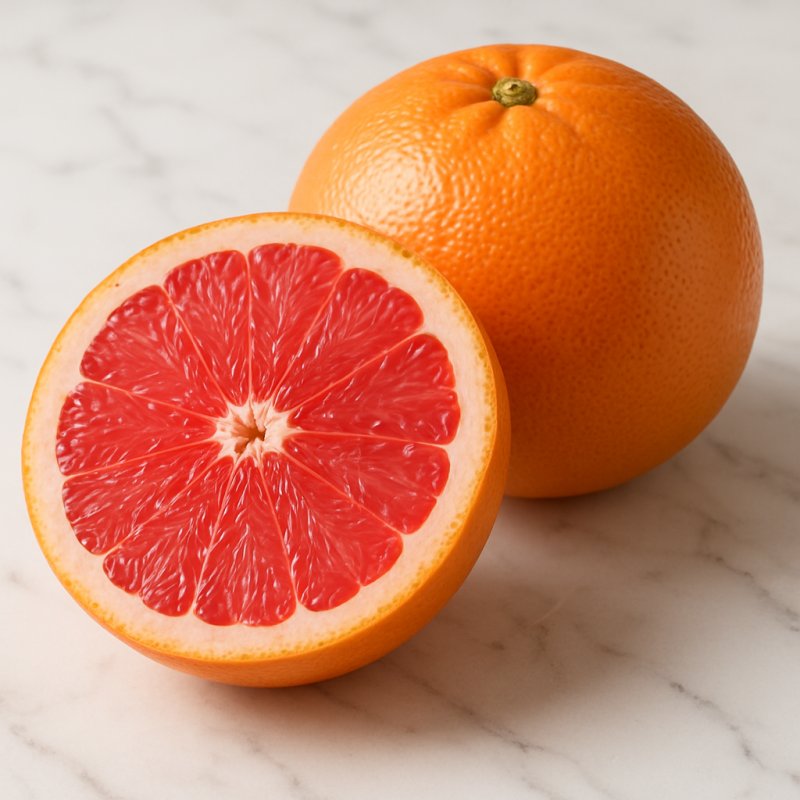
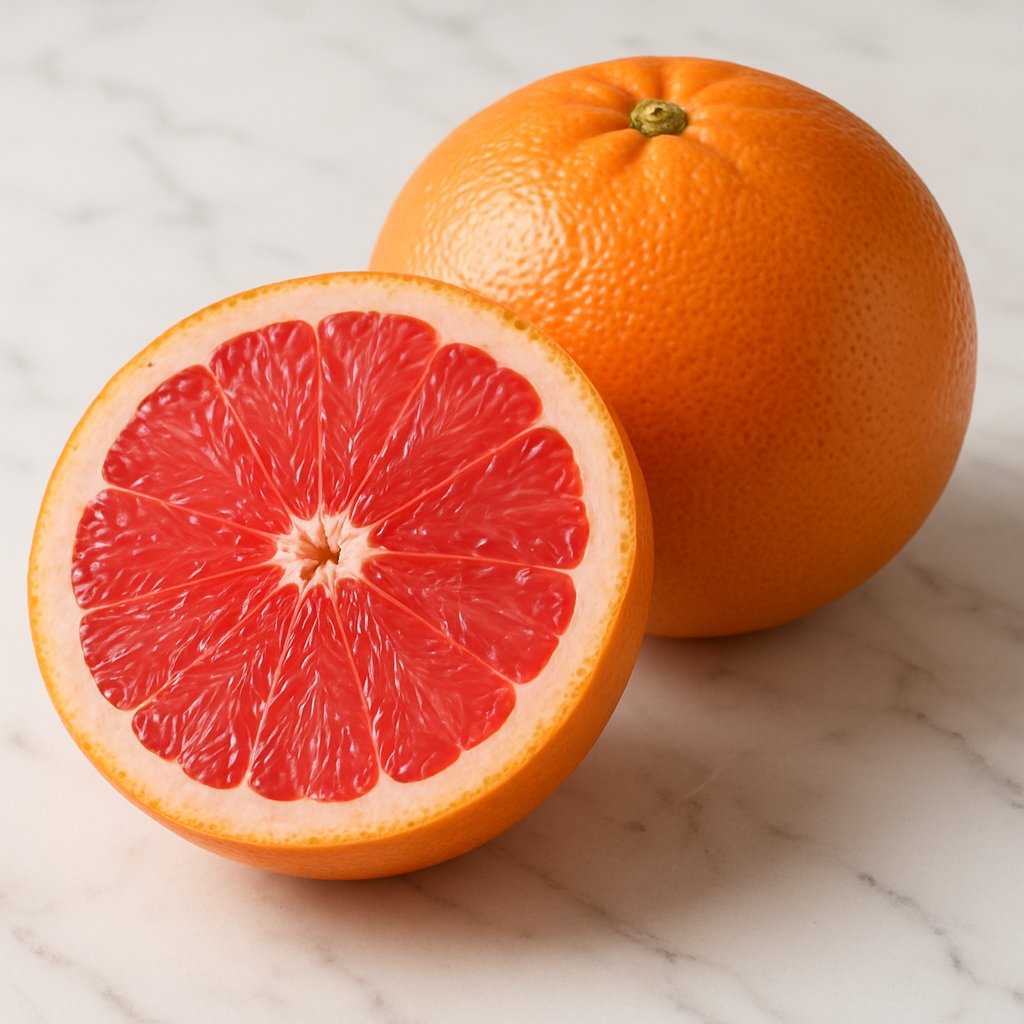
Fresh grapefruit halved

I still remember exactly the first bite of a grapefruit I hadn't planned to take: a colleague placed a halved fruit on the conference table one early morning, and the room was suddenly filled with that sparkling, citrusy sharpness. Since then the grapefruit hasn't left me. For me it is a fruit of contrasts – at once juicy and dry, sweet and bitter, with a slightly philosophical mouthfeel.

Botanically the grapefruit belongs to the citrus family and is a fairly young resident of our fruit bowl, having arisen as a cross of different citrus species. It comes in several varieties: pink, red and white, with the pink types often a bit sweeter and the white ones noticeably more bitter. I prefer to cut it the wrong way round so the flesh shows nicely, and spoon it directly from the peel.
Sometimes I juice it, sometimes I briefly caramelize the segments in a pan – both very different but fascinating results.

Grapefruit is incredibly versatile. It livens up salads, pairs with avocado and fennel, suits pescetarian dishes and is a surprising partner for BBQ sauces. In my notebook there are always a few simple basic rules:

  • Selection: A heavy fruit with shiny skin is usually juicy.
  • Storage: In the refrigerator grapefruit stays fresh longer.
  • Preparation: Segmenting rather than juicing preserves texture and aroma.
  • Pairings: Salty items like feta or smoked salmon bring out the sweetness.
Besides flavor, grapefruit provides a lot of vitamin C and fiber, making it a smart choice for the breakfast table. One important note I learned: grapefruit can interact with certain medications, so a quick look at package inserts or a talk with the pharmacy is sensible.

For me grapefruit remains a small culinary challenge that is also uncomplicated. It surprises, awakens memories and invites experimentation, whether for breakfast, in salads or as a zesty ingredient in an evening drink. Try different varieties, play with combinations, and let yourself be seduced by the bittersweet fascination of this fruit.

Availability & types


Availability and types of grapefruit – explained practically: where the fruit comes from, when you find it in the supermarket and which different types you can buy. I explain this simply and clearly so that a 12‑year‑old could understand.

Origin
Grapefruit is not an entirely new fruit but a mix that originated long ago. It's called a hybrid — like when two different plants have a “child”. Grapefruit comes from the pomelo and the sweet orange. It was discovered in the 18th century in the Caribbean, especially on the island of Barbados. Imagine: the fruits are like siblings that have a bit of both parents.

Growing regions
Grapefruits grow best where it is warm. Important regions are:

  • USA – especially Florida, Texas and California. There you find many grapefruits in winter and spring.
  • South Africa – supplies much of Europe, especially in winter.
  • Israel, Spain and Turkey – many grapefruits are also grown there.
  • Mexico and Chile – provide additional supply depending on the season.
  • China – also cultivates many citrus fruits, including grapefruits.
Seasonality and availability
Grapefruits do not have a single season when they are always equally good. In the northern hemisphere (e.g. Europe, USA) the main season is usually winter to spring (about November to May). In the southern hemisphere (e.g. South Africa, Chile) the season is the opposite. In supermarkets you often get them year‑round because they come from different countries.

Important varieties and types
There are many different varieties – it's easiest to compare them to dog breeds: they look similar but differ in taste and color.

  • White/Yellow – usually has light flesh and is somewhat more sour or bitter.
  • Pink – a bit sweeter than the white type and has pinkish flesh.
  • Red/Ruby – very popular because it often tastes sweeter and less bitter. Varieties like Ruby Red or Star Ruby belong here.
  • Seeded vs. Seedless – some grapefruits have many seeds, others almost none. Seedless types are more convenient to eat.
  • Marsh – a classic, commonly grown white variety.
  • Duncan – a somewhat larger, often juicy variety.
Buying and storage tips
When selecting a grapefruit, choose a fruit that feels heavy in your hand – that usually means it has a lot of juice. The skin should be smooth and free of soft spots. At home it keeps for a few days up to about a week in the refrigerator. Once cut you can eat the segments like apple slices or drink the juice.

In summary: grapefruits originate from a mix of pomelo and orange and are now grown in warm countries worldwide. There are white, pink and red variants as well as seeded and seedless cultivars. The fruits are especially fresh in winter and spring in the northern hemisphere but are often available year‑round due to imports. When shopping, weight is a helpful sign of juiciness, and the different varieties offer everything from very tart to pleasantly sweet for every taste.
Details & nutrition

Property Value
Unit g
Average weight per piece 300
Calories per 100 42
Protein per 100 0.8
Carbohydrates per 100 10.7
Sugar per 100 6.9
Fat per 100 0.1
Saturated fat per 100 0.0
Monounsaturated fat 0.0
Polyunsaturated fat 0.0
Fiber per 100 1.6
Vitamin C (mg) per 100 31
Vitamin D (IU) per 100 0
Calcium (mg) per 100 22
Iron (mg) per 100 0.1
Nutri-Score A
CO₂ footprint 0.6 kg CO2e/kg
Origin Mediterranean region, USA or Israel (depending on season)
Gluten-free Yes
Lactose-free Yes
Nut-free Yes
Vegan Yes
Note Can affect the action of certain medications (e.g. some statins, blood pressure drugs, or immunosuppressants) – consult a doctor if unsure.

Technical & scientific information


Grapefruit (Citrus × paradisi) is a citrus fruit that is botanically classified as an amphidiploid hybrid of pomelo (Citrus maxima) and bitter orange (Citrus × aurantium). It is characterized by a thicker rind, juicy flesh and a pronounced aroma ranging from bitter to sweet‑sour notes. Cultivars vary in color (white, pink, red), sweetness and content of secondary plant metabolites.

Chemical composition and nutritional values. Grapefruit is composed mainly of water (about 88–92 %), but it also provides carbohydrates, fiber and small amounts of protein and fat. Typical nutritional values for 100 g of raw flesh are approximately 30–45 kcal, 8–11 g carbohydrates, 1–2 g fiber, 0.6–1 g protein and negligible fat. Grapefruit is a reliable source of vitamin C (ascorbic acid) and contains moderate amounts of potassium, folate and β‑carotene (higher in pink/red varieties).

Primary organic compounds. The fruit contains organic acids, mainly citric acid, which shapes the acidic taste. The flesh is rich in water‑soluble polyphenols and flavonoids, particularly naringin and neohesperidin, which are responsible for the characteristic bitterness. The peel and fruit oil contain terpenes such as limonene (dominant), as well as smaller amounts of β‑pinene and the aromatic character compound nootkatone.

Processing techniques. Industrial processing includes peeling, juicing, pasteurization, concentration by evaporation and freeze‑drying for powders. To preserve volatile aromas, short‑time pasteurization procedures or gentle concentration methods are often used. Peels are a raw material for obtaining essential oils by cold pressing or steam distillation; pectin can be extracted from fruit residues using enzymatic processes and is used as a gelling and stabilizing agent in food products.

Bioactive effects and health aspects. Flavonoids and vitamin C contribute to the fruit's antioxidant capacity and have been associated with positive effects on inflammatory markers and lipid profiles, although clinical evidence is often heterogeneous. Pectins can affect digestion and promote satiety. An important clinical note is the interaction of grapefruit constituents, particularly furanocoumarins such as bergamottin, with drug metabolism pathways: these compounds inhibit intestinal CYP3A4 and can therefore strongly alter the absorption and breakdown of many drugs. The effect can persist for several hours to days, so consultation with medical personnel is important when taking certain medications.

Safety and quality. Grapefruit is harmless for most people, although sensitive individuals can have allergic reactions. Integrated pest management measures are common in cultivation; residues can be reduced by washing and peeling. For storage, cooling (around 5–10 °C) is beneficial to maintain quality and juiciness, but the fruit is susceptible to chilling injury at too low temperatures.

Use in culinary and industry. Fresh consumption, juices, marmalades and flavorings for beverages are common uses. Aroma compounds and nootkatone are also used in the perfume industry and for food flavoring. Grapefruit by‑products serve as feedstock for pectin production, animal feed or extraction of bioactives.

Overall, grapefruit combines nutritional features such as high water content and vitamin C with a complex profile of secondary plant compounds that is both valued culinarily and relevant pharmacologically. In particular, the potential influence on drug metabolism pathways makes mindful use of grapefruit juice during medication intake necessary; controlled studies are required to clearly assess the health effects of plant constituents.
Wiki entry for: grapefruit
Active now: 6 visitors of which 2 logged-in members in the last 5 minutes