Menu & categories

Grand Manier

Aromatic orange liqueur for enhancing desserts and cocktails.

Wiki about Grand Marnier Nutri-Score E Vegan Yes Gluten-free Yes Lactose-free Yes Nut-free Yes
NUTRITION / 100 ml
255 kcal 0.0 g Protein 26.0 g Kohlenhydrate 0.0 g Fett

Introduction

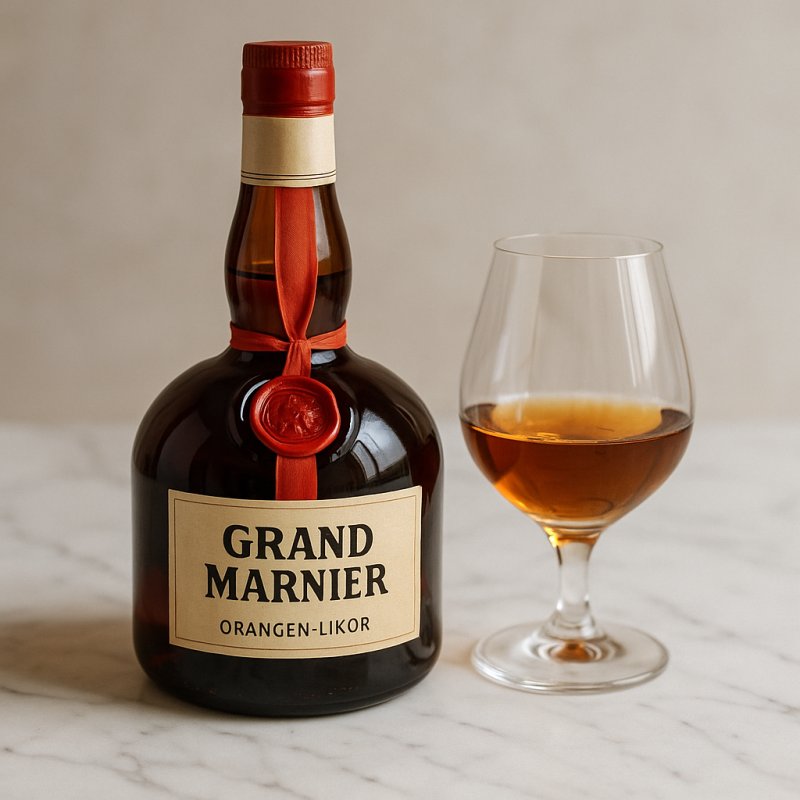
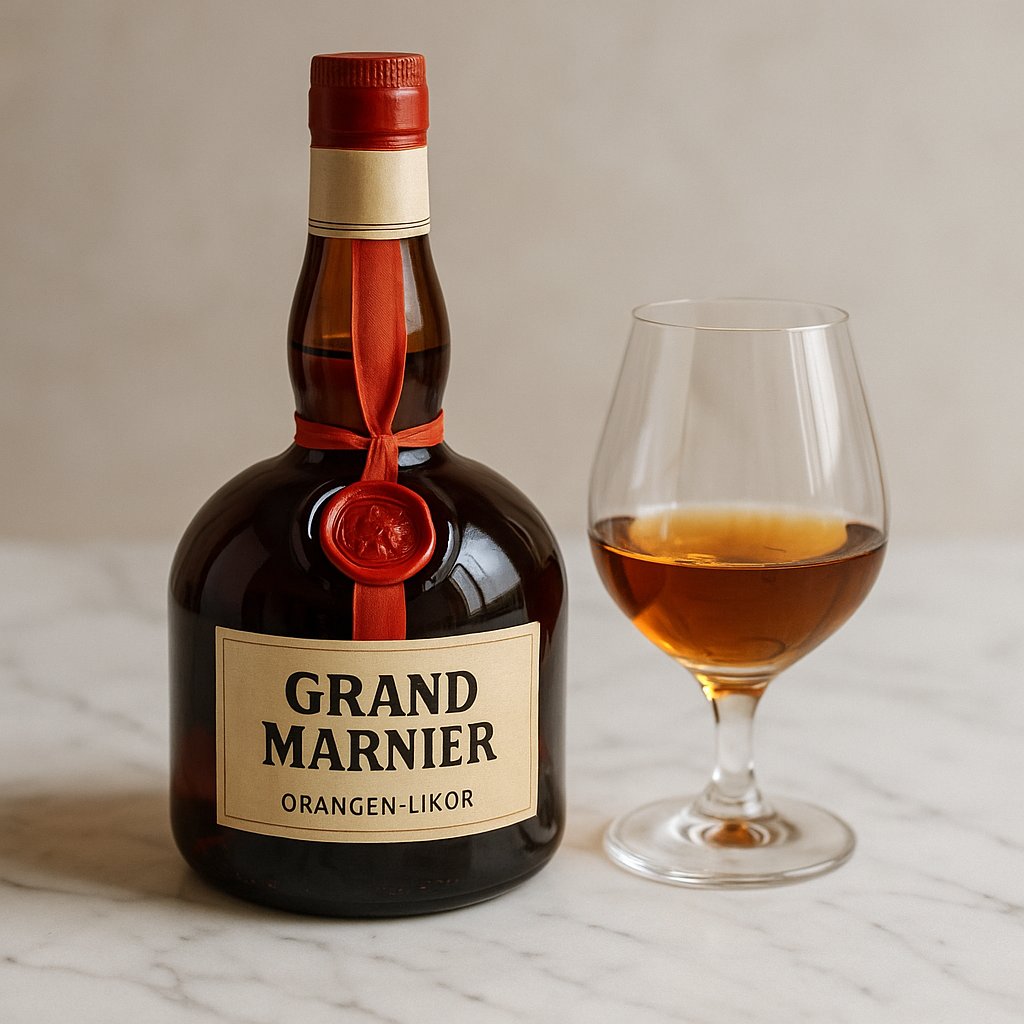
Bottle of Grand Manier orange liqueur
Some ingredients have a bit of theatricality about them, and Grand Marnier definitely belongs to that group. Many people casually call the amber bottle "Grand Manier"; I still remember a friend bringing it like that to a party and everyone briefly guessing at the pronunciation before we turned to the aroma. Behind the name is an elegant liaison of cognac and bitter oranges that holds its own equally in the kitchen and at the bar.

The first sip I consciously noticed wasn't in a cocktail but in a tart a colleague had baked for our team meeting. The orange notes stood out so clearly that I immediately understood why pastry chefs and mixologists alike swear by this liqueur. It's not just sweet; it brings depth, a woody cognac note and a subtle, slightly bitter orange peel that gives dishes character.

Typical uses I discover again and again when wandering curiously through food markets or small bars:

  • Crêpes Suzette or flambéed desserts, where the liqueur adds a dramatic touch when flamed.
  • Sauces for poultry or duck that benefit from the fruity acidity.
  • Baked goods and chocolate desserts that gain freshness from the orange aromas.
  • Cocktails such as a more classic sidecar twist or an elegant margarita substitute.
I'm not a fan of strict rules in the kitchen, but with Grand Marnier restraint pays off: a small splash is often enough to transform a dish. If I may pass on one tip, it's this: oil‑based sauces take the complexity of the liqueur beautifully, and for conservative storage a dark cupboard away from heat is sufficient.

In the end Grand Marnier is one of those ingredients that brings both stories and flavor. It builds bridges between the bar and the bakery and inspires small culinary experiments that often become the most beautiful memories at the table.

Availability & types

Grand Marnier (sometimes mistakenly written "Grand Manier") is a well‑known orange liqueur from France. It was invented at the end of the 19th century by Louis‑Alexandre Marnier‑Lapostolle. In short: Grand Marnier contains a very aromatic orange extract mixed with cognac – a particular type of brandy from a specific region in France that has been aged in wooden casks and gives the liqueur flavour and warmth. Because it is an alcoholic beverage, Grand Marnier is intended for adults and is sold in many countries only from ages 18 or 21.

Where do the ingredients come from?
The oranges for Grand Marnier usually come from warm, tropical or subtropical regions where the peel produces many essential oils. These oils create the typical orange scent and flavor. The cognac comes from the Cognac region of France. Together they form the characteristic blend of robust orange and soft, woody flavour.


What varieties and versions exist?

  • Cordon Rouge – this is the classic and most commonly purchased variety. It is often recognizable by the red seal or red ribbon on the bottle. It is balanced, with clearly perceptible orange and cognac.
  • Premium variants – these include bottlings that use older and more expensive cognacs. These bottles cost more and often have a stronger, more complex flavour. They are suited to special occasions.
  • Special or limited editions – from time to time the brand releases special editions, for example with very old cognacs or in elaborate bottles. These are rare and often collected.
  • Simpler variants – there are also versions blended with neutral alcohol instead of high‑quality cognac. They are usually cheaper and sometimes used in cocktails.
  • Mini bottles and gift sizes – for gifts or tasting there are small bottles (so‑called miniatures) alongside the normal bottle sizes.
Where can you buy Grand Marnier?
Grand Marnier is fairly widespread worldwide and can often be found in the following places:

  • Liquor stores and supermarkets (where alcohol is sold)
  • Specialty spirit or wine shops
  • Airport duty‑free shops
  • Online shops that deliver alcoholic beverages (only in countries where this is allowed)
  • Some bars and restaurants use Grand Marnier in cocktails or in cooking.
If you want to spot a bottle, look for the logo with the red ribbon (on the classic variety) and make sure the product is legally sold in your country. Remember: Grand Marnier is an adult beverage; children and adolescents should not taste it. The different varieties range from everyday to very exclusive – much like chocolate, where there are ordinary bars, fine bars and limited gift packs. This gives you a good idea that this orange liqueur also comes in simple and special versions.
Details & nutrition

Property Value
Unit ml
Calories per 100 255
Protein per 100 0.0
Carbohydrates per 100 26.0
Sugar per 100 26.0
Fat per 100 0.0
Saturated fat per 100 0.0
Monounsaturated fat 0.0
Polyunsaturated fat 0.0
Fiber per 100 0.0
Vitamin C (mg) per 100 0
Vitamin D (IU) per 100 0
Calcium (mg) per 100 0
Iron (mg) per 100 0.0
Nutri-Score E
CO₂ footprint 0.23 kg CO2e/100 ml
Origin France
Gluten-free Yes
Lactose-free Yes
Nut-free Yes
Vegan Yes
Note Liqueur containing alcohol; nutritional values may vary slightly depending on the product variant.

Technical & scientific information

Grand Marnier is an orange‑flavoured liqueur based on brandy, used in gastronomy and cooking both to flavor dishes and as a beverage. Chemically speaking it is a multiphase solvent/water mixture with significant proportions of ethanol, dissolved saccharides and volatile aroma compounds from citrus raw materials and distillate (cognac), which acquires stabilized sensory properties through controlled blending.

Composition and ingredients
The basic components are ethanol, water, sugar and orange‑derived flavor compounds. Typical chemical groups and compounds include:

  • Ethanol (C2H5OH): dissolves lipophilic odorants, is the primary alcohol component and accounts for most of the energy content.
  • Water: affects solubility, evaporation and the perception of sweetness.
  • Saccharides (sucrose, possibly invert sugar): determine sweetness, viscosity and mouthfeel.
  • Essential oils and terpenes: chiefly limonene, linalool and other monoterpenes from bitter or sweet orange, responsible for the fruity aroma.
  • Flavonoids and phenols: such as hesperidin and naringin, extracted from the peel and contributing bitter or astringent notes as well as secondary antioxidant properties.
  • Brandy congeners: esters, higher alcohols, aldehydes and wood‑derived compounds from cask ageing that add additional complexity to the product.
Manufacturing process
Typical production steps include extraction of the orange notes (maceration and/or distillation of the peels), production or selection of the brandy/cognac base material, followed by blending, sweetening and possible resting. Ethanol functions as a solvent for lipophilic aroma and bitter compounds, while high‑proof brandy is added to ensure a lasting alcohol profile. The exact recipe and ratios are brand‑specific and partly protected.

Nutritional and energetic aspects
The caloric contribution of a liqueur arises primarily from ethanol (7 kcal/g) and sugar (≈4 kcal/g). Total caloric content varies with alcohol level and sugar amount; liqueurs are typically energy‑dense and provide "empty" calories without significant amounts of protein, fiber, vitamins or minerals.

Physicochemical properties and stability
At an alcohol content around 40 % vol. most microbial risks are largely suppressed by the ethanol. Aroma losses occur through oxidation and evaporation, which is why storage in dark, cooler conditions is recommended. Sugar increases viscosity and helps stabilize aromas, while volatile terpenes may decrease over time.

Health considerations
From a pharmacological perspective ethanol and sugar are the relevant components: ethanol has central depressant effects, causes toxic effects with regular intake and provides a high energy load. Citrus components can cause allergies or skin reactions in sensitive individuals; some bitter orange constituents such as p‑synephrine are cardiovascularly active at high doses, but in liqueur quantities are typically present only at very low concentrations. Interactions with medications and contraindicated use in pregnancy or certain medical conditions should be taken into account.

Overall Grand Marnier is a complex, alcohol‑ and sugar‑rich foodstuff with characteristic aroma matrices of terpenes, flavonoids and brandy congeners. For culinary applications it provides intense orange and woody flavours; for health the effects of alcohol consumption and the high caloric and sugar content are the main considerations.

Wiki entry for: Grand Marnier
Active now: 26 visitors of which 2 logged-in members in the last 5 minutes